Mori Atlas logo
National parkKirirom National Park

Discover the mountain forest geography and mapped boundaries within Kampong Speu Province

Kirirom National Park: Cambodia's First National Park Protected Landscape

(Preah Suramarit-Kossamak Kirirom National Park)

Kirirom National Park represents Cambodia's inaugural national park, established as a protected landscape within the eastern Cardamom Mountains. Situated in Kampong Speu Province, this park offers a unique vantage point with its mean elevation of 675 meters, contributing to distinct mountain forest ecosystems. Explore the geographic context and mapped territory of this historically significant conservation area.

Cardamom MountainsMountain ForestCambodia National ParksFirst National ParkProtected AreaIUCN Category II

Kirirom National Park

National park

Park overview

Structured park overview, official facts, and landscape profile for Kirirom National Park

Kirirom National Park park facts, protected area profile, and essential visitor context
Review the core facts for Kirirom National Park, including designation, size, terrain, visitor scale, habitats, and operating context in one park-focused overview.

About Kirirom National Park

Kirirom National Park occupies a significant position in Cambodia's conservation history as the nation's first officially designated national park. The protected area is situated in the eastern portion of the Cardamom Mountains, a mountain range that runs parallel to the Gulf of Thailand and forms a critical biogeographic corridor in mainland Southeast Asia. The park's establishment in 1993 marked a pivotal moment in Cambodia's environmental protection efforts, establishing a precedent for subsequent protected area designations throughout the country. The terrain is characterized by rolling hills and mountain ridges that rise to elevations significantly above the surrounding lowland plains, creating diverse microhabitats and ecological niches. The park's relative proximity to Phnom Penh, approximately 110 kilometers to the southwest, makes it a practical destination for visitors seeking to experience Cambodia's natural heritage without undertaking extended travel to more remote protected areas. The forest cover, while having faced pressures from human activity in the surrounding landscape, maintains important ecological functions including watershed protection and habitat provision for numerous species.

Quick facts and research context for Kirirom National Park

Kirirom National Park occupies 283.75 square kilometers in the eastern Cardamom Mountains of Cambodia, within Phnom Sruoch District, Kampong Speu Province. Established in 1993, it holds the distinction of being Cambodia's first national park. The park sits at a mean elevation of 675 meters, providing a cooler climate compared to the surrounding lowlands. Its location approximately 110 kilometers from Phnom Penh makes it one of the more accessible protected areas in the country for day trips and short excursions.

Park context

Deeper park guide and search-rich context for Kirirom National Park

Kirirom National Park history, landscape, wildlife, and travel context
Explore Kirirom National Park through its history, landscape character, ecosystems, wildlife, conservation priorities, cultural context, and seasonal travel timing in a structured park guide built for atlas discovery and search intent.

Why Kirirom National Park stands out

Kirirom National Park is best known as Cambodia's pioneering national park, representing the country's first official protected area designation under the modern national park system. The park is celebrated for its mountain forest ecosystems within the Cardamom Mountains, one of Southeast Asia's most significant biodiversity regions. Its cultural heritage is equally notable, rooted in the legend of the heroic brothers Vorvong and Sorvong, which gave the area its historical name Phnom Vorvong Sorvong. The elevated terrain provides scenic viewpoints and a cooler microclimate that attracts visitors seeking relief from the tropical heat of the Cambodian lowlands.

Kirirom National Park history and protected-area timeline

Kirirom National Park was officially established in 1993, becoming Cambodia's first national park under the country's modern protected area framework. The naming of the area as Kirirom, meaning "Happiness Mountain," dates to the 1930s when King Monivong bestowed this evocative name upon the region. Prior to this royal designation, the area was known as Phnom Vorvong Sorvong, a name that references a popular Cambodian legend concerning two princely brothers of exceptional heroism. The formal establishment of the park in 1993 represented Cambodia's commitment to biodiversity conservation during a period of increasing environmental awareness in the region. The park was named Preah Suramarit-Kossamak Kirirom National Park in honor of the royal couple, further cementing its significance within Cambodia's protected area system.

Kirirom National Park landscape and geographic character

The landscape of Kirirom National Park is defined by its position within the eastern Cardamom Mountains, characterized by a series of forested ridges and valleys that rise sharply from the surrounding lowland terrain. The mean elevation of approximately 675 meters creates a distinct environmental zone that differs markedly from the hot, humid conditions of the Cambodian plains below. The terrain features rolling hillsides and steeper slopes where the forest cover remains intact, interspersed with natural clearings and drainage courses that channel water through the protected area. The elevation gain provides visitors with scenic vistas across the forested mountain landscape, while the vegetation patterns shift with altitude, creating visual variety across the park's extent.

Kirirom National Park ecosystems, habitats, and plant life

The Cardamom Mountains, within which Kirirom National Park is situated, form one of Southeast Asia's most important biodiversity regions. The park's forest ecosystems include both evergreen and semi-evergreen formations adapted to the moisture regimes of this mountain environment. These forests support a diversity of plant species characteristic of the Indochinese region, including numerous tree species that contribute to the overall ecological complexity of the area. The protected status of Kirirom ensures the preservation of watershed functions that influence water quality and availability in downstream areas, while also maintaining habitat connectivity within the broader mountain chain.

Kirirom National Park wildlife and species highlights

The Cardamom Mountains are recognized as a critical wildlife habitat in mainland Southeast Asia, and Kirirom National Park contributes to the conservation of species associated with this biogeographic region. The forest environments within the park provide habitat for various mammal, bird, and reptile species typical of the Indochinese mountain forests. While specific species inventories from this particular protected area are limited in the available sources, the broader Cardamom region is known to support populations of large mammals, including species of conservation concern that require extensive forest habitats for their survival.

Kirirom National Park conservation status and protection priorities

Kirirom National Park holds particular significance within Cambodia's protected area network as the country's first national park, establishing a model for subsequent conservation designations throughout the nation. The park's inclusion in the IUCN Category II classification reflects its management approach centered on ecosystem conservation and public recreation. The Cardamom Mountains more broadly are recognized as a biodiversity hotspot of regional and global importance, and protected areas like Kirirom play a critical role in maintaining ecological connectivity across this mountainous landscape. The park also provides ecosystem services including watershed protection and soil stabilization that benefit communities in the surrounding lowlands.

Kirirom National Park cultural meaning and human context

Kirirom National Park is deeply intertwined with Cambodian cultural heritage through the legend of Vorvong and Sorvong, two heroic princely brothers central to local folklore. This legend gave the area its ancient name, Phnom Vorvong Sorvong, referring to the two prominent hills within the region. The royal connection to the area was reinforced in the 1930s when King Monivong renamed the location Kirirom, meaning "Happiness Mountain," adding another layer to the site's cultural significance. This combination of mythological heritage and royal patronage distinguishes Kirirom from purely natural protected areas, providing visitors with a sense of the landscape's meaning within Cambodian culture.

Top sights and standout views in Kirirom National Park

Kirirom National Park offers visitors the opportunity to experience Cambodia's natural heritage at its first officially protected national park. The mountain setting provides a cooler climate than the surrounding lowlands, making it particularly appealing during the hot season. The forest trails through the Cardamom Mountains offer hiking opportunities with scenic viewpoints, while the cultural layer of the Vorvong and Sorvong legend adds historical depth to the visitor experience. The park's status as a pioneer in Cambodia's protected area system gives it historical significance beyond its ecological value.

Best time to visit Kirirom National Park

The optimal time to visit Kirirom National Park falls during the dry season from November to April, when visitor access is most convenient and trail conditions are favorable. The cooler months from November through February offer the most comfortable hiking conditions, with temperatures at the elevated park site being noticeably lower than in the Cambodian lowlands. The wet season from May to October brings increased rainfall that can affect trail accessibility and visibility, though the forest landscape remains green and lush during this period.

Park location guide

Geography guide, regional context, and park location map for Kirirom National Park

Kirirom National Park park geography, regions, and map view in Cambodia
Understand where Kirirom National Park sits in Cambodia through a broader geographic reading of the surrounding landscape, nearby location context, and its mapped position within the national park landscape.

How Kirirom National Park fits into Cambodia

Cambodia is a unitary parliamentary constitutional elective monarchy in Southeast Asia. The country spans 181,035 km² and is characterized by a low-lying plain centered around the Mekong River and Tonlé Sap, Southeast Asia's largest lake. Its capital and largest city is Phnom Penh. The nation has a tropical climate and is home to a predominantly Khmer ethnic population. Cambodia has a history dating back to the Khmer Empire established in 802 AD.

Wider geography shaping Kirirom National Park in Cambodia

Cambodia occupies 181,035 km² in Mainland Southeast Asia. It is bordered by Thailand to the northwest, Laos to the north, and Vietnam to the east, with a coastline along the Gulf of Thailand in the southwest. The terrain is dominated by a low-lying central plain centered around the confluence of the Mekong River and Tonlé Sap, Southeast Asia's largest lake. The country has a tropical climate.

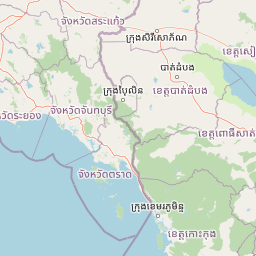
Map view of Kirirom National Park

Use this park location map to pinpoint Kirirom National Park in Cambodia, understand its exact geographic position, and read its mapped placement within the surrounding landscape more clearly.

Pigeon | © OpenStreetMap contributors

Location context for Kirirom National Park

Kampong Speu Province
Park atlas

Trace the regional spread of protected areas, from Kirirom National Park's mountain forests to other significant Cambodian conservation landscapes.

Explore Nearby National Parks and Protected Areas Beyond Kirirom National Park
Continue your park discovery beyond Kirirom National Park by browsing other protected areas throughout Cambodia, including sites within the extensive Cardamom Mountains and coastal regions. Uncover diverse protected landscapes and compare their unique geographical characteristics, conservation status, and regional contexts for informed atlas exploration.
National parkKoh Kong province

Southern Cardamom National Park: A Vital Protected Landscape in Koh Kong Province

Explore its mapped boundaries and conservation significance.

Southern Cardamom National Park is a crucial protected area in southwestern Cambodia, encompassing a significant portion of the Cardamom Mountains. This national park serves as a vital atlas point for understanding the regional geography and conservation efforts in Southeast Asia. Its expansive territory is dedicated to safeguarding critical habitats and supporting ambitious wildlife programs, making it a cornerstone of landscape-level conservation and a key element in mapping the protected areas of the region.

Area
4,103.92 km²
Established
2016
IUCN
II
National parkKampot Province

Preah Monivong Bokor National Park: An ASEAN Heritage Mountain Park in Kampot Province

Explore diverse forests and colonial history within its mapped terrain.

Preah Monivong Bokor National Park is a protected national park in Kampot Province, Cambodia, distinguished by its mountainous geography within the Dâmrei Mountains. Covering over 1,500 square kilometers, it showcases varied forest ecosystems and is recognized as an ASEAN Heritage Park. The park's landscape combines significant natural biodiversity with remnants of French colonial history, offering a rich context for atlas-based geographic exploration and protected-area understanding.

Area
1,544.58 km²
Established
1993
IUCN
II
National parkCambodia

Botum Sakor National Park: Cambodia's Largest National Park and Coastal Wilderness

Explore its mapped geography and protected landscape features.

Botum Sakor National Park represents Cambodia's largest national park, offering a unique protected landscape where the Cardamom Mountains meet the Gulf of Thailand. The park's diverse geography includes extensive evergreen forests, grasslands, and significant coastal wetland ecosystems, such as mangrove and freshwater swamp forests. Examining its mapped boundaries reveals a critical area for biodiversity and regional ecological context within Southeast Asia's protected lands.

Area
1,825.85 km²
Established
1993
IUCN
II
National parkCambodia

Central Cardamom Mountains National Park: Cambodia's Premier Protected Rainforest Landscape

Explore Extensive Rainforest, Diverse Habitats, and Mountain Terrain

Central Cardamom Mountains National Park is Cambodia's largest protected area, a testament to significant rainforest conservation efforts. This national park spans approximately 4,010 square kilometers, showcasing a dynamic mountainous landscape with diverse ecological zones from coastal areas to peaks over 1,500 meters. Discover the geographic distribution of its protected boundaries and the rich tapestry of habitats that define this vital Southeast Asian natural reserve, offering deep context for atlas-based exploration.

Area
4,010.65 km²
Established
1999
IUCN
II
National parkKep Province

Kep National Park: Cambodia's Coastal Mountain Protected Landscape

Explore mapped terrain and panoramic viewpoints of this national park.

Kep National Park is a protected national park situated in Kep Province, Cambodia, known for its unique hilly terrain that rises from the coastal lowlands. This protected area offers elevated viewpoints with commanding sights across the Gulf of Thailand, stretching towards Phu Quoc island and the distant Bokor Ranges. Its landscape character is defined by the contrast between its mountainous interior and the surrounding flat coastal regions, making it a significant feature for understanding regional geography and mapped protected areas. The park provides an accessible experience of Cambodia's coastal mountainous ecosystems.

Area
11.52 km²
Established
1993
IUCN
II
National parkSihanoukville Province

Ream National Park: Protected Coastal Landscape and Marine Biodiversity in Sihanoukville Province

Explore unique mangrove ecosystems and mapped terrain within Cambodia.

Ream National Park is a significant protected area in Cambodia, celebrated for its intricate coastal and terrestrial ecosystems. This national park offers a detailed view of mangrove wetlands, evergreen forests, rolling hills, and marine habitats like coral reefs and sea grass beds. Situated in Sihanoukville Province, its landscape is characterized by rivers flowing through the terrain into the sea, providing vital habitats for diverse species and contributing to its atlas significance for regional geography and protected-area study.

Area
146.76 km²
Established
1993
IUCN
II
National parkKiên Giang Province

Phú Quốc National Park: Comprehensive Protected Island Landscape and Geography

Explore the mapped terrain and unique ecosystems of this national park.

Phú Quốc National Park offers a unique exploration of a fully protected tropical island ecosystem, encompassing significant landmass and marine territory within Kiên Giang Province. As Vietnam's largest island national park, it showcases a diverse array of landscapes, from dense forests blanketing rolling hills to vital coastal and marine protected areas essential for regional biodiversity. This park provides a focused lens for understanding island protected area management and geographic context within the Gulf of Thailand.

Area
314.22 km²
Established
2001
IUCN
II
National parkKiên Giang Province

U Minh Thượng National Park: Vietnam's Premier Mekong Delta Wetland Protected Area

Mapping the rich biodiversity and peat swamp ecosystems of Kiên Giang Province.

U Minh Thượng National Park is a key protected wetland in Kiên Giang Province, recognized for its exceptional biodiversity and status as a Ramsar site. Covering vast peat swamp forests and freshwater marshes, this national park offers critical insights into the Mekong Delta's unique ecology and hydrological systems. Its extensive mapped boundaries and distinct landscape character make it a vital point of study for understanding regional protected area networks and the natural geography of Southeast Asia.

Area
80.53 km²
Established
2002
IUCN
II

Common questions about visiting, size, designation, and location context for Kirirom National Park

Kirirom National Park FAQs for park facts, access, geography, and protected area context
Find quick answers about Kirirom National Park, including protected-area facts, park geography, trail and visitor context, and how the park fits into its surrounding country and regional landscape.
MoriAtlas Explorer

Continue Your Protected Areas Search Across the Global Atlas

Deepen your exploration by continuing the structured search for national parks and protected areas worldwide. Utilize the comprehensive filtering capabilities to compare different conservation landscapes and refine your understanding of global park geography. Discover more about the distribution and characteristics of protected natural areas.

Global natural geography