Mori Atlas logo
National parkCentral Cardamom Mountains National Park

A Vast Rainforest Ecosystem Spanning 4,010 sq km in Southeast Asia

Central Cardamom Mountains National Park: Cambodia's Largest Protected Landscape

Central Cardamom Mountains National Park represents a significant protected area within Cambodia, encompassing approximately 4,010 square kilometers of dramatic mountainous terrain and dense rainforest. Situated in the country's central highlands, this national park offers a rich canvas for exploring its diverse ecosystems, from lowland wetlands and mangrove fringes to montane forests reaching over 1,500 meters. Its geographic position and expansive contiguous forest make it a key component of Southeast Asia's natural heritage, ideal for atlas-style discovery of protected landscapes and their ecological significance.

Rainforest protected areaMountain ecosystemsElephant habitatSoutheast Asian biodiversity hotspotWetland systemsCambodia national parks

Central Cardamom Mountains National Park

National park

Park overview

Structured park overview, official facts, and landscape profile for Central Cardamom Mountains National Park

Central Cardamom Mountains National Park park facts, protected area profile, and essential visitor context
Review the core facts for Central Cardamom Mountains National Park, including designation, size, terrain, visitor scale, habitats, and operating context in one park-focused overview.

About Central Cardamom Mountains National Park

Central Cardamom Mountains National Park represents Cambodia's commitment to preserving its natural heritage within the Cardamom Mountains, a globally significant biodiversity hotspot in mainland Southeast Asia. The park's vast expanse of approximately 4,010 square kilometers makes it the largest protected area in Cambodia, forming the core of a larger protected landscape that includes adjacent wildlife sanctuaries. The terrain is characterized by mountainous ridgelines, steep valleys, and rolling foothills that descend toward coastal plains, creating diverse microhabitats and ecological niches. The evergreen and semi-evergreen forests that dominate the park are interspersed with semi-deciduous forest in certain areas, while lower elevations feature melaleuca wetlands and coastal mangrove systems along watercourses that eventually reach the Gulf of Thailand. The park spans three provinces, creating administrative complexity but also representing ecological continuity across a landscape that has remained relatively intact compared to other lowland forest areas in Cambodia. The protected area serves as a critical watershed, with numerous rivers originating in the mountains and flowing westward to the coast, providing water resources for both wildlife and downstream communities.

Quick facts and research context for Central Cardamom Mountains National Park

The Central Cardamom Mountains National Park protects a significant portion of Cambodia's Cardamom Mountains, one of the nation's most ecologically important rainforest regions. The park spans an elevation gradient from approximately 20 meters to 1,540 meters, encompassing diverse habitats including evergreen and semi-evergreen forests, monsoon forest, melaleuca wetlands, mangroves, and estuarine systems. It is flanked by Phnom Aural Wildlife Sanctuary to the east and Phnom Samkos Wildlife Sanctuary to the west, forming a contiguous protected landscape that supports remarkable biodiversity including Asian elephants, clouded leopards, sun bears, and over 400 vertebrate species.

Park context

Deeper park guide and search-rich context for Central Cardamom Mountains National Park

Central Cardamom Mountains National Park history, landscape, wildlife, and travel context
Explore Central Cardamom Mountains National Park through its history, landscape character, ecosystems, wildlife, conservation priorities, cultural context, and seasonal travel timing in a structured park guide built for atlas discovery and search intent.

Why Central Cardamom Mountains National Park stands out

The Central Cardamom Mountains National Park is best known for protecting one of Southeast Asia's most significant remaining rainforest ecosystems and serving as habitat for an impressive array of threatened species including the Asian elephant, Asiatic black bear, clouded leopard, and pileated gibbon. The park encompasses the largest expanse of contiguous protected forest in mainland Southeast Asia, with elevation gradients supporting multiple habitat zones from lowland evergreen forest through to montane forest. Its network of rivers draining toward the Gulf of Thailand and its melaleuca wetland systems add to the ecological diversity of this protected landscape.

Central Cardamom Mountains National Park history and protected-area timeline

The Central Cardamom Mountains region served as a Khmer Rouge stronghold during Cambodia's period of civil conflict, with the area harboring both indigenous communities and former Khmer Rouge families who settled in the remote mountainous terrain. Following the end of the conflict, the region faced increasing pressures from logging, road building, and agricultural expansion during the 1990s as the country opened up economically. In 1999, the area was established as a protected forest under the management of the Forestry Administration within the Ministry of Agriculture, Forestry and Fisheries, representing one of Cambodia's earliest efforts to formally protect the Cardamom forest estate. Conservation International supported a Central Cardamom Protected Forest project from 2001 to 2004, while a parallel wildlife sanctuaries project operated from 2003 to 2007 under the Ministry of Environment with support from Fauna and Flora International. These initiatives focused on management planning, community engagement, capacity building, and developing sustainable financing mechanisms for the protected area. In 2016, administrative responsibility for the park transitioned from the Forestry Administration to the Ministry of Environment, consolidating management under the environmental ministry alongside the adjacent wildlife sanctuaries.

Central Cardamom Mountains National Park landscape and geographic character

The Central Cardamom Mountains National Park encompasses a dramatic mountainous landscape characterized by steep ridgelines, deep valleys, and undulating foothills that rise from the coastal lowlands of Koh Kong province toward the central highlands. The elevation gradient spans from approximately 20 meters above sea level in the lower reaches to roughly 1,540 meters at the highest points, creating a diverse topographical setting that supports multiple distinct ecological zones. The park is transected by numerous perennial rivers that originate in the mountain ranges and flow westward toward the Gulf of Thailand, carving valleys that provide access routes through the otherwise rugged terrain. Lower elevation areas feature wetlands dominated by melaleuca trees, while coastal fringe areas contain mangrove forests and estuarine environments where freshwater meets the tidal waters of the Gulf. The forest cover is predominantly evergreen and semi-evergreen, with the dense monsoon forest creating a closed canopy that characterizes one of Southeast Asia's most significant remaining tract of intact rainforest.

Central Cardamom Mountains National Park ecosystems, habitats, and plant life

The ecological significance of Central Cardamom Mountains National Park cannot be overstated, as the park protects one of the largest remaining contiguous rainforest ecosystems in mainland Southeast Asia. The elevation gradient from 20 to 1,540 meters supports a succession of habitat types, from lowland evergreen forest through semi-evergreen formations to montane forest at higher elevations. The melaleuca wetland systems represent a particularly distinctive habitat within the protected area, providing critical water storage and wildlife corridors through the landscape. Coastal mangrove habitats and estuarine zones at the western edges of the park add marine and brackish water ecosystems to the protected portfolio. The Cardamom Mountains rainforest landscape has been identified as globally significant for biodiversity, with the park supporting more than 400 vertebrate species, approximately 70 fish species, and over 200 plant species, including numerous species endemic to this region of Southeast Asia.

Central Cardamom Mountains National Park wildlife and species highlights

The Central Cardamom Mountains National Park provides critical habitat for an impressive diversity of wildlife, including several endangered species that depend on the park's intact forest ecosystems. Large mammals known to occur within the park include the Asian elephant, Asiatic black bear, sun bear, clouded leopard, and pileated gibbon, representing some of the region's most iconic fauna. Camera trap surveys conducted across the wider Cardamom Rainforest Landscape between 2012 and 2016 documented at least 30 species of medium to large ground-dwelling mammals, with sun bears, clouded leopards, and dholes among the most frequently detected species. The park also supports significant populations of smaller carnivores and ungulates, while its rivers and wetlands provide habitat for fish species and other aquatic fauna. The diverse habitat types, from lowland forest to montane zones and wetland systems, support different animal communities, creating an ecological mosaic that contributes to the overall biodiversity value of the protected area.

Central Cardamom Mountains National Park conservation status and protection priorities

Central Cardamom Mountains National Park occupies a central position within Cambodia's protected area network and represents a cornerstone of national conservation strategy for preserving the country's forest estate and biodiversity. The park forms part of the larger Cardamom Mountains protected area complex, which includes Phnom Aural and Phnom Samkos wildlife sanctuaries, creating a contiguous protected landscape of significant ecological extent. Between 2000 and 2015, the park experienced forest loss estimated at 1.2 percent, a relatively low rate compared to other forest areas in the region, reflecting the effectiveness of protected area status in limiting conversion. The park's designation as a protected forest and subsequently as a national park has provided a legal framework for preventing agricultural encroachment and limiting economic land concessions within its boundaries. Ongoing conservation challenges include addressing illegal logging, wildlife trafficking, and land encroachment, with ranger patrols actively working to combat these threats. The park's conservation value is enhanced by its role as a watershed, protecting water resources that flow to the Gulf of Thailand and supporting downstream communities and ecosystems.

Central Cardamom Mountains National Park cultural meaning and human context

The Central Cardamom Mountains region has a complex human history, having served as a refuge during Cambodia's period of civil conflict when the remote mountainous terrain provided shelter for both indigenous communities and Khmer Rouge fighters. Indigenous peoples have traditionally inhabited the forest areas, maintaining livelihoods that depend on forest resources while living in close connection with the natural environment. Following the end of the conflict, former Khmer Rouge families also settled in the area, creating a population with mixed backgrounds and complex relationships to the landscape. Traditional use of forest resources has been common in the region, with local communities collecting timber, non-timber forest products, and other resources from the forest. The establishment of the protected area has required balancing conservation objectives with the livelihood needs of communities who depend on forest resources, a challenge common to protected area management throughout Cambodia and the broader Southeast Asian region.

Top sights and standout views in Central Cardamom Mountains National Park

The Central Cardamom Mountains National Park protects the largest remaining tract of contiguous rainforest in mainland Southeast Asia, a landscape of exceptional biodiversity significance that shelters threatened species including Asian elephants, clouded leopards, and sun bears. The park's elevation gradient from coastal lowlands to 1,540-meter peaks creates diverse habitats spanning evergreen forest, monsoon forest, melaleuca wetlands, and coastal mangroves. As part of the broader Cardamom Mountains protected complex flanked by Phnom Aural and Phnom Samkos wildlife sanctuaries, the park forms an ecological corridor of international importance. The transition of management responsibility to the Ministry of Environment in 2016 reflects evolving approaches to protected area governance in Cambodia, building on earlier conservation initiatives supported by international organizations including Conservation International and Fauna and Flora International.

Best time to visit Central Cardamom Mountains National Park

The Central Cardamom Mountains National Park experiences a tropical monsoon climate with distinct wet and dry seasons that significantly affect the character of a visit. The rainy season typically runs from April through October, with the heaviest rainfall occurring between June and September when monthly precipitation can exceed 500 millimeters. During this period, the landscape is at its most lush and green, rivers and waterfalls are flowing well, and the wetland areas are at their fullest, though some trails may be difficult to navigate due to muddy conditions. The dry season from November through March offers easier access to forest trails and more comfortable conditions for trekking, though water sources in the landscape may be lower. Annual rainfall in the region averages approximately 3,633 millimeters, with temperatures generally ranging from 22 to 34 degrees Celsius year-round. Visitors interested in wildlife viewing should be aware that dry season months may concentrate animals around remaining water sources, while wet season months offer the chance to experience the forest at its most vibrant and to see waterfalls and river systems at their most impressive.

Park location guide

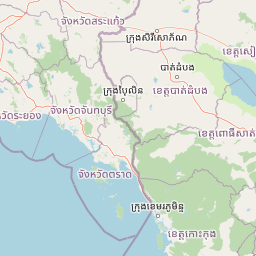
Geography guide, regional context, and park location map for Central Cardamom Mountains National Park

Central Cardamom Mountains National Park park geography, regions, and map view in Cambodia
Understand where Central Cardamom Mountains National Park sits in Cambodia through a broader geographic reading of the surrounding landscape, nearby location context, and its mapped position within the national park landscape.

How Central Cardamom Mountains National Park fits into Cambodia

Cambodia is a unitary parliamentary constitutional elective monarchy in Southeast Asia. The country spans 181,035 km² and is characterized by a low-lying plain centered around the Mekong River and Tonlé Sap, Southeast Asia's largest lake. Its capital and largest city is Phnom Penh. The nation has a tropical climate and is home to a predominantly Khmer ethnic population. Cambodia has a history dating back to the Khmer Empire established in 802 AD.

Wider geography shaping Central Cardamom Mountains National Park in Cambodia

Cambodia occupies 181,035 km² in Mainland Southeast Asia. It is bordered by Thailand to the northwest, Laos to the north, and Vietnam to the east, with a coastline along the Gulf of Thailand in the southwest. The terrain is dominated by a low-lying central plain centered around the confluence of the Mekong River and Tonlé Sap, Southeast Asia's largest lake. The country has a tropical climate.

Map view of Central Cardamom Mountains National Park

Use this park location map to pinpoint Central Cardamom Mountains National Park in Cambodia, understand its exact geographic position, and read its mapped placement within the surrounding landscape more clearly.

Pigeon | © OpenStreetMap contributors

Location context for Central Cardamom Mountains National Park

Kampong Speu ProvinceKoh Kong provincePursat province
Park atlas

Compare other protected areas and trace the regional extent of conservation landscapes within the Cardamom Mountains ecosystem.

Explore National Parks and Protected Areas Near Central Cardamom Mountains National Park
Browse national parks and protected areas located in the geographic vicinity of Central Cardamom Mountains National Park, uncovering diverse conservation landscapes across the surrounding region. Continue your atlas exploration to compare adjacent ecosystems, examine varied terrain, and understand the broader network of protected areas within the Cardamom Mountains.
National parkKoh Kong province

Southern Cardamom National Park: A Vital Protected Landscape in Koh Kong Province

Explore its mapped boundaries and conservation significance.

Southern Cardamom National Park is a crucial protected area in southwestern Cambodia, encompassing a significant portion of the Cardamom Mountains. This national park serves as a vital atlas point for understanding the regional geography and conservation efforts in Southeast Asia. Its expansive territory is dedicated to safeguarding critical habitats and supporting ambitious wildlife programs, making it a cornerstone of landscape-level conservation and a key element in mapping the protected areas of the region.

Area
4,103.92 km²
Established
2016
IUCN
II
National parkKampong Speu Province

Kirirom National Park: Cambodia's Pioneering Protected Mountain Landscape

Explore its mapped terrain and regional geography in Kampong Speu Province

Kirirom National Park stands as Cambodia's foundational national park, safeguarding a significant portion of the eastern Cardamom Mountains. This protected landscape is defined by its elevated terrain and mountain forest ecosystems, offering a distinct geographic character within Kampong Speu Province. Its atlas-style exploration reveals the mapped boundaries and regional context of this pioneering conservation area, providing insight into Cambodia's commitment to preserving its natural heritage.

Area
283.75 km²
Established
1993
IUCN
II
National parkCambodia

Botum Sakor National Park: Cambodia's Largest National Park and Coastal Wilderness

Explore its mapped geography and protected landscape features.

Botum Sakor National Park represents Cambodia's largest national park, offering a unique protected landscape where the Cardamom Mountains meet the Gulf of Thailand. The park's diverse geography includes extensive evergreen forests, grasslands, and significant coastal wetland ecosystems, such as mangrove and freshwater swamp forests. Examining its mapped boundaries reveals a critical area for biodiversity and regional ecological context within Southeast Asia's protected lands.

Area
1,825.85 km²
Established
1993
IUCN
II
National parkKampot Province

Preah Monivong Bokor National Park: An ASEAN Heritage Mountain Park in Kampot Province

Explore diverse forests and colonial history within its mapped terrain.

Preah Monivong Bokor National Park is a protected national park in Kampot Province, Cambodia, distinguished by its mountainous geography within the Dâmrei Mountains. Covering over 1,500 square kilometers, it showcases varied forest ecosystems and is recognized as an ASEAN Heritage Park. The park's landscape combines significant natural biodiversity with remnants of French colonial history, offering a rich context for atlas-based geographic exploration and protected-area understanding.

Area
1,544.58 km²
Established
1993
IUCN
II
National parkSihanoukville Province

Ream National Park: Protected Coastal Landscape and Marine Biodiversity in Sihanoukville Province

Explore unique mangrove ecosystems and mapped terrain within Cambodia.

Ream National Park is a significant protected area in Cambodia, celebrated for its intricate coastal and terrestrial ecosystems. This national park offers a detailed view of mangrove wetlands, evergreen forests, rolling hills, and marine habitats like coral reefs and sea grass beds. Situated in Sihanoukville Province, its landscape is characterized by rivers flowing through the terrain into the sea, providing vital habitats for diverse species and contributing to its atlas significance for regional geography and protected-area study.

Area
146.76 km²
Established
1993
IUCN
II
National parkKep Province

Kep National Park: Cambodia's Coastal Mountain Protected Landscape

Explore mapped terrain and panoramic viewpoints of this national park.

Kep National Park is a protected national park situated in Kep Province, Cambodia, known for its unique hilly terrain that rises from the coastal lowlands. This protected area offers elevated viewpoints with commanding sights across the Gulf of Thailand, stretching towards Phu Quoc island and the distant Bokor Ranges. Its landscape character is defined by the contrast between its mountainous interior and the surrounding flat coastal regions, making it a significant feature for understanding regional geography and mapped protected areas. The park provides an accessible experience of Cambodia's coastal mountainous ecosystems.

Area
11.52 km²
Established
1993
IUCN
II
National parkKiên Giang Province

Phú Quốc National Park: Comprehensive Protected Island Landscape and Geography

Explore the mapped terrain and unique ecosystems of this national park.

Phú Quốc National Park offers a unique exploration of a fully protected tropical island ecosystem, encompassing significant landmass and marine territory within Kiên Giang Province. As Vietnam's largest island national park, it showcases a diverse array of landscapes, from dense forests blanketing rolling hills to vital coastal and marine protected areas essential for regional biodiversity. This park provides a focused lens for understanding island protected area management and geographic context within the Gulf of Thailand.

Area
314.22 km²
Established
2001
IUCN
II
National parkSiem Reap Province

Phnom Kulen National Park: Protected Highland Landscape and Khmer Empire Origins in Siem Reap

Explore ancient Khmer sites and natural terrain within this Cambodian national park.

Phnom Kulen National Park offers a unique glimpse into Cambodia's geographic and historical richness. As a protected national park in Siem Reap Province, it preserves a distinct highland landscape characterized by sandstone formations, evergreen forests, and sacred sites. Discover the mapped boundaries of this important conservation area, trace the historical significance of the Khmer Empire's origins, and explore the natural terrain that defines this culturally significant region.

Area
373.76 km²
Established
1993
IUCN
II

Common questions about visiting, size, designation, and location context for Central Cardamom Mountains National Park

Central Cardamom Mountains National Park FAQs for park facts, access, geography, and protected area context
Find quick answers about Central Cardamom Mountains National Park, including protected-area facts, park geography, trail and visitor context, and how the park fits into its surrounding country and regional landscape.
MoriAtlas Explorer

Continue Your Protected Areas Search Across the Global Atlas

Deepen your exploration by continuing the structured search for national parks and protected areas worldwide. Utilize the comprehensive filtering capabilities to compare different conservation landscapes and refine your understanding of global park geography. Discover more about the distribution and characteristics of protected natural areas.

Global natural geography