Why Botum Sakor National Park stands out
Botum Sakor is best known as Cambodia's largest national park and a critical stronghold for Indo-Burmese biodiversity. The park contains significant populations of the pileated gibbon, which may represent as much as 10% of the global population, along with endangered species including the white-winged wood duck, Siamese crocodile, and Asian elephant. Its location on the Cardamom peninsula places it at the intersection of continental and maritime ecosystems, supporting coastal mangroves, freshwater swamps, and lowland evergreen forests in a relatively intact landscape that is increasingly rare in mainland Southeast Asia.
Botum Sakor National Park history and protected-area timeline
Botum Sakor National Park was established in 1993 as part of Cambodia's emerging protected area network following the country's political stabilization in the late 1980s and early 1990s. The park was designated to protect the significant natural values of the Cardamom peninsula, which had remained relatively intact due to its remote location and limited infrastructure development during the preceding decades. Administration was assigned to the Cambodian Ministry of Environment's Department of Nature Conservation and Protection. However, shortly after the park's establishment, the government approved a series of economic land concessions within the park boundaries that have since become a major source of controversy. Beginning in 1998, large portions of the park were allocated to agro-industrial projects, including oil palm, acacia, rubber, and tapioca plantations, as well as tourism development initiatives. The largest of these, the Dara Sakor project awarded to Tianjin Union Development Group in 2008, encompasses 36,000 hectares for tourism development including plans for a major airport, cruise ship facilities, and high-speed rail connections. These developments have proceeded despite the park's protected status, representing a significant challenge to Cambodia's conservation framework.
Botum Sakor National Park landscape and geographic character
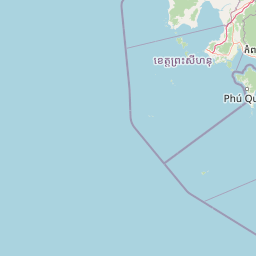
The landscape of Botum Sakor National Park is characterized by gently sloping lowland terrain that descends from the foothills of the Cardamom Mountains toward the Gulf of Thailand. The park's interior consists predominantly of evergreen woodlands and grasslands, creating a semi-open forest matrix that differs from the dense tropical rainforests found in adjacent mountain areas. As the terrain approaches the coast, the landscape transitions into extensive coastal floodplains marked by mangrove forests and freshwater swamp forests. These tidal wetlands form a critical interface between terrestrial and marine environments, with the park experiencing two high tides per day having a range of approximately 1.5 meters. The southwestern-facing peninsula configuration creates an extensive coastline that exposes the park's mangroves and coastal ecosystems to the Gulf of Thailand. This combination of lowland forests, grasslands, wetlands, and coastal environments makes Botum Sakor one of the most ecologically diverse protected areas in mainland Southeast Asia.
Botum Sakor National Park ecosystems, habitats, and plant life
The ecological character of Botum Sakor National Park reflects its unique position at the intersection of continental and coastal ecosystems in mainland Southeast Asia. The park's habitat mosaic includes evergreen forest, grassland, mangrove forest, and freshwater swamp forest, each supporting distinct ecological communities. The evergreen woodlands of the interior represent the southern extent of Indochinese lowland forest ecosystems, while the coastal mangrove forests rank among the most important in Cambodia for carbon sequestration, coastal protection, and marine fishery support. Despite the park's large size and ecological significance, formal biodiversity research has been limited, with most scientific surveys conducted only between 2005 and 2009. Preliminary findings have revealed exceptional biodiversity value across multiple taxonomic groups, with the park supporting species assemblages characteristic of both the Indochinese and Sundaic biogeographic regions.
Botum Sakor National Park wildlife and species highlights
Botum Sakor National Park supports remarkably rich wildlife, with over 44 mammal species documented within its boundaries, including eight species listed as endangered on the IUCN Red List. The pileated gibbon represents perhaps the park's most significant conservation asset, with estimates suggesting the population may constitute as much as 10% of the global population for this species. Other notable mammals include the Sunda pangolin, Bengal slow loris, Germain's langur, clouded leopard, fishing cat, Asian elephant, and dhole. The park also supports important reptile populations, including a small population of the critically endangered Siamese crocodile in its creeks, along with king cobras and Malayan pit vipers. Bird diversity is exceptional, with the endangered white-winged wood duck among the most significant findings, alongside green peafowl, lesser adjutant, great pied hornbill, and grey-headed fish eagle. The park's lepidopteran diversity is also notable, with 147 species recorded, including 49 species in the Nymphalidae family.
Botum Sakor National Park conservation status and protection priorities
The conservation significance of Botum Sakor National Park is substantial but increasingly threatened. The park represents one of the largest and most intact coastal protected areas in mainland Southeast Asia, providing critical habitat for numerous endangered species and supporting ecosystems of regional importance. The southern portion of the park is included in the Southern Cardamom REDD+ Project, recognizing its role in carbon storage and climate mitigation. However, the park faces severe and escalating threats. Approximately 70% of the park's area has been allocated through economic land concessions for agro-industrial development, including oil palm, rubber, acacia, and tapioca plantations, as well as large-scale tourism infrastructure projects. Satellite imagery has documented extensive clear-cutting within concession areas since 2008, with mangrove forests along the coast nearly eliminated by 2012. Illegal logging continues to degrade the interior forests, with rosewood and other valuable hardwood species targeted by organized criminal networks. Poaching remains rampant, with snare traps and opportunistic hunting for the traditional Chinese medicinal market threatening wildlife populations.
Botum Sakor National Park cultural meaning and human context
Botum Sakor National Park occupies the traditional lands of indigenous communities in Koh Kong Province, though the park's establishment and subsequent land concessions have complicated local land use patterns. The park derives its name from the local Khmer terminology, with the Khmer name ឧទ្យានជាតិបុទុមសាគ reflecting the cultural significance of the area. The coastal communities historically relied on the park's mangrove forests and marine resources, while the interior forests provided traditional livelihoods including non-timber forest product collection. However, the allocation of economic land concessions within the park has displaced traditional land uses and raised concerns about the rights of local communities. Several international conservation organizations work in the area, including Fauna and Flora International, Conservation International, and Wildlife Alliance, supporting biodiversity monitoring and community engagement initiatives.
Top sights and standout views in Botum Sakor National Park
The park's defining features include its status as Cambodia's largest national park, its critical populations of pileated gibbons representing a significant proportion of global numbers, and its diverse habitat mosaic spanning coastal mangroves to lowland evergreen forests. The presence of the critically endangered Siamese crocodile, one of the world's rarest reptiles, in the park's creek systems underscores its conservation importance. The endangered white-winged wood duck, among the rarest waterfowl in Asia, has been documented here, alongside the green peafowl and numerous hornbill species. The park's extensive coastline and mangrove systems support coastal fisheries and provide storm protection for surrounding communities. The Cardamom peninsula location places the park at a biogeographic crossroads, supporting species from both continental Southeast Asia and the Sundaic region.
Best time to visit Botum Sakor National Park
The optimal time to visit Botum Sakor National Park falls during the dry season from November to April, when rainfall is minimal and temperatures are slightly cooler. This period offers the most comfortable conditions for wildlife viewing and forest exploration, though the park's remote character and limited infrastructure mean that access remains challenging year-round. The wet season from May to October brings heavy rainfall that can flood low-lying areas and make interior trails difficult to navigate, but also rejuvenates the park's forests and creates dramatic scenery. Visitors should be aware that the park faces significant access restrictions due to ongoing development projects within concession areas, and travel to the park requires careful planning and local guidance to navigate the complex permitting and access arrangements.