Why Khao Phra Wihan National Park stands out
Khao Phra Wihan is best known for its dramatic cliff-top setting as the Thai gateway to Preah Vihear Temple, one of the most important archaeological sites of the Khmer Empire. The red sandstone cliff of Pha Mo I Daeng, which gives the park its Thai name meaning 'Temple Hill,' features ancient Khmer ruins and prehistoric rock art dating to the 10th century. The park occupies a geographically significant position on the Dângrêk Mountains at the southern edge of the Khorat Plateau, where the border between Thailand and Cambodia remains contested. This combination of archaeological significance, dramatic topography, and geopolitical importance makes the park distinctive among Thailand's protected areas.
Khao Phra Wihan National Park history and protected-area timeline
The history of Khao Phra Wihan is deeply intertwined with the rise and fall of the Khmer Empire and the subsequent geopolitical complexities between Thailand and Cambodia. The Khmer ruins found within the park date from the 10th to 11th centuries, representing a period when the Khmer Empire extended its architectural and religious influence across what is now northeastern Thailand. The Preah Vihear Temple, to which the park provides access, was constructed over several centuries by successive Khmer kings and represents one of the most impressive examples of Khmer religious architecture perched on a natural promontory. Following the decline of the Khmer Empire, the region's political boundaries shifted repeatedly through Thai and French colonial periods. In 1962, the International Court of Justice awarded the temple ruins to Cambodia, though Thailand retained control of the surrounding area including what is now Khao Phra Wihan National Park. The park was formally established in 1998, protecting not only the archaeological heritage but also the natural landscape surrounding the cliff. The prehistoric rock art at Pha Mo I Daeng was discovered in 1987 by a Border Protection Ranger Unit, with figures dated to approximately the 10th century, potentially older than the Preah Vihear Temple itself. The early 21st century saw renewed diplomatic tension over the border area, culminating in an International Court of Justice ruling in 2011 requiring both countries to withdraw military forces from the disputed zone.
Khao Phra Wihan National Park landscape and geographic character
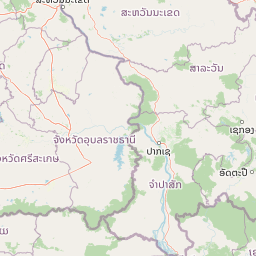
The landscape of Khao Phra Wihan is defined by the dramatic geological features of the Dângrêk Mountains, which form the natural boundary between Thailand's Korat Plateau and the Cambodian lowlands to the east. The park's centrepiece is the massive red sandstone cliff of Pha Mo I Daeng, a tor-like formation that rises abruptly more than 500 metres above the surrounding terrain. This cliff, whose name translates roughly to 'Red Gloomy Cliff' in English, displays distinctive rust-red coloration from the iron-rich sandstone that characterizes the formation. The cliff face and surrounding slopes support a mosaic of forest types adapted to the region's seasonal climate. The park occupies a transitional zone between the Korat Plateau's relatively flat uplands and the more broken terrain leading down to the Cambodian border. The distinct watershed ridge along the international boundary creates a clear geographic division, though the only road access to the archaeological sites actually leads from the Thai side. The landscape includes three-tiered waterfalls and the significant Khun Sri Cave, a cavern of considerable size associated with local legend.
Khao Phra Wihan National Park ecosystems, habitats, and plant life
The ecological character of Khao Phra Wihan reflects the park's position in northeastern Thailand's forest biome. The park supports three principal forest types: dry evergreen forest, mixed dipterocarp forest, and deciduous dipterocarp forest. These forest types represent the typical vegetation of the Dângrêk Mountains region, where seasonal monsoons create distinct wet and dry periods. The deciduous dipterocarp forests, also known as dipterocarp forests, are characterized by tree species that lose their leaves during the dry season, with prominent species including Pterocarpus macrocarpus, Shorea siamensis, and Xylia xylocarpa var. kerrii. The forest structure varies with elevation and aspect, creating diverse habitats within the park's 130-square-kilometre area. The park sits within a broader ecological corridor connecting protected areas on both sides of the Thailand-Cambodia border, allowing wildlife to move between the two countries.
Khao Phra Wihan National Park wildlife and species highlights
Khao Phra Wihan supports wildlife populations that freely move across the Thailand-Cambodia border, reflecting the park's position along an international boundary that does not correspond to ecological boundaries. The forest habitats are home to several mammal species including wild hog, various deer species, barking deer, rabbits, and squirrels. Primates are represented by gibbons, which can be observed in the forest canopy. Smaller carnivores include civets, contributing to the park's mammalian diversity. The park's location on the Dângrêk Mountains and its diverse forest types provide habitat for species adapted to both evergreen and seasonal deciduous environments. While the park is not primarily known as a wildlife destination, the cross-border movement of animals between protected areas in Thailand and Cambodia creates ecological connections that transcend the political boundary.
Khao Phra Wihan National Park conservation status and protection priorities
Khao Phra Wihan holds protected status as a Category II national park under the IUCN protected area classification system, reflecting its dual significance for both cultural heritage and natural resources. The park's establishment in 1998 formalized protection for an area containing significant archaeological sites dating to the Khmer Empire period, as well as the prehistoric rock art at Pha Mo Mo I Daeng discovered in 1987. The forest ecosystems within the park contribute to broader conservation objectives in northeastern Thailand, connecting with other protected areas in the region including the Phanom Dong Rak Wildlife Sanctuary. However, the park's location along a disputed international border presents unique conservation challenges. Areas containing landmines are clearly marked for visitor safety, reflecting the historical conflict over this border region. The management of the park falls under Thailand's Department of National Park, Wildlife and Plant Conservation, which must balance visitor access with protection of archaeological and natural resources.
Khao Phra Wihan National Park cultural meaning and human context
Khao Phra Wihan exists at the intersection of Thai and Khmer cultural heritage, a region where the boundaries between the two civilizations have shifted over centuries. The park takes its name from Pali-Sanskrit roots, reflecting the influence of Khmer religious and linguistic traditions on the area. The ruins within the park are part of the broader Khmer Empire's architectural legacy that extends across mainland Southeast Asia. Local legend associates the site with a figure known as Nang Nom Yai or Nieng Non dor in Khmer, said to have rested at this location while traveling to visit a king. The park also contains the Twin Stupas, two red sandstone structures of approximately 4.2 metres in height with lotus-bud-shaped apices, representing Buddhist architectural elements that may have been added to the site in later periods. The Tham Khun Sri cave within the park is associated with local tradition involving a nobleman named Khun Sri who controlled rock cutting activities during the construction of Preah Vihear Sanctuary. The ongoing border dispute between Thailand and Cambodia over the Preah Vihear Temple area adds a layer of contemporary geopolitical complexity to the site's cultural significance.
Top sights and standout views in Khao Phra Wihan National Park
The prehistoric rock art at Pha Mo I Daeng represents perhaps the park's most distinctive archaeological feature, with bas-relief images and engravings discovered in 1987 that may predate the famous Preah Vihear Temple itself. The dramatic 500-metre red cliff of Pha Mo Mo I Daeng offers commanding views over the Cambodian plain and serves as the park's most recognizable landmark. The Don Tuan Khmer Ruins near Ban Phume Sarol date from the 10th to 11th centuries and provide tangible evidence of the park's connection to the Khmer Empire. The Twin Stupas, with their distinctive red sandstone construction and lotus-bud shapes, offer another architectural highlight. The three-tiered waterfall above Khun Sri Cave provides a natural complement to the archaeological sites, while the cave itself represents a significant geological and cultural feature.
Best time to visit Khao Phra Wihan National Park
The park can be visited throughout the year, though the most comfortable conditions occur during the cooler dry season from November to February. The Thai summer from March to May brings higher temperatures that can make hiking and exploration more challenging, particularly given the exposed cliff-top positions within the park. The monsoon season from June to October brings rainfall that can affect access to some areas, though the waterfall flow is typically at its best during this period. Visitors should be aware that border conditions between Thailand and Cambodia can fluctuate, affecting access to the Preah Vihear Temple ruins. When relations between the two countries are normal, the temple ruins are accessible from the Thai side upon payment of entrance fees. For those interested in the rock art at Pha Mo I Daeng, the cooler months offer more comfortable conditions for the stairway descent to view the images.