Mori Atlas logo
National parkO'Yadav National Park

Discover the mapped boundaries and regional geographic context of this national park.

O'Yadav National Park: Protected Forest Landscape in Ratanakiri Province, Cambodia

O'Yadav National Park represents a significant protected forest area within Cambodia's Ratanakiri province, covering 105,019 hectares and established to conserve vital northeastern ecosystems. As part of Cambodia's biodiversity corridor network, its establishment in 2016 underscores regional conservation efforts and ecological connectivity across the Indochinese region. This national park offers a unique blend of natural forest landscapes and the archaeological Yak Nang temple site, inviting detailed exploration of its geography and protected status.

protected areanational parkforest conservationCambodiaRatanakiri provincebiodiversity corridor

O'Yadav National Park

National park

Park overview

Structured park overview, official facts, and landscape profile for O'Yadav National Park

O'Yadav National Park park facts, protected area profile, and essential visitor context
Review the core facts for O'Yadav National Park, including designation, size, terrain, visitor scale, habitats, and operating context in one park-focused overview.

About O'Yadav National Park

O'Yadav National Park represents an important addition to Cambodia's protected area network, established in 2016 to safeguard the forest ecosystems of Ratanakiri province in the country's northeast. The province lies near the tri-border area of Cambodia, Laos, and Vietnam, a region recognized for its ecological significance and biodiversity. The park's creation responded to the need for formal conservation of forest areas that had previously lacked formal protected status. The 2023 boundary revision, accomplished through Sub-decree No. 177, expanded the park's territory by incorporating additional land from the northeastern biodiversity conservation corridor system, demonstrating Cambodia's adaptive approach to conservation planning. The presence of the Yak Nang temple site within the park adds archaeological and cultural value to its conservation mandate, representing the intersection of natural and cultural heritage protection.

Quick facts and research context for O'Yadav National Park

O'Yadav National Park is situated in Ratanakiri province in northeastern Cambodia, approximately 13°26′58″N 107°28′03″E. The park covers 105,019 hectares (1,050.19 km²) of protected forest land. It was originally established on 9 May 2016 through Sub-decree No. 82, covering 101,348 hectares at that time. In July 2023, boundary revisions expanded the park to its current size by incorporating an additional 3,671 hectares from the northeastern biodiversity conservation corridor system. The park is governed by Cambodia's Ministry of Environment.

Park context

Deeper park guide and search-rich context for O'Yadav National Park

O'Yadav National Park history, landscape, wildlife, and travel context
Explore O'Yadav National Park through its history, landscape character, ecosystems, wildlife, conservation priorities, cultural context, and seasonal travel timing in a structured park guide built for atlas discovery and search intent.

Why O'Yadav National Park stands out

O'Yadav National Park is best known for its role in protecting northeastern Cambodia's forest ecosystems and as part of the country's biodiversity corridor network. The park contains the archaeological site of Yak Nang, a temple discovered in 2006 within the park boundaries. The protected area serves as a critical conservation zone in the Indochinese region, helping to preserve forest habitats in a province that represents one of Cambodia's most ecologically diverse areas.

O'Yadav National Park history and protected-area timeline

O'Yadav National Park was established on 9 May 2016 through Sub-decree No. 82, which designated 101,348 hectares in Ratanakiri province as a national park. This establishment represented Cambodia's ongoing effort to expand its protected area network and conserve remaining forest ecosystems in the northeastern region of the country. In 2017, Cambodia took a significant step in conservation planning by establishing a national system of biodiversity conservation corridors under Sub-decree No. 07, creating a framework for connecting protected areas and maintaining ecological corridors. On 17 July 2023, Sub-decree No. 177 revised the boundaries of O'Yadav National Park, expanding the protected area from 101,348 hectares to 105,019 hectares by incorporating 3,671 hectares from the northeastern biodiversity conservation corridor system. This expansion reflects the park's integration into Cambodia's broader ecological connectivity strategy.

O'Yadav National Park landscape and geographic character

O'Yadav National Park is located in the forested landscapes of northeastern Cambodia within Ratanakiri province. The terrain in this region generally consists of rolling hills and forested areas characteristic of the Annamite Range foothills that extend into Cambodia from Vietnam and Laos. The park's forest environments represent some of the remaining intact forest cover in the province, which has experienced logging and land conversion pressures in recent decades. The landscape provides important watershed functions and habitat for forest-dwelling species.

O'Yadav National Park ecosystems, habitats, and plant life

The natural environment of O'Yadav National Park consists primarily of forested ecosystems in northeastern Cambodia, a region recognized as part of the Indo-Burma biodiversity hotspot. Ratanakiri province contains diverse habitats including lowland evergreen and semi-evergreen forests, and the protected area status helps preserve these forest types. The park's integration into Cambodia's biodiversity corridor system connects it with other protected areas, supporting broader ecological processes and species movement across the landscape.

O'Yadav National Park wildlife and species highlights

While the Wikipedia source does not provide detailed wildlife information specific to O'Yadav National Park, the broader Ratanakiri province is known for its biodiversity including various mammal, bird, and reptile species typical of Indochinese forests. The forest habitats within the protected area likely support populations of species adapted to forest environments, consistent with the broader ecological character of northeastern Cambodia's conservation areas.

O'Yadav National Park conservation status and protection priorities

O'Yadav National Park plays a significant role in Cambodia's conservation framework by protecting forest ecosystems in the country's northeast. The park's boundary expansion in 2023, which incorporated additional land from the biodiversity conservation corridor system, demonstrates its integration into a larger national strategy for maintaining ecological connectivity. The corridor system established in 2017 under Sub-decree No. 07 represents Cambodia's commitment to connecting protected areas and maintaining wildlife movement pathways. The park contributes to protecting forest cover in a province that has experienced significant environmental pressures from logging, agricultural expansion, and infrastructure development.

O'Yadav National Park cultural meaning and human context

O'Yadav National Park contains the Yak Nang temple site, an archaeological feature discovered within the park boundaries in 2006. This temple represents a cultural heritage element within the protected area, adding historical and archaeological significance to the park's value beyond its ecological function. Ratanakiri province is home to various indigenous communities whose traditional lands and practices are connected to the forested landscapes now included in the protected area.

Top sights and standout views in O'Yadav National Park

O'Yadav National Park serves as a protected forest area in northeastern Cambodia's Ratanakiri province, established in 2016 and expanded in 2023 to 105,019 hectares. The park contains the Yak Nang temple archaeological site discovered in 2006. It is part of Cambodia's national biodiversity corridor system, representing the country's efforts to conserve northeastern forest ecosystems and maintain ecological connectivity across the Indochinese region.

Best time to visit O'Yadav National Park

O'Yadav National Park's location in northeastern Cambodia means visits are influenced by the region's tropical climate. The dry season from November to April typically offers more accessible conditions for exploration, while the wet season from May to October brings heavier rainfall that may affect access within the park. Visitors interested in forest landscapes and the archaeological site should consider seasonal conditions when planning trips.

Park location guide

Geography guide, regional context, and park location map for O'Yadav National Park

O'Yadav National Park park geography, regions, and map view in Cambodia
Understand where O'Yadav National Park sits in Cambodia through a broader geographic reading of the surrounding landscape, nearby location context, and its mapped position within the national park landscape.

How O'Yadav National Park fits into Cambodia

Cambodia is a unitary parliamentary constitutional elective monarchy in Southeast Asia. The country spans 181,035 km² and is characterized by a low-lying plain centered around the Mekong River and Tonlé Sap, Southeast Asia's largest lake. Its capital and largest city is Phnom Penh. The nation has a tropical climate and is home to a predominantly Khmer ethnic population. Cambodia has a history dating back to the Khmer Empire established in 802 AD.

Wider geography shaping O'Yadav National Park in Cambodia

Cambodia occupies 181,035 km² in Mainland Southeast Asia. It is bordered by Thailand to the northwest, Laos to the north, and Vietnam to the east, with a coastline along the Gulf of Thailand in the southwest. The terrain is dominated by a low-lying central plain centered around the confluence of the Mekong River and Tonlé Sap, Southeast Asia's largest lake. The country has a tropical climate.

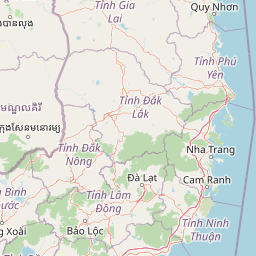
Map view of O'Yadav National Park

Use this park location map to pinpoint O'Yadav National Park in Cambodia, understand its exact geographic position, and read its mapped placement within the surrounding landscape more clearly.

Pigeon | © OpenStreetMap contributors

Location context for O'Yadav National Park

Ratanakiri province
Park atlas

Explore the geographic context of parks and protected landscapes across Ratanakiri province and beyond.

Browse National Parks and Protected Areas Surrounding O'Yadav National Park, Cambodia
Explore additional national parks and protected areas geographically adjacent to O'Yadav National Park, spanning northeastern Cambodia's forest ecosystems. Compare park sizes, conservation priorities, and regional ecological connectivity across mapped protected landscapes in Southeast Asia.
National parkĐắk Lắk Province

Yok Đôn National Park: Vietnam's Expansive Lowland Forest Protected Landscape and Regional Geography

Mapped boundaries within Đắk Lắk Province, part of a transboundary conservation area.

Yok Đôn National Park is Vietnam's largest lowland forest national park, covering approximately 1,155 square kilometers in Đắk Lắk Province. This protected area is characterized by its rare khộp forest ecosystem and serves as a crucial refuge for large mammals. Situated near the Cambodian border, it forms a key component of one of Southeast Asia's largest continuous protected area networks, offering significant insights into regional protected landscape geography and conservation connectivity.

Area
1,155.45 km²
Established
1986
IUCN
II
National parkRatanakiri province

Veun Sai, Siem Pang National Park: Northeastern Cambodia's Protected Lowland Forest Landscape

Mapped Boundaries and Primate Conservation Habitat

Veun Sai, Siem Pang National Park in Cambodia's Ratanakiri province is a vital protected area featuring expansive lowland evergreen and semi-evergreen forests. Its designation as a national park underscores its role in safeguarding critical habitat for diverse primate populations, notably the endangered Northern buffed-cheeked gibbon. The park's geography, characterized by gentle terrain and extensive forest cover, makes it a significant component of the region's biodiversity corridor and a key site for understanding Cambodia's natural landscapes.

Area
574.69 km²
Established
2016
IUCN
II
National parkRatanakiri province

Virachey National Park: Cambodia's Vast Highland Protected Landscape in Ratanakiri

Explore its remote montane forest ecosystems and diverse terrain.

Virachey National Park, Cambodia's largest national park, offers a profound glimpse into one of mainland Southeast Asia's last great wildernesses. Spanning remote highland terrain in Ratanakiri province, it features dramatic elevation changes from 400 to 1,500 meters, supporting diverse ecosystems including dense lowland forests, unique montane cloud forests, and upland savannahs. Its recognition as an ASEAN Heritage Park underscores its critical regional conservation value, making it a significant destination for understanding protected landscapes and their geographic context.

Area
3,380.57 km²
Established
1993
IUCN
II
National parkVietnam

Cát Tiên National Park: Vietnam's Premier Protected Lowland Forest and Wetland Atlas

Explore the mapped boundaries and diverse ecosystems of this vital national park.

Cát Tiên National Park represents a significant ecological reserve in southern Vietnam, covering a vast expanse of lowland tropical forest and critical wetland habitats. The park's landscape is shaped by seasonal flooding from the Dong Nai River, creating unique ecosystems like the renowned Bàu Sấu (Crocodile Lake) and supporting diverse flora and fauna. Understanding Cát Tiên National Park's geography, its protected landscape character, and its position within Vietnam offers valuable insights for atlas-based exploration of Southeast Asia's natural heritage.

Area
720 km²
Established
1992
IUCN
II
National parkVietnam

Bach Ma National Park: Protected Area and Mountain Landscape in Vietnam

Explore the biodiversity and unique geography of this vital national park.

Bach Ma National Park in Vietnam is a protected area defined by its steep, granite-rich mountainous terrain within the Annamite Range. The park’s location at a significant biogeographical crossroads contributes to its exceptional biodiversity, particularly its documented birdlife and varied forest ecosystems. Understanding Bach Ma National Park through its mapped landscape provides critical insight into Vietnam's natural heritage and the ecological dynamics shaped by its unique regional geography.

Area
220 km²
Established
1986
IUCN
II
National parkSisaket Province

Khao Phra Wihan National Park: Protected Landscape and Archaeological Atlas Gateway

Explore dramatic red sandstone cliffs and historic Khmer ruins.

Khao Phra Wihan National Park in Sisaket Province, Thailand, is a protected landscape distinguished by its dramatic Pha Mo I Daeng red sandstone cliff and its role as a gateway to significant Khmer archaeological sites. This national park offers a deep dive into the region's unique geography, featuring rugged terrain, distinctive forest ecosystems, and prehistoric rock art. As a key entry point for understanding the Preah Vihear Temple's context, the park provides rich material for atlas-based exploration of border landscapes and historical terrain.

Area
130 km²
Established
1998
IUCN
II
National parkSiem Reap Province

Phnom Kulen National Park: Protected Highland Landscape and Khmer Empire Origins in Siem Reap

Explore ancient Khmer sites and natural terrain within this Cambodian national park.

Phnom Kulen National Park offers a unique glimpse into Cambodia's geographic and historical richness. As a protected national park in Siem Reap Province, it preserves a distinct highland landscape characterized by sandstone formations, evergreen forests, and sacred sites. Discover the mapped boundaries of this important conservation area, trace the historical significance of the Khmer Empire's origins, and explore the natural terrain that defines this culturally significant region.

Area
373.76 km²
Established
1993
IUCN
II
National parkKampong Speu Province

Kirirom National Park: Cambodia's Pioneering Protected Mountain Landscape

Explore its mapped terrain and regional geography in Kampong Speu Province

Kirirom National Park stands as Cambodia's foundational national park, safeguarding a significant portion of the eastern Cardamom Mountains. This protected landscape is defined by its elevated terrain and mountain forest ecosystems, offering a distinct geographic character within Kampong Speu Province. Its atlas-style exploration reveals the mapped boundaries and regional context of this pioneering conservation area, providing insight into Cambodia's commitment to preserving its natural heritage.

Area
283.75 km²
Established
1993
IUCN
II

Common questions about visiting, size, designation, and location context for O'Yadav National Park

O'Yadav National Park FAQs for park facts, access, geography, and protected area context
Find quick answers about O'Yadav National Park, including protected-area facts, park geography, trail and visitor context, and how the park fits into its surrounding country and regional landscape.
MoriAtlas Explorer

Continue Your Protected Areas Search Across the Global Atlas

Deepen your exploration by continuing the structured search for national parks and protected areas worldwide. Utilize the comprehensive filtering capabilities to compare different conservation landscapes and refine your understanding of global park geography. Discover more about the distribution and characteristics of protected natural areas.

Global natural geography