Why Yok Đôn National Park stands out
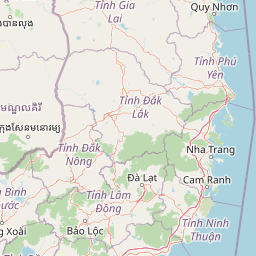
Yok Đôn National Park is best known for its extensive khộp lowland forest ecosystem, which is increasingly rare across Southeast Asia. The park serves as a critical refuge for several globally endangered megafauna species, particularly the Indochinese tiger and Indochinese leopard, though populations have declined significantly in recent decades. It is also notable for supporting viable populations of Indian elephants and gaur, making it one of Vietnam's most important areas for large mammal conservation. The park's status as Vietnam's largest lowland forest protected area, combined with its transboundary connection to Cambodia's Mondulkiri Protected Forest, gives it regional significance as part of possibly the largest continuous protected area complex in mainland Southeast Asia.
Yok Đôn National Park history and protected-area timeline
Yok Đôn National Park traces its formal establishment to 1986 when initial protection measures were implemented to preserve the forest ecosystem. The national park was officially designated in 1991, with the initial protected zone covering 582 square kilometers designated specifically for the preservation of khộp lowland forest. Over time, the protected area was expanded to its current extent of 1,155.45 square kilometers, not including an additional buffer zone of 1,138.9 square kilometers that surrounds the core protection zone. The establishment of the park reflected growing recognition in Vietnam of the need to protect remaining lowland forest habitats and the biodiversity they support, particularly in the Central Highlands region which had experienced significant deforestation and land conversion during the latter decades of the twentieth century. The park's creation also acknowledged the ecological connection to adjacent protected areas in Cambodia, eventually forming part of a broader transboundary conservation initiative that seeks to protect forest ecosystems across international borders.
Yok Đôn National Park landscape and geographic character
The landscape of Yok Đôn National Park is dominated by rolling hills and undulating terrain typical of the Central Highlands region, with elevations varying across the park's extensive footprint. The terrain is intersected by numerous streams and small rivers that flow through forested valleys, creating a dendritic drainage pattern across the park. The forest canopy is characterized by a mix of deciduous and semi-evergreen tree species that create a layered canopy structure, with emergent trees reaching above the general canopy level. The forest experiences distinct seasonal changes, with many tree species shedding leaves during the dry winter months before regenerating foliage with the arrival of the wet season. Areas closer to watercourses and in valley bottoms support evergreen forest patches that retain their foliage year-round, providing contrast to the seasonal deciduous forests on the slopes and ridges. The combination of topographic variation, hydrological features, and forest type diversity creates a visually varied landscape that supports the ecological complexity for which the park is valued.
Yok Đôn National Park ecosystems, habitats, and plant life
The ecological character of Yok Đôn National Park is defined by its extensive khộp lowland forest ecosystem, a forest type that has become increasingly rare throughout its historic range in mainland Southeast Asia. The vegetation is dominated by a mosaic of deciduous forest and semi-evergreen mixed deciduous forest, with smaller but significant areas of evergreen forest concentrated on hillsides and along watercourses. This forest mosaic supports exceptional plant diversity, with 474 vascular plant species documented within the park boundaries. The forest structure provides diverse microhabitats including canopy gaps, fallen logs, riparian zones, and forest edges that each support different plant and animal communities. The park's location within the Central Highlands places it at an interface between different biogeographic zones, contributing to its species richness. The transboundary connection to Cambodia's Mondulkiri Protected Forest extends the ecological footprint of the area significantly, creating a large forested landscape that supports ecological processes requiring extensive habitat areas.
Yok Đôn National Park wildlife and species highlights
Yok Đôn National Park supports significant populations of large mammals that depend on extensive forest habitats for their survival. The park is recognized as an important site for the conservation of the Indochinese tiger, a critically endangered subspecies whose populations have suffered major declines within the park in recent years. Similarly, Indochinese leopards persist in the forest, though their numbers have also declined substantially. The park supports populations of Indian elephants that use the forested areas for foraging and movement, and the gaur, the largest wild cattle species in the world, is also present within the park's boundaries. These four species represent the park's most significant conservation价值, each requiring large territories and intact forest habitat to maintain viable populations. The forest also supports a diverse community of smaller mammals, birds, reptiles, and invertebrates that contribute to the park's overall biodiversity, though detailed species inventories for these groups remain less comprehensive than for the megafauna. The decline of key species populations highlights the ongoing pressures facing the park's wildlife despite its protected status.
Yok Đôn National Park conservation status and protection priorities
Yok Đôn National Park holds significant conservation importance as Vietnam's largest lowland forest protected area and as a component of a transboundary conservation complex spanning into Cambodia. The park protects critical habitat for several globally endangered species, particularly the Indochinese tiger and Indochinese leopard, both of which are listed as endangered on the IUCN Red List. The Indian elephant and gaur, while not currently classified as globally threatened, face significant population pressures across their ranges and depend on the large connected habitat that Yok Đôn and the adjacent Mondulkiri Protected Forest provide. The protection of khộp lowland forest represents a conservation priority because this ecosystem type has been extensively cleared for agriculture, logging, and other development across its historic range. The transboundary nature of the protected area network offers opportunities for coordinated conservation management that can address threats that do not respect international borders, though such coordination presents practical challenges. The documented declines in key species populations indicate that despite protection status, the park faces ongoing conservation challenges that require sustained management attention and resource allocation.
Yok Đôn National Park cultural meaning and human context
Yok Đôn National Park is located within Đắk Lắk Province, a region that is home to several indigenous peoples including the Ê Đê, who have historically inhabited the Central Highlands of Vietnam. The landscape around the park has been shaped by generations of traditional land use practices, including rotational agriculture and forest management, though the establishment of the protected area has altered the relationship between local communities and the forest. The town of Buôn Đôn, from which the district takes its name, serves as a local center for the region and reflects the cultural heritage of the indigenous communities. The park's establishment required consideration of how to balance conservation objectives with the historical rights and livelihoods of local communities who had traditionally used the forest resources. The buffer zone surrounding the core protected area serves as a transition zone where some traditional uses may continue under regulated conditions.
Top sights and standout views in Yok Đôn National Park
Yok Đôn National Park stands as Vietnam's premier lowland forest protected area, offering extensive tracts of khộp forest in a region where such ecosystems have been largely eliminated. The park provides critical habitat for Indochinese tigers, leopards, elephants, and gaur, though all four species have experienced significant population declines. The transboundary connection to Mondulkiri Protected Forest in Cambodia creates one of Southeast Asia's largest continuous protected area complexes, supporting regional biodiversity conservation at a meaningful scale. The forest's seasonal character, with deciduous trees shedding leaves during the dry season before leafing out again with the rains, creates a dynamic visual landscape that distinguishes this park from evergreen forest parks in other regions. The 474 documented vascular plant species reflect the ecological richness of this forest ecosystem.
Best time to visit Yok Đôn National Park
The best time to visit Yok Đôn National Park coincides with the dry season, which typically runs from November through April, when lower humidity and reduced rainfall make wildlife viewing more accessible and trail conditions more favorable. The wet season from May through October brings higher precipitation that can limit some activities and make certain areas difficult to access, though the forest becomes more lush and waterfalls may be more impressive during this period. The dry season also corresponds with clearer visibility and more comfortable temperatures for visitors, though this is also when the forest's deciduous trees have shed their leaves, changing the visual character of the landscape. Wildlife viewing may be more productive during the dry season as animals concentrate around remaining water sources, though the forest's density always presents challenges for observation. Visitors interested in seeing the park's full seasonal range might consider timing their visit to experience both the dry and wet season characteristics of this lowland forest ecosystem.