

Mori Atlas logo
National parkCát Tiên National Park

Discover the expansive lowland tropical forests and vital wetlands of Vietnam's Cát Tiên National Park.

Cát Tiên National Park: Vietnam's Key Protected Landscape and National Park Atlas Entry

Cát Tiên National Park stands as a significant protected area within Vietnam, encompassing approximately 720 square kilometers of vital lowland tropical forest, bamboo woodlands, and extensive seasonal wetlands. Situated in southern Vietnam, its geography is defined by the Dong Nai River system, creating unique flooded grasslands and marshes, most notably the Bàu Sấu (Crocodile Lake). As a critical component of the Đồng Nai Biosphere Reserve, Cát Tiên offers a profound insight into regional protected-area geography and mapped landscape context for those exploring Southeast Asia's natural heritage.

Tropical forestWetlandsPrimatesBirdwatchingRamsar siteBiosphere reserve

Cát Tiên National Park

National park

Park overview

Structured park overview, official facts, and landscape profile for Cát Tiên National Park

Cát Tiên National Park park facts, protected area profile, and essential visitor context
Review the core facts for Cát Tiên National Park, including designation, size, terrain, visitor scale, habitats, and operating context in one park-focused overview.

About Cát Tiên National Park

Cát Tiên National Park stands as a testament to Vietnam's commitment to preserving its natural heritage in the face of significant environmental challenges. The park protects one of the country's most ecologically significant lowland tropical forest ecosystems, providing sanctuary for an extraordinary diversity of flora and fauna despite decades of historical disturbance from wartime defoliation and post-war logging activities. The landscape encompasses a remarkable range of habitats, from semi-evergreen primary forest in the most protected valleys to extensive bamboo thickets that have colonized areas of former forest degraded by human activity and chemical herbicides during the Vietnam War. The Bàu Sấu wetland complex, comprising Crocodile Lake and adjacent seasonal floodplains covering over 13,000 hectares, represents a critical habitat for waterbirds and aquatic species, supporting the park's Ramsar designation as an internationally significant wetland. Beyond its ecological value, the park contains archaeological sites revealing a sophisticated Hindu civilization that once thrived along the Dong Nai River, with gold, bronze, ceramic, and stone artifacts displayed in Da Lat museum. The park's management operates under the Ministry of Agriculture and Rural Development, with forest rangers (Kiểm lâm) tasked with combating poaching, illegal logging, and fire management across the challenging terrain.

Quick facts and research context for Cát Tiên National Park

Cát Tiên National Park occupies roughly 720 square kilometers in southern Vietnam, making it one of the nation's largest lowland forest reserves. The protected area straddles three provinces: Đồng Nai, Bình Phước, and Lâm Đồng, situated about 150 kilometers north of Ho Chi Minh City. The park features a complex mosaic of habitats including primary forest covering only about 2% of the area, extensive bamboo forests representing approximately 40% of the landscape, and seasonal grasslands and wetlands making up roughly 10%. The park was established in 1992 and received its current unified status in 1998 when the Nam Cat Tien, Tay Cat Tien, and Cat Loc sectors were combined. It holds Ramsar Wetland status for the Bàu Sấu ecosystem and forms part of the Đồng Nai Biosphere Reserve.

Park context

Deeper park guide and search-rich context for Cát Tiên National Park

Cát Tiên National Park history, landscape, wildlife, and travel context
Explore Cát Tiên National Park through its history, landscape character, ecosystems, wildlife, conservation priorities, cultural context, and seasonal travel timing in a structured park guide built for atlas discovery and search intent.

Why Cát Tiên National Park stands out

Cát Tiên National Park is best known for its population of endangered primates, particularly the endemic golden-cheeked gibbon, and its historic role as a refuge for the Vietnamese Javan rhinoceros, which was tragically poached to extinction in 2010. The park's Bàu Sấu (Crocodile Lake) wetland system, designated as a Ramsar site in 2005, represents one of the most significant seasonally flooded ecosystems in Vietnam. The archaeological discoveries near the park, revealing a previously unknown Shaiva Hindu civilization from the 4th to 9th centuries AD, add a remarkable cultural dimension to the reserve's significance.
Inside Thien Duong Cave
Inside Thien Duong Cave in Quang Binh, Vietnam.

Cát Tiên National Park history and protected-area timeline

The territory now protected as Cát Tiên National Park has a complex conservation history reflecting Vietnam's broader political transformations. Initially gazetted as two separate protected sectors in 1978, Nam Cat Tien and Tay Cat Tien received formal protection during a period when the nation was still emerging from conflict. The discovery of a breeding population of the critically endangered Vietnamese Javan rhinoceros in the early 1990s catalyzed international attention and led to the creation of the Cat Loc sector as a dedicated rhinoceros reserve in 1992. This remarkable find placed Cát Tiên at the center of global conservation efforts for one of the rarest large mammals on Earth. The three sectors were formally consolidated into a single national park in 1998, creating the unified protected area that exists today. The park's surrounding landscapes were historically inhabited by Ma and Stieng peoples, with many residents relocated to Talai village following the establishment of formal protection. Vietnam's modern integration into global conservation frameworks brought additional designations, including membership in the Đồng Nai Biosphere Reserve in 2011 and Ramsar Wetland status in 2005 for the critical Bàu Sấu wetland system.

Cát Tiên National Park landscape and geographic character

The physical geography of Cát Tiên National Park is characterized by undulating lowland terrain typical of southern Vietnam's interior provinces, with elevations ranging from near sea level to approximately 300 meters above sea level. The landscape is fundamentally shaped by the Dong Nai River system, which flows through the park and provides the hydrological engine for the extensive seasonal flooding that creates the park's distinctive wetland character. During the rainy season, floodwaters from the Dong Nai backflow into northern Nam Cat Tien, replenishing the chain of lakes known collectively as Bàu Sấu, including Bau Sau (Crocodile Lake), Bau Chim, Bau Co, and surrounding grasslands covering approximately 2,500 hectares. The park's western portion contains more rolling terrain while the eastern half features extensive flat areas with numerous swamps and wet meadows, typically ranging from 3 to 10 hectares, often surrounded by swamp forest. The distinctive bamboo forests, covering roughly 40% of the park's area, represent a successional landscape where native hardwood forest has been replaced by bamboo following disturbance from logging, fire, and wartime herbicide exposure.
Water buffalos in Cat Tien National Park
Feral water buffalos, Bubalus bubalis, in Cat Tien National Park, Vietnam.

Cát Tiên National Park ecosystems, habitats, and plant life

The ecological character of Cát Tiên is defined by seasonal tropical forest ecosystems that have evolved under pronounced wet and dry seasonal cycles. Primary evergreen forest, now limited to perhaps 2% of the Nam Cat Tien area, supports the highest biodiversity with emergent trees from the Dipterocarpaceae and Fabaceae families dominating the canopy. Species such as Dipterocarpus alatus and Hopea odorata represent commercially important timber species that have been targeted by historical logging operations. The understory contains a remarkable diversity of palms including the endemic Licuala cattienensis, as well as fruit trees providing critical food resources for wildlife, particularly the numerous fig species and wild bananas. The extensive bamboo forest zone represents a degraded successional stage where natural forest has been displaced, with species such as Bambusa balcooa and Gigantochloa dominating. The riparian zones along streams and in lowland areas support freshwater swamp forest with distinctive species including Ficus benjaminas and Livistona palms. The seasonally flooded grasslands and wetlands support different ecological communities adapted to periodic inundation, with emergent vegetation providing important habitat for waterbirds and aquatic fauna.
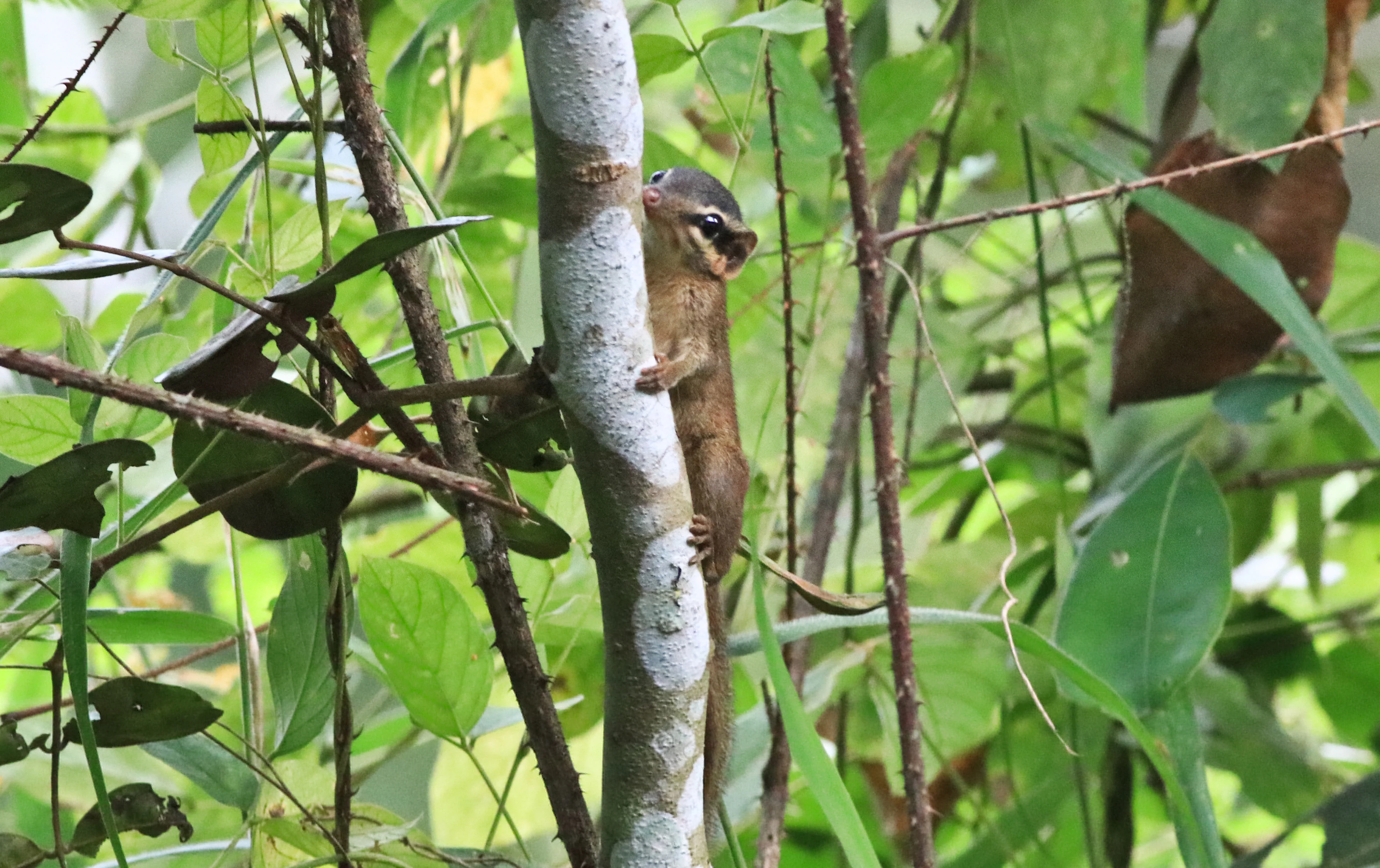
Northern smooth-tailed treeshrew
Northern smooth-tailed treeshrew from Cát Tiên National Park.

Cát Tiên National Park wildlife and species highlights

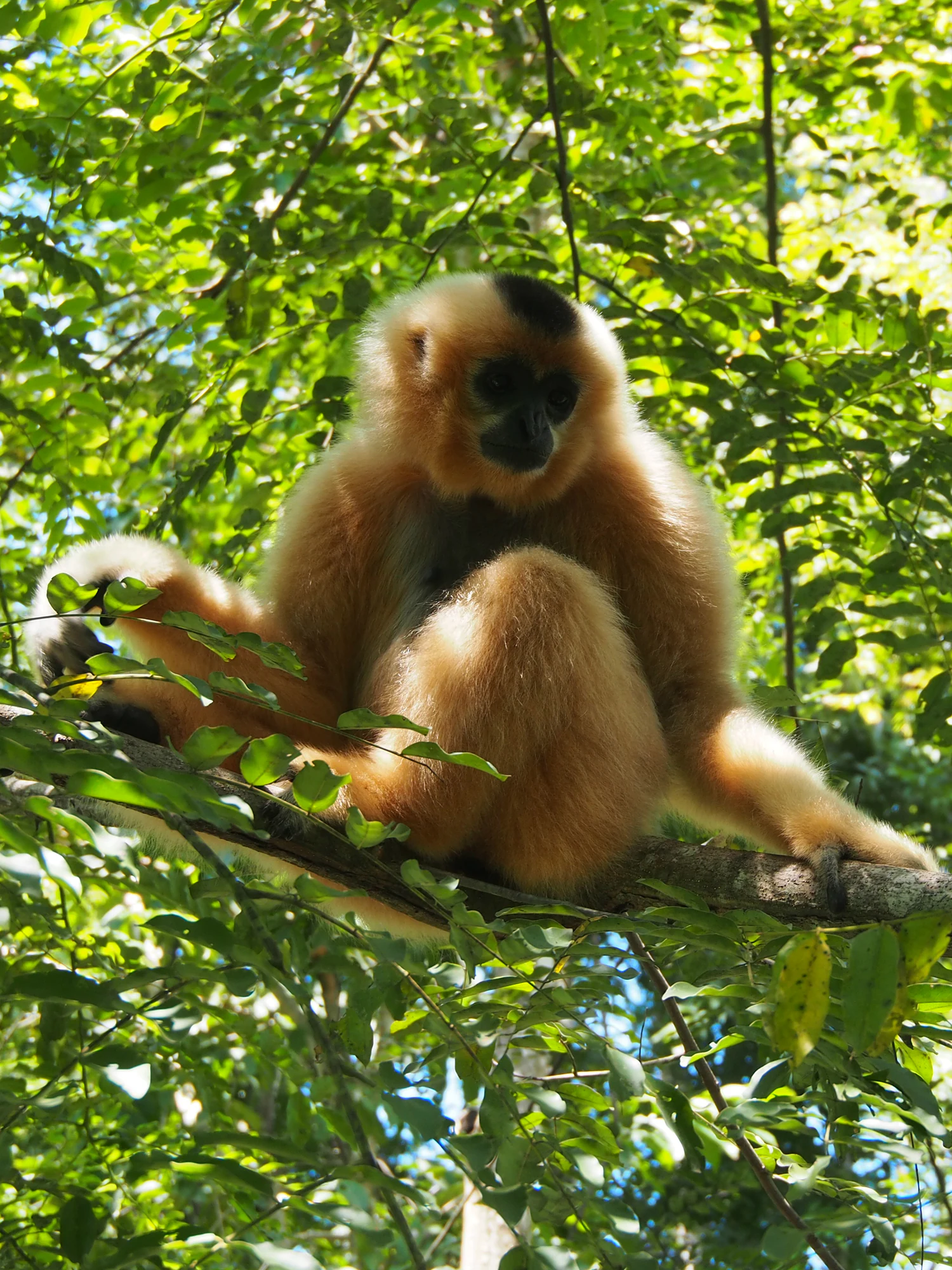
Cát Tiên supports an exceptional mammalian fauna that includes several globally threatened species and a remarkable diversity of primates. The golden-cheeked gibbon (Nomascus gabriellae), endemic to this region of Vietnam, remains one of the park's most iconic species, though populations have declined significantly from historical levels. Other primates include the black-shanked douc langur, Indochinese lutung, and the nocturnal pygmy slow loris. Large mammals include the endangered Asian elephant (Elephas maximus), the vulnerable gaur (Bos gaurus), and the critically endangered Sunda pangolin. The park historically supported one of only two remaining populations of the Javan rhinoceros in the world until the last individual was poached in 2010, marking a tragic extinction event. The bird fauna is exceptionally diverse with over 300 species recorded, including the green peafowl, various pheasants such as Germain's peacock-pheasant and Siamese fireback, and hornbills including the great hornbill, oriental pied hornbill, and wreathed hornbill. The park's reptile population includes the Siamese crocodile and numerous snake species, while the amphibian fauna includes the Vietnamese bug-eyed frog (Theloderma vietnamense), one of several endemic species bearing the catienensis name.
Pyrops coelestinus
Pyrops coelestinus from Cat Tien National Park, by Roy Bateman

Cát Tiên National Park conservation status and protection priorities

Cát Tiên National Park represents one of Vietnam's most important conservation areas, protecting approximately 30% of the nation's species within its boundaries while supporting 40 species listed on the IUCN Red List. The park's conservation significance is amplified by its designation as part of the Đồng Nai Biosphere Reserve, recognizing its role in maintaining ecological processes while supporting sustainable human use of the surrounding landscape. The Ramsar designation of the Bàu Sấu wetland system in 2005 provides international recognition of the wetland values and obligations for sustainable management. Conservation challenges remain substantial, with encroachment from local communities, illegal logging, and poaching continuing to pressure wildlife populations. The park's relatively small size relative to the home ranges of large species such as elephants creates management complications, leading to human-wildlife conflict as animals move beyond park boundaries. The Dao Tien Endangered Primate Species Centre, established in 2008 through collaboration with international conservation organizations, focuses on rescue, rehabilitation, and release of the park's four endangered primates, contributing to conservation outcomes while educating visitors about primate conservation needs.

Cát Tiên National Park cultural meaning and human context

The landscapes of Cát Tiên have been inhabited by human communities for centuries, with archaeological evidence revealing a sophisticated civilization predating the modern era. The Cát Tiên archaeological site, located just outside the park on the northern bank of the Dong Nai River, contains the remains of a Shaiva Hindu civilization that likely inhabited the area between the 4th and 9th centuries AD. Excavations conducted between 1994 and 2003 revealed temples and a substantial collection of artifacts including gold, bronze, ceramic, colored stone, and glass items, now displayed in the Da Lat museum. The surrounding area was historically occupied by Ma and Stieng peoples, particularly in the western portions of what is now Đồng Nai Province. Following the establishment of the protected area, many of these communities were resettled in Talai village to the southwest of Nam Cat Tien, reflecting the complex relationship between conservation objectives and traditional land use patterns. The park name itself derives from the Vietnamese designation reflecting the area's historical and cultural identity.
Licuala cattienensis
Licuala cattienensis from Cát Tiên National Park, photographed by Roy Bateman.

Top sights and standout views in Cát Tiên National Park

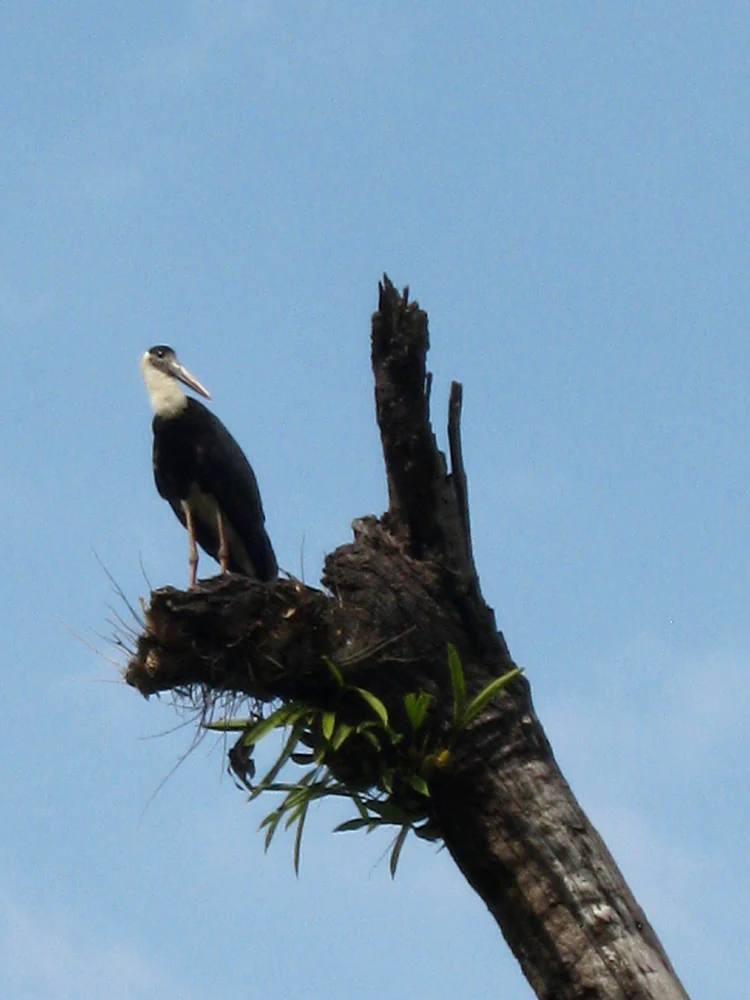
The ecological richness of Cát Tiên makes it a premier destination for wildlife observation in Vietnam, with guided treks offering opportunities to encounter gibbons, langurs, and a remarkable diversity of bird species including hornbills and pittas. The Bàu Sấu wetland system, particularly during the dry season when water sources become concentrated, provides exceptional birdwatching opportunities with species such as the woolly-necked stork and lesser adjutant frequently observed. The archaeological site near the park entrance offers a unique cultural dimension, revealing the ancient Hindu civilization that once thrived in this forested landscape. The Dao Tien Endangered Primate Species Centre provides educational tours showcasing rehabilitation work with golden-cheeked gibbons and other endangered primates, offering visitors direct engagement with conservation efforts. The diverse habitats from primary forest to bamboo groves and seasonal wetlands create varied experiences depending on the season and specific area visited within the park.
Indian Bison (Gaur) by N. A. Naseer
Gaur, also known as Indian Bison.

Best time to visit Cát Tiên National Park

The optimal time to visit Cát Tiên National Park depends on the specific experiences sought, with the dry season from December through April generally offering easier access to forest trails and improved wildlife viewing opportunities as animals congregate around remaining water sources. The wet season from May through November brings substantial rainfall that can make trails difficult and restrict access to certain areas, though the flooded wetland areas reach their maximum extent and waterbird populations peak during this period. The shoulder months of November and May often provide a balance between accessibility and seasonal character, though visitor facilities may be more limited during these transition periods. The driest months of January through March typically offer the most comfortable conditions for trekking and wildlife observation, though the park remains accessible year-round and each season presents distinct ecological characteristics worth experiencing.

Park location guide

Geography guide, regional context, and park location map for Cát Tiên National Park

Cát Tiên National Park park geography, regions, and map view in Vietnam
Understand where Cát Tiên National Park sits in Vietnam through a broader geographic reading of the surrounding landscape, nearby location context, and its mapped position within the national park landscape.

How Cát Tiên National Park fits into Vietnam

Vietnam, officially the Socialist Republic of Viet Nam, is a unitary communist state in Southeast Asia. It occupies roughly 331,000 square kilometres along the eastern edge of Mainland Southeast Asia, with a population exceeding 102 million. The country is bordered by China to the north, Laos and Cambodia to the west, and has maritime boundaries in the Gulf of Thailand and South China Sea.

Wider geography shaping Cát Tiên National Park in Vietnam

Vietnam occupies the eastern edge of Mainland Southeast Asia, stretching along the Gulf of Thailand to the southwest and the South China Sea to the east. The country is bordered by China to the north, and Laos and Cambodia to the west. It has a diverse landscape ranging from the Red River Delta in the north to the Mekong Delta in the south.

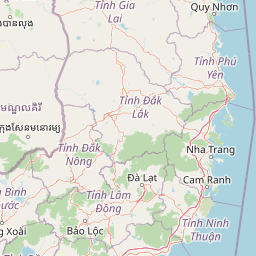
Map view of Cát Tiên National Park

Use this park location map to pinpoint Cát Tiên National Park in Vietnam, understand its exact geographic position, and read its mapped placement within the surrounding landscape more clearly.

Pigeon | © OpenStreetMap contributors

Location context for Cát Tiên National Park

Bình Phước ProvinceĐồng Nai ProvinceLâm Đồng Province

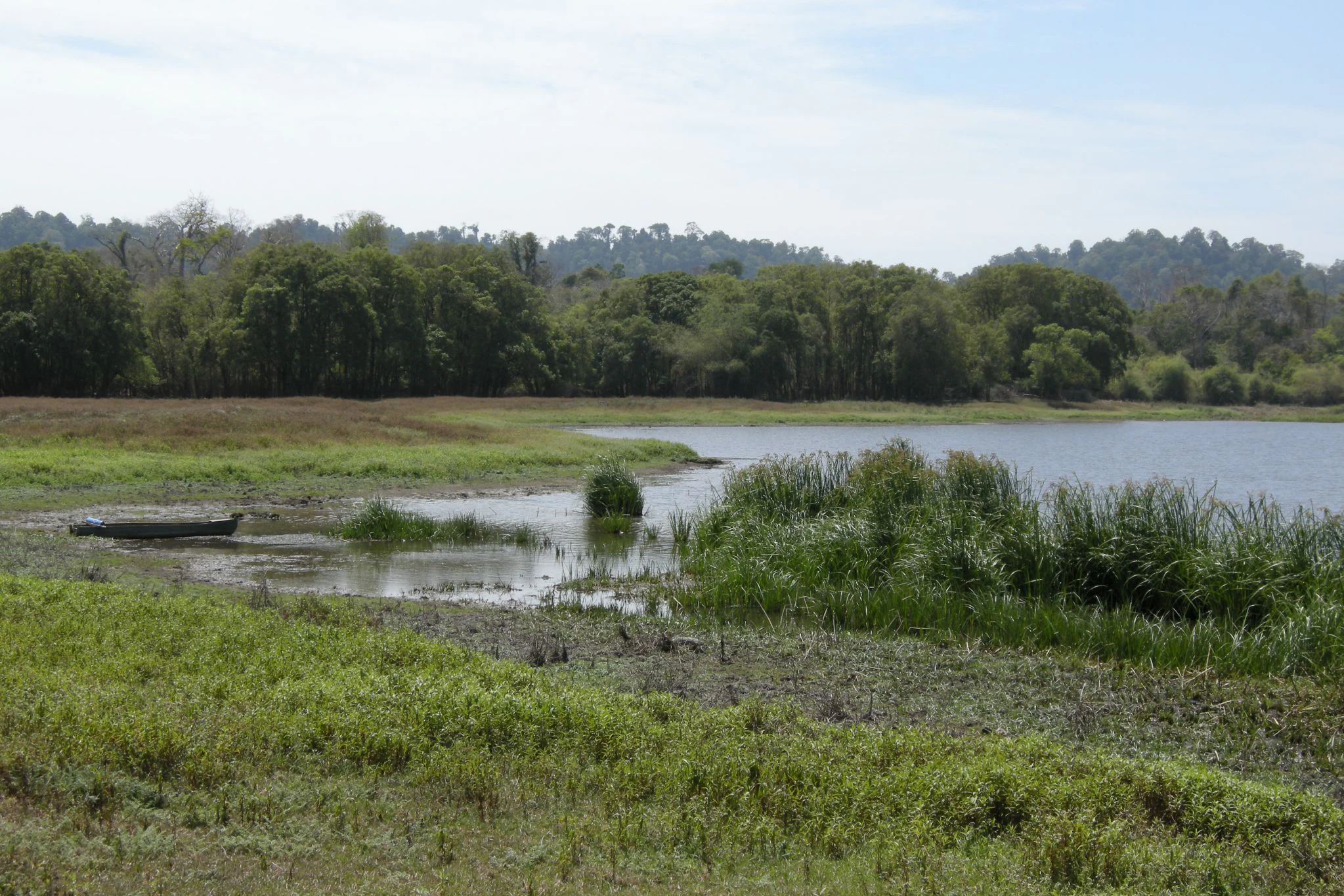
Explore the diverse forest terrain, unique wetland habitats, and protected-area scenery within Cát Tiên National Park.

Cát Tiên National Park Photos: Visual Guide to Vietnam's Lowland Tropical Forest Landscapes
Visually explore the distinct lowland tropical forest, extensive bamboo woodlands, and vital wetland systems that define Cát Tiên National Park. These images offer a detailed understanding of the park's diverse ecosystems, seasonal flooding patterns, and the critical habitats protecting endangered species within this significant Vietnamese protected area.

Inside Thien Duong Cave

Wooly-necked stork, Cát Tiên National Park

Water buffalos in Cat Tien National Park

Northern smooth-tailed treeshrew

Pyrops coelestinus

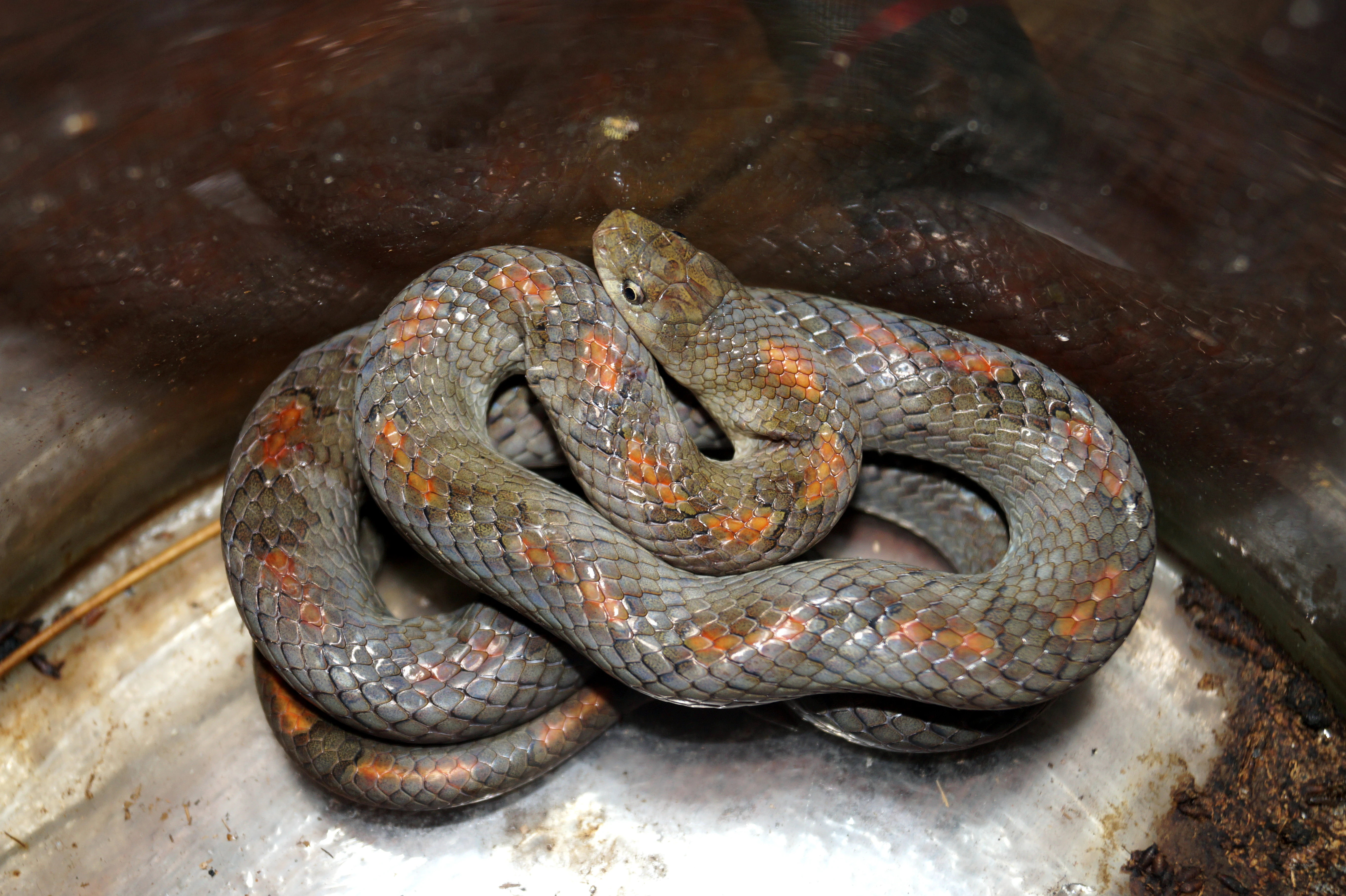
Oligodon cattienensis

Licuala cattienensis

Indian Bison (Gaur) by N. A. Naseer

Hydrornis elliotii (Bar-bellied Pitta)

Golden-cheeked gibbon female at Cát Tiên National Park

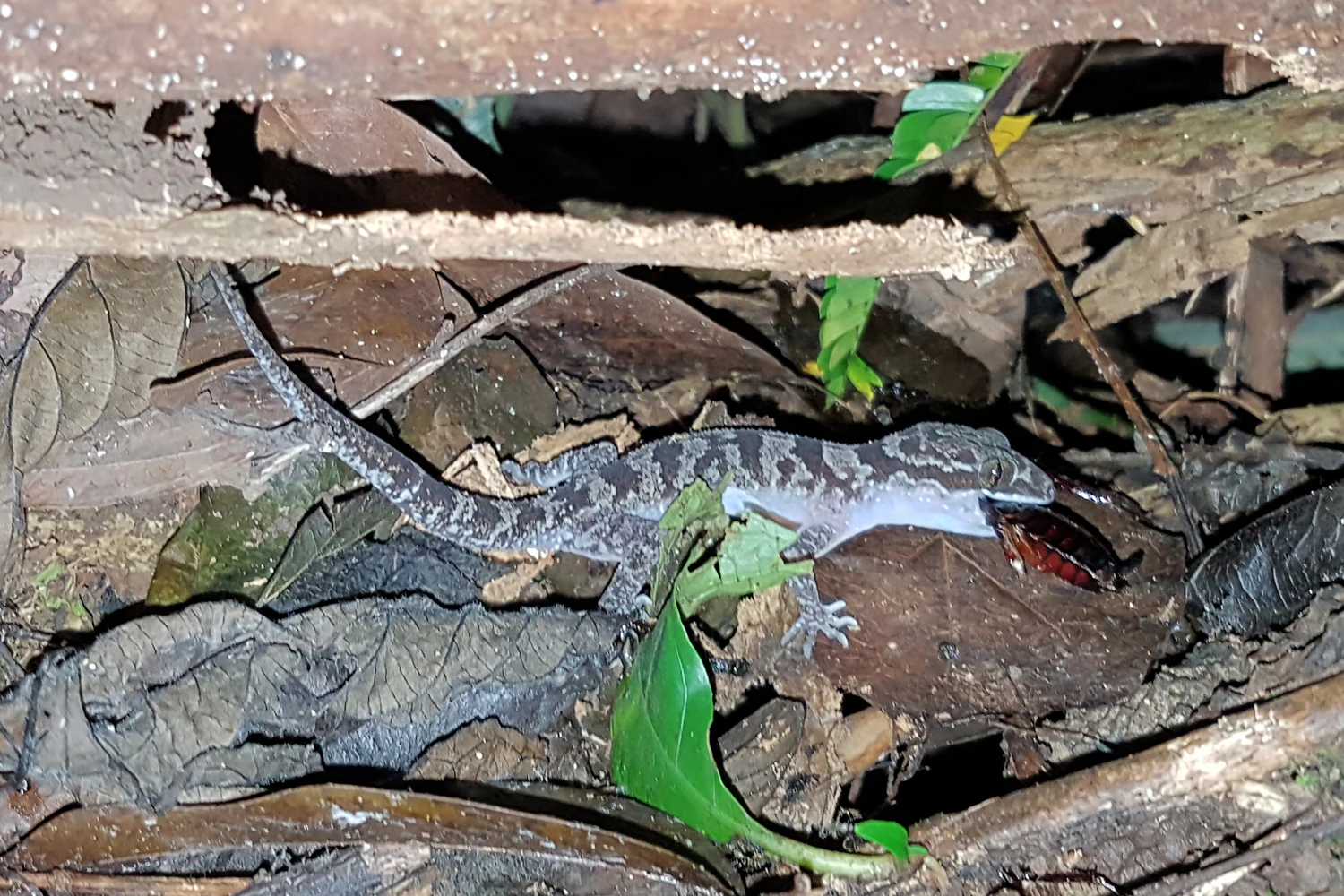
Cyrtodactylus cattienensis eating cockroach

Cycas inermis female flower

Cát Tiên National Park, Vietnam

Boigacyanea.jpg

Ben Cu forest structure

Banded Krait in Cat Tien National Park

Park atlas

Trace the geographic spread of Vietnam's protected areas, exploring adjacent landscapes for comparison.

Compare Nearby National Parks and Protected Areas Surrounding Cát Tiên National Park
From Cát Tiên National Park, continue your exploration by browsing nearby national parks and other protected areas across Vietnam's diverse geographic regions. This provides crucial regional context, allowing you to trace the spread of conservation landscapes and compare specific park characteristics for a comprehensive atlas-style understanding.
National parkĐắk Lắk Province

Yok Đôn National Park: Vietnam's Expansive Lowland Forest Protected Landscape and Regional Geography

Mapped boundaries within Đắk Lắk Province, part of a transboundary conservation area.

Yok Đôn National Park is Vietnam's largest lowland forest national park, covering approximately 1,155 square kilometers in Đắk Lắk Province. This protected area is characterized by its rare khộp forest ecosystem and serves as a crucial refuge for large mammals. Situated near the Cambodian border, it forms a key component of one of Southeast Asia's largest continuous protected area networks, offering significant insights into regional protected landscape geography and conservation connectivity.

Area
1,155.45 km²
Established
1986
IUCN
II
National parkRatanakiri province

O'Yadav National Park: Protected Forest Conservation in Ratanakiri Province

Explore mapped boundaries and regional landscape context.

O'Yadav National Park is a national park located in northeastern Cambodia's Ratanakiri province, designated to protect significant forest ecosystems and serve as a vital link in the nation's biodiversity corridor system. Spanning 105,019 hectares, the park encompasses forested terrain and includes the historically significant Yak Nang temple site. Its conservation efforts contribute to the ecological integrity of the broader Indochinese region, making it a key protected landscape for atlas-based geographic study.

Area
1,050.19 km²
Established
2016
IUCN
II
National parkRatanakiri province

Veun Sai, Siem Pang National Park: Northeastern Cambodia's Protected Lowland Forest Landscape

Mapped Boundaries and Primate Conservation Habitat

Veun Sai, Siem Pang National Park in Cambodia's Ratanakiri province is a vital protected area featuring expansive lowland evergreen and semi-evergreen forests. Its designation as a national park underscores its role in safeguarding critical habitat for diverse primate populations, notably the endangered Northern buffed-cheeked gibbon. The park's geography, characterized by gentle terrain and extensive forest cover, makes it a significant component of the region's biodiversity corridor and a key site for understanding Cambodia's natural landscapes.

Area
574.69 km²
Established
2016
IUCN
II
National parkRatanakiri province

Virachey National Park: Cambodia's Vast Highland Protected Landscape in Ratanakiri

Explore its remote montane forest ecosystems and diverse terrain.

Virachey National Park, Cambodia's largest national park, offers a profound glimpse into one of mainland Southeast Asia's last great wildernesses. Spanning remote highland terrain in Ratanakiri province, it features dramatic elevation changes from 400 to 1,500 meters, supporting diverse ecosystems including dense lowland forests, unique montane cloud forests, and upland savannahs. Its recognition as an ASEAN Heritage Park underscores its critical regional conservation value, making it a significant destination for understanding protected landscapes and their geographic context.

Area
3,380.57 km²
Established
1993
IUCN
II
National parkBà Rịa–Vũng Tàu province

Côn Đảo National Park: Island Protected Landscape and Marine Geography

Explore mapped terrain and protected land boundaries.

Côn Đảo National Park presents a rich island geography featuring mountainous terrain, dense forests, and vibrant marine ecosystems. As a protected national park, it safeguards crucial habitats for endangered sea turtles and dugongs, alongside extensive coral reef systems and seagrass beds. This detailed atlas entry offers insight into the park's unique landscape context within Bà Rịa, Vũng Tàu province, highlighting its significance for conservation and geographic exploration.

Area
150.43 km²
Established
1993
IUCN
II
National parkKiên Giang Province

U Minh Thượng National Park: Vietnam's Premier Mekong Delta Wetland Protected Area

Mapping the rich biodiversity and peat swamp ecosystems of Kiên Giang Province.

U Minh Thượng National Park is a key protected wetland in Kiên Giang Province, recognized for its exceptional biodiversity and status as a Ramsar site. Covering vast peat swamp forests and freshwater marshes, this national park offers critical insights into the Mekong Delta's unique ecology and hydrological systems. Its extensive mapped boundaries and distinct landscape character make it a vital point of study for understanding regional protected area networks and the natural geography of Southeast Asia.

Area
80.53 km²
Established
2002
IUCN
II
National parkKep Province

Kep National Park: Cambodia's Coastal Mountain Protected Landscape

Explore mapped terrain and panoramic viewpoints of this national park.

Kep National Park is a protected national park situated in Kep Province, Cambodia, known for its unique hilly terrain that rises from the coastal lowlands. This protected area offers elevated viewpoints with commanding sights across the Gulf of Thailand, stretching towards Phu Quoc island and the distant Bokor Ranges. Its landscape character is defined by the contrast between its mountainous interior and the surrounding flat coastal regions, making it a significant feature for understanding regional geography and mapped protected areas. The park provides an accessible experience of Cambodia's coastal mountainous ecosystems.

Area
11.52 km²
Established
1993
IUCN
II
National parkKampong Speu Province

Kirirom National Park: Cambodia's Pioneering Protected Mountain Landscape

Explore its mapped terrain and regional geography in Kampong Speu Province

Kirirom National Park stands as Cambodia's foundational national park, safeguarding a significant portion of the eastern Cardamom Mountains. This protected landscape is defined by its elevated terrain and mountain forest ecosystems, offering a distinct geographic character within Kampong Speu Province. Its atlas-style exploration reveals the mapped boundaries and regional context of this pioneering conservation area, providing insight into Cambodia's commitment to preserving its natural heritage.

Area
283.75 km²
Established
1993
IUCN
II

Common questions about visiting, size, designation, and location context for Cát Tiên National Park

Cát Tiên National Park FAQs for park facts, access, geography, and protected area context
Find quick answers about Cát Tiên National Park, including protected-area facts, park geography, trail and visitor context, and how the park fits into its surrounding country and regional landscape.
MoriAtlas Explorer

Continue Your Protected Areas Search Across the Global Atlas

Deepen your exploration by continuing the structured search for national parks and protected areas worldwide. Utilize the comprehensive filtering capabilities to compare different conservation landscapes and refine your understanding of global park geography. Discover more about the distribution and characteristics of protected natural areas.

Global natural geography