Why U Minh Thượng National Park stands out
U Minh Thượng National Park is renowned as the most biodiverse region in the entire Mekong Delta, boasting over 243 plant species, 32 mammal species, 187 bird species, 39 amphibian species, and 34 fish species. The park is particularly famous for its population of hairy-nosed otters, a rare and endangered species rarely encountered in other Vietnamese protected areas. Its wetlands provide critical habitat for numerous waterbird species including the oriental darter, spot-billed pelican, black-headed ibis, and Asian golden weaver. The park also stands out for its historical significance as a former Viet Minh and Vietcong stronghold during two major wars, adding layers of cultural and historical weight to its natural values.
U Minh Thượng National Park history and protected-area timeline
The forest now protected as U Minh Thượng National Park carries a remarkable and tumultuous modern history that intersects with major geopolitical events of the twentieth century. During the First Indochina War against French colonial rule, the dense U Minh Forest served as a critical Viet Minh stronghold, providing隐蔽 and logistical support for communist forces operating in the southernmost regions of Vietnam. In a notable incident in 1952, a contingent of approximately 500 French paratroopers was dropped into the U Minh Forest in an attempt to attack Viet Minh positions, but the unit was never heard from again, becoming one of the many mysteries of that conflict. The forest's strategic importance continued during the Vietnam War, when the area served as a Vietcong base area and logistical stronghold, benefiting from its impenetrable terrain and extensive network of waterways. Two notable American military officers, Humbert Roque Versace and James N. Rowe, were captured by Vietcong forces during a battle in the U Minh Forest in October 1963, with Rowe later surviving a famous escape. The park was formally established on 14 January 2002 through Decision No. 11/2002/QĐ-TTg signed by Prime Minister Nguyễn Tấn Dũng, transitioning from its previous status as the U Minh Thuong Nature Reserve to full national park protection.
U Minh Thượng National Park landscape and geographic character
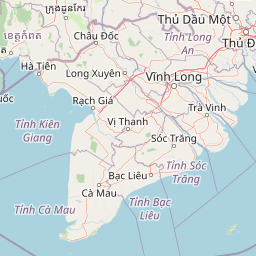
The physical landscape of U Minh Thượng National Park is defined by its position at the southern terminus of the Mekong River system, where vast quantities of sediment have created an extremely flat, low-lying terrain barely above sea level. The park's elevation rarely exceeds a few meters above sea level, resulting in a landscape dominated by wetlands, peat bogs, and extensive freshwater marsh systems. The peat soils in the deeper portions of the park have accumulated over thousands of years from decomposing vegetation, creating a spongy substrate that holds large quantities of water and plays a critical role in the regional hydrological cycle. Throughout the park, permanent and seasonal water bodies are interspersed with stands of freshwater swamp forest, where trees such as dipterocarps and palms have adapted to waterlogged conditions. The water regime is governed by both the wet and dry seasons, with monsoon rains causing extensive flooding from approximately May through November, while the dry season exposes larger areas of mudflat and peat. This dynamic hydrological system supports the distinctive zonation of vegetation communities from deep-water species in permanent channels to moisture-tolerant forest species on higher ground.
U Minh Thượng National Park ecosystems, habitats, and plant life
The ecological character of U Minh Thượng National Park centers on its exceptional biodiversity, making it the richest region in the entire Mekong Delta for both plant and animal life. The park supports over 243 plant species spanning diverse families adapted to wetland conditions, including numerous species of palms, ferns, and emergent aquatic vegetation that characterize tropical peat swamp forests. The mammalian community of 32 species includes the endangered hairy-nosed otter, a species that has become increasingly rare across its historic range and finds important refuge in the park's freshwater habitats. However, the park has also experienced significant ecological losses, as both saltwater crocodiles and Siamese crocodiles that once inhabited the area were determined to be locally extinct by a 2002 survey, representing the extinction of species that previously played important roles in the aquatic ecosystem. The 187 bird species recorded in the park include numerous species of global conservation concern, particularly waterbirds that depend on wetlands for breeding, feeding, and staging during migration. The 39 amphibian species and 34 fish species contribute to the overall ecological complexity, with many completing portions of their life cycles within the park's aquatic environments.
U Minh Thượng National Park wildlife and species highlights
U Minh Thượng National Park provides critical habitat for an impressive array of wildlife, with its wetlands supporting populations of both resident and migratory species. The bird fauna is particularly notable, with the park hosting significant populations of the oriental darter, a large diving bird that hunts fish in the park's freshwater channels, and the spot-billed pelican, a species that gathers in feeding flocks across the wetlands. The black-headed ibis and glossy ibis represent iconic wetland birds that forage in the shallow waters, while the greater spotted eagle hunts over open areas within the forest. The Asian golden weaver builds its distinctive hanging nests in reed beds and scrub, demonstrating the diverse nesting strategies present among the park's avifauna. Among mammals, the hairy-nosed otter stands out as a particularly significant species, as this endangered predator relies on the park's fish populations and secluded waterways for survival. While crocodiles have been lost from the ecosystem, the park continues to support populations of other reptiles and amphibians that fill ecological niches in the freshwater systems.
U Minh Thượng National Park conservation status and protection priorities
U Minh Thượng National Park represents an important conservation priority for Vietnam and the broader Southeast Asian region, protected under both national legislation and international agreements. The park's designation as a Ramsar Wetland in 2015 acknowledged its significance within the international wetland conservation framework, providing recognition and support for ongoing protection efforts. As a Category II protected area under the IUCN classification system, the national park designation provides legal framework for habitat protection, species conservation, and ecosystem management. The conservation challenges facing U Minh Thượng include pressures from surrounding agricultural development, water management projects that can alter the natural hydrological regime, and the need to balance human use with ecological protection. The local extinction of crocodile species highlights the vulnerability of large predators in fragmented wetland systems and underscores the importance of maintaining connectivity and habitat quality. Conservation efforts focus on maintaining the natural water regime, preventing illegal exploitation of resources, and protecting the critical habitats that support endangered species populations.
U Minh Thượng National Park cultural meaning and human context
The landscape now protected as U Minh Thượng National Park has been shaped by centuries of human presence and use, though the park's status as a protected area now limits traditional resource extraction activities. The dense forest and extensive waterways provided historical communities with fish, timber, and other forest products, supporting relatively low-density populations that adapted their practices to the seasonal flooding patterns. The forest's modern history is inextricably linked to the major conflicts of the twentieth century, when its secluded location made it strategically important first to the Viet Minh and later to the Vietcong during periods of armed struggle. The capture of American officers in the forest during 1963 represents a specific historical event that connects the natural landscape to broader narratives of the Vietnam War. The Vietnamese name Vườn quốc gia U Minh Thượng translates literally as Upper U Minh National Park, distinguishing this area from the similar U Minh Hạ nature reserve in adjacent Cà Mau Province, with both areas representing remnants of a once-extensive forest ecosystem that covered much of the Mekong Delta region.
Top sights and standout views in U Minh Thượng National Park
U Minh Thượng National Park offers several standout features that distinguish it within Vietnam's protected area network: the richest biodiversity in the Mekong Delta with over 500 documented species across multiple taxonomic groups; Ramsar Wetland designation recognizing its international importance; the presence of hairy-nosed otters, one of Southeast Asia's rarest carnivores; critical habitat for migratory waterbirds along the East Asian-Australasian Flyway; significant populations of spot-billed pelicans, oriental darters, and black-headed ibises; and a powerful historical narrative as a former Viet Minh and Vietcong stronghold during major twentieth-century conflicts. The park provides some of the best wetland birdwatching opportunities in Vietnam and serves as an important reference site for tropical peat swamp ecology. Its location within the Mekong Delta, one of the world's most productive agricultural regions, creates a striking contrast between the protected wetland and the surrounding farmland landscape.
Best time to visit U Minh Thượng National Park
The optimal time to visit U Minh Thượng National Park aligns with the dry season from approximately December through April, when water levels are lower and wildlife becomes more concentrated around remaining water bodies, facilitating easier observation. The months of March and April often represent the best period for birdwatching, as many migratory species are still present before their return to northern breeding grounds. However, the wet season from May through November offers a different experience, with the flooded forest creating a vast wetland landscape where water birds can be observed in their full extent, though access may be more limited. Visitors interested in observing otters and other mammals may find the transition periods between wet and dry seasons particularly rewarding, as animals concentrate around shrinking water sources. The park can be visited year-round, though visitors should be prepared for the intense tropical heat and humidity, particularly during the dry season months.