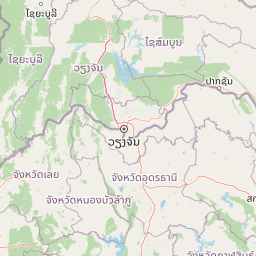
Why Phu Phan National Park stands out
Phu Phan National Park is best known for its extensive dry dipterocarp forests that blanket the Phu Phan Mountains, creating one of the more significant woodland ecosystems in Thailand's Isan region. The park's landscape features dramatic viewpoints like Nang Mern Cliff and the Lan Sao Aee plateau, which offer panoramic vistas over the forested highlands. The park also preserves the ruins of Phra That Phu Pek, a Khmer-era temple accessible by ascending approximately 500 steps, connecting the natural landscape to the region's cultural heritage. The multi-stage Kam Hom Waterfall and unusual rock formations add further distinctive character to the park's offerings.
Phu Phan National Park history and protected-area timeline
The history of Phu Phan National Park extends beyond its official establishment in 1972, with the mountains themselves playing notable roles in regional events. During World War II, the isolated nature of the Phu Phan Mountains made them a strategic location for the Seri Thai resistance movement, which used Tham Seri Thai cave as a weapons storage facility in opposition to Japanese occupation forces. This resistance activity contributed to the area's historical significance beyond its ecological value. In the 1970s, during a period of political unrest in Thailand, the People's Liberation Army of Thailand utilized the remote terrain as a hideout, again demonstrating how the mountainous isolation that makes the area valuable for conservation had historically provided refuge and strategic advantage. The establishment of the protected area in 1972 formalized the recognition of the region's natural value, transitioning from a strategic landscape to a conservation landscape. The park's cultural heritage includes the ruins of Phra That Phu Pek, a Khmer temple that reflects the historical presence of ancient kingdoms in this region of Thailand.
Phu Phan National Park landscape and geographic character
The physical landscape of Phu Phan National Park consists of forested mountain terrain forming part of the Phu Phan Mountains, a range that rises from the Isan plateau in northeastern Thailand. The terrain features ridge lines and valleys that create a varied topography, with elevations that provide visual prominence above the surrounding agricultural plains. Several distinctive geological features punctuate the forested landscape, including the Tang Pee Parn natural stone bridge, an eight-metre natural formation that spans a small gorge. The Khong Ping Ngu formation presents an unusual grilled-snake shape, demonstrating the erosional processes that have shaped the park's rock formations over geological time. Viewpoints such as Nang Mern Cliff face westward, offering sweeping views across the mountain landscape and over the forest canopy. The park's drainage pattern includes numerous streams that descend through the valleys, feeding the waterfalls that rank among the park's attractions, particularly during the rainy season when water flow is most pronounced.
Phu Phan National Park ecosystems, habitats, and plant life
The ecological character of Phu Phan National Park centers on seasonal tropical forest ecosystems that display remarkable diversity given the park's relatively isolated position within the Isan region. The dominant forest type consists of dry dipterocarp woodland, a vegetation community adapted to seasonal rainfall patterns and characterized by trees that lose leaves during the dry season. This dipterocarp component represents a significant portion of the forest, with species such as Shorea roxburghii, Shorea obtusa, and Shorea siamensis forming the canopy structure. Mixed deciduous forest occurs in areas with different moisture regimes, while dry evergreen forest occupies valleys and areas with more consistent moisture. The species composition includes valuable timber species such as Dalbergia cochinchinensis, Pterocarpus macrocarpus, and Afzelia xylocarpa, along with lesser-known species that contribute to overall biodiversity. The forest structure supports a complex web of ecological interactions, with the diverse tree species providing habitat for the park's animal inhabitants.
Phu Phan National Park wildlife and species highlights
Phu Phan National Park supports a diversity of mammal species typical of northeastern Thailand's forest ecosystems, though some populations have declined due to habitat pressures in the surrounding region. The park provides habitat for Indochinese tigers, a subspecies whose presence indicates the conservation value of the protected forest. Primates represented include Phayre's leaf monkey, a species that inhabits forest canopies and maintains social groups in the park's woodland. Mammalian megafauna includes sambar deer, while smaller species include the Sunda flying lemur, Malayan porcupine, common palm civet, northern red muntjac, and wild boar. The fishing cat represents a species adapted to wetland areas within the forest. Birdlife includes species such as the black drongo, hill myna, Richard's pipit, and white-rumped shama, representing both resident and migratory components of the avifauna. The wildlife community reflects the park's role as a forest refuge in a region where much of the original habitat has been converted to agricultural use.
Phu Phan National Park conservation status and protection priorities
Phu Phan National Park represents a significant conservation asset for northeastern Thailand, preserving forest ecosystem types that have disappeared from much of the Isan region. The protected area maintains ecological connectivity in a landscape dominated by agricultural land use, serving as a watershed and forest cover in an area where such habitat is limited. The park's forest types, particularly the dry dipterocarp communities, are of conservation concern due to their sensitivity to disturbance and their historical reduction across Thailand. Protection of this area preserves genetic resources of tree species including several commercially valuable species, along with the animal communities that depend on forest habitat. The presence of species such as the Indochinese tiger indicates the park's significance for larger predators that require extensive territory and intact forest ecosystems. As an IUCN Category II protected area, the park is managed primarily for ecosystem conservation while allowing for limited compatible visitor use.
Phu Phan National Park cultural meaning and human context
The cultural dimension of Phu Phan National Park includes both ancient heritage and more recent historical associations. The ruins of Phra That Phu Pek, a Khmer temple, demonstrate the historical presence of the Khmer Empire in this region of Thailand, with the temple's location on a mountain slope reflecting the religious significance that many cultures attach to elevated terrain. Access to the temple involves climbing approximately 500 steps, a pilgrim pathway that connects visitors to the site's heritage. The more recent historical layer includes the park's use during World War II by the Seri Thai resistance movement, whose activities against Japanese occupation left material traces in the form of cave usage at Tham Seri Thai. The political turbulence of the 1970s also left an imprint, with the People's Liberation Army of Thailand finding refuge in the mountain terrain. These historical associations add layers of meaning to the landscape beyond its ecological value, connecting the protected area to regional history and the broader narrative of Thai political development.
Top sights and standout views in Phu Phan National Park
Phu Phan National Park offers a combination of natural and cultural attractions that distinguish it among Thailand's northeastern protected areas. The forest-covered mountains create a scenic landscape quite different from the surrounding plains, with viewpoints providing opportunities to appreciate the park's elevated terrain. Waterfalls including the multi-stage Kam Hom and the park's other cascades offer natural beauty, particularly during the wet season when water flow is strongest. The Tang Pee Parn natural stone bridge and Khong Ping Ngu rock formation demonstrate interesting geological processes at work in the park's landscape. For cultural visitors, the ruins of the Khmer-era Phra That Phu Pek temple provide historical context, while the legacy of the Seri Thai resistance adds a layer of 20th-century history. The park's dry dipterocarp forests represent a vegetation type that is distinctive to mainland Southeast Asia and increasingly rare in accessible locations.
Best time to visit Phu Phan National Park
The optimal time to visit Phu Phan National Park falls during the cool dry season from November through February, when temperatures are more comfortable for hiking and the forest foliage is less dense, improving visibility at viewpoints. This period coincides with the end of the monsoon season, meaning that streams and waterfalls may still have reasonable water flow while rainfall is reduced. The hot season from March through May brings higher temperatures that can make outdoor activities uncomfortable, though the forest provides some shade. The rainy season from June through October brings regular rainfall that can affect access to some areas and create challenging trail conditions, though waterfall flow is at its peak during this period. Visitors interested in wildlife viewing may find the dry season more productive as animals concentrate around remaining water sources, though the forest's reduced foliage during this period can improve sighting opportunities.