

Mori Atlas logo
National parkPhu Pha Man National Park

Discover mapped geography, dramatic cliffs, and ancient landscapes within Thailand's Phu Pha Man National Park.

Phu Pha Man National Park: Protected Landscape and Prehistoric Dinosaur Tracks in Thailand

Phu Pha Man National Park represents a significant protected landscape in Thailand, renowned for its dramatic mountainous terrain characterized by steep cliffs, deep valleys, and expansive cave systems. This national park protects vital evergreen and mixed deciduous forests, serving as a crucial habitat and preserving remarkable geological and paleontological treasures. Users can explore the park's mapped boundaries and understand its geographic context within Thailand, uncovering significant sites like the ancient rock paintings and Asia's oldest known dinosaur tracks.

National ParksThailandCave SystemsWaterfallsMountain LandscapesPrehistoric Sites

Phu Pha Man National Park

National park

Park overview

Structured park overview, official facts, and landscape profile for Phu Pha Man National Park

Phu Pha Man National Park park facts, protected area profile, and essential visitor context
Review the core facts for Phu Pha Man National Park, including designation, size, terrain, visitor scale, habitats, and operating context in one park-focused overview.

About Phu Pha Man National Park

Phu Pha Man National Park occupies a distinctive position in Thailand's protected area network as a forested mountain reserve in the country's northeastern region. The park's terrain is characterized by rugged limestone cliffs, deep gorges, and rolling forest-covered hills that create a visually striking landscape. The name Phu Pha Man translates roughly to mean the mountain of the cliff formations, reflecting the area's most prominent geographical feature. The park lies within the Phu Pha Man district and extends into adjacent Chum Phae district of Khon Kaen Province, as well as the Phu Kradueng District of Loei Province, representing a significant cross-provincial protected area. The park's elevation range of 200 to 800 metres creates diverse microhabitats within its boundaries, supporting both lowland and montane forest communities. Beyond its natural beauty, the park has emerged as a site of considerable scientific importance following the discovery of prehistoric fossil tracks that have drawn international attention from paleontologists and researchers studying the early dinosaur record in Southeast Asia.

Quick facts and research context for Phu Pha Man National Park

Phu Pha Man National Park is located about 100 kilometres west of Khon Kaen city in northeastern Thailand. The park spans elevations from 200 to 800 metres above sea level across its mountainous terrain. It was established in 2000 under the management of Thailand's Department of National Parks, Wildlife and Plant Conservation, receiving IUCN Category II protection status. The park received approximately 9,682 visitors in 2019, making it a modestly visited destination compared to Thailand's more established national parks. The area is known for its dramatic limestone cliffs, forest-covered slopes, and the distinctive rock formations that characterize the Phu Pha Man landscape.

Park context

Deeper park guide and search-rich context for Phu Pha Man National Park

Phu Pha Man National Park history, landscape, wildlife, and travel context
Explore Phu Pha Man National Park through its history, landscape character, ecosystems, wildlife, conservation priorities, cultural context, and seasonal travel timing in a structured park guide built for atlas discovery and search intent.

Why Phu Pha Man National Park stands out

Phu Pha Man National Park is best known for its dramatic cliff formations and extensive cave systems. The Klang Khao cave system hosts one of Thailand's most impressive bat colonies, with thousands of bats emerging at dusk in a formation stretching approximately 10 kilometres. The Lai Thaeng cave contains ancient rock paintings dating back up to 2,000 years, providing archaeological evidence of early human presence in the region. The park's waterfalls, including the 80-metre Tat Yai and the 60-70 metre Tat Rong, rank among the tallest in the region. Perhaps most significantly, the park now holds the distinction of containing Thailand's and Asia's oldest known dinosaur tracks, discovered at the Tat Yai waterfall area in 2023 and 2024, representing fossil footprints from the late Triassic period approximately 220 to 225 million years ago.
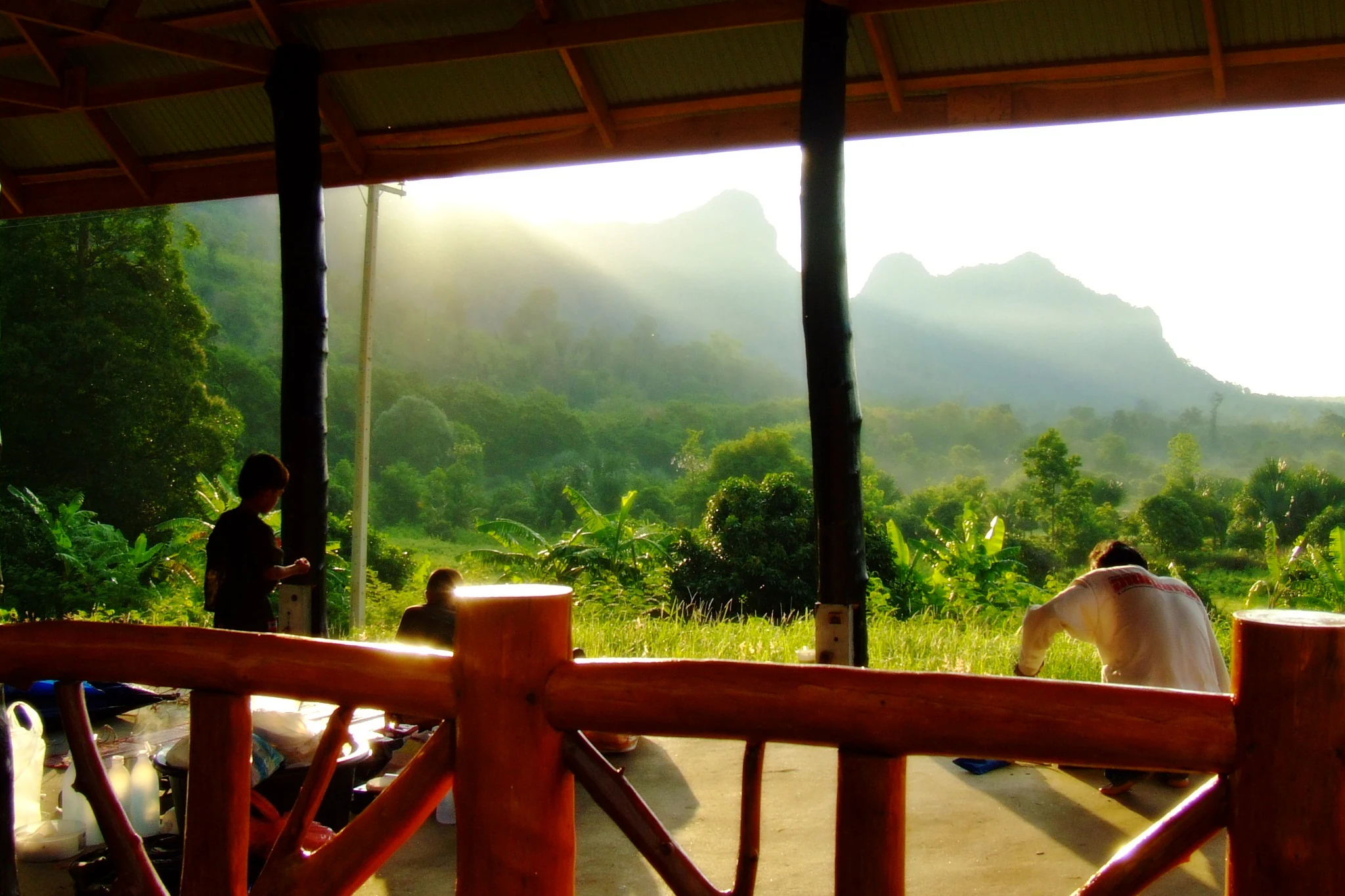
Phu Pha Man National Park Thailand
Photo of Phu Pha Man National Park, a natural heritage site in Thailand.

Phu Pha Man National Park history and protected-area timeline

Phu Pha Man National Park was established in 2000 as Thailand's 58th national park, created to protect the significant forest ecosystems and geological features of the Phu Pha Man mountain region. The protected area was designated under Thailand's national park legislation and placed under the management of the Department of National Parks, Wildlife and Plant Conservation. Prior to national park status, the area had been recognized for its ecological and scenic value, though formal protection was limited. The establishment of the park provided formal legal protection for the forest, wildlife habitats, and natural attractions including the caves, waterfalls, and cliff formations that define the area. In recent years, the park has gained additional significance through paleontological discoveries, with fossil track sites at the Tat Yai waterfall area first identified in May 2023 and subsequently explored by teams from Thailand's Department of Mineral Resources, leading to the identification of multiple prehistoric footprint sites dating to approximately 220 to 225 million years ago.

Phu Pha Man National Park landscape and geographic character

The landscape of Phu Pha Man National Park is defined by its dramatic mountainous terrain and rocky limestone formations that create a visually compelling environment. The park's terrain rises from around 200 metres in the lower valleys to approximately 800 metres at the higher elevations, with the steep cliffs and rock faces providing the most striking visual elements. The Pha Nok Khao cliff rises prominently above the Phong River, creating a dramatic natural landmark visible from within the park. The area supports numerous cave systems carved into the limestone, including the extensive Klang Khao cave network and the Lai Thaeng cave with its ancient rock paintings. Waterfalls cascade from the upland areas, with the Tat Yai waterfall dropping approximately 80 metres and the Tat Rong waterfall reaching 60 to 70 metres in height. The forest cover across the park's slopes creates a green backdrop to the rocky outcrops and cliff faces, with the terrain characterized by ridges, valleys, and the distinctive rock formations that give the area its name.

Phu Pha Man National Park ecosystems, habitats, and plant life

The forest ecosystems within Phu Pha Man National Park consist primarily of evergreen forest and mixed deciduous forest, creating a diverse vegetational profile across the park's elevation gradient. The evergreen forest communities dominate the moist valleys and lower slopes, while mixed deciduous forest appears on drier ridges and higher elevations. Plant life within the park includes several notable species, with rattan palms, various orchid species, and extensive stands of cogon grass representing common vegetation types. The forest structure provides important habitat for numerous species and plays a significant role in watershed protection for the surrounding region. The cave systems within the park also support specialized ecological communities, particularly the Klang Khao cave system which hosts remarkable bat populations that emerge in spectacular daily exodus. The park's waterways and riparian zones contribute additional habitat diversity, while the rocky cliff environments support their own distinct plant communities adapted to the steep, exposed terrain.

Phu Pha Man National Park wildlife and species highlights

Phu Pha Man National Park supports a range of wildlife species typical of northeastern Thailand's forest environments. Mammal species present in the park include wild boar and barking deer, also known as muntjac, which are commonly encountered in the forested areas. The park is also home to monitor lizards, which are frequently observed basking on rocks and tree limbs throughout the area, and pangolins, an increasingly rare species across its range. The bat colonies residing in the Klang Khao cave system represent one of the most significant wildlife features, with thousands of individuals forming large colonies that emerge nightly in search of food. The cave environments also support various invertebrate species adapted to subterranean conditions, while the forest habitats provide foraging and nesting areas for numerous bird species. The diverse habitats from valley floors to cliff tops support the overall wildlife community, though detailed species inventories for the park remain limited in available documentation.

Phu Pha Man National Park conservation status and protection priorities

Phu Pha Man National Park serves as an important conservation area within Thailand's northeastern region, protecting a significant tract of forest ecosystem that might otherwise face development pressure. The park's IUCN Category II designation reflects its primary function as a national park focused on ecosystem conservation and protection. The forest communities within the park boundary represent important habitat for wildlife species and play a critical role in watershed protection for the Phong River basin and surrounding agricultural areas. The recent paleontological discoveries have added another dimension to the park's conservation significance, with the dinosaur track sites requiring careful management to preserve these irreplaceable scientific resources. The cave systems, particularly those with significant bat colonies and archaeological features like the rock paintings in Lai Thaeng cave, represent additional conservation priorities requiring protection from disturbance and degradation.

Phu Pha Man National Park cultural meaning and human context

The cultural significance of Phu Pha Man National Park is evident in the archaeological discoveries within its boundaries, most notably the rock paintings in Lai Thaeng cave that date back up to 2,000 years. These ancient artworks provide evidence of human presence in the region during prehistoric times and represent an important cultural heritage resource preserved within the national park framework. The cave paintings reflect the traditions of early communities who inhabited this landscape long before the area received formal protected status. The mountainous terrain and dramatic cliffs have likely held cultural significance for local communities throughout history, with the landscape features inspiring various traditional beliefs and practices. While the park does not contain major living cultural communities within its boundaries, the archaeological evidence connects the area to the broader human history of northeastern Thailand and provides a cultural dimension that complements its natural significance.

Top sights and standout views in Phu Pha Man National Park

Phu Pha Man National Park offers a distinctive combination of natural and cultural attractions that set it apart within Thailand's national park system. The daily bat exodus from Klang Khao cave represents one of the most impressive wildlife spectacles in the region, with thousands of bats creating a living river across the sky at dusk. The ancient rock paintings in Lai Thaeng cave provide a unique window into prehistoric human culture and artistic expression. The park's waterfalls, particularly the 80-metre Tat Yai and the dramatic multi-tiered Tat Rong, rank among the most impressive in northeastern Thailand. The paleontological significance of the dinosaur track discoveries at Tat Yai waterfall has elevated the park's international profile, with tracks representing the oldest dinosaur evidence in Thailand and all of Asia. The dramatic cliff formations, especially the imposing Pha Nok Khao, create iconic landscapes that define the park's visual identity.

Best time to visit Phu Pha Man National Park

The optimal time to visit Phu Pha Man National Park falls during the cool dry season from November to February, when temperatures are comfortable for hiking and outdoor exploration. The weather during these months is generally stable with less rainfall, allowing better access to trail areas and viewpoints. The period from March to May brings increasing heat, making midday activities more challenging, though early morning excursions remain feasible. The rainy season from June through October can bring heavy downpours that may affect trail conditions and visibility, though the waterfalls typically flow at their strongest during this period. For wildlife viewing, the dry season offers better opportunities to observe animals as they congregate at water sources, while the bat exodus at Klang Khao cave occurs year-round and can be experienced during any visit.

Park location guide

Geography guide, regional context, and park location map for Phu Pha Man National Park

Phu Pha Man National Park park geography, regions, and map view in Thailand
Understand where Phu Pha Man National Park sits in Thailand through a broader geographic reading of the surrounding landscape, nearby location context, and its mapped position within the national park landscape.

How Phu Pha Man National Park fits into Thailand

Thailand is a Southeast Asian nation formerly called Siam, located in mainland Southeast Asia. It operates as a unitary parliamentary constitutional monarchy under King Vajiralongkorn. The country borders Myanmar, Laos, Cambodia, and Malaysia, with maritime boundaries involving Vietnam, Indonesia, and India. Thailand has a population of nearly 66 million and covers approximately 513,120 km². Historically, the Sukhothai Kingdom marks the beginning of Thai history, followed by the powerful Ayutthaya Kingdom.

Wider geography shaping Phu Pha Man National Park in Thailand

Thailand occupies mainland Southeast Asia with borders to Myanmar (west/northwest), Laos (east/northeast), Cambodia (southeast), and Malaysia (south). The country has coastline along the Gulf of Thailand to the southeast and the Andaman Sea to the southwest. The territory covers approximately 513,120 km².

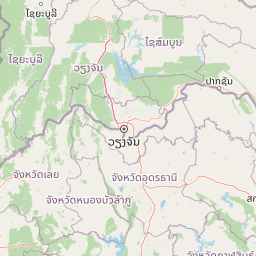
Map view of Phu Pha Man National Park

Use this park location map to pinpoint Phu Pha Man National Park in Thailand, understand its exact geographic position, and read its mapped placement within the surrounding landscape more clearly.

Pigeon | © OpenStreetMap contributors

Location context for Phu Pha Man National Park

Khon Kaen ProvinceLoei Province

A visual journey through the park's unique geological formations, extensive cave systems, and cascading waterfalls.

Phu Pha Man National Park Photos: Explore its Dramatic Cliffs and Forested Mountain Scenery
Discover the captivating visual identity of Phu Pha Man National Park through a curated collection of imagery highlighting its distinctive terrain. These photographs offer valuable insight into the park's diverse habitats, dramatic limestone formations, and the overall character of this significant protected area in Thailand.

Phu Pha Man National Park Thailand

Park atlas

Trace the regional geography of Thailand's protected areas and compare diverse landscapes near Phu Pha Man.

Explore Other National Parks and Protected Areas Surrounding Phu Pha Man National Park
Continue your exploration from Phu Pha Man National Park by browsing other national parks and protected areas across the surrounding mountain terrain, cave systems, and waterfall landscapes of northeastern Thailand. This regional view enables a structured comparison of diverse conservation areas, highlighting how natural features connect within the broader geographic context.
National parkLoei Province

Phu Kradueng National Park: Sandstone Mesa Protected Landscape and Geographic Atlas

Discover mapped boundaries and pine savanna terrain.

Phu Kradueng National Park, situated in Loei Province, Thailand, is a remarkable protected area defined by its large sandstone mesa and striking cliff-edged summit plateau. This page offers detailed geographic insights into the park's unique landscape, including its pine savanna ecosystems, diverse forest types transitioning from lower slopes to the summit, and its cool, refreshing climate. Explore Phu Kradueng National Park's mapped boundaries and natural terrain for a deeper understanding of this significant conservation landscape.

Area
348 km²
Established
1962
IUCN
II
National parkPhetchabun Province

Nam Nao National Park: Protected Landscape and Regional Geography

Explore maps and natural terrain of this Northern Thailand park.

Nam Nao National Park, situated in Phetchabun Province, Thailand, is a large national park distinguished by its rugged mountainous terrain and extensive pine forest landscapes. This protected area is vital for its role in conservation, housing significant biodiversity and forming a natural boundary between regions. Through its mapped geography and diverse natural settings, Nam Nao National Park offers a key destination for understanding protected land dynamics and regional natural landscapes.

Area
966 km²
Established
1972
IUCN
II
National parkKhon Kaen Province

Nam Phong National Park: Mapped Protected Landscape and Geography in Khon Kaen Province

Explore scenic viewpoints, rock formations, and reservoir landscapes.

Nam Phong National Park presents a compelling case study in protected landscape geography, particularly within Thailand's northeastern region. This national park is defined by its mountainous terrain, featuring the Phu Phan Kham and Phu Meng ranges that dramatically meet the waters of the Ubol Ratana Dam reservoir. Its mapped boundaries encompass striking viewpoints like Hin Chang Si, prehistoric rock paintings, and geological formations, offering a detailed look at its natural and archaeological significance for atlas exploration.

Area
197 km²
Established
2000
IUCN
II
Visitors
68.3K annual
National parkThailand

Phu Hin Rong Kla National Park: A Protected Mountain Landscape in Northern Thailand

Explore rock formations, waterfalls, and unique historical terrain.

Phu Hin Rong Kla National Park, situated in northern Thailand, is a significant national park known for its dramatic mountainous terrain, including impressive fractured rock formations and numerous multi-tiered waterfalls. This protected area also holds historical importance, having served as a former communist insurgent stronghold. Its rugged landscape is defined by steep ridges, deep valleys, and diverse forest ecosystems, making it a compelling destination for understanding Thailand's natural and historical geography within a mapped context.

Area
307 km²
Established
1984
IUCN
II
National parkPhitsanulok Province

Namtok Chat Trakan National Park: Protected Mountain Forests and River Headwaters in Phitsanulok Province

Discover mapped geography and unique protected landscape features.

Namtok Chat Trakan National Park protects over 543 square kilometers of mountainous dipterocarp forest within Phitsanulok Province, Thailand. Established in 1987, it is recognized for its role as a vital watershed area, safeguarding the headwaters of the Khwae Noi River system. The park's rugged terrain, dense forests, and prominent waterfalls, including the multi-tiered Chat Trakan cascade, provide a distinct geographic identity. Explore the mapped boundaries and natural landscape of this significant protected area.

Area
543 km²
Established
1987
IUCN
II
National parkSakon Nakhon Province

Phu Phan National Park: Thailand's Protected Mountain Landscape and Natural Atlas Entry

Explore dry dipterocarp forest and unique terrain in Sakon Nakhon.

Phu Phan National Park offers a detailed look into Thailand's northeastern geography, characterized by its mountainous terrain and extensive dry dipterocarp forests. As a national park, it represents a vital protected landscape within Sakon Nakhon Province, showcasing unique geological formations and providing a rich context for atlas-based exploration. Discover the park's mapped boundaries, its ecological significance, and the distinct natural features that define this prominent Isan region protected area.

Area
665 km²
Established
1972
IUCN
II
National parkSaraburi Province

Namtok Chet Sao Noi National Park: Protected Landscape and Seven-Tiered Waterfall Geography

Mapped terrain within Saraburi Province, Thailand.

Namtok Chet Sao Noi National Park offers a rich exploration of Thailand's natural geography, centered around its famous seven-tiered Chet Sao Noi waterfall. This national park, situated in Saraburi Province, features tropical rainforest ecosystems and distinctive landscapes within the Dong Phaya Yen mountains. Understand the park's mapped boundaries and its role as a vital protected area, providing insight into central Thailand's natural terrain and conservation efforts.

Area
42 km²
Established
2016
IUCN
II
National parkSaraburi Province

Namtok Sam Lan National Park: A Mapped Protected Landscape in Saraburi Province

Explore its terrain, waterfalls, and regional geography.

Gain detailed geographic insight into Namtok Sam Lan National Park, a vital protected area situated in Thailand's Saraburi Province. This destination provides a rich atlas view of its landscape, featuring prominent waterfalls and mixed forest ecosystems. Understand the park's specific location, mapped terrain, and its contribution to the regional geography, offering a concrete point for exploration.

Area
45 km²
Established
1981
IUCN
II

Common questions about visiting, size, designation, and location context for Phu Pha Man National Park

Phu Pha Man National Park FAQs for park facts, access, geography, and protected area context
Find quick answers about Phu Pha Man National Park, including protected-area facts, park geography, trail and visitor context, and how the park fits into its surrounding country and regional landscape.
MoriAtlas Explorer

Continue Your Protected Areas Search Across the Global Atlas

Deepen your exploration by continuing the structured search for national parks and protected areas worldwide. Utilize the comprehensive filtering capabilities to compare different conservation landscapes and refine your understanding of global park geography. Discover more about the distribution and characteristics of protected natural areas.

Global natural geography