

Mori Atlas logo
National parkNamtok Sam Lan National Park

Discover the mapped natural terrain and waterfall geography of this key Thai national park.

Namtok Sam Lan National Park: Protected Landscape and Geographic Context in Saraburi Province

Namtok Sam Lan National Park represents a significant protected landscape within Saraburi Province, Thailand. This page offers an atlas-style exploration of its mapped boundaries, diverse terrain characterized by low mountains and mixed forests, and its notable waterfall features. Understand the park's unique geographic setting and its place within the broader regional context, ideal for detailed landscape discovery.

National ParksWaterfallsDipterocarp ForestsCentral ThailandSaraburi ProvinceWildlife Viewing

Namtok Sam Lan National Park

National park

Park overview

Structured park overview, official facts, and landscape profile for Namtok Sam Lan National Park

Namtok Sam Lan National Park park facts, protected area profile, and essential visitor context
Review the core facts for Namtok Sam Lan National Park, including designation, size, terrain, visitor scale, habitats, and operating context in one park-focused overview.

About Namtok Sam Lan National Park

Namtok Sam Lan National Park occupies a distinctive position in central Thailand's protected area network, located in Saraburi Province about six kilometers south of the provincial capital. The park covers approximately 45 square kilometers and spans portions of four administrative districts, creating a protected corridor through a region of low mountains and forested valleys. The landscape is characterized by rolling hills reaching elevations around 329 meters at the Khao Khrok viewpoint, interspersed with streams and waterfall systems that descend through the forest. The park's establishment in 1981 followed decades of conservation effort that began after World War II, when the area's forests had suffered significant damage from military occupation. Today the park serves as an important ecological preserve in a region of Thailand that has experienced substantial land use change, providing habitat for species adapted to mixed forest environments and serving as a green space for both biodiversity and human recreation.

Quick facts and research context for Namtok Sam Lan National Park

Namtok Sam Lan National Park spans roughly 45 square kilometers in Saraburi Province, central Thailand. The terrain consists of low mountains and forested hills with the highest elevation at Khao Khrok peak reaching 329 meters above sea level. The park is named for its signature Sam Lan Waterfall, which features three distinct levels. The area was historically impacted by Japanese military occupation during World War II, leading to forest degradation that prompted subsequent restoration and eventual protected area designation. The park supports mixed forest ecosystems including deciduous, dipterocarp, and evergreen vegetation types.

Park context

Deeper park guide and search-rich context for Namtok Sam Lan National Park

Namtok Sam Lan National Park history, landscape, wildlife, and travel context
Explore Namtok Sam Lan National Park through its history, landscape character, ecosystems, wildlife, conservation priorities, cultural context, and seasonal travel timing in a structured park guide built for atlas discovery and search intent.

Why Namtok Sam Lan National Park stands out

Namtok Sam Lan National Park is best known for its network of waterfalls, with the namesake Sam Lan Waterfall being the centerpiece featuring three cascading levels. The park also contains significant forest ecosystems in the central Thai highlands and is notable for its proximity to the cave temple Wat Phra Puttachai. The mixed forest types support diverse wildlife populations including numerous bird species and butterflies.

Namtok Sam Lan National Park history and protected-area timeline

The history of Namtok Sam Lan National Park is closely tied to Thailand's modern conservation movement and the country's wartime experience. During World War II, Japanese forces occupied the area and established an encampment, resulting in substantial damage to the forest ecosystem that had previously covered the region. Following the end of the war, the Thai government recognized the ecological importance of the degraded landscape and in 1960 initiated active forest restoration efforts, designating the area as a conservation zone. This restoration period spanned two decades as the forest ecosystem gradually recovered. On June 2, 1981, the Thai government formally established Namtok Sam Lan as a national park under the National Park Act, providing formal legal protection and institutional oversight through what is now the Department of National Parks, Wildlife and Plant Conservation. The park's alternate names, including Khao Sam Lan and Phra Puttachai, reflect both its geographic features and cultural landmarks within its boundaries.

Namtok Sam Lan National Park landscape and geographic character

The landscape of Namtok Sam Lan National Park consists of low mountainous terrain in central Thailand's Saraburi Province. The terrain is characterized by rounded hills and ridges with elevations ranging from the valley floors up to 329 meters at the Khao Khrok peak viewpoint. The park encompasses parts of four districts and contains several stream systems that have carved valleys through the forested terrain. The most prominent landscape feature is the waterfall system, particularly Sam Lan Waterfall with its three tiered drops. The forest cover varies across the park, with mixed vegetation types including deciduous, dipterocarp, and evergreen species creating a diverse visual character across different areas of the protected area.

Namtok Sam Lan National Park ecosystems, habitats, and plant life

The ecological character of Namtok Sam Lan National Park reflects the mixed forest ecosystems of central Thailand. The park supports three primary forest types: deciduous forest, mixed dipterocarp forest, and evergreen forest, each supporting different species assemblages. The dipterocarp forests are particularly significant, containing numerous species from the Dipterocarpaceae family that dominate much of mainland Southeast Asia's lowland and hill forests. Tree species found in the park include teak, Pterocarpus macrocarpus, Afzelia xylocarpa, Hopea odorata, Dipterocarpus tuberculatus, Shorea obtusa, Xylia xylocarpa, Shorea siamensis, and Lagerstroemia calyculata. These forest types create layered canopies and diverse microhabitats throughout the park.

Namtok Sam Lan National Park wildlife and species highlights

The wildlife community in Namtok Sam Lan National Park includes several mammal species typical of Thai forest environments. Mammals documented in the park include the northern pig-tailed macaque, northern red muntjac, lesser Oriental chevrotain, wild boar, Finlayson's squirrel, and northern treeshrew. The park supports a particularly diverse bird community with species including brown shrike, greater coucal, green-billed malkoha, Javan pond-heron, long-tailed shrike, Oriental magpie-robin, plain prinia, plaintive cuckoo, puff-throated babbler, red junglefowl, sooty-headed bulbul, streak-eared bulbul, western koel, and white-rumped shama. The park also supports various butterfly species, contributing to the invertebrate diversity of the forest ecosystem. Historical records suggest the white-eyed river martin, a bird once found in northern Thailand, may have occurred in the area though this species is now considered extinct.

Namtok Sam Lan National Park conservation status and protection priorities

Namtok Sam Lan National Park represents an important conservation area in central Thailand, providing protected habitat within a region that has experienced significant agricultural and urban development. The park's establishment in 1981 formalized protection for forest ecosystems that had already undergone restoration following WWII damage. As an IUCN Category II protected area, the park is managed primarily for ecosystem conservation while also supporting recreational use. The mixed forest types, particularly the dipterocarp component, represent increasingly rare habitat in central Thailand where much of the original forest cover has been converted. The park's protected status helps preserve wildlife corridors and forest integrity in an area where pressure from human activities remains high.

Namtok Sam Lan National Park cultural meaning and human context

Namtok Sam Lan National Park contains cultural elements beyond its natural features, most notably the proximity to Wat Phra Puttachai, a cave temple located within or near the park boundaries. This religious site reflects the traditional relationship between Thai communities and the forest landscape, where caves and natural formations often serve as locations for spiritual practice. The park's location in Saraburi Province places it within a region of historical significance in Thai history, and the area has long been associated with both settlement and spiritual activity. The Thai name of the park, อุทยานแห่งชาติน้ำตกสามหลั่น, directly translates to Three Tier Waterfall National Park, emphasizing the importance of the waterfall feature in local naming and identity.

Top sights and standout views in Namtok Sam Lan National Park

The highlights of Namtok Sam Lan National Park center on its waterfall system, particularly the three-tiered Sam Lan Waterfall for which the park is named. Additional waterfalls including Pho Hin Dat, Roi Kueak Ma, and Ton Rak Sai add to the park's water-related attractions. The park offers hiking opportunities to viewpoints including the Khao Khrok peak, providing panoramic views across the central Thai landscape. The mixed forest environment supports wildlife viewing opportunities, particularly for birdwatchers, with numerous resident bird species present throughout the year. The combination of forest, waterfalls, and cultural sites creates a diverse experience within a relatively compact protected area near the Saraburi urban center.

Best time to visit Namtok Sam Lan National Park

The best time to visit Namtok Sam Lan National Park corresponds to Thailand's cool dry season, typically from November through February, when temperatures are moderate and rainfall is minimal. During this period, trails are more accessible and wildlife activity may be more observable as animals seek water sources. The wet season from May through October brings increased rainfall that can affect trail conditions and may make some areas less accessible, though the waterfalls typically flow more strongly during and immediately after the rainy season. The hot season from March through May brings higher temperatures that can make hiking more strenuous. Visitors seeking to see waterfalls at their fullest should consider the period following the monsoon season when water flow is typically strongest.

Park location guide

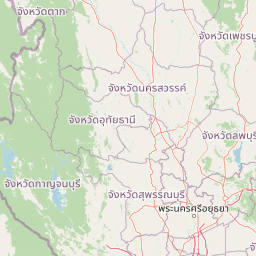
Geography guide, regional context, and park location map for Namtok Sam Lan National Park

Namtok Sam Lan National Park park geography, regions, and map view in Thailand
Understand where Namtok Sam Lan National Park sits in Thailand through a broader geographic reading of the surrounding landscape, nearby location context, and its mapped position within the national park landscape.

How Namtok Sam Lan National Park fits into Thailand

Thailand is a Southeast Asian nation formerly called Siam, located in mainland Southeast Asia. It operates as a unitary parliamentary constitutional monarchy under King Vajiralongkorn. The country borders Myanmar, Laos, Cambodia, and Malaysia, with maritime boundaries involving Vietnam, Indonesia, and India. Thailand has a population of nearly 66 million and covers approximately 513,120 km². Historically, the Sukhothai Kingdom marks the beginning of Thai history, followed by the powerful Ayutthaya Kingdom.

Wider geography shaping Namtok Sam Lan National Park in Thailand

Thailand occupies mainland Southeast Asia with borders to Myanmar (west/northwest), Laos (east/northeast), Cambodia (southeast), and Malaysia (south). The country has coastline along the Gulf of Thailand to the southeast and the Andaman Sea to the southwest. The territory covers approximately 513,120 km².

Map view of Namtok Sam Lan National Park

Use this park location map to pinpoint Namtok Sam Lan National Park in Thailand, understand its exact geographic position, and read its mapped placement within the surrounding landscape more clearly.

Pigeon | © OpenStreetMap contributors

Location context for Namtok Sam Lan National Park

Saraburi Province
Park atlas

Trace the regional spread of national parks and protected landscapes across Saraburi Province and central Thailand, offering valuable geographic comparison.

Discover More Protected Areas Near Namtok Sam Lan National Park: Explore Central Thailand's Diverse Park Geography
Browse additional national parks and protected areas situated within the central Thai highlands and Saraburi Province, extending beyond Namtok Sam Lan National Park's immediate boundaries. Compare diverse forest ecosystems, waterfall systems, and low mountainous terrain, gaining deeper insights into regional conservation efforts and distinct protected landscapes.
National parkSaraburi Province

Namtok Chet Sao Noi National Park: Protected Landscape and Seven-Tiered Waterfall Geography

Mapped terrain within Saraburi Province, Thailand.

Namtok Chet Sao Noi National Park offers a rich exploration of Thailand's natural geography, centered around its famous seven-tiered Chet Sao Noi waterfall. This national park, situated in Saraburi Province, features tropical rainforest ecosystems and distinctive landscapes within the Dong Phaya Yen mountains. Understand the park's mapped boundaries and its role as a vital protected area, providing insight into central Thailand's natural terrain and conservation efforts.

Area
42 km²
Established
2016
IUCN
II
National parkSa Kaeo Province

Pang Sida National Park: Protected Landscape Atlas in Sa Kaeo Province

Discover its mapped terrain and wildlife habitats.

Pang Sida National Park is a significant protected national park located in Sa Kaeo Province, Thailand, spanning approximately 844 square kilometers of the Sankamphaeng Range. As a critical element of the UNESCO Dong Phayayen-Khao Yai Forest Complex, it provides a vital protected landscape for diverse ecosystems and remarkable biodiversity. Users can explore the park's mountainous terrain, grasslands, and riparian zones, gaining insight into its geographic significance and its role within a larger conservation area.

Area
844 km²
Established
1982
IUCN
II
National parkRayong Province

Khao Chamao, Khao Wong National Park: Protected Area Atlas and Mountain Landscape Context

Rayong Province's vital national park with mapped terrain and waterfalls.

Delve into the geography of Khao Chamao, Khao Wong National Park, a designated national park in Thailand's Rayong Province, forming a western extension of the Cardamom Mountains. This page provides detailed mapped context for its protected boundaries, forested hills, and prominent peaks, highlighting its importance as a habitat and an atlas entry for understanding regional landscapes. Explore the park's terrain and its role in conservation.

Area
84 km²
Established
1975
IUCN
II
National parkRayong Province

Khao Laem Ya, Mu Ko Samet National Park: Marine National Park and Protected Island Geography

Coastal terrain and archipelago mapped within Rayong Province.

Delve into Khao Laem Ya, Mu Ko Samet National Park, a significant marine protected area located in Rayong Province, Thailand. This atlas entry highlights the park's archipelago of islands, including Ko Samet, its mainland coastal features like Khao Laem Ya, and the surrounding Gulf of Thailand waters. Understand the park's role in coastal conservation, its mapped marine environments, and its unique blend of terrestrial and aquatic protected landscapes for geographic discovery.

Area
131 km²
Established
1981
IUCN
II
Visitors
1.6M annual
National parkPhetchabun Province

Nam Nao National Park: Protected Landscape and Regional Geography

Explore maps and natural terrain of this Northern Thailand park.

Nam Nao National Park, situated in Phetchabun Province, Thailand, is a large national park distinguished by its rugged mountainous terrain and extensive pine forest landscapes. This protected area is vital for its role in conservation, housing significant biodiversity and forming a natural boundary between regions. Through its mapped geography and diverse natural settings, Nam Nao National Park offers a key destination for understanding protected land dynamics and regional natural landscapes.

Area
966 km²
Established
1972
IUCN
II
National parkThailand

Phu Pha Man National Park: Dramatic Cliffs, Caves, and Dinosaur Tracks in Thailand's Protected Landscape

Explore mapped geography and prehistoric fossil sites within Thailand's Phu Pha Man National Park.

Phu Pha Man National Park is a protected area in Thailand distinguished by its rugged limestone formations, significant cave networks, and dramatic waterfalls. Beyond its scenic beauty, the park is a globally important site for paleontology, holding Asia's oldest known dinosaur tracks. This page provides an atlas-style view of its protected landscape, local geography, and the unique prehistoric discoveries that define its identity.

Area
350 km²
Established
2000
IUCN
II
National parkThailand

Phu Hin Rong Kla National Park: A Protected Mountain Landscape in Northern Thailand

Explore rock formations, waterfalls, and unique historical terrain.

Phu Hin Rong Kla National Park, situated in northern Thailand, is a significant national park known for its dramatic mountainous terrain, including impressive fractured rock formations and numerous multi-tiered waterfalls. This protected area also holds historical importance, having served as a former communist insurgent stronghold. Its rugged landscape is defined by steep ridges, deep valleys, and diverse forest ecosystems, making it a compelling destination for understanding Thailand's natural and historical geography within a mapped context.

Area
307 km²
Established
1984
IUCN
II
National parkLoei Province

Phu Kradueng National Park: Sandstone Mesa Protected Landscape and Geographic Atlas

Discover mapped boundaries and pine savanna terrain.

Phu Kradueng National Park, situated in Loei Province, Thailand, is a remarkable protected area defined by its large sandstone mesa and striking cliff-edged summit plateau. This page offers detailed geographic insights into the park's unique landscape, including its pine savanna ecosystems, diverse forest types transitioning from lower slopes to the summit, and its cool, refreshing climate. Explore Phu Kradueng National Park's mapped boundaries and natural terrain for a deeper understanding of this significant conservation landscape.

Area
348 km²
Established
1962
IUCN
II

Common questions about visiting, size, designation, and location context for Namtok Sam Lan National Park

Namtok Sam Lan National Park FAQs for park facts, access, geography, and protected area context
Find quick answers about Namtok Sam Lan National Park, including protected-area facts, park geography, trail and visitor context, and how the park fits into its surrounding country and regional landscape.
MoriAtlas Explorer

Continue Your Protected Areas Search Across the Global Atlas

Deepen your exploration by continuing the structured search for national parks and protected areas worldwide. Utilize the comprehensive filtering capabilities to compare different conservation landscapes and refine your understanding of global park geography. Discover more about the distribution and characteristics of protected natural areas.

Global natural geography