Why Khao Chamao, Khao Wong National Park stands out
Khao Chamao, Khao Wong National Park is best known for its dramatic eight-tiered waterfall system, which originates from the Khao Chamao peak and descends more than three kilometers downstream. The park is also recognized as an important habitat for larger mammal species such as Asian elephants and banteng, which migrate from the adjacent Khao Ang Rue Nai Wildlife Sanctuary. The mountainous landscape and proximity to the larger protected area create conditions that support rare and threatened species typically found in extensive wilderness areas. Birdlife is particularly notable, with species including great hornbills, wreathed hornbills, and Asian fairy-bluebirds inhabiting the forest canopy.
Khao Chamao, Khao Wong National Park history and protected-area timeline
Khao Chamao–Khao Wong National Park was established in 1975 as part of Thailand's expanding national park system during a period of increased recognition of the need to protect representative natural areas across the country. The establishment of the park provided formal protection for the Chamao-Wong Mountains, which had previously existed as unprotected forest land amid the broader Cardamom ecosystem. The park was designated under Thailand's national park legislation and placed under the management of the Royal Forest Department, which later became the Department of National Park, Wildlife and Plant Conservation. The creation of the park also complemented the existing protection of the larger Khao Ang Rue Nai Wildlife Sanctuary, creating a more comprehensive conservation framework for the eastern Thailand mountain landscape.
Khao Chamao, Khao Wong National Park landscape and geographic character
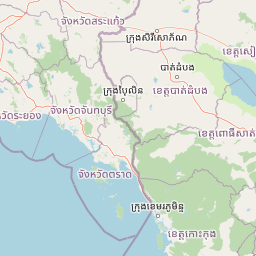
The landscape of Khao Chamao–Khao Wong National Park is defined by the Chamao-Wong Mountains, a ridge of forested peaks that rise from the surrounding lowlands of Rayong Province. The mountain ridge represents a western offshoot of the Cardamom Mountains, the major mountain range that extends through western Thailand and eastern Cambodia. Most of the ridgeline consists of moderate slopes, though certain hillside areas are sufficiently steep to create dramatic terrain. The two most prominent peaks are Khao Chamao and Khao Wong, with Khao Chamao reaching approximately 1,024 meters above sea level as the highest point in the park. The mountains act as a drainage divide, with numerous streams descending the slopes to form the waterfall system that is a signature feature of the park.
Khao Chamao, Khao Wong National Park ecosystems, habitats, and plant life
The forest ecosystems within Khao Chamao–Khao Wong National Park represent the semi-evergreen and evergreen forest types characteristic of the Cardamom Mountains foothills in eastern Thailand. These forests maintain relatively continuous canopy cover and support high species diversity due to the region's location at the intersection of mainland Southeast Asian biogeographic zones. The park's position adjacent to the much larger Khao Ang Rue Nai Wildlife Sanctuary is ecologically significant, as it provides a protected corridor that allows species requiring large territories to move between core habitat areas. The elevation range within the park, from valley streams to peaks above 1,000 meters, creates a gradient of microhabitats including riparian zones, slope forests, and summit vegetation. This diversity of habitats contributes to the park's ability to support both widespread and locally restricted species.
Khao Chamao, Khao Wong National Park wildlife and species highlights
Khao Chamao–Khao Wong National Park supports a notable assemblage of wildlife, with particular significance attached to the presence of larger mammal species that require extensive wilderness areas. Asian elephants and banteng occur in the park, utilizing the protected corridor that connects to Khao Ang Rue Nai Wildlife Sanctuary. Smaller mammals present include barking deer, sambar deer, pileated gibbons, and crab-eating macaques. The bird fauna is especially diverse, with several species of hornbills including the great hornbill and wreathed hornbill, along with the Asian fairy-bluebird, long-tailed broadbill, thick-billed pigeon, mountain imperial pigeon, blue pitta, blue whistling thrush, and sulphur-breasted warbler. Reptiles include king cobras, reticulated pythons, Malayan pit vipers, and Malayan kraits. Several gecko species found in the park are endemic to this region of Southeast Asia, including the intermediate bent-toed gecko and Chanthaburi rock gecko. Green water dragons inhabit streams and pools throughout the area.
Khao Chamao, Khao Wong National Park conservation status and protection priorities
Khao Chamao–Khao Wong National Park plays an important role in the conservation network of eastern Thailand by protecting a mountainous segment of the Cardamom Mountains ecosystem that might otherwise face deforestation and development pressure. The park's connection to the larger Khao Ang Rue Nai Wildlife Sanctuary creates a functional conservation landscape that can support viable populations of species requiring large home ranges, particularly Asian elephants and banteng. The protection of the forest catchments also provides watershed benefits for the surrounding lowlands in Rayong Province. The park's IUCN designation as Category II reflects its primary objective of protecting natural ecosystems while allowing for sustainable visitation and environmental education activities. The presence of multiple threatened and endemic species, including regionally restricted reptiles and amphibians, adds to the conservation significance of the area.
Top sights and standout views in Khao Chamao, Khao Wong National Park
The multi-tiered Khao Chamao waterfall stands as the park's most distinctive feature, with eight distinct levels descending more than three kilometers from the Khao Chamao peak. Visitors can hike along a trail following the waterfall, reaching the top tier in approximately two hours and viewing each cascade along the way. The park's birdwatching opportunities are exceptional, with great hornbills and wreathed hornbills being particular highlights, along with other forest-dwelling species that are difficult to observe in more accessible areas. The presence of Asian elephants and banteng, migrating from the adjacent sanctuary, represents a notable wildlife opportunity given the species' range requirements and the relatively small size of the park itself. The mountainous setting provides scenic views across the forested ridges, particularly from the higher peaks.
Best time to visit Khao Chamao, Khao Wong National Park
The cooler months from November through February generally offer the most comfortable conditions for hiking and wildlife observation in Khao Chamao–Khao Wong National Park. Morning temperatures in the mountains can be quite cool, and daytime conditions are typically pleasant during this period. The dry season from November to April tends to offer clearer visibility and more accessible trails, though waterfall flow may be reduced compared to the wet season. The wet season from May through October brings increased rainfall, which can enhance waterfall flow but may also make trail conditions more difficult. Year-round visits are possible, but the combination of comfortable temperatures and reasonable trail conditions during the cool dry season typically provides the most favorable visitor experience.