Why Phu Hin Rong Kla National Park stands out
Phu Hin Rong Kla is best known for its dual identity as both a mountain wilderness and a historic battlefield. The park's rugged terrain was the primary base of operations for Thai communist insurgents during the 1960s and early 1970s, and this historical dimension is preserved through the Thailand-Communism museum located within the park boundaries. Geographically, the park is notable for its dramatic rock formations at Lan Hin Taek and Lan Hin Pum, where massive stone slabs appear split apart and are decorated with orchids, ferns, and mosses. The area also features an impressive cascade of waterfalls, including the 32-tiered Namtok Man Daeng and the multi-tiered Namtok Romklao and Pharadon waterfalls, making it a destination of particular interest for geological and scenic attractions.
Phu Hin Rong Kla National Park history and protected-area timeline
The modern history of Phu Hin Rong Kla is defined by the communist insurgency that swept through northern Thailand during the late 1960s and early 1970s. Between 1968 and 1972, the mountainous terrain around Phu Hin Rong Kla served as the primary operational base for Thai communist insurgents, who established guerrilla strongholds in the difficult-to-access forests and ridges. The Royal Thai Armed Forces faced significant challenges in the rugged landscape, where conventional military tactics proved ineffective against mobile insurgent forces operating in familiar terrain. The turning point came when military authorities successfully convinced the local Hmong community, who had settled in the area, to cooperate with the Thai government. This alliance proved decisive, and communist insurgents eventually surrendered without further bloodshed, bringing the conflict to a peaceful conclusion. Following the end of hostilities, the Thai government recognized the need to restore and protect the damaged forest lands. A formal survey of the Phu Hin Rong Kla forest was conducted in February 1983, covering areas in Nakhon Thai District of Phitsanulok Province and Dan Sai District of Loei Province. The Royal Forest Department subsequently proposed incorporating the area into the national park system in March 1983, and Phu Hin Rong Kla was officially declared Thailand's 48th national park on July 26, 1984. The establishment of the park represented both a conservation milestone and a healing process for a landscape scarred by conflict.
Phu Hin Rong Kla National Park landscape and geographic character
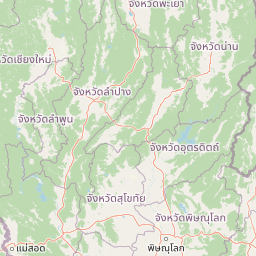
The physical landscape of Phu Hin Rong Kla National Park is characterized by dramatic mountain terrain formed as part of the Phetchabun Mountains within the Luang Prabang Range. The park's topography features steep, forested slopes descending into narrow valleys where streams have cut their own channels through the terrain. Several prominent peaks rise above the general ridgeline, with Phu Man Khao reaching 1,820 meters as the highest point in the park, followed by Phu Lomlo at 1,664 meters. Other significant peaks include Phu Hin Rong Kla, Phu Khi Thao, and Phu Phaeng Ma, creating a landscape of interlocking ridges and sheltered valleys. The underlying geology gives rise to distinctive rock formations throughout the park, most notably at Lan Hin Taek and Lan Hin Pum where massive sandstone slabs have fractured into seemingly artificial patterns. These broken rock surfaces host rich communities of epiphytic plants including orchids, ferns, mosses, and lichens that thrive in the persistent moisture. Numerous streams descend the mountain slopes, with Huai Lam Nam Sai and Huai Luang Yai among the larger watercourses that eventually drain into the wider river systems. The combination of elevation, aspect, and moisture availability creates diverse microenvironments across the park, from steep cliff faces to more gentle valley floors.
Phu Hin Rong Kla National Park ecosystems, habitats, and plant life
The ecological character of Phu Hin Rong Kla reflects its position within the Luang Prabang montane rain forests ecoregion, supporting a complex mosaic of forest types determined by elevation and local conditions. The park contains four distinct forest formations: mixed deciduous forest in the lower elevations, dry dipterocarp forest on drier slopes, hill evergreen forest in the cloud zone, and conifer forest at the highest elevations. This vertical zonation creates a gradient of species composition from tropical deciduous species at lower altitudes to more temperate-adapted communities near the summits. The diverse tree flora includes numerous species from the Dipterocarpaceae family such as Dipterocarpus alatus, Dipterocarpus tuberculatus, and Shorea species, as well as conifers including Pinus kesiya and Dacrydium elatum. The moist conditions support a rich epiphytic community, with numerous orchid species documented including Dendrobium crystallinum, Dendrobium infundibulum, and Phalaenopsis pulcherrima. The forest structure varies from dense, closed-canopy formations in the evergreen zones to more open woodland in the dry dipterocarp areas, providing varied habitat conditions for the park's wildlife communities.
Phu Hin Rong Kla National Park wildlife and species highlights
The wildlife community of Phu Hin Rong Kla reflects the park's diverse habitats, though human settlement and historical conflict have reduced wildlife populations compared to more undisturbed areas. Mammal species documented in the park include nine species, with the Asian black bear and leopard representing the larger predators present in the area. Other mammals include the Asian golden cat, barking deer, Finlayson's squirrel, hog badger, Indochinese serow, leopard cat, and wild boar. Bird diversity is considerably more pronounced, with approximately 260 species recorded including roughly 190 passerine species from 42 families and 70 non-passerine species from 21 families. Notable bird species include the red-headed trogon, Siamese fireback, long-tailed broadbill, blue pitta, and black eagle. The park also supports 18 reptile species and 15 amphibian species, with the big-headed turtle and various pitviper species among the more distinctive reptiles. Amphibians include the Somsak's newt and Taylor's tree frog. However, the source material notes that human settlement in and around the park has reduced wildlife populations, with many animals having fled to safer areas during the conflict period.
Phu Hin Rong Kla National Park conservation status and protection priorities
Phu Hin Rong Kla National Park serves important conservation functions as a protected area within Thailand's national park system, designated under IUCN Category II. The park protects representative examples of the Luang Prabang montane rain forests ecoregion, a biogeographically significant region spanning the mountains of northern Thailand and Laos. The diverse forest types within the park, ranging from lowland deciduous to subalpine conifer communities, harbor biological values that warrant protection. However, the park's conservation history is complicated by the legacy of the communist conflict period, during which significant forest damage occurred and wildlife populations were reduced through hunting and habitat destruction. The establishment of the protected area in 1984 initiated a process of ecological recovery, though the ongoing presence of human communities within and adjacent to the park boundaries continues to present conservation challenges. The park's management under the Department of National Parks, Wildlife and Plant Conservation aims to balance visitor access with habitat protection while working to strengthen wildlife populations in degraded areas.
Phu Hin Rong Kla National Park cultural meaning and human context
The cultural context of Phu Hin Rong Kla is uniquely defined by its role in the communist insurgency period, which represents a significant chapter in modern Thai history. The area became a strategic stronghold for the Communist Party of Thailand during the late 1960s and early 1970s, when insurgent forces established bases in the difficult terrain that offered both security and resources. The presence and cooperation of the Hmong people in this region proved crucial to the eventual resolution of the conflict, as their decision to ally with the Thai government enabled the peaceful surrender of communist forces. The historical significance of this period is preserved within the park through the Thailand-Communism museum, which documents the insurgency and its resolution. This cultural heritage adds a distinctive dimension to the park's identity, distinguishing it from other Thai protected areas that lack such direct historical associations. The landscape itself bears physical evidence of this period, though the extent of visible impact has diminished as forest recovery has progressed over the decades since the conflict ended.
Top sights and standout views in Phu Hin Rong Kla National Park
Phu Hin Rong Kla National Park offers several standout features that distinguish it within Thailand's protected area network. The rock formations at Lan Hin Taek present a striking geological spectacle where massive broken stone slabs resemble splitting land, their surfaces adorned with orchids, ferns, mosses, and seasonal flowers throughout the year. Nearby Lan Hin Pum offers additional natural rock formations of similar character. The park's waterfall system provides another major attraction, with Namtok Man Daeng featuring 32 distinct tiers fed by the Man Creek and flowing year-round. Additional waterfalls including Namtok Romklao and Pharadon, Namtok Pha Lat and Tat Fa, and Namtok Huai Khamin Noi offer further cascading scenery. The Thailand-Communism museum provides historical context unique to this park, documenting the insurgent period and offering visitors insight into this significant chapter of Thai history. The cool mountain climate offers relief from Thailand's tropical heat, making the park particularly appealing as a year-round destination.
Best time to visit Phu Hin Rong Kla National Park
Phu Hin Rong Kla can be visited throughout the year due to its consistently cool temperatures, though certain seasons offer distinct advantages. The park's elevation and northern location result in mild conditions year-round, with temperatures rarely exceeding 25 degrees Celsius and occasionally dropping below freezing during the cooler months. The dry season from November through April generally provides more comfortable conditions for hiking and outdoor exploration, with reduced rainfall and clearer visibility from the mountain peaks. The wet season from May through October brings increased rainfall to the area, which maintains the lush vegetation and ensures that waterfalls remain flowing but may create muddy trail conditions. The winter months from December through February tend to offer the coolest and most pleasant conditions for visitors seeking to enjoy the mountain environment without extreme heat or cold. Because the park is known for its cool climate regardless of season, it serves as a year-round escape from the hotter lowland temperatures found in central and southern Thailand.