Why Khlong Wang Chao National Park stands out
Khlong Wang Chao National Park is best known for its dramatic mountainous terrain within the Thanon Thong Chai Range and its historically significant teak forests. The park features Yen Mountain as its highest peak and contains a unique central valley formation resembling two connected basin areas. Notable features include the Namtok Khlong Samo Kruai waterfall and the dense teak forest (Tectona grandis) that originally prompted conservation efforts in the late 1980s. The park represents an important ecological corridor within Thailand's northern mountain forest systems.
Khlong Wang Chao National Park history and protected-area timeline
The conservation history of Khlong Wang Chao National Park traces to a formal survey conducted on December 7, 1988, when the Minister of Agriculture and Cooperative, along with related parties, evaluated the forest conditions in the Khlong Wang Chao and Khlong Suan Mak forest areas. The survey revealed exceptionally fertile conditions and densely populated teak forests (Tectona grandis) alongside other notable natural features. These findings motivated efforts to establish formal protection for the area. Khlong Wang Chao National Park was subsequently gazetted on August 29, 1990, covering an area of 466,875 rai, equivalent to approximately 747 square kilometers. This designation made it the 63rd national park in Thailand, marking a significant addition to the country's expanding network of protected areas during that period.
Khlong Wang Chao National Park landscape and geographic character
The physical landscape of Khlong Wang Chao National Park is defined by its position within the Thanon Thong Chai Mountain Range, a major mountain system in western Thailand. The terrain consists primarily of complicated mountain formations extending along north-south axes, creating a series of parallel ridges and valleys. Several named mountain ranges and peaks contribute to the park's topography, including Yen Mountain, Tao Dam, Tat Rup Khai, Mi, Bang Cha Le Mountains, and Bang Sung Peak. Yen Mountain, situated in the western portion of the park, represents the highest elevation at approximately 1,898 meters above sea level. A distinctive feature of the landscape is the central valley area, which contains flat terrain resembling two connected pan basins spanning 3.2 to 8 square kilometers. The overall elevation within the park ranges from about 300 meters in the lower valleys to 2,000 meters on the upper slopes.
Khlong Wang Chao National Park ecosystems, habitats, and plant life
The ecological character of Khlong Wang Chao National Park centers on its moist evergreen and mixed deciduous forest ecosystems within the Thanon Thong Chai Range. The original survey that led to the park's establishment highlighted the presence of dense teak forest (Tectona grandis), a economically and ecologically significant species in Southeast Asia. The elevation gradient from 300 to 2,000 meters supports diverse habitat types, from lower valley forests to montane communities on the higher slopes. The central basin area provides specialized wetland and riparian habitats amid the surrounding mountain ridges. The park's location within a major mountain range positions it as an important area for watershed protection and biodiversity conservation in western Thailand.
Khlong Wang Chao National Park wildlife and species highlights
The wildlife of Khlong Wang Chao National Park is typical of the Thanon Thong Chai mountain forest ecosystem in western Thailand. The diverse elevation range and varied habitat types, from valley forests to montane slopes, support populations of forest-dwelling species. While the source material does not provide specific species lists, the park's protected status and forest habitats provide refuge for various mammals, birds, and smaller fauna typical of northern Thai mountain forests. The teak forest ecosystem, while primarily valued for its timber, also provides important habitat for numerous species dependent on mature forest structures.
Khlong Wang Chao National Park conservation status and protection priorities
Khlong Wang Chao National Park represents an important conservation designation within Thailand's protected area system. As a Category II protected area under IUCN classification, the park prioritizes ecosystem conservation and natural landscape preservation. The original justification for protection centered on the significant teak forests discovered during the 1988 survey, recognizing both their ecological value and their vulnerability to exploitation. The park's location within the Thanon Thong Chai Range connects it to broader conservation networks protecting Thailand's northern mountain forests. The elevation range and varied habitats support biodiversity that benefits from the protected status, while the watershed functions of the mountainous terrain provide ecological services extending beyond park boundaries.
Khlong Wang Chao National Park cultural meaning and human context
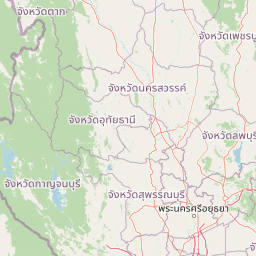
The cultural context of Khlong Wang Chao National Park relates to the local communities in Tak Province and Kamphaeng Phet Province that have traditionally inhabited the surrounding areas. The park name derives from the Khlong Wang Chao watercourse, reflecting the hydrological significance of the area in local geography. The administrative districts covering the park, including Wang Chao and Mueang Tak in Tak Province, and Kosamphi Nakhon, Khlong Lan, and Mueang Kamphaeng Phet in Kamphaeng Phet Province, represent areas with historical human presence in the western Thai highlands. While the source material does not detail specific indigenous or cultural heritage sites within the park, the region's proximity to historical settlement patterns in northern Thailand suggests traditional relationships between local communities and the mountain forest environment.
Top sights and standout views in Khlong Wang Chao National Park
The defining highlights of Khlong Wang Chao National Park include its dramatic mountain scenery within the Thanon Thong Chai Range, with Yen Mountain's 1,898-meter summit offering the park's highest point. The unique central valley formation, resembling twin pan basins surrounded by mountain ridges, provides a distinctive landscape feature not commonly seen in Thai national parks. The Namtok Khlong Samo Kruai waterfall represents a notable water feature within the park's boundaries. The dense teak forests that prompted the original conservation designation remain a significant ecological feature, representing one of the more extensive teak forest areas within Thailand's protected area network. The park's size of 747 square kilometers provides substantial wilderness area for exploration and ecological study.
Best time to visit Khlong Wang Chao National Park
The best time to visit Khlong Wang Chao National Park follows typical patterns for western Thailand's mountainous regions. The cool dry season from November through February offers the most comfortable conditions for trekking and outdoor activities, with milder temperatures at higher elevations. The surrounding forest environments are most accessible during this period when rainfall is minimal and trail conditions are optimal. The wet season from May through October brings increased precipitation to the mountain catchments, which can affect trail accessibility and create hazardous conditions on steeper terrain. Visitors planning trips should consider the elevation range within the park, as temperatures at higher elevations such as Yen Mountain can be significantly cooler than in the lower valley areas.