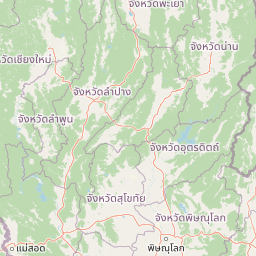
Why Op Luang National Park stands out
Op Luang National Park is best known for its spectacular river canyon, which offers one of the most visually striking geological features in northern Thailand's protected area network. The Mae Chaem River has carved a deep, steep-sided gorge through the mountainous terrain, creating a dramatic landscape that draws visitors seeking natural scenic beauty. Beyond the canyon, the park preserves significant prehistoric heritage, with ancient rock paintings estimated at 28,000 years old providing tangible evidence of human presence in this highland valley far back into the Pleistocene era. The combination of dramatic topography, waterfalls, caves, and archaeological significance makes Op Luang distinctive among Thailand's national parks.
Op Luang National Park history and protected-area timeline
The area now protected as Op Luang National Park has a human history extending back tens of thousands of years, as demonstrated by the prehistoric paintings and artifacts discovered within its boundaries. Carbon-dating of these archaeological finds has established that humans inhabited this highland valley approximately 28,000 years ago, making it one of the oldest continuously habitable landscapes in mainland Southeast Asia. The Doi Pha Chang area preserves a particularly significant cliff painting depicting an elephant, while additional rock art sites near Op Luang Canyon have yielded ancient jewelry and stone tools that provide insight into the lives of these early inhabitants. The modern conservation history of the area began in 1966 when the region was designated as a forest park, reflecting Thailand's mid-twentieth century approach to managing state forest lands. This status continued for twenty-five years until 1991, when Op Luang was elevated to become Thailand's 68th national park, granting it stronger legal protection and greater resources for ecological management.
Op Luang National Park landscape and geographic character
The physical landscape of Op Luang National Park is dominated by the mountainous terrain of the Thanon Thong Chai Range, with elevations varying across the protected area to create dramatic topographic variation. The centerpiece is Op Luang Canyon, a steep-sided gorge approximately 300 meters in length where the Mae Chaem River has cut through the surrounding rock, creating a landscape of considerable scenic impact. The river continues its course through the park, feeding several notable waterfalls including Mae Bua Kham, which drops about 50 meters, and the year-round Mae Tia at approximately 80 meters high. Mae Chon waterfall spans roughly 80 meters in width, creating a broad curtain of falling water. The park also contains cave systems such as Tham Tong, a granite and limestone formation with tunnels extending into the mountain, and Tham Tu Pu, known for its stalactite and stalagmite formations. In the western portion of the park, Thep Thanom hot spring adds another geological dimension to the landscape, offering a contrasting attraction to the canyon and waterfalls.
Op Luang National Park ecosystems, habitats, and plant life
The vegetation of Op Luang National Park encompasses several distinct forest types that reflect the park's elevation range and position within the northern Thailand highlands. The park supports mixed deciduous forest, deciduous dipterocarp forest, and evergreen forest, each dominating different zones based on elevation, aspect, and soil conditions. The deciduous dipterocarp forests are particularly characteristic of this region and represent a threatened habitat type across mainland Southeast Asia. Tree species documented in the park include valuable timber species such as teak (Tectona grandis), as well as Hopea odorata, Dipterocarpus alatus, Xylia xylocarpa, Afzelia xylocarpa, Toona ciliata, Diospyros mollis, Terminalia alata, and various Lagerstroemia species. The forest understory includes diverse bamboos, palms, and ferns that contribute to the overall ecological complexity. This forest diversity supports the mammal and bird communities that inhabit the park.
Op Luang National Park wildlife and species highlights
Op Luang National Park provides habitat for a diverse mammalian fauna characteristic of northern Thailand's highland forests. Large mammals present in the park include the Indochinese tiger, sambar deer, and Asiatic black bear, representing the top predators and megaherbivores that require extensive territories and intact forest habitats. Smaller carnivores include the common palm civet, large-spotted civet, and the endangered Sunda pangolin. Primate species include Phayre's leaf monkey, while additional mammals include the Siamese hare, mainland serow, tree monitor lizard, northern treeshrew, northern red muntjac, and wild boar. The avian community is particularly diverse, with species including the vernal hanging parrot, scarlet minivet, white-rumped shama, spotted dove, greater coucal, hill myna, Siamese fireback, red junglefowl, shikra, various falconet species, red-whiskered bulbul, woodpeckers, pheasants, and partridges. This bird diversity reflects the variety of forest habitats and the park's position within a mountainous region that serves as a migration corridor and biogeographic transition zone.
Op Luang National Park conservation status and protection priorities
Op Luang National Park contributes to Thailand's protected area network by preserving a substantial block of highland forest within the Thanon Thong Chai Range, an important biogeographic region that connects to larger conservation landscapes extending toward Myanmar. The park's designation as IUCN Category II reflects its primary objective of protecting natural ecosystems while allowing for sustainable tourism and environmental education. By protecting diverse forest types including mixed deciduous, deciduous dipterocarp, and evergreen communities, the park preserves habitat for threatened species including the Indochinese tiger and Sunda pangolin, both listed as endangered by international conservation bodies. The prehistoric archaeological sites within the park, with artifacts dating approximately 28,000 years old, add a cultural dimension to the conservation value, as the protection of landscapes with demonstrated long-term human-nature interaction is increasingly recognized as important for understanding ecological and cultural resilience.
Op Luang National Park cultural meaning and human context
The cultural significance of Op Luang National Park extends far beyond its ecological value, as the park preserves tangible evidence of human presence spanning roughly 28,000 years. The prehistoric rock paintings found throughout the park, particularly the elephant depiction at Doi Pha Chang and additional art near Op Luang Canyon, represent some of the oldest known artistic expressions in mainland Southeast Asia. These archaeological finds, which also include ancient jewelry and stone tools, demonstrate that this highland valley has supported human communities throughout the late Pleistocene and Holocene periods. This deep time human history makes the park important not only as an ecological preserve but also as a cultural landscape where the continuity of human occupation and interaction with the environment can be traced across an extraordinarily long timeframe.
Top sights and standout views in Op Luang National Park
The signature attraction of Op Luang National Park is the dramatic Op Luang Canyon, where the Mae Chaem River has carved a steep-sided gorge through the mountainous terrain, creating a scenic landscape that defines the park's visual identity. The canyon provides not only natural beauty but also hiking opportunities along its slopes and viewpoints that offer sweeping perspectives of the gorge. Beyond the canyon, the park offers multiple waterfalls including the impressive Mae Tia, the wide Mae Chon, and the tall Mae Bua Kham, each providing different experiences of water in the landscape. The cave systems of Tham Tong and Tham Tu Pu offer exploration opportunities, with the latter featuring notable stalactite and stalagmite formations. The prehistoric rock paintings at Doi Pha Chang, dating back approximately 28,000 years, represent a unique cultural attraction found within a natural protected area.
Best time to visit Op Luang National Park
Op Luang National Park can be visited throughout the year, though the optimal period for most visitors coincides with the cool, dry season from November to February when temperatures are comfortable and rainfall is minimal. This period offers the best conditions for hiking the canyon trails, exploring cave systems, and viewing waterfalls, as the reduced precipitation means trails are less muddy and visibility is generally good for landscape photography. The hot season from March to May brings higher temperatures that can make strenuous hiking more difficult, though the dry conditions may provide different landscape character. The monsoon season from June to October brings rainfall that can affect trail conditions and accessibility, though the瀑布 are often at their most impressive during and immediately after the wet season when water flow is strongest.