
Mori Atlas logo
National parkDoi Inthanon National Park

Discover the geography of Chom Thong District's premier national park and its vertical ecosystems.

Doi Inthanon National Park: Thailand's Highest Mountain and Protected Montane Landscape

Doi Inthanon National Park, Thailand's highest protected peak, offers a profound geographic exploration across varied montane ecosystems. Situated in Chom Thong District, its landscape spans dramatic elevation changes from 800 to 2,565 meters, encompassing tropical forests, cloud forests, and unique high-altitude bogs. This national park serves as a critical watershed for the Ping River and represents a significant axis of biodiversity in the northern Thai highlands, ideal for understanding protected land context.

Mountain parksCloud forestsWaterfall destinationsBirdwatching hotspotsMontane ecosystemsThai highlands

Doi Inthanon National Park

National park

Park overview

Structured park overview, official facts, and landscape profile for Doi Inthanon National Park

Doi Inthanon National Park park facts, protected area profile, and essential visitor context
Review the core facts for Doi Inthanon National Park, including designation, size, terrain, visitor scale, habitats, and operating context in one park-focused overview.

About Doi Inthanon National Park

Doi Inthanon National Park protects the geological and ecological heart of Thailand's northern highlands within the Thanon Thong Chai Range. The park's defining feature is Doi Inthanon itself, a granite mountain reaching 2,565 metres and standing as the country's tallest peak. This vertical prominence creates dramatic ecological transitions across relatively short horizontal distances, with vegetation zones shifting dramatically as visitors ascend from the lower deciduous forests through increasingly cool and wet montane environments to the summit's unique peat bog ecosystem. The park's location within the Ping River watershed gives it substantial hydrological importance, with numerous streams and rivers originating on its slopes to feed agricultural communities throughout Chiang Mai Province. Beyond its ecological significance, the park provides habitat for ethnic minority communities, particularly Karen and Hmong villages whose traditional land use practices have shaped the cultural landscape over generations. The combination of extreme biodiversity, watershed protection, cultural heritage, and recreational opportunities makes Doi Inthanon one of Thailand's most comprehensive protected areas serving ecological, hydrological, and social functions.

Quick facts and research context for Doi Inthanon National Park

Doi Inthanon National Park is located in Chom Thong District, approximately 60 kilometres southwest of Chiang Mai city. The park encompasses Thailand's highest peak at 2,565 metres above sea level and a secondary summit, Doi Hua Mot Luang, at 2,330 metres. The protected area spans 482 square kilometres and was established in 1972, making it one of Thailand's oldest national parks. The park contains four major waterfalls, including Mae Klang, Wachiratan, Siriphum, and Mae Ya Falls. Approximately 4,500 people from Karen and Hmong ethnic communities live within the park boundaries. The park is managed by Thailand's Department of National Park, Wildlife and Plant Conservation.

Park context

Deeper park guide and search-rich context for Doi Inthanon National Park

Doi Inthanon National Park history, landscape, wildlife, and travel context
Explore Doi Inthanon National Park through its history, landscape character, ecosystems, wildlife, conservation priorities, cultural context, and seasonal travel timing in a structured park guide built for atlas discovery and search intent.

Why Doi Inthanon National Park stands out

Doi Inthanon is renowned as Thailand's highest mountain, a title that draws visitors seeking to stand at the summit of the Kingdom. The park is equally celebrated for its spectacular waterfalls, particularly the Wachirathan Waterfall which plunges through dense forest near the park's main access road. The mountain's vertical ecological zonation is exceptional, supporting the only significant sphagnum peat bog in Thailand at approximately 2,500 metres elevation. Birdwatchers flock to the park for its extraordinary avifauna diversity, with 383 species making it the second richest national park in Thailand for birds. The cloud forests at higher elevations feature gnarled trees draped in moss and epiphytes, creating an atmospheric landscape distinctive among Thailand's protected areas.

Doi Inthanon National Park history and protected-area timeline

Doi Inthanon National Park was officially established on 2 October 1972 through a declaration published in the Royal Gazette, becoming Thailand's sixth national park. The creation of the park reflected growing recognition in the 1960s and early 1970s of the need to protect Thailand's remaining forest cover and unique mountain ecosystems. The park's boundaries were subsequently modified in 1978 and again in 2009 to reflect improved understanding of ecological boundaries and management requirements. Prior to formal protection, the area had long been recognized by local communities as a significant landscape, with the mountain featuring in traditional beliefs and as a source of headwaters for rivers supporting valley agriculture. The establishment also came during a period when Thailand was systematically creating a national park system, with Doi Inthanon selected as one of the flagship areas for mountain ecosystem protection based on its ecological distinctiveness and the presence of the country's highest summit.

Doi Inthanon National Park landscape and geographic character

The physical landscape of Doi Inthanon National Park is dominated by steep ridgelines and deep valleys carved by streams descending from the high summit. The terrain rises dramatically from around 800 metres in the lower park boundaries to 2,565 metres at the summit, creating an elevation change of nearly 1,800 metres within the protected area. Granite bedrock underlies much of the mountain, with exposed rock formations visible along ridges and in stream channels. Multiple waterfalls mark where streams plunge over geological weaknesses in the landscape, with Wachirathan Falls being particularly prominent with its broad, multi-tiered cascade. The upper elevations feature rounded, dome-like summits and the distinctive sphagnum peat bog that represents one of Thailand's few true high-altitude wetlands. Throughout the park, the terrain supports dense vegetation cover that stabilizes slopes and creates the characteristic green landscape of Thailand's northern highlands.

Doi Inthanon National Park ecosystems, habitats, and plant life

The ecological character of Doi Inthanon National Park is defined by its remarkable altitudinal zonation, which supports multiple distinct vegetation types across the elevation gradient. Below 800 metres, mixed deciduous forests transition into deciduous dipterocarp forests between 600 and 800 metres. Pine and deciduous dipterocarp forests occupy the 800 to 1,200 metre zone, while seasonal rain forests or dry evergreen forests occur up to 900 metres. Lower montane rain forests dominate below 1,000 metres, giving way to oak-dominated forests between 1,000 and 1,800 metres. From 1,800 metres upward, upper montane rain forests contain characteristic species such as Quercus, Schima wallichii, and Rhododendron arboreum. The summit area at approximately 2,500 metres supports a unique sphagnum peat bog with specialized vegetation including Rhododendron and various peat-adapted species. This vertical sequence represents an extraordinary diversity of forest types within a relatively compact area, creating what amounts to a living demonstration of tropical montane ecology.

Doi Inthanon National Park wildlife and species highlights

Doi Inthanon National Park supports exceptional wildlife diversity, particularly evident in its avifauna where 383 species have been recorded, placing the park second among Thailand's national parks for bird species richness. The varied forest types provide habitat for an enormous range of bird communities, from lowland species in the deciduous forests to montane-specialist birds in the cloud forests. Notable among these are various sunbird species, including the green-tailed sunbird which occupies highland habitats. The park's reptile community includes multiple lizard and snake species adapted to both ground-dwelling and arboreal lifestyles, with species such as the tokay gecko, several skinks, and various colubrid snakes present. Amphibians thrive in the wet environments, particularly in stream environments where species like the Inthanon toad (Ansonia inthanon) and various stream-dwelling frogs occur. The diverse insect community includes numerous butterfly species, with the red helen (Cethosia biblis) being commonly observed in the park's forested areas.

Doi Inthanon National Park conservation status and protection priorities

Doi Inthanon National Park serves multiple critical conservation functions within Thailand's protected area network. The park protects the headwaters of several rivers that flow into the Ping River system, making it essential for watershed protection serving agricultural communities across Chiang Mai Province. Its altitudinal range captures multiple vegetation types that would be severely threatened by deforestation or development, particularly the unique cloud forests and sphagnum peat bog at the summit which have no equivalent protection elsewhere in Thailand. The bird species richness, ranking second among national parks, indicates the area's importance as a biodiversity hotspot for both resident and migratory bird species. The park also functions as a connectivity corridor linking northern Thailand's forest systems, supporting species that require large contiguous habitats. As Thailand's highest mountain, Doi Inthanon serves as a benchmark for understanding climate change impacts on tropical montane ecosystems, making its long-term protection scientifically valuable for tracking ecological responses to environmental change.

Doi Inthanon National Park cultural meaning and human context

The landscape of Doi Inthanon National Park has been inhabited for centuries by ethnic minority communities, particularly Karen and Hmong peoples who maintain villages within the park boundaries. Approximately 4,500 people from these communities live in the park area, practicing traditional agriculture including rotational farming andettled cultivation. These communities have developed cultural relationships with the landscape over generations, with the mountain holding significance in traditional beliefs and resource use practices. The interaction between these communities and the environment has shaped both cultural traditions and the physical landscape within the park. Doi Inthanon also features religious structures including a chedi built near the summit, reflecting the integration of Buddhist practices with the landscape's spiritual significance.

Top sights and standout views in Doi Inthanon National Park

The summit of Doi Inthanon at 2,565 metres offers visitors the unique experience of standing at Thailand's highest point, with views extending across the northern highlands on clear days. The Wachirathan Waterfall provides one of the most accessible and impressive waterfall experiences in northern Thailand, with its cascading waters visible from the main park road. The ecological zonation can be experienced through the park's network of trails, which allow visitors to walk through multiple forest types from tropical deciduous to cloud forest within a single hike. The birdwatching opportunities are exceptional, with the possibility of observing dozens of species in a single day, particularly during early morning hours when bird activity peaks. The cherry blossom season in December and January adds a distinctive seasonal attraction when flowering trees create dramatic displays at higher elevations.

Best time to visit Doi Inthanon National Park

The optimal period for visiting Doi Inthanon National Park spans from November through February when dry, cool conditions prevail and visibility is typically excellent for summit views. Daytime temperatures at higher elevations during this period range from 20 to 25 degrees Celsius, with cool evenings suitable for overnight stays in the park. The dry season from March through May offers warm weather but increasing haze that may obscure views from the summit, and this period sees higher visitor numbers. The wet season from June through October brings heavy rainfall, particularly during August and September when precipitation can exceed 300 millimetres monthly, creating dramatic waterfall flows but potentially causing access issues. The period around December to January offers the additional attraction of cherry blossom flowering at higher elevations, though this varies from year to year depending on weather conditions.

Park location guide

Geography guide, regional context, and park location map for Doi Inthanon National Park

Doi Inthanon National Park park geography, regions, and map view in Thailand
Understand where Doi Inthanon National Park sits in Thailand through a broader geographic reading of the surrounding landscape, nearby location context, and its mapped position within the national park landscape.

How Doi Inthanon National Park fits into Thailand

Thailand is a Southeast Asian nation formerly called Siam, located in mainland Southeast Asia. It operates as a unitary parliamentary constitutional monarchy under King Vajiralongkorn. The country borders Myanmar, Laos, Cambodia, and Malaysia, with maritime boundaries involving Vietnam, Indonesia, and India. Thailand has a population of nearly 66 million and covers approximately 513,120 km². Historically, the Sukhothai Kingdom marks the beginning of Thai history, followed by the powerful Ayutthaya Kingdom.

Wider geography shaping Doi Inthanon National Park in Thailand

Thailand occupies mainland Southeast Asia with borders to Myanmar (west/northwest), Laos (east/northeast), Cambodia (southeast), and Malaysia (south). The country has coastline along the Gulf of Thailand to the southeast and the Andaman Sea to the southwest. The territory covers approximately 513,120 km².

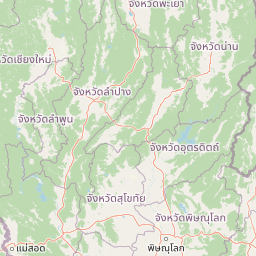
Map view of Doi Inthanon National Park

Use this park location map to pinpoint Doi Inthanon National Park in Thailand, understand its exact geographic position, and read its mapped placement within the surrounding landscape more clearly.

Pigeon | © OpenStreetMap contributors

Location context for Doi Inthanon National Park

Chiang Mai ProvinceChom Thong District
Park atlas

Trace the regional spread of protected landscapes, montane ecosystems, and waterfall destinations in Thailand.

Explore Nearby National Parks and Protected Areas Beyond Doi Inthanon National Park
After exploring Doi Inthanon National Park, browse other national parks and protected areas across Northern Thailand, uncovering diverse mountain parks, cloud forests, and montane ecosystems. Compare geographic features and conservation efforts across a broader atlas view, understanding how interconnected landscapes protect unique biodiversity and watershed regions.
National parkChiang Mai Province

Mae Wang National Park: National Park Landscape in Chiang Mai Province

Explore its mapped protected area and regional geography.

Mae Wang National Park offers a distinct protected landscape within the mountainous terrain of Chiang Mai Province, Thailand. This page provides detailed geographic context and maps the park's protected boundaries, contributing to a broader understanding of the Thai highlands. It serves as a critical entry point for exploring this national park's specific identity and its place within the regional atlas.

Area
119 km²
Established
2009
IUCN
II
Visitors
66K annual
National parkChiang Mai Province

Khun Khan National Park: A Mapped Protected Landscape in Northern Thailand's Highlands

Explore its geographic boundaries and regional park context.

Khun Khan National Park is a designated national park located in the mountainous region of Chiang Mai Province, Thailand. This page provides an atlas-driven perspective, highlighting the park's mapped boundaries and its position within the broader geography of the northern Thai highlands. Users can delve into the specific protected landscape characteristics and understand its role in the regional natural terrain, offering a structured geographic discovery of this important conservation area.

Area
208 km²
Established
2012
IUCN
II
Visitors
18.1K annual
National parkChiang Mai Province

Op Khan National Park: A National Park in Chiang Mai Province's Mountainous Terrain

Explore protected area geography and mapped landscape context.

Op Khan National Park is situated in the diverse geography of Chiang Mai Province, a region characterized by its prominent highlands and mountainous landscapes. This page serves as a focused entry point for understanding the park's identity as a protected national park, detailing its mapped boundaries and its contribution to the regional natural landscape. Discover the geographic features and the protected-area context that define Op Khan National Park within Thailand's atlas.

Area
227 km²
Established
1992
IUCN
II
Visitors
99K annual
National parkChiang Mai Province

Op Luang National Park: Dramatic River Canyon and Prehistoric Heritage in Chiang Mai Province

Explore protected landscape boundaries and natural terrain.

Op Luang National Park offers a unique glimpse into Thailand's protected areas, highlighted by its defining feature: the striking Op Luang Canyon. This national park in Chiang Mai Province preserves a dramatic mountain landscape carved by the Mae Chaem River, complemented by impressive waterfalls like Mae Tia and Mae Chon, and intriguing cave systems. The presence of ancient rock paintings adds a layer of prehistoric heritage, making it a significant site for geographic and cultural discovery within northern Thailand's conservation network.

Area
553 km²
Established
1991
IUCN
II
Visitors
36.3K annual
National parkThailand

Doi Suthep, Pui National Park: An Atlas View of Thailand's Protected National Landscape

Explore mapped boundaries and regional geographic context.

This entry focuses on Doi Suthep, Pui National Park, detailing its role as a protected national landscape within Thailand. Users can examine its mapped territory and understand its geographic placement and regional significance, offering a focused perspective for atlas exploration and a deeper appreciation of its protected status.

Area
257 km²
Established
1981
IUCN
II
Visitors
328.7K annual
National parkMae Hong Son Province

Namtok Mae Surin National Park: Protected Landscape Atlas Explorer

Mapped Boundaries and Regional Geographic Context

Access detailed information about Namtok Mae Surin National Park, a key protected area within the geographically diverse Mae Hong Son Province of Thailand. This entry focuses on the park's physical characteristics, mapped landscape, and its significance within the regional geography. Discover the protected boundaries and natural terrain that define this national park, offering a structured viewpoint for geographic exploration and atlas-based research.

Area
397 km²
Established
1981
IUCN
II
Visitors
5.5K annual
National parkLamphun Province

Doi Khun Tan National Park: Protected Mountain Landscape and Forest Terrain in Lamphun Province

Explore its mapped geography and the Khun Tan Tunnel.

Doi Khun Tan National Park is a protected mountain region in northern Thailand, recognized for its varied terrain and ecological significance. The park's geography includes steep slopes supporting distinct forest types, from lowland deciduous woodlands to upland evergreen forests, all contained within its clearly mapped boundaries. A prominent feature is the historic Khun Tan Tunnel, Thailand's longest railroad tunnel, highlighting the park's unique combination of natural landscapes and historical infrastructure. This national park offers a rich opportunity for atlas exploration of its protected area identity and regional geographic context within Lamphun Province.

Area
255 km²
Established
1975
IUCN
II
Visitors
12.7K annual
National parkMae Hong Son Province

Salawin National Park: Mapped Boundaries and Protected Landscape Geography

Discover its national park status and regional context.

Delve into the geographic specifics of Salawin National Park, a designated national park situated in Mae Hong Son Province, Thailand. This park's mapped boundaries and protected landscape identity are key to understanding its role within the broader regional geography. Explore its natural terrain and discover its atlas significance as a conservation area, offering valuable context for geographic study.

Area
721 km²
Established
1994
IUCN
II
Visitors
2.1K annual

Common questions about visiting, size, designation, and location context for Doi Inthanon National Park

Doi Inthanon National Park FAQs for park facts, access, geography, and protected area context
Find quick answers about Doi Inthanon National Park, including protected-area facts, park geography, trail and visitor context, and how the park fits into its surrounding country and regional landscape.
MoriAtlas Explorer

Continue Your Protected Areas Search Across the Global Atlas

Deepen your exploration by continuing the structured search for national parks and protected areas worldwide. Utilize the comprehensive filtering capabilities to compare different conservation landscapes and refine your understanding of global park geography. Discover more about the distribution and characteristics of protected natural areas.

Global natural geography