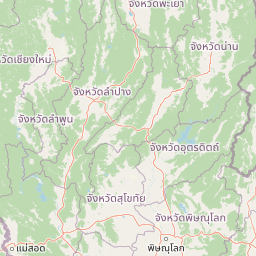
Why Khun Khan National Park stands out
Khun Khan National Park is best known for its pristine mountain forest ecosystems and dramatic natural attractions. The park features two notable waterfalls: the seven-tiered Huai Mae Na Poe waterfall and the two-tiered Huai Tat waterfall, with one section reaching 30 meters in height. The Pha Sam Na viewpoint offers a three-sided cliff experience at 1,253 meters elevation, providing panoramic vistas over the surrounding mountain landscapes. The protected area preserves significant tracts of virgin forest above 1,000 meters, creating important habitat for endangered species including tigers and the elusive goral, a goat-antelope native to the Himalayan region.
Khun Khan National Park history and protected-area timeline
Khun Khan National Park was officially established on May 18, 2012, when its creation was published in the Royal Gazette of Thailand, making it the 126th national park in the country's protected area system. The establishment followed recognition of the area's ecological significance and the need to preserve the mountain forest ecosystems of the Thanon Thong Chai range. Prior to national park designation, the area existed within a broader landscape of forest reserves and wildlife sanctuaries that had varying levels of protection. The formal designation brought increased resources for conservation management and visitor services, allowing for coordinated protection of the watershed and biodiversity values. The park's relatively recent establishment means it represents a modern approach to protected area management in Thailand, building on decades of national park development since the creation of the first protected area in 1962.
Khun Khan National Park landscape and geographic character
The physical landscape of Khun Khan National Park is characterized by extensive mountainous terrain that dominates approximately 80 percent of the protected area. The Thanon Thong Chai range runs through the park, creating a sequence of steep ridges, deep valleys, and elevated plateaus. Elevations range from 500 meters at the lower boundaries to 1,708 meters at Doi Pung Kia, the highest peak within the park. The terrain exhibits strong slope gradients, with most areas exceeding 35 percent inclination, creating dramatic topographic relief. Multiple stream systems drain the mountain slopes, including the Mae Saem, Mae Sap, Mae Khan, Mae Long, Mae To, Mae Bo Khao, Mae Om Taeng, Mae Tala, Mae Saeng, and Mae Chaem rivers. These watercourses have carved valleys through the mountainous terrain, creating cascading waterfalls and riparian habitats. The landscape supports diverse vegetation zones corresponding to elevation and aspect, with dense forest cover persisting across most of the terrain.
Khun Khan National Park ecosystems, habitats, and plant life
The ecological character of Khun Khan National Park is defined by its five distinct forest types distributed across the mountain landscape. Montane evergreen forest dominates at elevations above 1,000 meters in the upper portions of the park and along the ridge dividing Samoeng and Mae Chaem districts, featuring species such as three-needled pine, Pinus latteri, Malacca tree, Mammea siamensis, and Malabar ironwood. Dry evergreen forest occurs throughout valley floors and stream margins between 600 and 1,000 meters elevation, supporting hardwood species including various dipterocarp trees. Pine forest covers ridge crests and upper slopes between 700 and 1,300 meters, with two-needle and three-needle pine species predominating. Mixed deciduous forest appears on eastern slopes with teak and other deciduous species, while dry dipterocarp forest occupies lower hill areas with typical savanna species. This forest diversity creates complex habitat structure supporting the park's biodiversity.
Khun Khan National Park wildlife and species highlights
Khun Khan National Park provides sanctuary for diverse mammalian species within its protected forest habitats. Large mammals include the tiger, a flagship predator of the Asian forests, alongside wild boar, barking deer (muntjac), and the goral, a mountain goat-antelope that inhabits steep rocky terrain. The park also supports populations of Asiatic wild dogs known as dholes, porcupines, pangolins, masked palm civets, and various mongoose species. The bird community includes prominent species such as the red junglefowl, considered the ancestor of domestic chickens, and the great hornbill, a large and striking forest bird with distinctivecasqued bill. These species represent both the park's biodiversity value and its role as a functioning ecosystem capable of supporting apex predators and diverse herbivore communities.
Khun Khan National Park conservation status and protection priorities
Khun Khan National Park contributes significantly to Thailand's conservation network by protecting montane forest ecosystems within the Thanon Thong Chai mountain range. The park preserves critical habitat for species of conservation concern, including tigers and goral, both of which face population pressures across their ranges. The protected area functions as an ecological corridor connecting with adjacent wildlife sanctuaries and other protected areas, supporting genetic exchange between wildlife populations. The watersheds within the park provide ecosystem services including water regulation and soil retention that benefit downstream communities in Chiang Mai Province. Forest protection also contributes to carbon storage and climate mitigation objectives. The establishment of the park in 2012 reflects Thailand's ongoing commitment to expanding protected area coverage, particularly in mountain forest ecosystems that had previously received limited formal protection.
Khun Khan National Park cultural meaning and human context
Khun Khan National Park sits within the traditional territories of Northern Thailand, an area with rich cultural heritage tied to the mountain landscapes. The local communities in Samoeng and Mae Chaem districts have historical relationships with the forest resources of the region, though the park's recent establishment predates significant tourism development. The Thai name of the park, อุทยานแห่งชาติขุนขาน, reflects the local identity and connection to the mountainous terrain. The park boundaries adjoin several other protected areas, creating a network of conservation lands in the Chiang Mai highlands that collectively preserve both natural and cultural values of the region.
Top sights and standout views in Khun Khan National Park
The standout features of Khun Khan National Park include its dramatic mountain landscape with elevations reaching 1,708 meters, the spectacular Huai Tat waterfall with its 30-meter cascade, and the panoramic Pha Sam Na cliff viewpoint at 1,253 meters. The preserved virgin forest above 1,000 meters represents increasingly rare old-growth montane habitat in Northern Thailand. The presence of tigers as a resident species distinguishes the park as a location where visitors may encounter Thailand's largest carnivore. The network of streams and waterfalls, including the seven-tiered Huai Mae Na Poe, provides accessible natural attractions within the protected landscape.
Best time to visit Khun Khan National Park
The park can be visited throughout the year, with the comfortable climate making it a year-round destination. The cool season from November to February offers pleasant temperatures for hiking and viewpoint visits, while the surrounding forest maintains green foliage. The wet season from May to October brings increased rainfall that sustains waterfall flow and enhances the lush quality of the vegetation, though some trails may be more difficult to navigate. The transitional period between seasons provides intermediate conditions. Temperature remains moderate across seasons due to the mountain elevation, with average conditions around 23 degrees Celsius.