
Mori Atlas logo
National parkHuai Nam Dang National Park

Discover mapped boundaries and distinct terrain within Mae Hong Son Province, Thailand.

Huai Nam Dang National Park: Protected Mountainous Landscape and Geographic Atlas

Huai Nam Dang National Park stands as a significant protected mountainous wilderness in northern Thailand, primarily situated within Mae Hong Son Province. Spanning rugged terrain with elevations ranging from 400 to 1,962 meters at Doi Chang peak, this national park offers a compelling landscape for geographic discovery. Its steep ridges, deep valleys, and extensive forest cover define a critical watershed, feeding vital river systems and providing a rich context for understanding regional natural features through map exploration.

Mountain parksNorthern ThailandForest protectionWaterfall destinationsHot springsWildlife habitat

Huai Nam Dang National Park

National park

Park overview

Structured park overview, official facts, and landscape profile for Huai Nam Dang National Park

Huai Nam Dang National Park park facts, protected area profile, and essential visitor context
Review the core facts for Huai Nam Dang National Park, including designation, size, terrain, visitor scale, habitats, and operating context in one park-focused overview.

About Huai Nam Dang National Park

Huai Nam Dang National Park occupies a significant position in Thailand's northern mountain region, protecting a substantial tract of forested landscape that forms part of the broader Himalayan-influenced terrain of mainland Southeast Asia. The park's geography is characterized by a series of parallel mountain ridges and valleys that create a complex and visually striking landscape. The elevation gradient from 400 to nearly 2,000 meters supports remarkable ecological zonation, with different forest communities occupying distinct altitude bands. This topographical complexity also influences local climate patterns, with the park experiencing cool conditions throughout the year due to its elevation. The park serves important watershed functions, with its streams contributing to rivers that flow through populated valleys below. Visitors are drawn to the combination of natural scenic beauty, outdoor recreation opportunities, and the relatively intact forest ecosystems that remain within the protected boundary.

Quick facts and research context for Huai Nam Dang National Park

Huai Nam Dang National Park is located about 50 kilometers north of Chiang Mai city, with its eastern portion extending near the town of Pai in Mae Hong Son Province. The park features a cool climate year-round with average temperatures ranging from 8°C to 23°C. The protected area encompasses three main forest types: evergreen forest, deciduous forest, and dipterocarp forest, supporting substantial biodiversity. The park was formally declared following a survey initiated in December 1987, covering what were previously Chiang Dao, Mae Taeng, and Mai Pai forest reserves.

Park context

Deeper park guide and search-rich context for Huai Nam Dang National Park

Huai Nam Dang National Park history, landscape, wildlife, and travel context
Explore Huai Nam Dang National Park through its history, landscape character, ecosystems, wildlife, conservation priorities, cultural context, and seasonal travel timing in a structured park guide built for atlas discovery and search intent.

Why Huai Nam Dang National Park stands out

Huai Nam Dang National Park is best known for its dramatic mountain scenery and the "sea of fog" phenomenon that occurs on winter mornings, particularly visible from Doi Chang and Doi Kiew Lom viewpoints. The park's namesake waterfall, Huai Nam Dang, features four cascading levels dropping approximately 50 meters. Additionally, the park contains significant hot spring resources, including Pong Dueat with its multiple large thermal pools. These geological features, combined with the diverse forest ecosystems spanning multiple elevation zones, make the park a distinctive protected area in Thailand's northern highlands.

Huai Nam Dang National Park history and protected-area timeline

The formal protection of the Huai Nam Dang area began with a survey initiated in December 1987, which assessed the natural values and conservation potential of the forested mountain region. Following several years of evaluation and administrative process, the area was officially declared as Thailand's 81st national park on 14 August 1995. The declaration incorporated what had previously been designated as Chiang Dao, Mae Taeng, and Mai Pai forest reserves, unified under the new national park designation to provide more comprehensive protection. The establishment reflected growing recognition in Thailand during the 1990s of the need to conserve remaining forest areas in the northern highlands, which face pressures from agricultural expansion, logging, and infrastructure development. The park has since been managed by Thailand's Department of National Parks, Wildlife and Plant Conservation.

Huai Nam Dang National Park landscape and geographic character

The physical landscape of Huai Nam Dang National Park is defined by its mountainous terrain with steep, often heavily forested slopes and narrow valleys. The highest point, Doi Chang, reaches 1,962 meters above sea level and forms part of a prominent ridge system that runs through the park. From these higher elevations, the terrain descends sharply into valley floors at around 400 meters, creating dramatic topographic relief. The mountain ridges frequently experience cloud formation and the characteristic "sea of fog" effect during the cool season, when morning mists fill the valleys below the peaks. Several perennial streams flow through the park, carved into the steep terrain, eventually joining the larger river systems that drain the region. The combination of elevation, slope, and forest cover creates a landscape of considerable scenic diversity.

Huai Nam Dang National Park ecosystems, habitats, and plant life

The ecological character of Huai Nam Dang National Park is defined by the presence of three distinct forest types that occur across the elevation gradient. Evergreen forest dominates at higher elevations and in areas with consistent moisture, featuring species such as Ailanthus triphysa, various palm species, and both red pine and Tenasserim pine in more open areas. Deciduous forests occupy portions of the mid-elevation zones, with species including Alphonsea glabrifolia and red cedar. At lower elevations, dipterocarp forest becomes more prevalent, characterized by species such as Siamese sal, various dipterocarp trees, and associated hardwood species. This forest diversity supports the park's ecological significance and provides the foundation for its wildlife communities.

Huai Nam Dang National Park wildlife and species highlights

Huai Nam Dang National Park supports a diverse mammalian fauna typical of northern Thailand's forest ecosystems. The park is home to larger species including Asian elephant, tiger, and sambar deer, along with smaller mammals such as various monkey species, gibbons, bears, and the nocturnal palm civet. The reptile community includes several species of turtles, boas, cobras, and the greater green snake among others. Bird diversity is represented by both passerine and non-passerine species, with hill mynas, bulbuls, various pheasants, and the rufous-throated partridge among the species recorded. This assemblage of wildlife reflects the varied habitats provided by the park's forest types and elevation range.

Huai Nam Dang National Park conservation status and protection priorities

Huai Nam Dang National Park represents an important conservation area within Thailand's northern highlands, protecting substantial forest ecosystems that would otherwise face continuing pressure from human activities. The protected status helps preserve watershed function, maintain biodiversity corridors, and safeguard the scenic values that attract visitors. As a Category II protected area under IUCN classification, the park is managed primarily for ecosystem conservation while also providing opportunities for nature-based recreation and environmental education. The presence of species such as tiger and Asian elephant indicates the park's role in conserving larger mammals that require extensive habitat areas.

Top sights and standout views in Huai Nam Dang National Park

The park offers several standout features that distinguish it within Thailand's national park system. Doi Chang and Doi Kiew Lom provide commanding viewpoints where visitors can witness the dramatic sea of fog phenomenon on winter mornings, with neighboring mountain ranges visible across the mist-filled valleys. Huai Nam Dang waterfall, the park's namesake, presents a four-tier cascade approximately 50 meters high. The hot springs at Pong Dueat and Tha Pai offer therapeutic bathing opportunities in natural thermal settings. The forest-covered mountains and scenic driving routes through the park provide additional attractions for visitors exploring northern Thailand.

Best time to visit Huai Nam Dang National Park

The park can be visited throughout the year, though different seasons offer distinct experiences. The winter months from October to February bring cooler temperatures, with minimums sometimes dropping to 2°C, and create the conditions for the famous sea of fog phenomenon visible from mountain viewpoints on clear mornings. The hot springs become particularly appealing during the cooler period. The rainy season from May to September brings increased precipitation and lush vegetation, though some trails may be more difficult. The summer months of March and April offer warm conditions and are a popular time for waterfall viewing when water flow remains strong.

Park location guide

Geography guide, regional context, and park location map for Huai Nam Dang National Park

Huai Nam Dang National Park park geography, regions, and map view in Thailand
Understand where Huai Nam Dang National Park sits in Thailand through a broader geographic reading of the surrounding landscape, nearby location context, and its mapped position within the national park landscape.

How Huai Nam Dang National Park fits into Thailand

Thailand is a Southeast Asian nation formerly called Siam, located in mainland Southeast Asia. It operates as a unitary parliamentary constitutional monarchy under King Vajiralongkorn. The country borders Myanmar, Laos, Cambodia, and Malaysia, with maritime boundaries involving Vietnam, Indonesia, and India. Thailand has a population of nearly 66 million and covers approximately 513,120 km². Historically, the Sukhothai Kingdom marks the beginning of Thai history, followed by the powerful Ayutthaya Kingdom.

Wider geography shaping Huai Nam Dang National Park in Thailand

Thailand occupies mainland Southeast Asia with borders to Myanmar (west/northwest), Laos (east/northeast), Cambodia (southeast), and Malaysia (south). The country has coastline along the Gulf of Thailand to the southeast and the Andaman Sea to the southwest. The territory covers approximately 513,120 km².

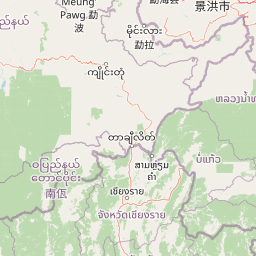
Map view of Huai Nam Dang National Park

Use this park location map to pinpoint Huai Nam Dang National Park in Thailand, understand its exact geographic position, and read its mapped placement within the surrounding landscape more clearly.

Pigeon | © OpenStreetMap contributors

Location context for Huai Nam Dang National Park

Chiang Mai ProvinceMae Hong Son Province
Park atlas

Explore adjacent national parks and conservation landscapes within Northern Thailand's rugged mountainous terrain.

Discover Other Protected Areas Near Huai Nam Dang National Park, Mapping Northern Thailand's Landscapes
Explore national parks and protected areas near Huai Nam Dang National Park, tracing the regional spread of mountain landscapes, forest reserves, and vital watershed protection zones across northern Thailand. Compare their geographic distribution and conservation characteristics to understand the broader atlas of natural spaces adjacent to Huai Nam Dang's unique terrain.
National parkChiang Mai Province

Doi Wiang Pha National Park: Protected Mountainous Terrain and Watershed Dynamics in Northern Thailand

Explore the geography of this vital national park's peaks and valleys.

Doi Wiang Pha National Park stands as a significant national park in Chiang Mai Province, renowned for its dramatic mountainous terrain and its crucial function as a watershed. The park's complex system of ridges and valleys, along with its central peak, Doi Wiang Pha, defines its rugged landscape. Its waters feed into the Fang and Mae Lao river systems, highlighting its ecological importance for regional agriculture and communities. Understanding Doi Wiang Pha National Park through its mapped geography reveals a key protected area within northern Thailand's atlas of natural landscapes.

Area
343.37 km²
IUCN
II
Visitors
939 annual
Relief
Mountain
National parkThailand

Doi Luang National Park: Northern Thailand's Extensive Mountain Protected Area

Mapped terrain, forest ecosystems, and watershed significance.

Doi Luang National Park is a substantial protected landscape situated in the Phi Pan Nam Range of Northern Thailand, covering extensive mountainous territory. The park's geographic importance is highlighted by its role in protecting critical headwater ecosystems for both the Wang and Lao Rivers, featuring rugged ridgelines and significant natural terrain. Discover the mapped boundaries and conservation value of this expansive national park, integral to Thailand's regional geography and ecological health.

Area
1,169 km²
Established
1990
IUCN
II
National parkChom Thong District

Doi Inthanon National Park: Thailand's Highest National Park and Montane Landscape Explorer

Mapped geography and protected land context in Chom Thong District.

Doi Inthanon National Park, the crown jewel of Thailand's northern highlands, represents an unparalleled opportunity for geographic discovery. As the nation's highest mountain national park, it showcases exceptional vertical zonation of ecosystems, from tropical deciduous forests to rare cloud forests and sphagnum peat bogs. This protected landscape in Chom Thong District is vital for watershed protection and offers critical insights into Thailand's montane biodiversity, making its mapped boundaries and terrain essential for atlas-based exploration.

Area
482 km²
Established
1972
IUCN
II
National parkLamphun Province

Doi Khun Tan National Park: Protected Mountain Landscape and Forest Terrain in Lamphun Province

Explore its mapped geography and the Khun Tan Tunnel.

Doi Khun Tan National Park is a protected mountain region in northern Thailand, recognized for its varied terrain and ecological significance. The park's geography includes steep slopes supporting distinct forest types, from lowland deciduous woodlands to upland evergreen forests, all contained within its clearly mapped boundaries. A prominent feature is the historic Khun Tan Tunnel, Thailand's longest railroad tunnel, highlighting the park's unique combination of natural landscapes and historical infrastructure. This national park offers a rich opportunity for atlas exploration of its protected area identity and regional geographic context within Lamphun Province.

Area
255 km²
Established
1975
IUCN
II
Visitors
12.7K annual
National parkPhrae Province

Mae Yom National Park: Protected Mountain Forest and Yom River Geography

Discover its mapped boundaries and natural teak ecosystems.

Mae Yom National Park represents a significant protected landscape in Phrae Province, Thailand, characterized by its mountainous terrain and the prominent Yom River. This national park is particularly noteworthy for its naturally growing teak forests, offering a unique glimpse into indigenous timber ecosystems within a conservation area. The park's geography features steep ridges, tributary streams feeding the main river, and distinct landscapes like the Kaeng Sua Ten rapids, providing a rich atlas context for northern Thailand's protected areas and natural terrain.

Area
455 km²
Established
1986
IUCN
II
National parkChiang Mai Province

Op Luang National Park: Dramatic River Canyon and Prehistoric Heritage in Chiang Mai Province

Explore protected landscape boundaries and natural terrain.

Op Luang National Park offers a unique glimpse into Thailand's protected areas, highlighted by its defining feature: the striking Op Luang Canyon. This national park in Chiang Mai Province preserves a dramatic mountain landscape carved by the Mae Chaem River, complemented by impressive waterfalls like Mae Tia and Mae Chon, and intriguing cave systems. The presence of ancient rock paintings adds a layer of prehistoric heritage, making it a significant site for geographic and cultural discovery within northern Thailand's conservation network.

Area
553 km²
Established
1991
IUCN
II
National parkMae Hong Son Province

Salawin National Park: Mapped Boundaries and Protected Landscape Geography

Discover its national park status and regional context.

Delve into the geographic specifics of Salawin National Park, a designated national park situated in Mae Hong Son Province, Thailand. This park's mapped boundaries and protected landscape identity are key to understanding its role within the broader regional geography. Explore its natural terrain and discover its atlas significance as a conservation area, offering valuable context for geographic study.

Area
721 km²
Established
1994
IUCN
II
National parkTak Province

Lan Sang National Park: Mapped Protected Landscape and Waterfall Atlas

Discover the geography and natural features of this national park.

Lan Sang National Park presents a rich protected landscape within Tak Province, Thailand, renowned for its striking tiered waterfalls cascading through the mountainous Dawna Range. This national park offers a detailed look at its mapped terrain, including multiple named waterfalls like Namtok Pha Lat and Namtok Tha Le, alongside scenic viewpoints. Its diverse forest environments contribute to a unique natural setting, making it a significant area for understanding regional geography and protected natural land patterns.

Area
104 km²
Established
1979
IUCN
II

Common questions about visiting, size, designation, and location context for Huai Nam Dang National Park

Huai Nam Dang National Park FAQs for park facts, access, geography, and protected area context
Find quick answers about Huai Nam Dang National Park, including protected-area facts, park geography, trail and visitor context, and how the park fits into its surrounding country and regional landscape.
MoriAtlas Explorer

Continue Your Protected Areas Search Across the Global Atlas

Deepen your exploration by continuing the structured search for national parks and protected areas worldwide. Utilize the comprehensive filtering capabilities to compare different conservation landscapes and refine your understanding of global park geography. Discover more about the distribution and characteristics of protected natural areas.

Global natural geography