
Mori Atlas logo
National parkNamtok Chat Trakan National Park

Discover the mapped geography and unique landscape of Thailand's 55th national park.

Namtok Chat Trakan National Park: Protected Mountain Forests and River Headwaters in Phitsanulok Province

Namtok Chat Trakan National Park is a significant protected area in Phitsanulok Province, Thailand, renowned for its rugged mountainous terrain and extensive dipterocarp forests. Established as the country's 55th national park, it encompasses over 543 square kilometers of pristine natural landscape. This area serves as a critical watershed, protecting the headwaters of the Khwae Noi River and its tributary, the Phak River, underscoring its ecological importance. The park's geography is defined by steep peaks, forest-covered slopes, and dramatic waterfalls, offering a rich context for exploring Thailand's protected lands.

WaterfallsDipterocarp ForestMountain ForestsNorthern ThailandPrehistoric Rock ArtRiver Headwaters

Namtok Chat Trakan National Park

National park

Park overview

Structured park overview, official facts, and landscape profile for Namtok Chat Trakan National Park

Namtok Chat Trakan National Park park facts, protected area profile, and essential visitor context
Review the core facts for Namtok Chat Trakan National Park, including designation, size, terrain, visitor scale, habitats, and operating context in one park-focused overview.

About Namtok Chat Trakan National Park

Namtok Chat Trakan National Park occupies a mountainous landscape in northern Thailand's Phitsanulok Province, protecting extensive dipterocarp forest and the headwaters of significant river systems. The park's terrain is dominated by rugged peaks and dense forest coverage, with Phu Khai Hoi rising as the highest summit at 1,277 meters. The park was formally established on November 2, 1987, following a lengthy survey process that began in 1982 under the name Khao Ya Puk Forest Park. After several name changes and survey iterations spanning approximately 1,274 square kilometers of potential parkland, the final designation encompassed 543 square kilometers as Thailand's 55th national park. The area forms part of the broader Luang Prabang montane rain forests ecoregion, representing a transition zone between tropical lowland forests and higher elevation forest types. Management responsibility transferred to the Phitsanulok Regional Office (Region 11) in 2002, overseeing conservation and visitor services for the park.

Quick facts and research context for Namtok Chat Trakan National Park

Namtok Chat Trakan National Park is located in Phitsanulok Province, approximately 350 kilometers north of Bangkok. The park's highest point is Phu Khai Hoi at 1,277 meters elevation. The area receives monsoonal rainfall from June through October, with a cool dry season from November to February and hot summer months from March to May. The park contains several waterfalls including Chat Trakan (7 tiers), Na Chan (7 tiers), and Pha Khu Kham (50 meters high). Cave systems such as Tham Pha Kradan Lek contain prehistoric carvings. The park falls within IUCN Category II (National Park) protection status.

Park context

Deeper park guide and search-rich context for Namtok Chat Trakan National Park

Namtok Chat Trakan National Park history, landscape, wildlife, and travel context
Explore Namtok Chat Trakan National Park through its history, landscape character, ecosystems, wildlife, conservation priorities, cultural context, and seasonal travel timing in a structured park guide built for atlas discovery and search intent.

Why Namtok Chat Trakan National Park stands out

Namtok Chat Trakan is best known for its dramatic Chat Trakan waterfall, a seven-tiered cascade with a total drop of approximately 1,280 meters, where visitors can swim at the sandy beach near the falls. The park's mountainous dipterocarp forests and position as a key watershed for the Khwae Noi River system distinguish it within Thailand's protected area network. The unexplained prehistoric rock carvings inscribed on cliffs near the waterfall add archaeological intrigue to the natural landscape.

Namtok Chat Trakan National Park history and protected-area timeline

The path to national park designation began with a forest park survey initiated in 1982 under the name Khao Ya Puk Forest Park. In March 1982, the area was renamed Namtok Chat Trakan Forest Park as the survey process expanded to evaluate approximately 1,274 square kilometers for potential national park status. Following detailed assessment, approximately half of the surveyed area was proposed for inclusion in Thailand's national park system. The proposal for Namtok Chat Trakan, covering 339,375 rai (approximately 543 square kilometers), was submitted in 1985. The park was officially declared Thailand's 55th national park on November 2, 1987. From its establishment until 2002, the park was managed directly by the Department of National Parks, Wildlife and Plant Conservation in Bangkok. Management oversight transferred to Protected Areas Regional Office 11 (Phitsanulok) in 2002, integrating the park into the regional coordination system for protected areas in upper central Thailand.

Namtok Chat Trakan National Park landscape and geographic character

The park's landscape consists predominantly of mountainous terrain covered in dense dipterocarp forest. The area sits within the Luang Prabang montane rain forests ecoregion, characterized by rugged peaks, steep valleys, and forest-covered slopes descending into river valleys. Phu Khai Hoi, the park's highest peak at 1,277 meters, provides sweeping views over the surrounding forest canopy. The park contains the source regions of several important waterways, including the Khwae Noi River and its tributary the Phak River, which flow through the protected area before entering the broader river systems of Phitsanulok Province. Notable geological features include sandstone formations at Khao Chang Luang and cave systems such as Tham Pha Kradan Lek containing prehistoric rock carvings. The landscape supports multiple waterfall systems, with the Chat Trakan cascade being the most prominent, featuring multiple tiers that cascade down the mountain slopes.

Namtok Chat Trakan National Park ecosystems, habitats, and plant life

The park's ecological character is defined by its dipterocarp forest ecosystems, which dominate the lower and middle elevations throughout the protected area. These tropical broadleaf forests contain a diverse array of tree species including Shorea obtusa, Shorea siamensis, Shorea roxburghii, Dipterocarpus alatus, Dipterocarpus obtusifolius, and Pterocarpus macrocarpus. The forest composition also includes valuable timber species such as Afzelia xylocarpa, Xylia xylocarpa, and Anisoptera costata. At higher elevations, the vegetation transitions toward more mesophytic species including Lithocarpus and various members of the Arecaceae family. The park's position within the Luang Prabang montane rain forests ecoregion means it supports species assemblages characteristic of this distinct biogeographic region, bridging tropical Southeast Asian flora with more temperate elements found at elevation.

Namtok Chat Trakan National Park wildlife and species highlights

The mammal fauna within the park includes several Southeast Asian forest species such as barking deer, wild boar, black giant squirrel, kanchil (lesser mouse-deer), and northern treeshrew. Bird diversity is well represented with approximately 60 species documented, including around 44 passerine species from 19 families and 16 non-passerine species from 9 families. Notable avian residents include the black-crested bulbul, ashy woodswallow, black drongo, black-headed bulbul, black-naped oriole, blue-winged leafbird, chestnut-tailed starling, and various sunbirds and flycatchers. Non-passerine species include the Asian barred owlet, Asian openbill, common kingfisher, greater coucal, and green-eared barbet. The avifauna reflects the park's forest habitats and its position within the broader Indochinese biogeographic region.

Namtok Chat Trakan National Park conservation status and protection priorities

Namtok Chat Trakan National Park plays an important conservation role as a protected area within Thailand's national park system, serving as a designated IUCN Category II protected area. The park protects critical watershed functions for the Khwae Noi River and Phak River systems, which provide water resources for surrounding communities and agricultural areas in Phitsanulok Province. Its inclusion within the Luang Prabang montane rain forests ecoregion highlights its significance for conserving this distinct biogeographic unit. The protected area helps maintain forest cover in a mountainous region that might otherwise face pressure from agricultural expansion or logging. The park's waterfalls and scenic landscapes also provide ecosystem services related to tourism and recreation, supporting local economic activity while promoting conservation awareness among visitors.

Namtok Chat Trakan National Park cultural meaning and human context

The park's cultural dimension centers primarily on the archaeological presence of unexplained prehistoric rock carvings found on cliffs near the Chat Trakan waterfall. These carved inscriptions remain an intriguing element of the park's heritage, though detailed interpretation or historical context is limited in available sources. Local communities in Chat Trakan and Nakhon Thai Districts have historical connections to the surrounding forested landscape, though the park does not contain major indigenous settlement or explicit traditional land use designations. The area's name combines Namtok (waterfall) with Chat Trakan (the local place name), reflecting the waterfall's centrality to the region's identity.

Top sights and standout views in Namtok Chat Trakan National Park

The seven-tiered Chat Trakan waterfall represents the park's signature natural feature, offering swimming opportunities at its sandy beach and dramatic scenery throughout the cascade. The multi-tiered Na Chan waterfall provides another significant waterfall experience, while Pha Khu Kham drops 50 meters in a single dramatic plunge. Prehistoric rock carvings at Tham Pha Kradan Lek cave add archaeological interest to the park's attractions. The summit of Phu Khai Hoi at 1,277 meters offers panoramic views for hikers willing to ascend the mountain trails. The park's role as a watershed protecting the Khwae Noi River's headwaters underscores its environmental importance beyond recreational value.

Best time to visit Namtok Chat Trakan National Park

The optimal time to visit Namtok Chat Trakan National Park is during the cool dry season from November through February, when temperatures are comfortable for hiking and outdoor activities. Winter nights can become quite cold, particularly at higher elevations within the park. The rainy season from June to October brings heavy rainfall that transforms the waterfalls into more spectacular cascades, though trail conditions may be more difficult and some paths could be restricted. Summer months from March to May offer warm conditions but may lack the dramatic waterfall flows seen after the monsoon season. Visitors seeking to experience the waterfalls at their most impressive should consider timing their visit toward the end of the rainy season or early dry season when water levels remain high.
Park location guide

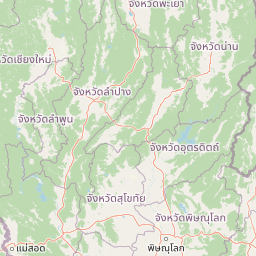
Geography guide, regional context, and park location map for Namtok Chat Trakan National Park

Namtok Chat Trakan National Park park geography, regions, and map view in Thailand
Understand where Namtok Chat Trakan National Park sits in Thailand through a broader geographic reading of the surrounding landscape, nearby location context, and its mapped position within the national park landscape.

How Namtok Chat Trakan National Park fits into Thailand

Thailand is a Southeast Asian nation formerly called Siam, located in mainland Southeast Asia. It operates as a unitary parliamentary constitutional monarchy under King Vajiralongkorn. The country borders Myanmar, Laos, Cambodia, and Malaysia, with maritime boundaries involving Vietnam, Indonesia, and India. Thailand has a population of nearly 66 million and covers approximately 513,120 km². Historically, the Sukhothai Kingdom marks the beginning of Thai history, followed by the powerful Ayutthaya Kingdom.

Wider geography shaping Namtok Chat Trakan National Park in Thailand

Thailand occupies mainland Southeast Asia with borders to Myanmar (west/northwest), Laos (east/northeast), Cambodia (southeast), and Malaysia (south). The country has coastline along the Gulf of Thailand to the southeast and the Andaman Sea to the southwest. The territory covers approximately 513,120 km².

Map view of Namtok Chat Trakan National Park

Use this park location map to pinpoint Namtok Chat Trakan National Park in Thailand, understand its exact geographic position, and read its mapped placement within the surrounding landscape more clearly.

Pigeon | © OpenStreetMap contributors

Location context for Namtok Chat Trakan National Park

Phitsanulok Province
Park atlas

Map the regional geography and discover adjacent protected areas beyond this significant watershed

Compare National Parks and Protected Landscapes Near Namtok Chat Trakan National Park
Browse additional national parks and protected areas across Northern Thailand, extending beyond the mountainous terrain and dipterocarp forests of Namtok Chat Trakan National Park. Exploring these adjacent conservation landscapes provides valuable geographic context, revealing diverse watershed areas and shared ecoregion features for comparative atlas discovery.
National parkThailand

Phu Hin Rong Kla National Park: A Protected Mountain Landscape in Northern Thailand

Explore rock formations, waterfalls, and unique historical terrain.

Phu Hin Rong Kla National Park, situated in northern Thailand, is a significant national park known for its dramatic mountainous terrain, including impressive fractured rock formations and numerous multi-tiered waterfalls. This protected area also holds historical importance, having served as a former communist insurgent stronghold. Its rugged landscape is defined by steep ridges, deep valleys, and diverse forest ecosystems, making it a compelling destination for understanding Thailand's natural and historical geography within a mapped context.

Area
307 km²
Established
1984
IUCN
II
National parkPhetchabun Province

Nam Nao National Park: Protected Landscape and Regional Geography

Explore maps and natural terrain of this Northern Thailand park.

Nam Nao National Park, situated in Phetchabun Province, Thailand, is a large national park distinguished by its rugged mountainous terrain and extensive pine forest landscapes. This protected area is vital for its role in conservation, housing significant biodiversity and forming a natural boundary between regions. Through its mapped geography and diverse natural settings, Nam Nao National Park offers a key destination for understanding protected land dynamics and regional natural landscapes.

Area
966 km²
Established
1972
IUCN
II
National parkLoei Province

Phu Kradueng National Park: Sandstone Mesa Protected Landscape and Geographic Atlas

Discover mapped boundaries and pine savanna terrain.

Phu Kradueng National Park, situated in Loei Province, Thailand, is a remarkable protected area defined by its large sandstone mesa and striking cliff-edged summit plateau. This page offers detailed geographic insights into the park's unique landscape, including its pine savanna ecosystems, diverse forest types transitioning from lower slopes to the summit, and its cool, refreshing climate. Explore Phu Kradueng National Park's mapped boundaries and natural terrain for a deeper understanding of this significant conservation landscape.

Area
348 km²
Established
1962
IUCN
II
National parkThailand

Phu Pha Man National Park: Dramatic Cliffs, Caves, and Dinosaur Tracks in Thailand's Protected Landscape

Explore mapped geography and prehistoric fossil sites within Thailand's Phu Pha Man National Park.

Phu Pha Man National Park is a protected area in Thailand distinguished by its rugged limestone formations, significant cave networks, and dramatic waterfalls. Beyond its scenic beauty, the park is a globally important site for paleontology, holding Asia's oldest known dinosaur tracks. This page provides an atlas-style view of its protected landscape, local geography, and the unique prehistoric discoveries that define its identity.

Area
350 km²
Established
2000
IUCN
II
National parkPhrae Province

Mae Yom National Park: Protected Mountain Forest and Yom River Geography

Discover its mapped boundaries and natural teak ecosystems.

Mae Yom National Park represents a significant protected landscape in Phrae Province, Thailand, characterized by its mountainous terrain and the prominent Yom River. This national park is particularly noteworthy for its naturally growing teak forests, offering a unique glimpse into indigenous timber ecosystems within a conservation area. The park's geography features steep ridges, tributary streams feeding the main river, and distinct landscapes like the Kaeng Sua Ten rapids, providing a rich atlas context for northern Thailand's protected areas and natural terrain.

Area
455 km²
Established
1986
IUCN
II
National parkKhon Kaen Province

Nam Phong National Park: Mapped Protected Landscape and Geography in Khon Kaen Province

Explore scenic viewpoints, rock formations, and reservoir landscapes.

Nam Phong National Park presents a compelling case study in protected landscape geography, particularly within Thailand's northeastern region. This national park is defined by its mountainous terrain, featuring the Phu Phan Kham and Phu Meng ranges that dramatically meet the waters of the Ubol Ratana Dam reservoir. Its mapped boundaries encompass striking viewpoints like Hin Chang Si, prehistoric rock paintings, and geological formations, offering a detailed look at its natural and archaeological significance for atlas exploration.

Area
197 km²
Established
2000
IUCN
II
Visitors
68.3K annual
National parkKamphaeng Phet Province

Khlong Wang Chao National Park: Thailand's Distinct Mountainous Protected Landscape in Kamphaeng Phet

Explore mapped boundaries and terrain of this significant national park.

Khlong Wang Chao National Park is a key protected area in western Thailand, recognized for its impressive mountainous geography within the Thanon Thong Chai Range. Spanning 747 square kilometers, the park features complex ridges, valleys, and Yen Mountain, its highest peak. Its designation as a national park highlights the importance of its dense teak forests and unique central valley formations, offering a rich subject for geographic and landscape exploration.

Area
747 km²
Established
1990
IUCN
II
National parkTak Province

Lan Sang National Park: Mapped Protected Landscape and Waterfall Atlas

Discover the geography and natural features of this national park.

Lan Sang National Park presents a rich protected landscape within Tak Province, Thailand, renowned for its striking tiered waterfalls cascading through the mountainous Dawna Range. This national park offers a detailed look at its mapped terrain, including multiple named waterfalls like Namtok Pha Lat and Namtok Tha Le, alongside scenic viewpoints. Its diverse forest environments contribute to a unique natural setting, making it a significant area for understanding regional geography and protected natural land patterns.

Area
104 km²
Established
1979
IUCN
II

Common questions about visiting, size, designation, and location context for Namtok Chat Trakan National Park

Namtok Chat Trakan National Park FAQs for park facts, access, geography, and protected area context
Find quick answers about Namtok Chat Trakan National Park, including protected-area facts, park geography, trail and visitor context, and how the park fits into its surrounding country and regional landscape.
MoriAtlas Explorer

Continue Your Protected Areas Search Across the Global Atlas

Deepen your exploration by continuing the structured search for national parks and protected areas worldwide. Utilize the comprehensive filtering capabilities to compare different conservation landscapes and refine your understanding of global park geography. Discover more about the distribution and characteristics of protected natural areas.

Global natural geography