Mori Atlas logo
National parkBardiya National Park

Discover the mapped geography and diverse ecosystems of Bardiya District's largest national park.

Bardiya National Park: Nepal's Premier Protected Landscape and Wildlife Atlas

Bardiya National Park, situated in Nepal's expansive Bardiya District, stands as the nation's largest protected area. Covering nearly 1,000 square kilometers, it offers a rich tapestry of terrains including alluvial grasslands, subtropical forests, and riverine habitats fed by the Karnali and Babai rivers. This protected landscape is crucial for understanding Nepal's southern plains geography and serves as a vital hub for conservation, particularly for iconic species like Bengal tigers and Indian rhinoceroses, providing an unparalleled atlas-level view of its ecological significance.

Terai Lowland ParkTiger HabitatRhinoceros ConservationElephant TerritoryRiverine EcosystemGrassland Wilderness

Bardiya National Park

National park

Park overview

Structured park overview, official facts, and landscape profile for Bardiya National Park

Bardiya National Park park facts, protected area profile, and essential visitor context
Review the core facts for Bardiya National Park, including designation, size, terrain, visitor scale, habitats, and operating context in one park-focused overview.

About Bardiya National Park

Bardiya National Park represents the crown jewel of Nepal's Terai conservation landscape, protecting a vast expanse of lowland wilderness that stands as one of South Asia's most significant remaining examples of alluvial grassland and moist deciduous forest ecosystems. The park's establishment in 1988 marked the culmination of decades of protective measures that began with a royal hunting reserve designation in 1969. Located in the Bardiya District, the park straddles the Babai River valley and adjoins the Karnali River, creating a complex hydrological system of channels, oxbow lakes, and floodplains that support extraordinary biodiversity. The landscape transitions from the terai plains in the south to theSiwalik foothills in the north, encompassing a remarkable diversity of habitats within its boundaries. The park's isolation from major urban centers has allowed it to remain relatively undisturbed compared to other protected areas in the Terai, making it particularly valuable for species that require large, contiguous habitats. The relocation of human populations from the Babai Valley in the 1980s enabled natural ecosystem recovery that has transformed the area into prime wildlife habitat, demonstrating the park's capacity for ecological restoration when human pressure is removed.

Quick facts and research context for Bardiya National Park

Bardiya National Park spans 968 square kilometers in Nepal's Terai plains, making it the country's largest national park by area. The protected area was established in 1988 after evolving from a royal hunting reserve in 1969 and wildlife reserve in 1976. The park features a network of river systems centered on the Karnali and Babai rivers, with extensive oxbow lakes and wetlands supporting diverse wildlife. It is home to at least 53 mammal species, 407 bird species, and 125 fish species. The park's ecological significance is recognized through its inclusion in the Bardia-Banke Tiger Conservation Unit, representing a coherent protected area of over 1,400 square kilometers.

Park context

Deeper park guide and search-rich context for Bardiya National Park

Bardiya National Park history, landscape, wildlife, and travel context
Explore Bardiya National Park through its history, landscape character, ecosystems, wildlife, conservation priorities, cultural context, and seasonal travel timing in a structured park guide built for atlas discovery and search intent.

Why Bardiya National Park stands out

Bardiya National Park is most renowned for its significant tiger population and successful conservation of the Bengal tiger in the Terai ecosystem. The park also maintains one of Nepal's most viable populations of Indian rhinoceroses, which have been translocated from Chitwan National Park since 1986. The park's elephant population includes the famous bull elephant Raja Gaj, noted for his exceptional size and mammoth-like appearance standing 3.4 meters at the shoulder. The Babai Valley has become a particularly important habitat following the resettlement of approximately 1,500 people and subsequent natural regeneration of vegetation, creating prime wildlife viewing opportunities.

Bardiya National Park history and protected-area timeline

The territory comprising present-day Bardiya National Park has a complex political history that shaped its eventual protection. Following the Sugauli Treaty of 1815, the region was ceded to the British East India Company and remained under British administration for 45 years before being returned to Nepal in 1860 as recognition for Nepal's support during the Indian Rebellion of 1857. The returned territory became known as Naya Muluk, meaning new country. In 1969, an area of 368 square kilometers was designated as the Royal Hunting Reserve, providing initial protection to the region's wildlife. This was upgraded to the Royal Karnali Wildlife Reserve in 1976, and further expanded in 1982 when it was proclaimed the Royal Bardia Wildlife Reserve. The protected area was significantly extended in 1984 to include the entire Babai River Valley, recognizing the ecological importance of this riparian corridor. Finally, in 1988, the reserve was elevated to national park status as Bardiya National Park, cementing its conservation priority. The approximately 1,500 residents of the Babai Valley were resettled elsewhere, allowing natural vegetation regeneration that has created the exceptional wildlife habitat the valley supports today.

Bardiya National Park landscape and geographic character

The physical geography of Bardiya National Park encompasses a remarkable variety of landforms characteristic of the Himalayan foreland basin. The park occupies the Terai plains, a flat alluvial landscape formed by sediment deposition from Himalayan rivers, transitioning northward into the Siwalik Hills that mark the beginning of the Himalayan foothills. The Karnali River, one of Nepal's major river systems, forms the western boundary of the park, while the Babai River bisects the protected area creating a central drainage corridor. The river system has produced numerous oxbow lakes, oxbow cutoffs, and wetlands scattered throughout the park's extent. The terrain is predominantly flat with gentle undulations, interrupted by isolated forested ridges and the distinctiveChuria range along the northern boundary. The floodplains along the major rivers support extensive grasslands that undergo seasonal inundation during the monsoon period, creating a dynamic wetland ecosystem. Riverine forests line the water channels, transitioning into savanna and grassland savanna across the wider plain.

Bardiya National Park ecosystems, habitats, and plant life

The ecological character of Bardiya National Park is defined by its complex mosaic of habitats supporting exceptional biodiversity. Approximately 70 percent of the park is covered by forest, with the remaining area split between grassland, savanna, and riverine forest zones. The park's flora includes 839 documented plant species, comprising 173 vascular plant species including 140 dicots, 26 monocots, six ferns, and one gymnosperm species. The vegetation community represents subtropical moist deciduous forest typical of the Terai, dominated by species adapted to the seasonal monsoon climate and periodic flooding. The grassland habitats are particularly significant, maintained by seasonal waterlogging that prevents forest encroachment and supports specialized grassland species. The river system, including the Karnali and Babai rivers along with their tributaries and the network of oxbow lakes, creates extensive wetland habitats that are critical for both aquatic biodiversity and wildlife such as the Gangetic dolphin. The floodplain grasslands represent some of the most productive and threatened habitats in South Asia, making their protection within the park particularly significant.

Bardiya National Park wildlife and species highlights

Bardiya National Park supports an extraordinary concentration of wildlife, with 642 faunal species documented within its boundaries. The park is home to at least 53 mammal species, most notably the Bengal tiger, Indian rhinoceros, and Indian elephant. The tiger population is part of the Bardia-Banke Tiger Conservation Unit, one of the most important tiger habitats in Nepal. The rhinoceros population, established through translocation from Chitwan National Park beginning in 1986, has faced significant challenges including poaching pressure that eliminated the population from the Babai Valley in the mid-2000s but has since recovered to around 29 individuals. The park's elephant population includes the famous bull Raja Gaj, distinguished by his exceptional size and distinctive domed head, who has been a resident of the park since first observed in 1985. The river systems support important aquatic species including a small population of gharials and mugger crocodiles, along with 125 recorded fish species and the endangered Gangetic dolphin. Bird diversity is exceptional with 407 species recorded, including the Bengal florican, white-rumped vulture, lesser florican, sarus crane, and the iconic peafowl and bar-headed geese.

Bardiya National Park conservation status and protection priorities

Bardiya National Park represents one of Nepal's most significant conservation achievements and faces ongoing challenges that test management capacity. The park forms the core of the Tiger Conservation Unit Bardia-Banke, a coherent protected area of 1,437 square kilometers that represents one of the few remaining large, contiguous tiger habitats in the region. The park's conservation value is amplified by its position as the largest and most undisturbed protected area in Nepal's Terai, providing critical habitat for species requiring extensive territories and intact ecosystems. The successful elephant population recovery demonstrates the park's capacity to support viable populations of mega-herbivores when adequately protected. However, the park has faced serious challenges including poaching threats that decimated the rhinoceros population in the Babai Valley and human-wildlife conflict that resulted in tiger attacks on local communities in 2021. The Nepalgunj-Surkhet highway crossing the southern boundary creates significant fragmentation and disrupts wildlife movement, representing a persistent conservation concern. Conservation efforts have focused on anti-poaching measures, community engagement, and habitat management to maintain the park's ecological integrity.

Bardiya National Park cultural meaning and human context

The region surrounding Bardiya National Park is inhabited by communities with deep cultural connections to the Terai landscape, though the park itself was created through the relocation of resident populations from the Babai Valley. The area's history reflects the complex political dynamics of Nepal's southern border regions, having been under British administration for 45 years following the Sugauli Treaty before returning to Nepal in 1860. The returned territory, known as Naya Muluk or new country, maintains a distinct identity within Nepal. Local communities in the villages surrounding the park continue traditional agricultural practices and maintain cultural connections to the landscape despite the protected area's establishment. The Karnali River holds significance for local communities as a source of livelihood and transportation, while the broader Terai region has historically been characterized by agricultural settlement patterns that contrast with the mountainous terrain predominant in much of Nepal.

Top sights and standout views in Bardiya National Park

The Babai Valley stands as perhaps the park's most remarkable feature, transformed into prime wildlife habitat following the resettlement of human populations and subsequent natural forest regeneration. The valley now supports the largest concentration of wildlife including rhinoceroses and provides exceptional safari opportunities in what has become a thriving wilderness area. The Karnali River provides habitat for the endangered gharial and Gangetic dolphin, offering unique wildlife viewing opportunities along its banks and sandbars. The Bengal florican, one of the park's flagship bird species, inhabits the grasslands and represents a conservation priority given the species' restricted range. The presence of Raja Gaj, one of Asia's most famous bull elephants, provides a unique wildlife viewing experience for visitors to the park.

Best time to visit Bardiya National Park

The optimal period for visiting Bardiya National Park spans from October through April, when dry conditions concentrate wildlife around the remaining water sources and visibility improves in the cleared grasslands. The post-monsoon months of October and November offer lush green landscapes following seasonal rains, while the winter months from December through February provide comfortable temperatures and excellent wildlife viewing as animals congregate near water bodies. March and April represent the hottest period but also offer optimal tiger and rhino sighting opportunities as animals seek water and vegetation is minimal. The monsoon season from June to September brings heavy rainfall that can limit park access and make wildlife viewing challenging, though the refreshed landscape and bird migration during this period offer different experiences for patient visitors.
Park location guide

Geography guide, regional context, and park location map for Bardiya National Park

Bardiya National Park park geography, regions, and map view in Nepal
Understand where Bardiya National Park sits in Nepal through a broader geographic reading of the surrounding landscape, nearby location context, and its mapped position within the national park landscape.

How Bardiya National Park fits into Nepal

Nepal is a federal parliamentary republic in South Asia, landlocked between China and India. It spans the Himalayas and includes eight of the world's ten highest mountains. Kathmandu is the capital and largest city.

Wider geography shaping Bardiya National Park in Nepal

Nepal is located in South Asia, landlocked between China to the north and India to the south, east, and west. The country occupies the Himalayan region in the north and extends into the Indo-Gangetic Plain in the south. Terrain includes the Terai lowlands, subalpine hills, and the Himalayas with peaks including Mount Everest.

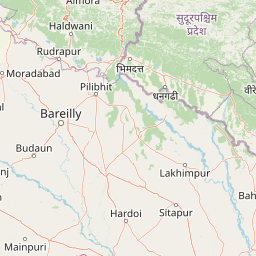
Map view of Bardiya National Park

Use this park location map to pinpoint Bardiya National Park in Nepal, understand its exact geographic position, and read its mapped placement within the surrounding landscape more clearly.

Pigeon | © OpenStreetMap contributors

Location context for Bardiya National Park

Bardiya District
Park atlas

Trace the Regional Protected Landscape and Connected Park Geography Surrounding Bardiya National Park

Discover Other National Parks Near Bardiya National Park, Nepal: Explore Connected Protected Areas
Continue your exploration from Bardiya National Park to browse other national parks and protected areas in Nepal's Terai lowlands, comparing their unique ecosystems and conservation efforts. Gain a deeper understanding of the regional park geography, riverine habitats, and grassland wilderness that define this critical South Asian biodiversity corridor.
National parkLakhimpur Kheri district

Dudhwa National Park: Terai Grasslands and Alluvial Plain Geography within Lakhimpur Kheri

Discover the mapped protected landscape of this vital Indian national park.

Dudhwa National Park in Lakhimpur Kheri district stands as a crucial example of the Terai grassland ecosystem, characterized by its expansive alluvial plains and marshy habitats. This page provides an atlas-style exploration of its protected landscape, detailing the unique terrain and geographic context essential for understanding its conservation significance.

Area
614 km²
Established
1977
IUCN
II
Visitors
26K annual
National parkNepal

Shey Phoksundo National Park: Nepal's Largest Trans-Himalayan Protected Landscape with Phoksundo Lake

Explore alpine terrain and unique protected ecosystems.

Delve into the geographical distinctiveness of Shey Phoksundo National Park, Nepal's expansive protected area. This park is defined by its dramatic elevation changes and the striking Phoksundo Lake, a vivid turquoise alpine reservoir set against barren, mountainous terrain. Understanding its trans-Himalayan setting and protected landscape context reveals its importance within the broader atlas of global natural areas.

Area
3,555 km²
Established
1984
IUCN
II
National parkUttarakhand

Nanda Devi National Park: High-Altitude Protected Landscape and Himalayan Geography

Explore mapped glacial basins and alpine terrain in Uttarakhand.

Nanda Devi National Park is a prime example of a high-altitude protected area, nestled in the Garhwal Himalayas of Uttarakhand, India. Established in 1982, this national park protects a vast glacial sanctuary, renowned for its dramatic peaks, including Nanda Devi, India's second-highest mountain. The park's landscape is defined by rugged terrain, extensive glaciers like the Uttari Rishi and Dakshini Rishi, and a striking ring of mountains over 6,000 meters, providing critical context for understanding protected land geography and Himalayan atlas exploration.

Area
630.33 km²
Established
1982
IUCN
II
National parkWest Champaran District

Valmiki National Park: A Vital National Park and Protected Landscape in Bihar

Explore unique Sivalik terrain and mapped protected area boundaries

Valmiki National Park, located in the West Champaran District of Bihar, is a significant protected area renowned for its unique geography. Situated at the interface of the Himalayas and the Gangetic plains, the park showcases a varied terrain including ridges, gorges, dense forests, and extensive wetlands. As Bihar's only national park and a designated tiger reserve, it offers rich insights into conservation landscapes and regional biodiversity for atlas exploration.

Area
898.45 km²
Established
1990
IUCN
II
National parkUttarakhand

Rajaji National Park: Uttarakhand National Park and Tiger Reserve Landscape

Sivalik Hills geography and protected area context

Rajaji National Park is a vital protected landscape situated in the Uttarakhand region of India, recognized as both a national park and a tiger reserve. Its territory spans across the Sivalik Hills, offering a diverse terrain characterized by deciduous forests and riparian ecosystems. The park's location along the Ganga river significantly influences its ecology, providing a unique geographic context for its protected status and wildlife significance.

Area
820.5 km²
Established
1983
IUCN
II
National parkNepal

Langtang National Park: Nepal's Pioneer Himalayan Protected Landscape and Alpine Atlas

Mapped glaciated terrain, sacred lakes, and towering peaks define this national park.

Langtang National Park, established as Nepal's first Himalayan national park, offers a unique window into high-altitude protected landscapes. Its geography is characterized by dramatic glaciated valleys, soaring mountain peaks including Langtang Lirung, and a rich diversity of alpine ecosystems. This page provides an atlas-centric view of the park's boundaries and its significance within the broader Himalayan conservation context.

Area
1,710 km²
Established
1976
IUCN
II
Relief
Mountain
National parkIndia

Keoladeo National Park: India's Renowned Wetland Bird Sanctuary and Protected Landscape

Explore its mapped terrain and critical avian habitat near Bharatpur.

Keoladeo National Park, a designated national park in India, represents a critical hub for wetland conservation and avian biodiversity. The park's meticulously managed wetland system, a mosaic of shallow waters and grasslands, provides essential habitat for thousands of resident and migratory birds from across Eurasia. Situated near Bharatpur, this protected landscape offers a unique opportunity to study the intersection of arid and fertile plains geography and serves as a vital stopover point on major bird flyways, underscoring its importance in regional conservation efforts.

Area
28.7 km²
Established
1982
IUCN
II
National parkHaryana

Kalesar National Park: Exploring Haryana's Unique Sal Forest Protected Landscape

Discover mapped terrain and regional geography within the Shivalik foothills.

Kalesar National Park, located in the Shivalik foothills of Haryana, is a crucial protected area renowned for its natural sal forest, a rare ecological feature in the state. Spanning approximately 53 square kilometers, the park's diverse terrain offers insights into regional geography and conservation, serving as a vital habitat for leopards and a corridor for wild elephants. Its mapped boundaries encompass a unique landscape that contrasts sharply with surrounding agricultural lands, making it a significant point of study for protected-area enthusiasts.

Area
53 km²
Established
2003
IUCN
IV

Common questions about visiting, size, designation, and location context for Bardiya National Park

Bardiya National Park FAQs for park facts, access, geography, and protected area context
Find quick answers about Bardiya National Park, including protected-area facts, park geography, trail and visitor context, and how the park fits into its surrounding country and regional landscape.
MoriAtlas Explorer

Continue Your Protected Areas Search Across the Global Atlas

Deepen your exploration by continuing the structured search for national parks and protected areas worldwide. Utilize the comprehensive filtering capabilities to compare different conservation landscapes and refine your understanding of global park geography. Discover more about the distribution and characteristics of protected natural areas.

Global natural geography