Mori Atlas logo
National parkKalesar National Park

Discover the mapped boundaries and diverse protected terrain of this vital Haryana national park.

Kalesar National Park: Haryana's Sole Natural Sal Forest Protected Landscape in the Shivalik Foothills

Kalesar National Park stands as a unique protected landscape in Haryana, representing the region's only natural sal forest belt situated within the scenic Shivalik foothills. This national park, established in 2003, spans approximately 53 square kilometers and is a critical element of northern India's protected area network. Its forested terrain, dotted with dry rivulets and sculpted by low sandstone hills, offers a distinct contrast to the surrounding agricultural plains, providing a rich context for understanding regional geography and conservation efforts.

Shivalik foothillsSal forestLeopard habitatElephant corridorBirdwatchingWildlife sanctuary

Kalesar National Park

National park

Park overview

Structured park overview, official facts, and landscape profile for Kalesar National Park

Kalesar National Park park facts, protected area profile, and essential visitor context
Review the core facts for Kalesar National Park, including designation, size, terrain, visitor scale, habitats, and operating context in one park-focused overview.

About Kalesar National Park

Kalesar National Park occupies a distinctive ecological niche in northern India, protecting a stretch of forested terrain in the Shivalik foothills where the Himalayan foothills meet the Indo-Gangetic plain. The park's establishment in 2003 marked an important milestone in conservation for Haryana, a state with limited forest cover and few protected areas. The contiguous Kalesar Wildlife Sanctuary extends the protected habitat, creating a combined conservation area that facilitates wildlife movement between Haryana and neighbouring states. The park's location along the Yamuna River adds to its environmental significance, while the surrounding landscape of Morni Hills to the west and agricultural plains to the south creates a diverse setting where forest ecosystems persist amid human-dominated terrain. Jeep safaris operate on three designated tracks within the park, allowing visitors to experience the dense sal forests and observe wildlife, though private vehicles are not permitted on these routes.

Quick facts and research context for Kalesar National Park

Kalesar National Park spans 53 square kilometres in the Shivalik foothills of Haryana, adjacent to the 53.45 square kilometre Kalesar Wildlife Sanctuary. The park was officially notified in December 2003, while the adjacent sanctuary was established in 1996. The protected area features dense old-growth sal forest covering approximately 53% of its territory, with additional open forest and scrubland. It sits at elevations between 2,000 and 3,500 feet in the Shivalik range, which forms the foothills of the Himalayas. The park shares its northeastern boundary with Rajaji National Park in Uttarakhand and its northern border with Simbalbara National Park in Himachal Pradesh.

Park context

Deeper park guide and search-rich context for Kalesar National Park

Kalesar National Park history, landscape, wildlife, and travel context
Explore Kalesar National Park through its history, landscape character, ecosystems, wildlife, conservation priorities, cultural context, and seasonal travel timing in a structured park guide built for atlas discovery and search intent.

Why Kalesar National Park stands out

Kalesar National Park is best known for being Haryana's only forest with a natural sal tree belt, a remarkable ecological feature in a state predominantly characterized by agricultural land. The park is renowned for its leopard population, with surveys recording approximately 42 Indian leopards, a significant increase from earlier counts. It also supports a population of wild Asiatic elephants and serves as a corridor for elephants moving between Kalesar and adjacent Rajaji National Park. The park is a popular destination for birdwatching and wildlife observation, with visitors able to explore three designated safari tracks through the forested landscape.

Kalesar National Park history and protected-area timeline

The formal protection of Kalesar began with the notification of the Kalesar Wildlife Sanctuary on 13 December 1996, followed by the establishment of Kalesar National Park on 8 December 2003. The park is named after the Kalesar Mahadev temple located within its boundaries, an ancient Shiva temple whose name derives from a corrupted form of Kaleshwar, a moniker of Lord Shiva. The area has historical significance dating to the 18th and 19th centuries, when Afghan invader Ahmad Shah Abdali camped at Pinjore Gardens in 1765 and British soldier Rollo Gillespie hunted tigers in these hills in 1807. By the late 19th century, tiger and panther populations had declined significantly due to excessive hunting, prompting the Sirmur State to ban hunting in the area by 1913. The park also contains a colonial-era dak bungalow over 100 years old, situated near the Kalesar Mahadev temple and offering views of the Yamuna River.

Kalesar National Park landscape and geographic character

Kalesar National Park lies in the Shivalik foothills, a range running parallel to the Himalayan range from Haridwar on the Ganges to the banks of the Beas River. The terrain is characterized by low sandstone and conglomerate hills formed from tertiary deposits of the outer Himalayas. Elevation within the park varies between 2,000 and 3,500 feet. Numerous dry rivulets cross the landscape, coming alive during the monsoon season. The park is bounded by the Yamuna River to the east, with agricultural farms surrounding the protected area to the west and south. The landscape features dense sal forest as its dominant vegetation type, with the forest floor dotted with sculptural anthills and covered in fallen leaves. A network of fire lines crisscrosses the forest to help contain wildfires.

Kalesar National Park ecosystems, habitats, and plant life

The forest ecosystem at Kalesar represents a rare example of natural sal forest in Haryana. Approximately 53% of the park consists of dense old-growth forest, 38% is open forest, and 9% is scrubland, giving an overall forest cover of about 71%. The sal trees form the dominant canopy, with other tree species including semul (Bombax ceiba), amaltas (Cassia fistula), and bahera (Terminalia bellirica). Additional species include khair, shisham, sain, jhingan, and chhal. A distinctive feature is the small sindoor tree, whose flowers produce pods yielding the vermilion powder used by married women in Hindu traditions. The park also includes the Ch. Devi Lal Herbal Nature Park, a 50-acre area with over 61,000 shrubs of herbs and 6,100 medicinal tree plants located approximately 20 kilometres away on the Chuharpur road.

Kalesar National Park wildlife and species highlights

Kalesar National Park supports a diverse mammalian fauna that includes the Indian leopard, with a 2016 survey recording 42 individuals, up from 19 in 1989. The leopard cat, rusty-spotted cat, jungle cat, Indian jackal, Asiatic elephant, chital, sambar, barking deer, goral, nilgai, Indian crested porcupine, small Indian civet, common palm civet, grey langur, rhesus macaque, Indian grey mongoose, wild boar, and Indian hare have all been documented in the park. The park has a natural population of wild elephants and is home to the Ch. Surinder Singh Elephant Rehabilitation Centre at Ban Santoor, which cares for rescued elephants. Eight watering holes have been dug across the forest to provide wildlife with water and prevent them from straying into human settlements. Camera traps monitoring wildlife were installed at 40 locations in 2014.

Kalesar National Park conservation status and protection priorities

Kalesar National Park represents Haryana's primary conservation asset for forest and wildlife protection in the state. The park's designation as an IUCN Category IV protected area reflects its focus on habitat and species management. The presence of 42 leopards and wild elephants demonstrates the park's significance as a wildlife corridor connecting protected areas across state boundaries. However, challenges exist, including insufficient funding from central authorities for conservation activities. The state government has provided forest staff with weapons to combat poaching, and special environmental courts have been established in Kurukshetra and Faridabad to handle wildlife crimes. Proposals for constructing dams within the sanctuary and fencing the area are under consideration.

Kalesar National Park cultural meaning and human context

The Kalesar Mahadev temple provides the park with its name and cultural significance. This ancient temple dedicated to Lord Shiva is located near National Highway 907 on the eastern side of the park, approximately 400 metres north of the Kalesar dak bungalow and 8.5 kilometres north of the Hathni Kund Barrage. A later-era Shiva temple also exists north of the Kalesar Mahadev temple. The area forms part of a broader tourism development plan announced by the Government of Haryana in 2019, which includes development of the temple along with other nearby religious and historical sites. The 100-year-old colonial dak bungalow reflects the area's historical significance during the British Raj period.

Top sights and standout views in Kalesar National Park

Kalesar National Park offers Haryana's only natural sal forest ecosystem, a remarkable feature in the state's predominantly agricultural landscape. The park's leopard population of approximately 42 individuals represents a successful conservation outcome, while wild elephants move through the area connecting to Rajaji National Park. The dense forest, scenic Shivalik foothills setting, and proximity to the Yamuna River create a distinctive protected area in northern India. Wildlife jeep safaris on three designated tracks provide access to the park's natural beauty, while the colonial-era dak bungalow offers historical character. The presence of the Kalesar Mahadev temple adds cultural depth to the natural landscape.

Best time to visit Kalesar National Park

Kalesar National Park is closed during the monsoon season from July to September. During the open months, visiting hours vary by season: in summer, the park is open from 6 am to 10 am and 4 pm to 7 pm, while in winter hours are 7 am to 11 am and 3:30 pm to 6 pm. The winter months generally offer more comfortable conditions for wildlife viewing, while the summer season provides longer daylight hours for exploration. The park's closure during the monsoon protects the ecosystem during the wet season when rivulets become active and the forest is most vulnerable.
Park location guide

Geography guide, regional context, and park location map for Kalesar National Park

Kalesar National Park park geography, regions, and map view in India
Understand where Kalesar National Park sits in India through a broader geographic reading of the surrounding landscape, nearby location context, and its mapped position within the national park landscape.

How Kalesar National Park fits into India

India is a South Asian country bordered by the Indian Ocean, Arabian Sea, and Bay of Bengal. It shares land borders with Pakistan, China, Nepal, Bhutan, Bangladesh, and Myanmar. The country has a population of over 1.4 billion people and operates as a federal parliamentary republic with its capital in New Delhi.

Wider geography shaping Kalesar National Park in India

India occupies the Indian subcontinent in South Asia, bordered by the Arabian Sea to the southwest, the Bay of Bengal to the southeast, and the Indian Ocean to the south. It shares land borders with Pakistan to the west, China, Nepal, and Bhutan to the north, and Bangladesh and Myanmar to the east. The territory also includes the Andaman and Nicobar Islands in the Indian Ocean.

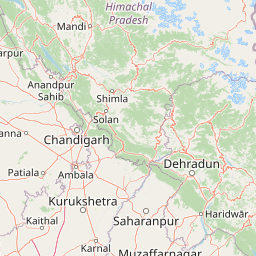
Map view of Kalesar National Park

Use this park location map to pinpoint Kalesar National Park in India, understand its exact geographic position, and read its mapped placement within the surrounding landscape more clearly.

Pigeon | © OpenStreetMap contributors

Location context for Kalesar National Park

HaryanaYamunanagar district
Park atlas

Compare protected landscapes across the Shivalik foothills and trace connected protected areas near Kalesar National Park.

Explore Nearby National Parks and Protected Areas Adjacent to Kalesar National Park
Browse national parks and protected areas geographically adjacent to Kalesar National Park, featuring significant conservation landscapes across the Shivalik foothills of northern India. Compare diverse ecological features, such as unique sal forests, and trace contiguous wildlife corridors within this broader regional protected area context.
National parkUttarakhand

Rajaji National Park: Uttarakhand National Park and Tiger Reserve Landscape

Sivalik Hills geography and protected area context

Rajaji National Park is a vital protected landscape situated in the Uttarakhand region of India, recognized as both a national park and a tiger reserve. Its territory spans across the Sivalik Hills, offering a diverse terrain characterized by deciduous forests and riparian ecosystems. The park's location along the Ganga river significantly influences its ecology, providing a unique geographic context for its protected status and wildlife significance.

Area
820.5 km²
Established
1983
IUCN
II
National parkHimachal Pradesh

Great Himalayan National Park: Protected Landscape and Mapped Geography

Explore this national park's dramatic elevation and rich biodiversity.

Great Himalayan National Park is a vital protected area within India's Himachal Pradesh, celebrated for its exceptional biodiversity and dramatic mountain geography. This national park encompasses a remarkable range of elevations, creating distinct ecological zones from lower forest elevations to high alpine meadows and glacial zones. Its significance as a mapped protected landscape makes it essential for understanding regional natural heritage and conservation efforts within the Himalayas.

Area
1,171 km²
Established
1984
IUCN
II
National parkHimachal Pradesh

Pin Valley National Park: Remote Himalayan Cold Desert National Park in Himachal Pradesh

Explore its dramatic terrain and unique protected landscape in Spiti Valley.

Pin Valley National Park is a significant protected area covering roughly 675 square kilometers of the cold desert region in Himachal Pradesh, India. Established as a national park, it showcases a remote and rugged Himalayan landscape, characterized by its stark beauty, sparse vegetation, and extreme temperatures typical of high-altitude deserts. The park's geography spans dramatic mountain terrain, steep cliffs, and deep valleys, forming a vital habitat for endangered species and contributing to the unique ecological profile of the Cold Desert Biosphere Reserve.

Area
675 km²
Established
1987
IUCN
II
Relief
Mountain
National parkUttarakhand

Nanda Devi National Park: High-Altitude Protected Landscape and Himalayan Geography

Explore mapped glacial basins and alpine terrain in Uttarakhand.

Nanda Devi National Park is a prime example of a high-altitude protected area, nestled in the Garhwal Himalayas of Uttarakhand, India. Established in 1982, this national park protects a vast glacial sanctuary, renowned for its dramatic peaks, including Nanda Devi, India's second-highest mountain. The park's landscape is defined by rugged terrain, extensive glaciers like the Uttari Rishi and Dakshini Rishi, and a striking ring of mountains over 6,000 meters, providing critical context for understanding protected land geography and Himalayan atlas exploration.

Area
630.33 km²
Established
1982
IUCN
II
National parkIndia

Keoladeo National Park: India's Renowned Wetland Bird Sanctuary and Protected Landscape

Explore its mapped terrain and critical avian habitat near Bharatpur.

Keoladeo National Park, a designated national park in India, represents a critical hub for wetland conservation and avian biodiversity. The park's meticulously managed wetland system, a mosaic of shallow waters and grasslands, provides essential habitat for thousands of resident and migratory birds from across Eurasia. Situated near Bharatpur, this protected landscape offers a unique opportunity to study the intersection of arid and fertile plains geography and serves as a vital stopover point on major bird flyways, underscoring its importance in regional conservation efforts.

Area
28.7 km²
Established
1982
IUCN
II
National parkLakhimpur Kheri district

Dudhwa National Park: Terai Grasslands and Alluvial Plain Geography within Lakhimpur Kheri

Discover the mapped protected landscape of this vital Indian national park.

Dudhwa National Park in Lakhimpur Kheri district stands as a crucial example of the Terai grassland ecosystem, characterized by its expansive alluvial plains and marshy habitats. This page provides an atlas-style exploration of its protected landscape, detailing the unique terrain and geographic context essential for understanding its conservation significance.

Area
614 km²
Established
1977
IUCN
II
Visitors
26K annual
National parkKishtwar district

Kishtwar National Park: Discover Protected Himalayan Wilderness & Geography

Mapped terrain and protected area context in India's Kishtwar district.

Kishtwar National Park is a significant protected landscape situated in the Kishtwar district, India, offering a detailed view of high-altitude Himalayan wilderness. Its dramatic mountainous terrain, from temperate forests to alpine meadows, defines its unique geographic character. Explore the park's mapped boundaries and understand its place within the broader regional geography for comprehensive atlas discovery.

Area
2,190.5 km²
Established
1981
IUCN
II
National parkPakistan

Deva Vatala National Park: Pakistan's Protected Tropical Thorn Forest Landscape

Explore mapped boundaries and regional geography within the Lower Himalayan foothills.

Deva Vatala National Park is a significant protected area located in Pakistan's Lower Himalayan Range, notable for its unique tropical thorn forest ecosystem. Occupying hilly terrain with elevations up to 1,101 meters, the park's landscape is defined by semiarid conditions and acacia-dominated vegetation, creating an unusual ecological interface. Its mapped boundaries encompass lake systems and diverse habitats, making it a critical conservation site within South Asia, distinct from typical Himalayan protected areas.

Area
70 km²
Established
1998
IUCN
II

Common questions about visiting, size, designation, and location context for Kalesar National Park

Kalesar National Park FAQs for park facts, access, geography, and protected area context
Find quick answers about Kalesar National Park, including protected-area facts, park geography, trail and visitor context, and how the park fits into its surrounding country and regional landscape.
MoriAtlas Explorer

Continue Your Protected Areas Search Across the Global Atlas

Deepen your exploration by continuing the structured search for national parks and protected areas worldwide. Utilize the comprehensive filtering capabilities to compare different conservation landscapes and refine your understanding of global park geography. Discover more about the distribution and characteristics of protected natural areas.

Global natural geography