Mori Atlas logo
National parkDudhwa National Park

Discover the mapped landscape context and protected area identity of this key Indian national park.

Dudhwa National Park: Protected Terai Grasslands & Alluvial Plains Geography

Dudhwa National Park represents a significant protected area within the Lakhimpur Kheri district, showcasing the unique Terai grassland ecosystem of the Upper Gangetic plains. This page offers detailed insights into its mapped boundaries, alluvial plain terrain, and distinctive natural landscapes, serving as a vital resource for understanding the park's geographic significance and protected conservation value.

Terai GrasslandsTiger ReserveWetland ConservationSwamp Deer HabitatNorthern IndiaAlluvial Plains

Dudhwa National Park

National park

Park overview

Structured park overview, official facts, and landscape profile for Dudhwa National Park

Dudhwa National Park park facts, protected area profile, and essential visitor context
Review the core facts for Dudhwa National Park, including designation, size, terrain, visitor scale, habitats, and operating context in one park-focused overview.

About Dudhwa National Park

Dudhwa National Park protects a vital tract of Terai grassland and wetland habitat in northern India's Gangetic plain. The park's alluvial landscape, shaped by ancient river systems flowing from the Himalayas, creates a mosaic of tall grasslands, marshy wetlands, and scattered forest patches that provide critical habitat for numerous species. The Terai region, once heavily forested and drained for agriculture, now exists in fragmented pockets with Dudhwa representing one of the most intact remaining examples. The park forms part of a broader conservation landscape connected to tiger reserves in Nepal, creating an important transboundary ecological corridor. The protection of this area acknowledges both its ecological significance as a biodiversity hotspot and its role in watershed protection for the surrounding agricultural lands. The park's management under the Uttar Pradesh State Government emphasizes the balance between wildlife conservation and the needs of local communities who share this landscape.

Quick facts and research context for Dudhwa National Park

Dudhwa National Park is situated in Lakhimpur Kheri district of Uttar Pradesh, India, at elevations ranging from 150 to 182 meters above sea level. The park features a humid subtropical climate with dry winters, where temperatures range from 6°C in winter to 45°C in summer, with monsoon rains from June to September. As part of the Dudhwa Tiger Reserve, the park plays a critical role in India's wildlife conservation framework, particularly for Bengal tigers, Indian rhinoceros, and the critically endangered swamp deer known as barasingha. The park received approximately 26,000 visitors in 2022.

Park context

Deeper park guide and search-rich context for Dudhwa National Park

Dudhwa National Park history, landscape, wildlife, and travel context
Explore Dudhwa National Park through its history, landscape character, ecosystems, wildlife, conservation priorities, cultural context, and seasonal travel timing in a structured park guide built for atlas discovery and search intent.

Why Dudhwa National Park stands out

Dudhwa National Park is best known for its population of swamp deer, also called barasingha, which represents one of the most successful conservation stories in Indian wildlife history. The park is also notable for being one of the last strongholds of the Bengal tiger in Uttar Pradesh and for its successful Indian rhinoceros reintroduction program. The Terai grasslands ecosystem here support a unique assemblage of wildlife including the hispid hare, which was rediscovered in the park in 1984 after being thought extinct. The park's bird diversity exceeds 400 species, including critically endangered vultures and the impressive sarus crane.

Dudhwa National Park history and protected-area timeline

The area that now comprises Dudhwa National Park was first protected in 1958 as a wildlife sanctuary, established specifically to safeguard the remaining population of swamp deer in the Terai region. This designation came at a critical time when the species faced severe pressure from hunting and habitat loss across its range. The park was officially notified as a national park in January 1977, a achievement largely attributed to the conservation efforts of Billy Arjan Singh, who championed the protection of this terai ecosystem. In 1987, the national park was integrated into the larger Dudhwa Tiger Reserve, which combined Dudhwa with the adjacent Kishanpur Wildlife Sanctuary and Katarniaghat Wildlife Sanctuary to create a more comprehensive conservation unit. This expansion reflected growing understanding that effective large carnivore conservation required protecting connected landscapes rather than isolated pockets. The park also became a site for pioneering conservation interventions, including the successful reintroduction of zoo-born tigers and leopards into the wild through hand-rearing programs led by Billy Arjan Singh.

Dudhwa National Park landscape and geographic character

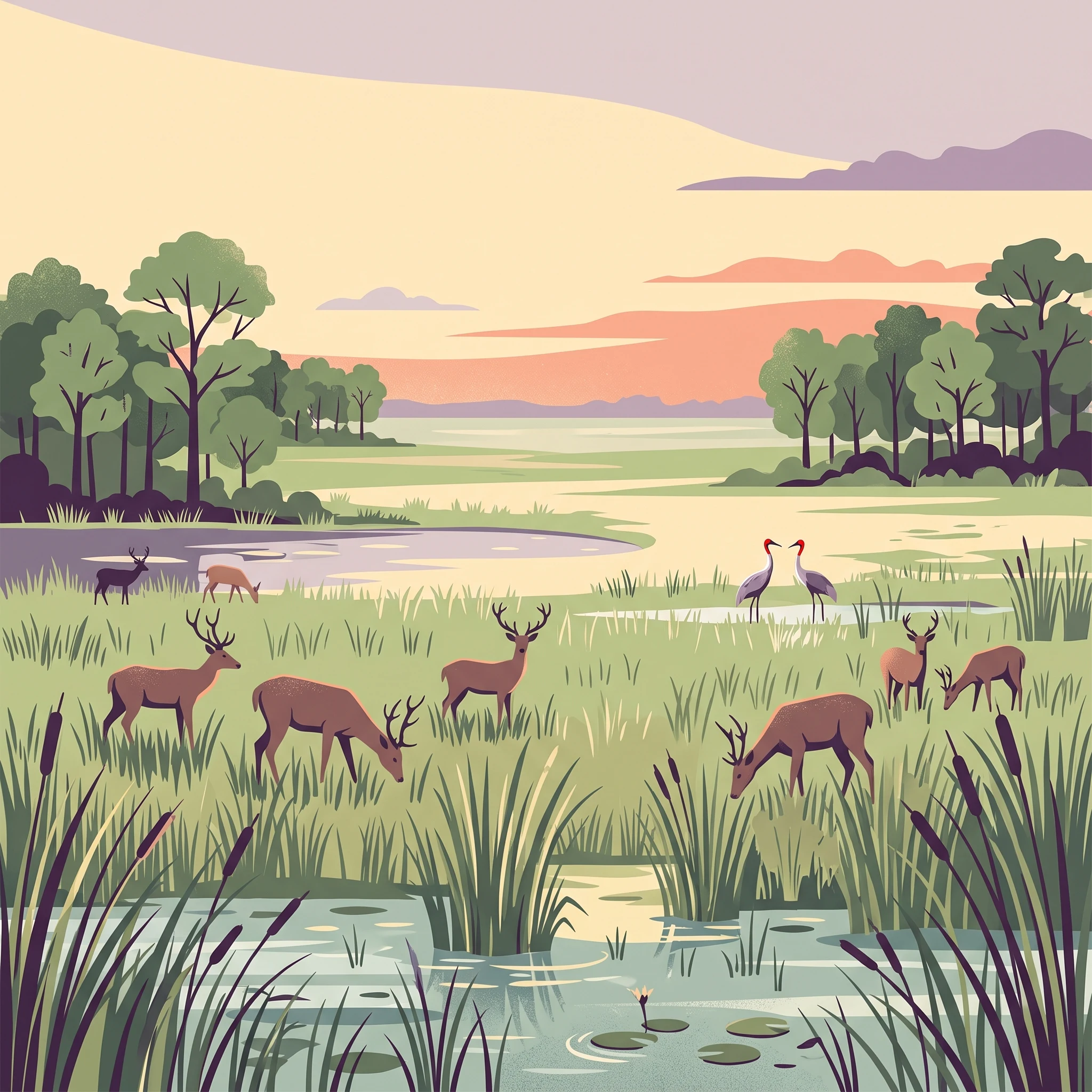
The terrain of Dudhwa National Park consists of vast alluvial plains characteristic of the Upper Gangetic region, with gentle topography that reflects its position in the ancient floodplains of rivers originating in the Himalayas. The landscape ranges in elevation from approximately 150 meters in the southeastern portions to 182 meters in the northern areas. The park contains a mosaic of habitat types including extensive tall grasslands locally known as `phanta`, marshy areas that retain water through much of the year, and patches of dense forest dominated by species like sal and sissoo. The grasslands represent the most distinctive feature of the park's visual character, with stands of tall grasses reaching several meters in height during the monsoon season. These grasslands transition into marshlands and wetland pockets that provide critical water retention functions and habitat for waterfowl and marsh-dependent species. The overall impression is one of expansive open landscapes punctuated by scattered trees and the sinuous lines of water channels and seasonal wetlands.

Dudhwa National Park ecosystems, habitats, and plant life

The ecological character of Dudhwa National Park is defined by its position in the Terai biogeographic zone, a region of exceptional biodiversity that represents the interface between Himalayan and Gangetic plain ecosystems. The park's habitats support a complex web of species adapted to the seasonal dynamics of the monsoon-influenced grassland environment. The tall grasslands provide cover for large ungulates and predators, while the wetlands serve as crucial dry-season water sources that sustain wildlife throughout the year. The alluvial soils support productive grasslands that rank among the most fertile in the region. This ecosystem historically supported extensive forests of sal and other hardwood species, though agricultural expansion has reduced forest cover across the broader Terai region, making protected areas like Dudhwa increasingly important as refuges for forest-dependent species.

Dudhwa National Park wildlife and species highlights

Dudhwa National Park supports a remarkable diversity of mammalian species, with the swamp deer, or barasingha, standing as the park's flagship conservation success. The species, which once faced extinction in this region, has recovered to populations exceeding 6,000 individuals as of 2022. The park provides habitat for all four major deer species found in India: barasingha, sambar, spotted deer, and hog deer, along with barking deer. The predator community includes Bengal tigers, Indian leopards, and smaller carnivores like the jungle cat, fishing cat, and leopard cat. The park also supports populations of Indian elephants and, following reintroduction efforts from Assam and Nepal beginning in 1984, a small but growing herd of Indian rhinoceros. The bird community exceeds 400 species, ranging from the spectacular Indian peafowl to the critically endangered white-rumped and red-headed vultures. Notable bird species include the sarus crane, painted stork, Bengal florican, and numerous waterfowl, raptor, and woodland bird species.

Dudhwa National Park conservation status and protection priorities

Dudhwa National Park represents a critical node in India's protected area network, particularly for conservation of Terai grassland ecosystems and large carnivores. The park's inclusion in the Dudhwa Tiger Reserve system reflects its strategic importance in tiger conservation, though the species exists at lower densities here than in some other Indian tiger reserves. The barasingha recovery program stands as one of India's most successful deer conservation stories, with the population growing from approximately 3,700 individuals in 1977 to over 6,100 in 2022. The reintroduction of Indian rhinoceros, starting in the mid-1980s, has established a small but viable population that continues to grow, with 46 individuals counted in 2024. The park also played a crucial role in the rediscovery of the hispid hare in 1984, a species previously thought to be extinct in India. The integration of multiple protected areas into the tiger reserve framework demonstrates the management approach of maintaining ecological connectivity across a larger landscape.

Dudhwa National Park cultural meaning and human context

The landscape surrounding Dudhwa National Park has been inhabited by agricultural communities for generations, with villages predating the park's formal protection. The local communities, primarily engaged in agriculture and livestock husbandry, share the landscape with the park's wildlife, creating both challenges and opportunities for conservation. The Terai region historically supported forest-dependent communities and indigenous groups whose traditional livelihoods were closely tied to the natural resources of the area. The park's establishment created a protected zone that limited certain traditional land uses while seeking to maintain community access to resources where possible. Understanding the human dimension of conservation in this densely populated region remains important for effective park management and long-term ecological sustainability.

Top sights and standout views in Dudhwa National Park

Dudhwa National Park offers visitors the opportunity to experience one of India's last significant Terai grassland ecosystems, with its tall grasslands, wetlands, and forest patches providing habitat for an impressive array of wildlife. The chance to observe barasingha herds in their natural environment represents a particular highlight, given the species' remarkable recovery from the brink of extinction. The park's tiger population, while more difficult to observe than in some other reserves, adds to the wildlife viewing experience. Bird enthusiasts will find over 400 species, including the elegant sarus crane and the critically endangered vultures. The landscape itself, with its expansive views and seasonal transformations, provides a visual counterpoint to the dense forest parks more common in India.

Best time to visit Dudhwa National Park

The optimal time to visit Dudhwa National Park is during the dry winter months from November through March, when temperatures are moderate and wildlife becomes more concentrated around remaining water sources. The park remains closed during the monsoon season from mid-June to mid-October to allow for natural regeneration and minimize disturbance during the breeding season. Winter visits offer the best opportunities for wildlife viewing, particularly for spotting tigers and rhinoceros as they congregate near waterholes. The transition seasons of early winter and late spring provide different visual experiences, with the post-monsoon period bringing lush grassland growth while the pre-monsoon months offer clearer visibility through the vegetation.
Park location guide

Geography guide, regional context, and park location map for Dudhwa National Park

Dudhwa National Park park geography, regions, and map view in India
Understand where Dudhwa National Park sits in India through a broader geographic reading of the surrounding landscape, nearby location context, and its mapped position within the national park landscape.

How Dudhwa National Park fits into India

India is a South Asian country bordered by the Indian Ocean, Arabian Sea, and Bay of Bengal. It shares land borders with Pakistan, China, Nepal, Bhutan, Bangladesh, and Myanmar. The country has a population of over 1.4 billion people and operates as a federal parliamentary republic with its capital in New Delhi.

Wider geography shaping Dudhwa National Park in India

India occupies the Indian subcontinent in South Asia, bordered by the Arabian Sea to the southwest, the Bay of Bengal to the southeast, and the Indian Ocean to the south. It shares land borders with Pakistan to the west, China, Nepal, and Bhutan to the north, and Bangladesh and Myanmar to the east. The territory also includes the Andaman and Nicobar Islands in the Indian Ocean.

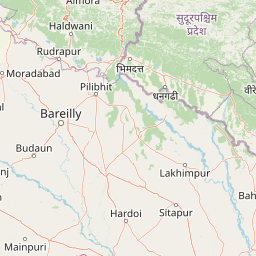
Map view of Dudhwa National Park

Use this park location map to pinpoint Dudhwa National Park in India, understand its exact geographic position, and read its mapped placement within the surrounding landscape more clearly.

Pigeon | © OpenStreetMap contributors

Location context for Dudhwa National Park

Lakhimpur Kheri districtUttar Pradesh
Park atlas

Trace the regional spread of protected landscapes and compare national parks surrounding Dudhwa National Park.

Explore Other National Parks and Protected Areas Surrounding Dudhwa National Park in the Terai Region
Continue your exploration of protected areas beyond Dudhwa National Park by browsing other national parks and wildlife sanctuaries in the Terai region of Uttar Pradesh and the Upper Gangetic plains. Compare their unique Terai grasslands, marshlands, and forest ecosystems to understand broader regional conservation efforts and distinct landscape features across northern India.
National parkBardiya District

Bardiya National Park: Nepal's Expansive Terai Protected Landscape and Atlas

Mapped geography, tiger habitat, and rhino conservation in Bardiya District.

Bardiya National Park represents a significant protected area within Nepal's Terai lowlands, providing an exceptional resource for geographic discovery. Its diverse terrain, including vast grasslands and dense forests bisected by major river systems like the Karnali and Babai, creates unique ecosystems. As the largest national park in Nepal, it is instrumental in mapping wildlife corridors and understanding regional landscape dynamics, particularly for endangered species such as Bengal tigers and Indian rhinoceroses. This park offers a profound glimpse into the mapped natural heritage of the Bardiya District.

Area
968 km²
Established
1988
IUCN
II
National parkUttarakhand

Nanda Devi National Park: High-Altitude Protected Landscape and Himalayan Geography

Explore mapped glacial basins and alpine terrain in Uttarakhand.

Nanda Devi National Park is a prime example of a high-altitude protected area, nestled in the Garhwal Himalayas of Uttarakhand, India. Established in 1982, this national park protects a vast glacial sanctuary, renowned for its dramatic peaks, including Nanda Devi, India's second-highest mountain. The park's landscape is defined by rugged terrain, extensive glaciers like the Uttari Rishi and Dakshini Rishi, and a striking ring of mountains over 6,000 meters, providing critical context for understanding protected land geography and Himalayan atlas exploration.

Area
630.33 km²
Established
1982
IUCN
II
National parkNepal

Shey Phoksundo National Park: Nepal's Largest Trans-Himalayan Protected Landscape with Phoksundo Lake

Explore alpine terrain and unique protected ecosystems.

Delve into the geographical distinctiveness of Shey Phoksundo National Park, Nepal's expansive protected area. This park is defined by its dramatic elevation changes and the striking Phoksundo Lake, a vivid turquoise alpine reservoir set against barren, mountainous terrain. Understanding its trans-Himalayan setting and protected landscape context reveals its importance within the broader atlas of global natural areas.

Area
3,555 km²
Established
1984
IUCN
II
National parkUttarakhand

Rajaji National Park: Uttarakhand National Park and Tiger Reserve Landscape

Sivalik Hills geography and protected area context

Rajaji National Park is a vital protected landscape situated in the Uttarakhand region of India, recognized as both a national park and a tiger reserve. Its territory spans across the Sivalik Hills, offering a diverse terrain characterized by deciduous forests and riparian ecosystems. The park's location along the Ganga river significantly influences its ecology, providing a unique geographic context for its protected status and wildlife significance.

Area
820.5 km²
Established
1983
IUCN
II
National parkIndia

Keoladeo National Park: India's Renowned Wetland Bird Sanctuary and Protected Landscape

Explore its mapped terrain and critical avian habitat near Bharatpur.

Keoladeo National Park, a designated national park in India, represents a critical hub for wetland conservation and avian biodiversity. The park's meticulously managed wetland system, a mosaic of shallow waters and grasslands, provides essential habitat for thousands of resident and migratory birds from across Eurasia. Situated near Bharatpur, this protected landscape offers a unique opportunity to study the intersection of arid and fertile plains geography and serves as a vital stopover point on major bird flyways, underscoring its importance in regional conservation efforts.

Area
28.7 km²
Established
1982
IUCN
II
National parkWest Champaran District

Valmiki National Park: A Vital National Park and Protected Landscape in Bihar

Explore unique Sivalik terrain and mapped protected area boundaries

Valmiki National Park, located in the West Champaran District of Bihar, is a significant protected area renowned for its unique geography. Situated at the interface of the Himalayas and the Gangetic plains, the park showcases a varied terrain including ridges, gorges, dense forests, and extensive wetlands. As Bihar's only national park and a designated tiger reserve, it offers rich insights into conservation landscapes and regional biodiversity for atlas exploration.

Area
898.45 km²
Established
1990
IUCN
II
National parkHaryana

Kalesar National Park: Exploring Haryana's Unique Sal Forest Protected Landscape

Discover mapped terrain and regional geography within the Shivalik foothills.

Kalesar National Park, located in the Shivalik foothills of Haryana, is a crucial protected area renowned for its natural sal forest, a rare ecological feature in the state. Spanning approximately 53 square kilometers, the park's diverse terrain offers insights into regional geography and conservation, serving as a vital habitat for leopards and a corridor for wild elephants. Its mapped boundaries encompass a unique landscape that contrasts sharply with surrounding agricultural lands, making it a significant point of study for protected-area enthusiasts.

Area
53 km²
Established
2003
IUCN
IV
National parkHimachal Pradesh

Great Himalayan National Park: Protected Landscape and Mapped Geography

Explore this national park's dramatic elevation and rich biodiversity.

Great Himalayan National Park is a vital protected area within India's Himachal Pradesh, celebrated for its exceptional biodiversity and dramatic mountain geography. This national park encompasses a remarkable range of elevations, creating distinct ecological zones from lower forest elevations to high alpine meadows and glacial zones. Its significance as a mapped protected landscape makes it essential for understanding regional natural heritage and conservation efforts within the Himalayas.

Area
1,171 km²
Established
1984
IUCN
II

Common questions about visiting, size, designation, and location context for Dudhwa National Park

Dudhwa National Park FAQs for park facts, access, geography, and protected area context
Find quick answers about Dudhwa National Park, including protected-area facts, park geography, trail and visitor context, and how the park fits into its surrounding country and regional landscape.
MoriAtlas Explorer

Continue Your Protected Areas Search Across the Global Atlas

Deepen your exploration by continuing the structured search for national parks and protected areas worldwide. Utilize the comprehensive filtering capabilities to compare different conservation landscapes and refine your understanding of global park geography. Discover more about the distribution and characteristics of protected natural areas.

Global natural geography