Why Nanda Devi National Park stands out
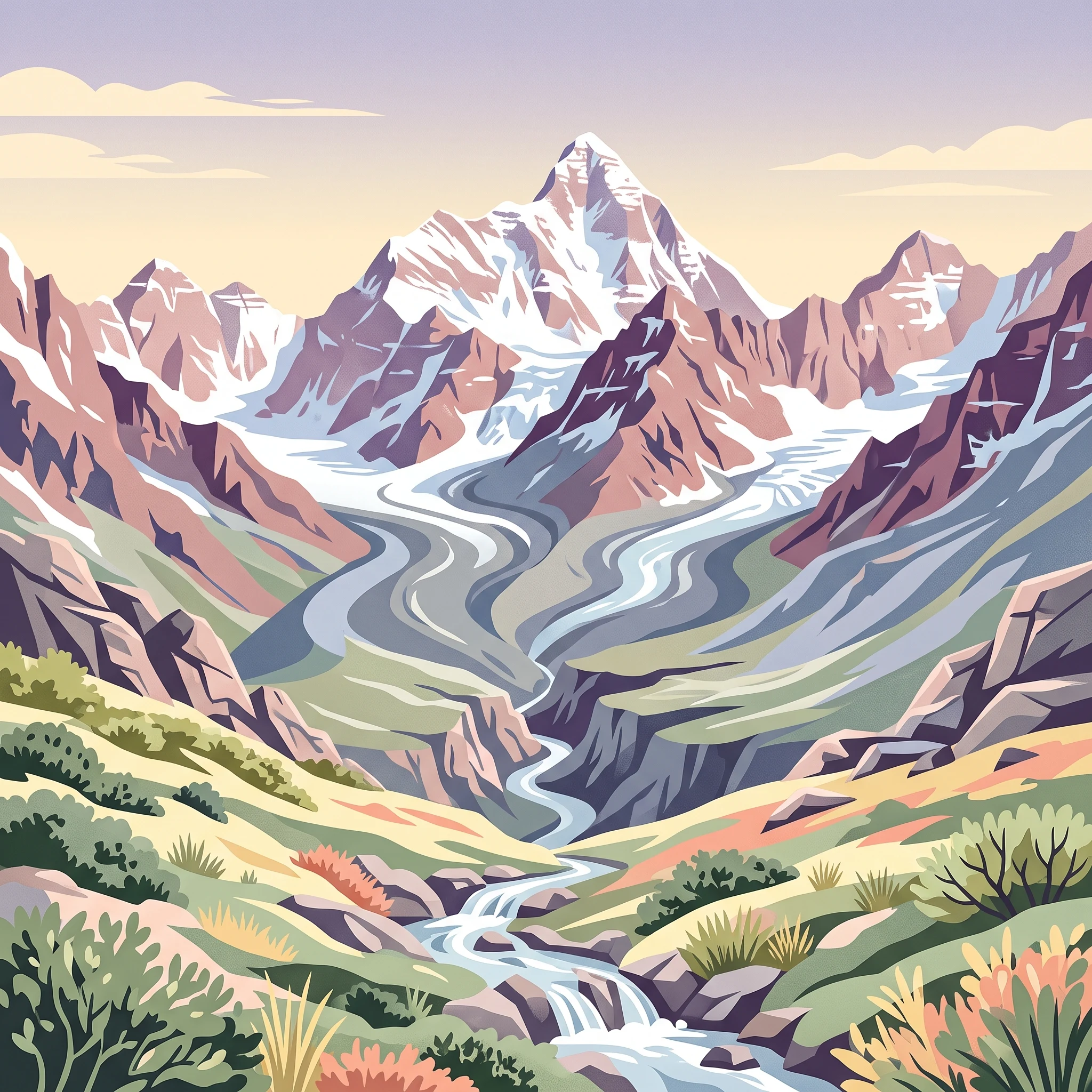
Nanda Devi National Park is best known for encircling Nanda Devi, India's second-highest mountain, within a spectacular glacial sanctuary ringed by some of the Himalayas' most impressive peaks. The park protects one of the world's highest and most remote ecosystems, with dramatic landscapes of glaciers, ice cliffs, and alpine terrain. It is renowned for its exceptional biodiversity in a harsh high-altitude environment, including rare Himalayan wildlife such as snow leopard, Himalayan musk deer, and mainland serow. The combination of religious significance (Nanda Devi is a major Hindu goddess), extraordinary mountain scenery, and strict protection makes this one of India's most significant conservation areas.
Nanda Devi National Park history and protected-area timeline
The history of Nanda Devi National Park is marked by extraordinary exploration challenges and remarkable historical events. The first recorded attempt to explore the sanctuary came in 1883 by W.W. Graham, who could proceed only as far as the Rishi Ganga. Subsequent attempts in 1870 by T.G. Longstaff and in 1926, 1927, and 1932 by Hugh Ruttledge all failed to penetrate the inner sanctuary. The breakthrough came in 1934 when Eric Shipton and H.W. Tilman successfully entered through the Rishi Ganga Gorge, opening the way for extensive exploration of this isolated basin. In 1939, the area was declared a game sanctuary, establishing early protection. The park's modern history includes a remarkable Cold War chapter: in the 1960s, a joint CIA-Indian intelligence mission attempted to install a nuclear-powered listening device on Nanda Devi's peak to monitor Chinese nuclear tests. The device was lost during the mission, and subsequent attempts to recover it failed, with recent concerns raised about potential environmental contamination. In February 2021, the park experienced a glacial outburst flood along the Rishiganga river, causing significant flooding downstream.
Nanda Devi National Park landscape and geographic character
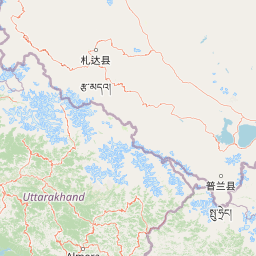
The landscape of Nanda Devi National Park is defined by its dramatic mountain terrain and glacial architecture. The park can be divided into two distinct zones: the Inner Sanctuary, occupying roughly the eastern two-thirds and containing Nanda Devi peak itself along with the two major glaciers flanking it, and the Outer Sanctuary in the western third. The inner sanctuary contains the Uttari Rishi Glacier and Dakshini Rishi Glacier, fed by smaller glaciers descending from the surrounding peaks. The outer sanctuary is split by the Rishi Ganga, with the Ramani Glacier on the north side descending from Dunagiri and Changabang, and the Trisul Glacier on the south side flowing from the Trisul peaks. The entire sanctuary is surrounded by a ring of peaks ranging from 6,000 to 7,500 meters, creating a dramatic mountain wall. Notable peaks within and around the park include Nanda Devi (7,816m), Sunanda Devi (7,434m), Changabang (6,864m), Dunagiri (7,066m), Trisul (7,120m), and numerous others including Devistan, Rishi Kot, Kalanka, Rishi Pahar, and many more. The Rishi Ganga Gorge, a steep and nearly impassable defile, drains the entire sanctuary westward.
Nanda Devi National Park ecosystems, habitats, and plant life
The ecological character of Nanda Devi National Park is defined by its high-altitude Himalayan environment with distinctive vegetation zones. The park supports approximately 312 floral species, including 17 rare species, despite the extreme conditions. The main tree species include fir, birch, rhododendron, and juniper, typically found in the transitional zones between the outer and inner sanctuary. However, vegetation becomes increasingly scarce in the inner sanctuary due to the dryness of conditions, with almost no vegetation found near the Nanda Devi Glacier. Alpine meadows occur in suitable locations, while Ramani glacier and surrounding areas support specialized alpine prone mosses and lichens adapted to extreme altitude. The park's position in the central Himalayas creates unique ecological conditions, with the combination of high elevation, glacial landscape, and relative isolation supporting specialized species adapted to this harsh environment.
Nanda Devi National Park wildlife and species highlights
Nanda Devi National Park supports a remarkable assemblage of Himalayan wildlife adapted to high-altitude conditions. The park is home to several threatened and rare mammal species, with larger mammals including Himalayan musk deer, mainland serow, and Himalayan tahr being the most commonly found. Himalayan goral, while not found within the park, occurs in the neighboring areas. The carnivore community includes the elusive snow leopard, Himalayan black bear, and possibly Himalayan brown bear. Primates are represented by langurs within the park, with rhesus macaque found in surrounding areas. A scientific expedition in 1993 documented 114 bird species within the park, indicating significant avian diversity despite the harsh environment. The wildlife community represents a typical high-altitude Himalayan fauna assemblage, with species adapted to the cold, sparse vegetation, and rugged terrain of the park's alpine and sub-nival zones.
Nanda Devi National Park conservation status and protection priorities
Nanda Devi National Park represents one of India's most important conservation achievements in the Himalayan region. The park was established in 1982 and achieved UNESCO World Heritage Site status in 1988, recognizing its outstanding universal value. The conservation significance is enhanced by its integration within the larger Nanda Devi Biosphere Reserve, which spans 2,236.74 square kilometers and provides a buffer zone around the core protected area. In 2005, the park was combined with Valley of Flowers National Parks to form the expanded Nanda Devi and Valley of Flowers National Parks World Heritage site. The protected area framework addresses the unique challenges of conserving high-altitude Himalayan ecosystems, including glacier protection, alpine habitat preservation, and safeguarding populations of threatened species such as snow leopard and Himalayan musk deer. The park's strict protection status helps preserve one of the most ecologically significant and scenically spectacular mountain landscapes in the world.
Nanda Devi National Park cultural meaning and human context
Nanda Devi National Park holds profound cultural and religious significance in the Himalayan region. The mountain Nanda Devi is one of the major goddess figures in Hindu tradition, and the sanctuary is considered her abode in the Garhwal Himalayas. The surrounding peaks and landscape have been sacred to local communities for centuries, with the area forming an important part of the religious geography of Uttarakhand. The park's name itself reflects this sacred dimension, as Nanda Devi is revered as the goddess of wealth, happiness, and prosperity. The traditional reverence for these mountains contributed to the relative protection of the area over centuries, and the cultural landscape reflects the long relationship between local communities and this sacred mountain environment.
Top sights and standout views in Nanda Devi National Park
Nanda Devi National Park offers exceptional highlights that distinguish it as one of India's premier protected mountain landscapes. The ring of peaks surrounding the Nanda Devi Sanctuary creates one of the most dramatic mountain settings in the Himalayas, with summits exceeding 7,000 meters forming an almost complete wall around the glacial basin. The park protects India's second-highest mountain and provides access to some of the most spectacular high-altitude terrain in the world. The combination of glacial landscapes, including the Uttari Rishi and Dakshini Rishi glaciers, with alpine meadows and unique high-altitude biodiversity creates an exceptional natural environment. The UNESCO World Heritage status recognizes both the outstanding natural beauty and the ecological significance of this remote Himalayan sanctuary.
Best time to visit Nanda Devi National Park
The optimal visiting season for Nanda Devi National Park extends from May through October, when weather conditions allow access to the park's high-altitude terrain. During these months, the mountain environment is most accessible and the landscapes are at their most spectacular, with alpine flowers blooming in the meadows during the summer months. The monsoon season from July to September brings significant rainfall to the region, creating lush green conditions but also potential access challenges. Winter access is extremely limited due to heavy snowfall at these elevations. The brief optimal season provides the only practical window for exploration of this high-altitude protected area, making advance planning essential for any visit.