Why Rajaji National Park stands out
Rajaji National Park is best known for its significant tiger and elephant populations, making it a prominent wildlife destination in Uttarakhand. The park is celebrated for its diverse habitats that support over 315 bird species, including the great hornbill and Indian grey hornbill. Its landscape of dense deciduous forests, riparian corridors, and grasslands provides ideal habitat for both megafauna and smaller mammals. The park also serves as an important ecological corridor connecting various protected areas in the region.
Rajaji National Park history and protected-area timeline
The history of Rajaji National Park traces back to 1948 when the area was first designated as Rajaji Sanctuary. Over the following decades, conservation efforts expanded to include the adjacent Motichur and Chilla wildlife sanctuaries. In 1983, these three separate protected areas were formally merged to create Rajaji National Park, establishing a unified conservation landscape. The park's significance in wildlife protection grew substantially in 2015 when the Uttarakhand government approved its designation as a tiger reserve, bringing additional resources and management focus to the area. This evolution from a single sanctuary to a comprehensive national park and tiger reserve reflects the increasing recognition of the region's ecological importance.
Rajaji National Park landscape and geographic character
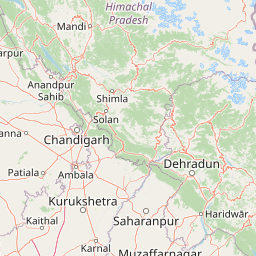
The landscape of Rajaji National Park is characterized by the undulating terrain of the Sivalik Hills, with elevations ranging from 300 meters in the lower valleys to 1,400 meters in the higher reaches. The Sivalik formation, also known as the Shiwaliks, represents the youngest mountain range of the Himalayas and features steep ridges, narrow valleys, and rocky outcrops. The Ganga river flows through the heart of the park, dividing the protected area into two distinct sections—the western Rajaji and Motichur sanctuary area and the eastern Chilla sanctuary. Riverine corridors, dense forest patches, and open grasslands create a varied topography that supports diverse ecological communities.
Rajaji National Park ecosystems, habitats, and plant life
The ecological character of Rajaji National Park derives from its position at the biogeographic crossroads of the Himalayas and the Indo-Gangetic Plain. Broadleaved deciduous forests dominate the lower elevations, with species such as sal, shisham, amaltas, and arjun forming the primary tree cover. Riparian vegetation lines the Ganga and its tributaries, while grasslands occur in the more open valleys and plateaus. Pine forests appear on the steeper, higher slopes where conditions are drier. The understory includes numerous shrub and smaller tree species that add to the habitat complexity. This mosaic of forest types, grasslands, and riverine zones creates a rich ecological matrix that supports diverse wildlife communities.
Rajaji National Park wildlife and species highlights
Rajaji National Park hosts an impressive array of mammalian species, led by the Bengal tiger and Indian elephant, both of which are flagship species for the reserve. The ungulate community includes chital, sambar deer, barasingha, nilgai, and the smaller hog deer and red muntjac. Predators include the Indian leopard, dhole, and Bengal fox, while omnivores such as the sloth bear and Asian black bear occupy the park's higher elevations. Primates represented by rhesus macaque and common langur are commonly observed. The goral and Himalayan tahr inhabit the precipitous pine-covered slopes, while smaller mammals include the yellow-throated marten, leopard cat, and jungle cat. The park's bird diversity exceeds 315 species, with notable inhabitants including peafowl, various pheasants, hornbills, vultures, and the crested serpent eagle.
Rajaji National Park conservation status and protection priorities
The designation of Rajaji National Park as a tiger reserve in 2015 elevated its conservation profile and brought additional management attention to the area. The park plays a crucial role in the conservation of Bengal tigers in Uttarakhand, providing protected habitat for a species that faces significant pressure across its range. The diverse habitats also support viable populations of Indian elephants, another species requiring extensive territories and protection. The Ganga river corridor adds ecological significance, as riverine systems serve as important movement pathways for wildlife and support distinct riparian ecosystems. The park's location in the Sivalik foothills positions it within a broader landscape of connected protected areas that facilitate wildlife movement and genetic exchange.
Top sights and standout views in Rajaji National Park
The standout features of Rajaji National Park include its dual designation as a national park and tiger reserve, its location along the sacred Ganga river, and the merger of three former wildlife sanctuaries into one coherent protected landscape. The park's elevation gradient from 300 to 1,400 meters creates diverse habitats within a relatively compact area. Over 315 bird species have been recorded, making it a significant destination for avian diversity. The presence of both Bengal tigers and Indian elephants provides opportunities for sighting these iconic megafauna. The park's accessibility from Haridwar and Dehradun adds to its value as a conservation and wildlife tourism destination.