Why Great Himalayan National Park stands out
The Great Himalayan National Park is especially known for its remarkable population of snow leopards, which inhabit the high-elevation regions above 3,500 meters along with other iconic species including the Himalayan brown bear, blue sheep, Himalayan tahr, and musk deer. The park's extraordinary biodiversity stems from its unique position at the westernmost extension of the Sino-Japanese biogeographic region, where species from both the Indomalayan and Palearctic realms overlap. The park is also renowned for its trekking opportunities through pristine valleys that showcase the full spectrum of Himalayan ecosystems, from dense coniferous forests to alpine meadows carpeted with wildflowers. The successful integration of local communities into conservation through village eco-development committees has made GHNP a model for community-based wildlife protection in the Himalayas.
Great Himalayan National Park history and protected-area timeline
The creation of the Great Himalayan National Park unfolded over twenty years from initial conception to formal establishment. The process began with preliminary surveys of the watersheds of Tirthan, Sainj, and Jiwanal in the Banjar area of Kullu district in 1980, followed by continued survey work in 1983. In 1984, the Himachal Pradesh government formally expressed its intention to create the national park, setting in motion the institutional process that would eventually bring the protected area into existence. The settlement of rights for local communities within the proposed park boundaries began in 1988, a critical step that would ultimately enable the park's formal declaration. The 1990s brought significant developments including World Bank funding for a Biodiversity Conservation project between 1994 and 1999, during which sixteen village eco-development committees were established to involve local communities in conservation efforts. The park was formally instated as India's newest national park in 1999, with compensation awarded to communities previously holding traditional forest rights. The subsequent decade saw the park emerge as a candidate for international recognition, with an application to nominate GHNP as a UNESCO World Heritage Site submitted in 2011. After an IUCN evaluation visit in 2012 and a period on a referral list in 2013, the park was finally awarded World Heritage Natural Site status in 2014 at the 38th World Heritage Committee meeting in Doha, Qatar.
Great Himalayan National Park landscape and geographic character
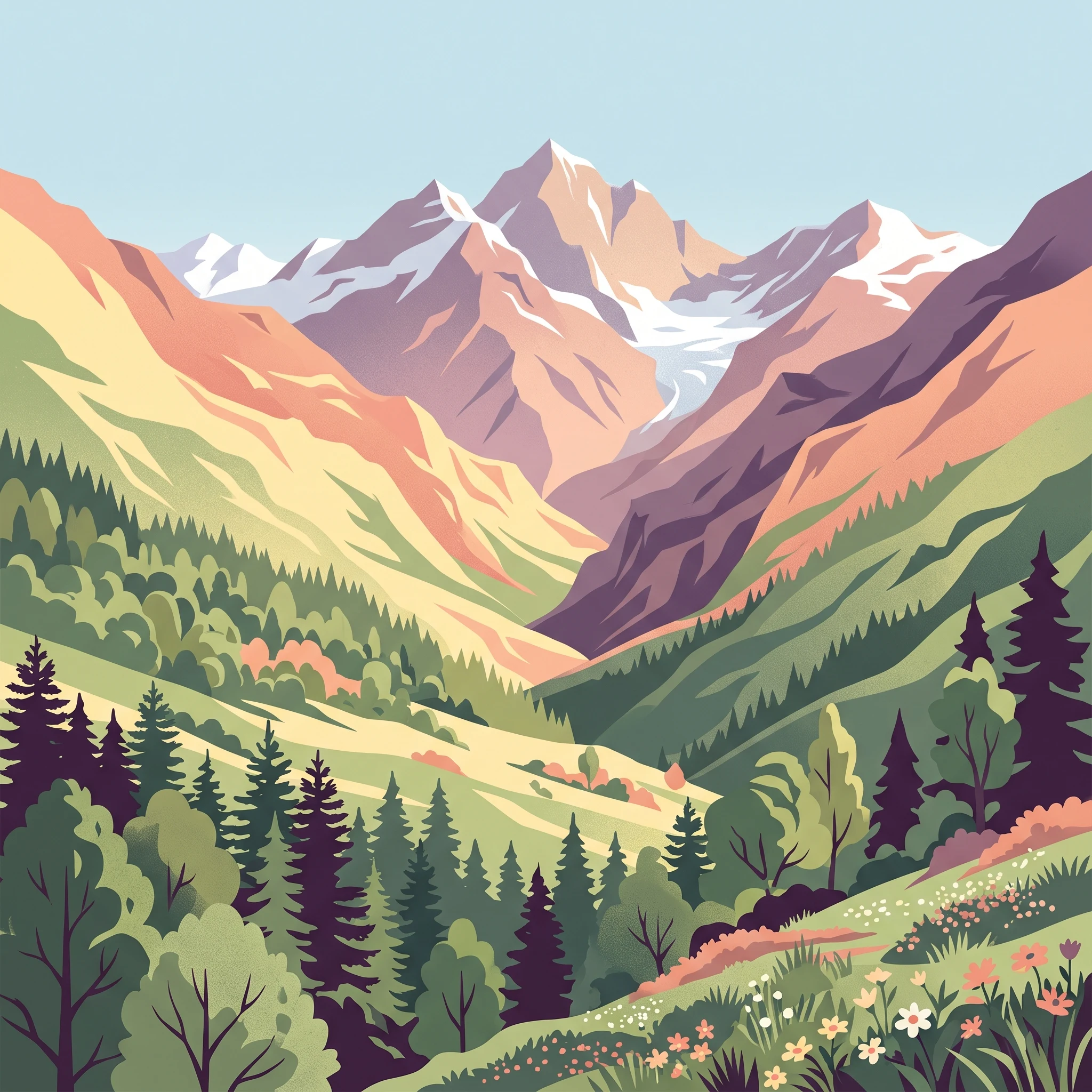
The Great Himalayan National Park encompasses a spectacular array of Himalayan landforms characterized by dramatic elevation changes, steep mountain slopes, and deeply carved river valleys. The terrain rises from approximately 1,500 meters in the lower valleys to peaks exceeding 6,000 meters, creating a vertical landscape that supports distinct ecological zones from subtropical forests at lower elevations through temperate and subalpine zones to alpine meadows and permanent snow and ice at the highest reaches. The park lies within the Greater Himalayan range, a mountain system formed through the collision of the Indian subcontinent with the Eurasian landmass, a geological process that continues today through plate tectonics and continues to shape the landscape. River valleys including Tirthan, Sainj, and Jiwanal dissect the mountains, creating corridors of habitat that allow species to move between different elevation zones. The western part of the park contains several small villages whose traditional agricultural landscapes create a mosaic with the wild terrain of the protected area. Alpine meadows in the high elevations provide seasonal grazing grounds and critical habitat for mountain ungulates, while the lower valleys support dense forests of pine, spruce, and horse chestnut.
Great Himalayan National Park ecosystems, habitats, and plant life
The ecological diversity of the Great Himalayan National Park reflects its extraordinary position at the biogeographic crossroads of two major realms. At the junction of the Indomalayan realm to the south and the Palearctic realm to the north, the park represents the westernmost extension of the Sino-Japanese Region, where temperate forest flora and fauna reach their western limits. The park's 4,100-meter elevation range creates a succession of distinct habitat zones, each supporting characteristic plant and animal communities. The subalpine zone proves to be the richest in species diversity, followed by the alpine zone and upper temperate zones. The park's relatively undisturbed condition means that visitors can observe forests and alpine meadows in something approaching their original state, a rarity in the heavily impacted Western Himalayas. The vegetation transitions from the lofty pines and spruces of the lower valleys through the great spreading horse chestnuts of the temperate zones to the dense cushions and prostrate branches of alpine herbs and junipers in the high elevations. While some areas have been modified by grazing, the overall integrity of the park's ecosystems remains high, providing vital habitat for species adapted to these diverse conditions.
Great Himalayan National Park wildlife and species highlights
The Great Himalayan National Park provides critical habitat for more than 375 faunal species, representing an extraordinary concentration of Himalayan biodiversity. The mammal fauna includes at least 31 species, with the high-elevation habitat above 3,500 meters supporting populations of blue sheep, snow leopard, Himalayan brown bear, Himalayan tahr, and musk deer. The snow leopard, an elusive apex predator of the high Himalayas, represents one of the park's most prized species, while the Himalayan brown bear occupies the alpine zones as the largest carnivore in the region. The bird fauna is exceptionally diverse, with 181 species documented within the park, representing a significant proportion of Himalayan avifauna. The reptile, amphibian, and invertebrate communities also contribute to the park's biodiversity, with 3 reptiles, 9 amphibians, 11 annelids, 17 mollusks, and 127 insects recorded. Most Himalayan fauna within the park receives the highest level of protection under Schedule I of the Indian Wildlife Protection Act of 1972, reflecting the conservation significance of these species. Autumn, from September to November, offers the best wildlife viewing opportunities as animals descend from high elevations to lower terrain during their seasonal migration.
Great Himalayan National Park conservation status and protection priorities
The Great Himalayan National Park's designation as a UNESCO World Heritage Site in 2014 recognizes its outstanding significance for biodiversity conservation within the global protected area network. The park's conservation value stems from its role as a habitat for numerous species of high conservation concern, many of which are listed under Schedule I of the Indian Wildlife Protection Act, providing them the strongest legal protection available. The park's position at the biogeographic junction of the Indomalayan and Palearctic realms makes it a critical area for preserving species from both realms and maintaining the ecological processes that allow gene flow between these biogeographic regions. The management approach at GHNP has notably emphasized community involvement, with sixteen village eco-development committees established during the 1994-1999 World Bank Biodiversity Conservation project to share responsibility for management with local populations. This collaborative model recognizes that effective conservation in mountain ecosystems requires addressing the traditional relationships between local communities and the landscape. The Himachal Pradesh government has also maintained a state-wide hunting ban for more than a decade, reinforcing protection for wildlife within the park and surrounding areas.
Great Himalayan National Park cultural meaning and human context
The Great Himalayan National Park exists within a landscape shaped by centuries of human habitation and traditional land use by local communities. Several small villages in the western part of the park maintain agricultural practices that create a cultural landscape interspersed with the protected wilderness. The settlement of rights of local communities, which began in 1988 and continued through the 1990s, represents a critical aspect of the park's establishment, recognizing that conservation in inhabited mountain landscapes must address the needs and traditional practices of local populations. The establishment of village eco-development committees during the 1994-1999 conservation project created mechanisms for local communities to participate in biodiversity protection while maintaining their relationship with the mountain environment. These committees represent an approach to conservation that acknowledges the historical connection between Himalayan communities and the landscapes they inhabit, moving beyond strictly exclusionary protected area models toward more collaborative conservation frameworks.
Top sights and standout views in Great Himalayan National Park
The Great Himalayan National Park offers visitors the opportunity to experience one of the most biologically significant mountain landscapes in Asia within a protected area that successfully balances conservation with community involvement. The high-elevation trekking routes through the park's valleys provide access to habitats where snow leopards, brown bears, and blue sheep can be observed in their natural environment, with autumn offering the best sighting opportunities as animals descend to lower elevations. The park's elevation gradient allows visitors to traverse multiple ecological zones in a single trek, from subtropical forests through temperate pine and spruce communities to alpine meadows and eventually glacial terrain. The UNESCO World Heritage designation in 2014 acknowledged the park's global significance for biodiversity conservation, making it a destination of international importance for nature enthusiasts, researchers, and conservation professionals alike. The successful integration of local communities into management through eco-development committees offers a model for sustainable conservation in mountain environments.
Best time to visit Great Himalayan National Park
The best time to visit the Great Himalayan National Park depends on the experiences visitors seek, with different seasons offering distinct advantages for exploring this high-altitude Himalayan landscape. Autumn, from September through November, generally offers the most favorable conditions for wildlife viewing, as animals begin their seasonal migration from high elevations down to lower terrain, increasing the likelihood of sightings of species like blue sheep, snow leopard, and Himalayan brown bear. The post-monsoon period typically brings clear skies and stable weather, making it ideal for trekking and photography. Summer months from May to June provide warm conditions at lower elevations and offer access to alpine meadows in full bloom, though high-elevation passes may still hold snow. Winter visits are challenging due to heavy snowfall that closes many trails, but the park's winter landscape offers a different perspective for experienced mountaineers. Visitors should obtain permits from the GHNP office at Sai Ropa and should be prepared for the physical demands of trekking at high elevations where weather conditions can change rapidly.