Mori Atlas logo
National parkPin Valley National Park

Discover the rugged terrain, mapped boundaries, and unique high-altitude geography of this vital national park.

Pin Valley National Park: Himachal Pradesh's Remote Himalayan Cold Desert Protected Landscape

Pin Valley National Park represents a unique protected landscape within the dramatic cold desert region of Himachal Pradesh, India. Established in 1987, this remote national park covers approximately 675 square kilometers of stark Himalayan terrain, extending from the Tibetan border area near Dhankar Gompa to the Bhaba Valley. Its position within the Cold Desert Biosphere Reserve makes it a critical area for understanding high-altitude desert ecosystems, characterized by extreme temperatures, sparse vegetation, and dramatic mountainous scenery that supports a remarkable diversity of endangered wildlife.

National ParkHimalayasCold DesertSnow Leopard HabitatSpiti ValleyEndangered Species

Pin Valley National Park

National park

Park overview

Structured park overview, official facts, and landscape profile for Pin Valley National Park

Pin Valley National Park park facts, protected area profile, and essential visitor context
Review the core facts for Pin Valley National Park, including designation, size, terrain, visitor scale, habitats, and operating context in one park-focused overview.

About Pin Valley National Park

Pin Valley National Park represents one of India's most distinctive protected landscapes, lying in the heart of the Spiti Valley within the broader Cold Desert region of the Himalayas. This high-altitude wilderness spans approximately 675 square kilometers across the mountainous terrain of Lahaul and Spiti district and parts of Kinnaur district. The park's establishment in 1987 marked an important step in preserving India's unique cold desert ecosystem, which differs dramatically from the country's more commonly known tropical and temperate forests. The landscape is characterized by stark, dramatic terrain with elevations ranging from around 3,500 meters to over 6,000 meters, creating a vertical ecological gradient that supports specialized species adapted to extreme conditions. The park's position near the Tibetan border places it at a cultural crossroads where Tibetan Buddhist traditions have shaped the region's identity for centuries. Unlike typical national parks with dense vegetation, Pin Valley's character is defined by its sparse alpine vegetation, rocky slopes, and the resilience of life in one of India's most challenging environments. The park forms part of a larger conservation network within the Cold Desert Biosphere Reserve, highlighting its regional significance in preserving ecological processes unique to high-altitude desert conditions.

Quick facts and research context for Pin Valley National Park

Pin Valley National Park is located in the Spiti Valley region of Himachal Pradesh, India, within the Cold Desert Biosphere Reserve in the Himalayas. The park covers 675 square kilometers and was established in 1987 as an IUCN Category II protected area. Elevation ranges from approximately 3,500 meters near Ka Dogri to over 6,000 meters at the highest points. The nearest major town is Kaza, and the park marks the border between Lahaul and Spiti district and Kinnaur district.

Park context

Deeper park guide and search-rich context for Pin Valley National Park

Pin Valley National Park history, landscape, wildlife, and travel context
Explore Pin Valley National Park through its history, landscape character, ecosystems, wildlife, conservation priorities, cultural context, and seasonal travel timing in a structured park guide built for atlas discovery and search intent.

Why Pin Valley National Park stands out

Pin Valley National Park is renowned as a critical habitat for the endangered snow leopard, one of the rarest and most elusive big cats in the world. The park is also famous for its population of Siberian ibex and Bharal (Himalayan blue sheep), which thrive in the harsh high-altitude desert environment. Its location within the Cold Desert Biosphere Reserve makes it one of India's unique protected areas, combining extreme mountain terrain with remarkable biodiversity. The park's cultural significance is amplified by its proximity to historic Tibetan Buddhist monasteries including Dhankar Gompa.

Pin Valley National Park history and protected-area timeline

The history of Pin Valley National Park is deeply intertwined with the broader cultural and political history of the Spiti Valley region. This area has been steeped in Tibetan Buddhist culture for centuries, with evidence of monastic traditions and spiritual practices embedded in the landscape. The region was historically part of traditional trade routes connecting India with Tibet, and the cultural exchange that occurred over centuries left lasting imprints on the local communities, architecture, and spiritual practices. The establishment of the park as a formal protected area in 1987 represented a recognition of both the ecological significance and cultural heritage of the region. Prior to formal protection, the area had long been inhabited by local communities whose traditional practices and Buddhist beliefs fostered a relationship with the land that naturally encouraged conservation. The park's creation also acknowledged the need to protect the critical habitat of species like the snow leopard, whose populations had faced increasing pressures from human-wildlife conflict and habitat fragmentation.

Pin Valley National Park landscape and geographic character

The landscape of Pin Valley National Park is defined by its dramatic Himalayan mountain terrain characteristic of cold desert environments. The park encompasses rugged valleys, steep cliffs, and towering mountain peaks that rise from approximately 3,500 meters to over 6,000 meters above sea level. The terrain is predominantly rocky and sparse, with little soil development due to the extreme climate conditions. Valleys are interspersed with glacial streams and the characteristic stark beauty of high-altitude desert landscapes. The area south of Dhankar Gompa represents some of the most spectacular scenery, where ancient monastic structures cling to cliff sides against the backdrop of towering peaks. The landscape transitions from the inhabited valley floors to the untouched higher reaches that remain snow-covered for much of the year, creating a visually striking contrast between the browns and grays of the lower elevations and the pure white of permanent snow fields. The park spans across the administrative boundary between Lahaul and Spiti district and Kinnaur district, encompassing diverse terrain within this transitional zone.

Pin Valley National Park ecosystems, habitats, and plant life

The ecological character of Pin Valley National Park is defined by its position within the Cold Desert Biosphere Reserve, one of India's unique biosphere designations protecting high-altitude desert environments. Despite the extreme conditions, the park supports remarkable biodiversity adapted to survive in this harsh landscape. The vegetation is sparse due to the high altitude and extreme temperature fluctuations, consisting primarily of alpine plant communities and scattered groves of Himalayan cedar (Cedrus deodara). The park contains remarkable botanical diversity despite its apparent barrenness, with twenty-two rare and endangered medicinal plant species identified within its boundaries across ten distinct habitat types. Plants such as Aconitum rotundifolium, Arnebia euchroma, Ephedra gerardiana, Ferula jaeschkeana, and Hyoscyamus niger occur here, many of which are threatened by overharvesting and climate pressures. The summer months bring a transformation as birdlife flourishes, with species including Himalayan snowcock, chukar partridge, snow partridge, various finches, and yellow-billed choughs appearing across the park's diverse elevations.

Pin Valley National Park wildlife and species highlights

Pin Valley National Park is renowned for its population of endangered megafauna, most notably the snow leopard, one of the world's rarest and most elusive big cats. The park's remote, high-altitude terrain provides ideal habitat for this iconic species, which has adapted to survive in some of the harshest conditions on Earth. Alongside the snow leopard, the park supports significant populations of Siberian ibex, a mountain ungulate species well-equipped for navigating the steep rocky slopes. The Bharal, also known as Himalayan blue sheep, is another notable species found throughout the park's terrain. Smaller mammals inhabiting the park include red foxes, weasels, martens, and pikas, each filling important ecological niches within this high-altitude ecosystem. The diverse birdlife includes game birds such as Himalayan snowcock, chukar partridge, and snow partridge, as well as corvids like the yellow-billed chough. This assembly of species makes Pin Valley one of India's most important areas for high-altitude wildlife conservation.

Pin Valley National Park conservation status and protection priorities

Pin Valley National Park plays a critical role in India's conservation framework as part of the Cold Desert Biosphere Reserve, which was established to protect the unique ecological processes of India's high-altitude desert environments. The park's designation as an IUCN Category II protected area reflects its primary purpose of preserving natural ecosystems while allowing for sustainable management. The conservation significance of Pin Valley is particularly pronounced given its role as a stronghold for snow leopard populations, a species listed as Vulnerable on the IUCN Red List and facing numerous threats across its range. The park also protects important habitat for other threatened species including the Siberian ibex and numerous medicinal plant species. The protection of this area helps maintain ecological connectivity within the broader Himalayan region and preserves the evolutionary processes that have produced the unique cold desert biota. Conservation efforts in the region must balance the needs of local communities with the imperatives of wildlife protection, as the area's long history of human habitation means that conservation strategies must consider traditional land use practices.

Pin Valley National Park cultural meaning and human context

The cultural landscape of Pin Valley National Park is profoundly shaped by centuries of Tibetan Buddhist influence, evident in the region's architecture, spiritual practices, and daily life. The area surrounding the park is home to numerous Buddhist monasteries, including the historic Dhankar Gompa, which sits prominently on a cliff overlooking the valley and represents centuries of religious tradition. These monastic communities and the local villages have developed a symbiotic relationship with the landscape over generations, with Buddhist principles fostering stewardship of the natural environment. The region was historically part of important trade routes between India and Tibet, bringing cultural exchange that enriched the local traditions. Traditional village life in the Spiti Valley continues to reflect this heritage, with lamas and residents maintaining practices that have been passed down through generations. The cultural context adds depth to the park's significance beyond its ecological value, making it a place where natural and cultural heritage intertwine.

Top sights and standout views in Pin Valley National Park

Pin Valley National Park offers visitors access to one of India's most remote and spectacular mountain landscapes, where stark desert beauty meets remarkable biodiversity. The opportunity to potentially observe snow leopards in their natural habitat draws wildlife enthusiasts and conservation researchers from around the world. The park's location near Dhankar Gompa provides cultural enrichment, allowing visitors to experience the spiritual heritage of the Spiti Valley. The dramatic elevation range from 3,500 to over 6,000 meters creates diverse habitats within a relatively compact area, supporting species found nowhere else in India. The summer months bring the park to life with flowering alpine meadows and active wildlife, offering the most rewarding time for wildlife observation. The combination of Himalayan wilderness, endangered species conservation, and Tibetan Buddhist cultural heritage makes Pin Valley a unique destination within India's protected area network.

Best time to visit Pin Valley National Park

The most favorable time to visit Pin Valley National Park is during the summer months from May to October, when temperatures are relatively milder and the park is more accessible. During this period, wildlife is more active and visible as the higher elevations become accessible after winter snows melt. The monsoon season in July and August brings increased precipitation to the region, which can affect road conditions and visibility but also transforms the landscape with blooming vegetation. Winter visits are extremely challenging due to heavy snowfall and sub-zero temperatures that close access to much of the park. The shoulder seasons of late spring and early autumn offer a balance between accessible conditions and fewer visitors, though weather can be unpredictable. Visitors should be prepared for extreme temperature variations regardless of the season and should be aware that the park's remote location requires careful planning for logistics and supplies.
Park location guide

Geography guide, regional context, and park location map for Pin Valley National Park

Pin Valley National Park park geography, regions, and map view in India
Understand where Pin Valley National Park sits in India through a broader geographic reading of the surrounding landscape, nearby location context, and its mapped position within the national park landscape.

How Pin Valley National Park fits into India

India is a South Asian country bordered by the Indian Ocean, Arabian Sea, and Bay of Bengal. It shares land borders with Pakistan, China, Nepal, Bhutan, Bangladesh, and Myanmar. The country has a population of over 1.4 billion people and operates as a federal parliamentary republic with its capital in New Delhi.

Wider geography shaping Pin Valley National Park in India

India occupies the Indian subcontinent in South Asia, bordered by the Arabian Sea to the southwest, the Bay of Bengal to the southeast, and the Indian Ocean to the south. It shares land borders with Pakistan to the west, China, Nepal, and Bhutan to the north, and Bangladesh and Myanmar to the east. The territory also includes the Andaman and Nicobar Islands in the Indian Ocean.

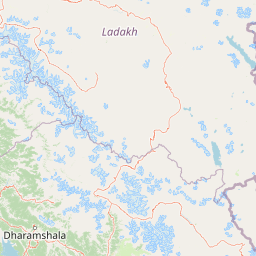
Map view of Pin Valley National Park

Use this park location map to pinpoint Pin Valley National Park in India, understand its exact geographic position, and read its mapped placement within the surrounding landscape more clearly.

Pigeon | © OpenStreetMap contributors

Location context for Pin Valley National Park

Himachal PradeshKinnaurLahaul and Spiti district
Park atlas

Compare high-altitude desert ecosystems and mountain conservation landscapes across the Spiti Valley and surrounding Himalayan regions

Explore Other National Parks and Protected Areas Near Pin Valley National Park in the Himalayas
Continue your park discovery beyond Pin Valley National Park by exploring other national parks and protected areas across the cold desert region of the Spiti Valley. Compare their unique high-altitude ecosystems, shared Himalayan geography, and diverse conservation landscapes to understand the broader regional context.
National parkHimachal Pradesh

Great Himalayan National Park: Protected Landscape and Mapped Geography

Explore this national park's dramatic elevation and rich biodiversity.

Great Himalayan National Park is a vital protected area within India's Himachal Pradesh, celebrated for its exceptional biodiversity and dramatic mountain geography. This national park encompasses a remarkable range of elevations, creating distinct ecological zones from lower forest elevations to high alpine meadows and glacial zones. Its significance as a mapped protected landscape makes it essential for understanding regional natural heritage and conservation efforts within the Himalayas.

Area
1,171 km²
Established
1984
IUCN
II
National parkHaryana

Kalesar National Park: Exploring Haryana's Unique Sal Forest Protected Landscape

Discover mapped terrain and regional geography within the Shivalik foothills.

Kalesar National Park, located in the Shivalik foothills of Haryana, is a crucial protected area renowned for its natural sal forest, a rare ecological feature in the state. Spanning approximately 53 square kilometers, the park's diverse terrain offers insights into regional geography and conservation, serving as a vital habitat for leopards and a corridor for wild elephants. Its mapped boundaries encompass a unique landscape that contrasts sharply with surrounding agricultural lands, making it a significant point of study for protected-area enthusiasts.

Area
53 km²
Established
2003
IUCN
IV
National parkUttarakhand

Rajaji National Park: Uttarakhand National Park and Tiger Reserve Landscape

Sivalik Hills geography and protected area context

Rajaji National Park is a vital protected landscape situated in the Uttarakhand region of India, recognized as both a national park and a tiger reserve. Its territory spans across the Sivalik Hills, offering a diverse terrain characterized by deciduous forests and riparian ecosystems. The park's location along the Ganga river significantly influences its ecology, providing a unique geographic context for its protected status and wildlife significance.

Area
820.5 km²
Established
1983
IUCN
II
National parkKishtwar district

Kishtwar National Park: Discover Protected Himalayan Wilderness & Geography

Mapped terrain and protected area context in India's Kishtwar district.

Kishtwar National Park is a significant protected landscape situated in the Kishtwar district, India, offering a detailed view of high-altitude Himalayan wilderness. Its dramatic mountainous terrain, from temperate forests to alpine meadows, defines its unique geographic character. Explore the park's mapped boundaries and understand its place within the broader regional geography for comprehensive atlas discovery.

Area
2,190.5 km²
Established
1981
IUCN
II
National parkUttarakhand

Nanda Devi National Park: High-Altitude Protected Landscape and Himalayan Geography

Explore mapped glacial basins and alpine terrain in Uttarakhand.

Nanda Devi National Park is a prime example of a high-altitude protected area, nestled in the Garhwal Himalayas of Uttarakhand, India. Established in 1982, this national park protects a vast glacial sanctuary, renowned for its dramatic peaks, including Nanda Devi, India's second-highest mountain. The park's landscape is defined by rugged terrain, extensive glaciers like the Uttari Rishi and Dakshini Rishi, and a striking ring of mountains over 6,000 meters, providing critical context for understanding protected land geography and Himalayan atlas exploration.

Area
630.33 km²
Established
1982
IUCN
II
National parkPakistan

Deva Vatala National Park: Pakistan's Protected Tropical Thorn Forest Landscape

Explore mapped boundaries and regional geography within the Lower Himalayan foothills.

Deva Vatala National Park is a significant protected area located in Pakistan's Lower Himalayan Range, notable for its unique tropical thorn forest ecosystem. Occupying hilly terrain with elevations up to 1,101 meters, the park's landscape is defined by semiarid conditions and acacia-dominated vegetation, creating an unusual ecological interface. Its mapped boundaries encompass lake systems and diverse habitats, making it a critical conservation site within South Asia, distinct from typical Himalayan protected areas.

Area
70 km²
Established
1998
IUCN
II
National parkAzad Jammu and Kashmir

Pir Lasura National Park: Pakistan National Park with Subtropical Pine Forest Landscape

Explore the mapped boundaries and geography of this unique Azad Jammu and Kashmir protected area.

Pir Lasura National Park in Azad Jammu and Kashmir, Pakistan, is a critical national park encompassing approximately 15.8 square kilometers of subtropical chir pine forest and scrub vegetation. Located in the Pir Lasura mountain range, it features a varied terrain with elevations ranging from 1,000 to 2,000 meters, contributing to its unique ecosystem at the transitional zone between major geographic regions. This page offers a detailed atlas-style exploration of the park's mapped features, its importance as a protected landscape, and its role in supporting diverse wildlife including significant vulture roosting sites and common leopard habitats.

Area
15.8 km²
Established
2005
IUCN
II
National parkPunjab

Pabbi and Rasul Reserve Forest National Park: Punjab's Protected Landscape and Regional Geography

Subtropical thorn scrub, undulating hills, and wetland habitats.

Pabbi and Rasul Reserve Forest National Park, situated in Punjab, Pakistan, is a significant protected area renowned for its subtropical thorn scrub vegetation and its role in conserving the Pothohar Plateau's biodiversity. The park's landscape features a diverse mosaic of undulating hills, scrub-covered ridges, grasslands, and wetlands, situated within the dry tropical environments characteristic of northern Punjab. Its recent designation as a national park highlights its importance for regional conservation efforts, offering a unique glimpse into the mapped geography and protected natural landscapes of the region.

Area
147.2 km²
Established
2023
IUCN
II

Common questions about visiting, size, designation, and location context for Pin Valley National Park

Pin Valley National Park FAQs for park facts, access, geography, and protected area context
Find quick answers about Pin Valley National Park, including protected-area facts, park geography, trail and visitor context, and how the park fits into its surrounding country and regional landscape.
MoriAtlas Explorer

Continue Your Protected Areas Search Across the Global Atlas

Deepen your exploration by continuing the structured search for national parks and protected areas worldwide. Utilize the comprehensive filtering capabilities to compare different conservation landscapes and refine your understanding of global park geography. Discover more about the distribution and characteristics of protected natural areas.

Global natural geography