
Why Biamanga National Park stands out
Biamanga National Park is best known for Mumbulla Mountain, a prominent volcanic peak that serves as a sacred Aboriginal site for the Yuin people. The mountain, also known by its dual name Biamanga, holds profound cultural significance as a ceremonial and men's law mountain where initiation ceremonies were conducted until 1918. The park is also recognized for its importance to the endangered swift parrot, which migrates through the area and forms part of the internationally significant Ulladulla to Merimbula Important Bird Area. The combination of cultural heritage, volcanic landscape, and biodiversity makes this park a distinctive protected area on Australia's southern coastline.
Biamanga National Park history and protected-area timeline
The history of Biamanga National Park reflects both ancient Indigenous occupation and more recent conservation movements. The Yuin people have inhabited these lands for thousands of years, with the mountain serving as a major ceremonial center where initiation ceremonies were conducted, the last recorded one taking place in 1918. During the twentieth century, the area experienced extensive logging that continued into the 1970s. In 1967, rock was blasted with dynamite to improve television reception, and a transmitter tower was constructed on the mountain. Local community concerns about forest destruction led to government action, and in 1977 an advisory committee was established to investigate the woodchipping industry. That same year, Yuin elder Guboo Ted Thomas led a significant protest against the destruction of forests on Mumbulla Mountain. On July 15, 1980, the NSW Government declared approximately 7,540 hectares an Aboriginal place and Protected Archaeological Area under the National Parks and Wildlife Act 1974. The national park was officially proclaimed in 1994 and expanded in 1997. Further protests against logging occurred in 2010, demonstrating the ongoing community commitment to protecting this culturally and environmentally significant landscape.
Biamanga National Park landscape and geographic character
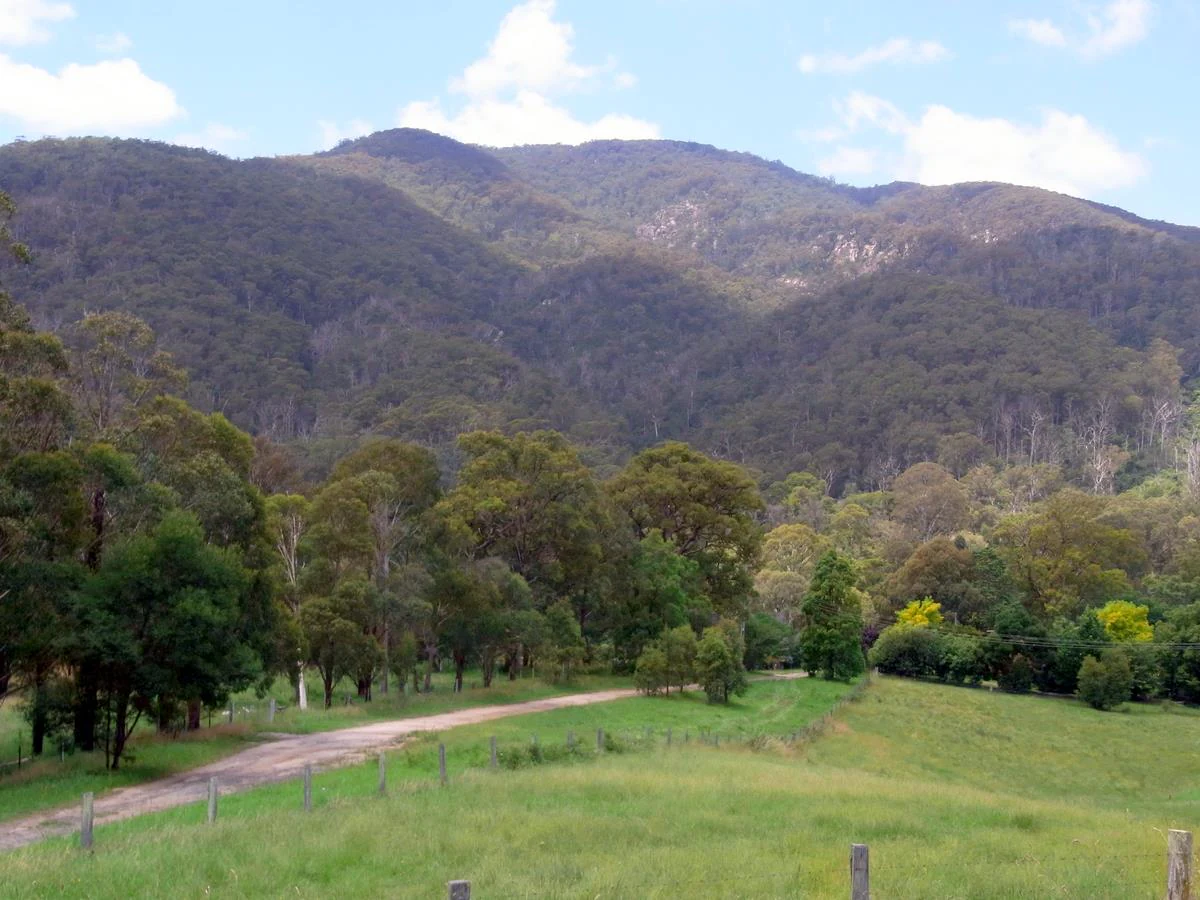
The landscape of Biamanga National Park is defined by Mumbulla Mountain, the remnant of an ancient shield volcano that rises prominently above the surrounding Bega Valley. The mountain's volcanic origins are evident in the basalt formations that characterize its slopes and summits. Granite rock formations and boulder fields are visible along the course of Mumbulla Creek, which drains the mountain's slopes. The terrain encompasses a range of elevations from valley floors through moist gullies to exposed ridgelines, creating diverse microhabitats throughout the park. The prominent peak can be seen from considerable distances across the South Coast region, making it a navigational and cultural landmark. The creek systems support riparian vegetation communities featuring monkey gums and ribbon gums, while the surrounding slopes support diverse forested habitats.
Biamanga National Park ecosystems, habitats, and plant life
Biamanga National Park supports several distinct ecological communities and habitat types. Along the watercourses, monkey gums and ribbon gums form distinctive riparian corridors, while the park is home to Chef's Cap Correa, an endangered plant species. The park forms part of the Ulladulla to Merimbula Important Bird Area, identified by BirdLife International as internationally significant for its populations of swift parrots. This migratory parrot species depends on the forest habitats of the South Coast region during its seasonal movements. The park's diverse habitats support a range of bird species including azure kingfishers and superb fairywrens, which are commonly observed along the creek systems and in the forested areas. The combination of volcanic soils, moisture from creek systems, and varied topography creates conditions supporting botanical diversity.
Biamanga National Park wildlife and species highlights
The wildlife of Biamanga National Park reflects the South Coast's diverse ecological character. The park is particularly significant for birdlife, most notably the swift parrot, which migrates through the area and depends on the region's forested habitats. The park forms part of a formally designated Important Bird Area due to this species significance. Azure kingfishers can be observed along the creek systems, where they hunt fish and invertebrates in the shallow waters. Superb fairywrens inhabit the understory and riparian zones throughout the park. The endangered Chef's Cap Correa plant provides important habitat for various invertebrates and small vertebrates. The forested slopes and creek corridors provide shelter and foraging resources for various mammal and reptile species typical of South Coast forests.
Biamanga National Park conservation status and protection priorities
Biamanga National Park represents an important conservation outcome achieved through the intersection of Aboriginal cultural protection and biodiversity preservation. The park's designation as an Important Bird Area by BirdLife International acknowledges its international significance for the endangered swift parrot, a species that migrates along Australia's east coast. The presence of Chef's Cap Correa, listed as an endangered species, adds particular botanical conservation significance to the park. The joint management arrangement between traditional Yuin owners and the NSW National Parks and Wildlife Service, established in 2006, represents a pioneering model for Indigenous participation in protected area management. This arrangement recognizes the Merrimans and Bega Local Aboriginal Land Councils as traditional custodians who own the land and lease it back to the government for national park purposes.
Biamanga National Park cultural meaning and human context
Biamanga National Park holds extraordinary cultural significance for the Yuin people of the South Coast of New South Wales. Mumbulla Mountain, also known as Biamanga, is one of the most important Aboriginal sacred sites in the region, functioning as a ceremonial and men's law mountain where initiation ceremonies were conducted for generations, with the last recorded ceremony occurring in 1918. The mountain was named after King Jack Mumbulla, a Yuin leader who would climb to the highest peak to commune with ancestor spirits and send smoke signals to his people below. The site achieved formal legal recognition in 1980 when it was declared an Aboriginal place and Protected Archaeological Area under NSW legislation. The Biamanga protest site represents broader significance for Indigenous Australian land rights and self-determination movements, symbolizing the successful resistance to environmental destruction and the recovery of cultural connection to Country. Traditional owners view the park as part of a single cultural landscape connected to Gulaga National Park, Merriman Island, Montague Island, and Pigeon House Mountain.
Top sights and standout views in Biamanga National Park
Mumbulla Mountain stands as the defining feature of Biamanga National Park, offering both cultural significance and scenic views across the Bega Valley. The volcanic landscape provides distinctive geological features including basalt formations and granite boulder fields along Mumbulla Creek. The park's importance for swift parrots makes it a significant destination for birdwatching and nature observation, particularly during migration seasons. The dual naming of Mumbulla Mountain as Biamanga in 2021 represents the ongoing recognition of Aboriginal heritage within the protected area. Joint management arrangements with Yuin traditional owners offer a model for collaborative conservation that integrates Indigenous knowledge and cultural values.
Best time to visit Biamanga National Park
The best time to visit Biamanga National Park depends on seasonal conditions and visitor interests. Autumn and winter months typically offer clear visibility for appreciating the mountain's prominent silhouette and panoramic views across the Bega Valley. Spring brings milder temperatures and increased bird activity, with swift parrots potentially observable during their migration period. Summer visits should account for higher temperatures and reduced water availability in some creek systems. Visitors interested in cultural interpretation may benefit from contacting the NSW National Parks and Wildlife Service for information about access arrangements and any cultural heritage considerations.