Why Boukornine National Park stands out
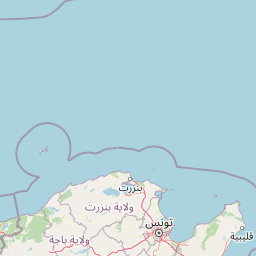
Boukornine National Park is distinguished by its remarkable concentration of notable species within a relatively small area. The park protects populations of the Persian cyclamen, a distinctive flowering plant prized for its ornamental value, and serves as a habitat for the Etruscan shrew, the smallest mammal species in the world. The mountain gazelle also inhabits the park's rocky terrain. The park's most recognizable feature is Jebel Boukornine itself, a prominent peak that provides panoramic views over the Gulf of Tunis and serves as a landmark for the surrounding region. The presence of Aïn Zargua spring adds hydrological significance to the reserve, supporting vegetation in an otherwise semi-arid environment.
Boukornine National Park history and protected-area timeline
Boukornine National Park was officially established on 12 February 1987, becoming part of Tunisia's growing network of national parks during a period of increased environmental conservation emphasis in the country. The park's creation responded to both ecological preservation needs and growing recognition of the area's value as a natural laboratory for studying Mediterranean mountain ecosystems. Prior to formal protection, the Jebel Boukornine area had been subject to traditional land use including grazing and charcoal production, and the establishment of the reserve represented a shift toward sustainable management. The ecomuseum development followed shortly after the park's creation, providing infrastructure for interpretation and environmental education that distinguishes this reserve from more purely ecological protected areas in Tunisia.
Boukornine National Park landscape and geographic character
The landscape of Boukornine National Park is dominated by the steep-sided mass of Jebel Boukornine, a mountain of approximately 576 metres elevation that rises abruptly from the surrounding terrain. The mountain's granite and limestone composition has produced rugged terrain with rocky cliffs, boulder-strewn slopes, and narrow valleys that channel seasonal water flow. The lower slopes transition into a more gentle undulating terrain before meeting the coastal plain. Aïn Zargua spring provides a permanent water source within the reserve, supporting riparian vegetation in an environment characterized by long dry seasons and limited precipitation. The combination of elevation, rock type, and water availability creates a mosaic of microhabitats within the relatively small park boundary.
Boukornine National Park ecosystems, habitats, and plant life
The vegetation of Boukornine National Park reflects the Mediterranean climate zone characteristic of northern Tunisia, dominated by maquis shrubland and garrigue plant communities. The characteristic evergreen shrubs including rosemary, thyme, and various sage species carpet the lower slopes, while denser vegetation clusters around water sources and in sheltered valleys. The park's most celebrated botanical resident is the Persian cyclamen, a bulbous perennial that blooms in late winter and early spring, producing distinctive curved petals in shades of pink and white. This species thrives in the rocky, shaded conditions provided by the mountain's upper slopes and forest margins.
Boukornine National Park wildlife and species highlights
Boukornine National Park supports a notable fauna population despite its modest size, with several species of particular conservation significance. The park is home to the Etruscan shrew, recognized as the world's smallest known mammal, a species that weighs only a few grams and possesses distinctive elongated features adapted for insectivorous feeding. The mountain gazelle, a graceful antelope species adapted to rocky terrain, inhabits the park's steeper slopes and open areas. Smaller mammals including various rodent species and hedgehogs contribute to the park's mammalian diversity. The Mediterranean scrubland provides habitat for numerous bird species, though the source material focuses primarily on the mammalian residents.
Boukornine National Park conservation status and protection priorities
Boukornine National Park serves as an important conservation island in Tunisia's heavily modified eastern coastal region, protecting representative Mediterranean mountain habitat that has been lost or degraded in surrounding areas. The park's small size belies its ecological significance, as it preserves viable populations of species including the Persian cyclamen and mountain gazelle that face pressure from habitat fragmentation elsewhere in Tunisia. The reserve also protects the watershed that feeds Aïn Zargua spring, maintaining hydrological function in a region where water availability shapes ecosystem health. The park's accessibility from Tunis supports conservation education objectives, allowing urban populations to experience relatively intact natural environments.
Boukornine National Park cultural meaning and human context
The Boukornine region has historical connections to human settlement and land use that predate the park's establishment. Traditional activities including grazing and small-scale charcoal production shaped the landscape over generations. The park's ecomuseum acknowledges this human dimension, presenting not only natural history but also the relationship between local communities and the mountain environment. The proximity to Hammam-Lif, a coastal town with its own historical development, creates a cultural landscape where the protected area serves as a green backdrop to ongoing human activity.
Top sights and standout views in Boukornine National Park
Jebel Boukornine dominates the park both visually and ecologically, its 576-metre peak offering commanding views and supporting distinctive plant communities. The presence of the world's smallest mammal, the Etruscan shrew, gives the park international scientific significance beyond its modest area. The Persian cyclamen provides seasonal floral interest, carpeting parts of the mountain in late winter. The ecomuseum offers interpretive resources uncommon in Tunisia's protected areas. The park's location just 15 kilometres from Tunis makes it uniquely accessible among the country's mountain reserves.
Best time to visit Boukornine National Park
The optimal period for visiting Boukornine National Park spans from late autumn through early spring, when cooler temperatures make hiking comfortable and the Persian cyclamen typically blooms. Winter and early spring bring the most verdant vegetation conditions, with wildflowers appearing on the slopes following seasonal rains. Summer months feature hotter, drier conditions that reduce the appeal of outdoor exploration but may suit visitors preferring quieter park access. The Mediterranean climate means that rain is possible during the winter months, adding variety to the landscape but potentially affecting trail conditions.