

Mori Atlas logo
National parkChambi National Park

Discover the geography and mapped boundaries of this vital national park and biosphere reserve.

Chambi National Park: Tunisia's Highest Mountain, Protected Landscape in Kasserine Governorate

Chambi National Park, situated in the Kasserine Governorate of west-central Tunisia, represents a significant protected landscape centered around Djebel Chambi, the nation's highest peak at 1,544 meters. Established to preserve its unique mountain ecosystems and semi-arid vegetation, the park spans 67.23 square kilometers, forming part of the Mont de Tebessa forest massif. Its dramatic mountainous terrain and conservation importance make it a key destination for atlas-driven geographic discovery.

mountain ecosystemendangered species habitatUNESCO biosphere reserveNorth AfricaCuvier's gazelle refugeBarbary sheep

Chambi National Park

National park

Park overview

Structured park overview, official facts, and landscape profile for Chambi National Park

Chambi National Park park facts, protected area profile, and essential visitor context
Review the core facts for Chambi National Park, including designation, size, terrain, visitor scale, habitats, and operating context in one park-focused overview.

About Chambi National Park

Chambi National Park protects a mountainous landscape of considerable ecological and geographical importance in Tunisia. Located in the west-central region of the country within the Kasserine Governorate, the park encompasses the slopes and summit of Djebel Chambi, Tunisia's highest mountain at 1,544 meters above sea level. The protected area lies close to the Algerian border and forms part of the Mont de Tebessa forest massif, a mountain range that extends across the border region. The terrain consists of rugged slopes, rocky outcrops, and forested areas that transition from Mediterranean-type vegetation at lower elevations to more sparse, drought-resistant plant communities at higher altitudes. The park's ecological character is defined by its position at the intersection of North African and Mediterranean biogeographical zones, supporting a mix of species adapted to both semi-arid and more temperate conditions. Without permanent rivers or streams, the park's water systems rely entirely on seasonal rainfall and underground aquifers, making the ecosystem particularly sensitive to climatic variations.

Quick facts and research context for Chambi National Park

Chambi National Park occupies 67.23 square kilometers in the Kasserine Governorate of west-central Tunisia, near the Algerian border. The park was formally established in 1980, though conservation efforts began earlier with a 300-hectare fenced reserve for Cuvier's gazelle created in 1970. Mount Chambi (Djebel Chambi) rises to 1,544 meters as Tunisia's tallest mountain, forming the park's central geographical feature. The area is part of the Mont de Tebessa forest massif, a mountainous region spanning the border zone between Tunisia and Algeria. The park has no permanent watercourses, relying instead on seasonal precipitation and groundwater systems.

Park context

Deeper park guide and search-rich context for Chambi National Park

Chambi National Park history, landscape, wildlife, and travel context
Explore Chambi National Park through its history, landscape character, ecosystems, wildlife, conservation priorities, cultural context, and seasonal travel timing in a structured park guide built for atlas discovery and search intent.

Why Chambi National Park stands out

Chambi National Park is best known for protecting Tunisia's highest mountain and serving as one of the last remaining habitats for the endangered Cuvier's gazelle, a species now rare across North Africa. The park also supports populations of Barbary sheep, a vulnerable mountain-dwelling antelope species. Its significance extends to ornithology, with notable bird species including the Tunisian crossbill, Egyptian vulture, Bonelli's eagle, and peregrine falcon. The combination of high-altitude ecosystems, endangered mammal species, and the presence of endemic flora makes this park a critical conservation area in the Mediterranean region.
Chambi National Park history and protected-area timeline

Conservation at Chambi began in 1970 when a 300-hectare fenced reserve was established specifically to protect populations of Cuvier's gazelle, which had become increasingly endangered across its range. This early protection effort recognized the critical importance of the Mount Chambi area as a refuge for this species. In 1977, the park and its surrounding areas received international recognition when they were designated a UNESCO biosphere reserve, acknowledging both the ecological significance and the need for coordinated conservation management. The formal establishment of Chambi National Park followed in 1980, expanding the protected area to its current extent of 6,723 hectares and providing stronger legal framework for the preservation of the region's unique ecosystems and endangered species.

Chambi National Park landscape and geographic character

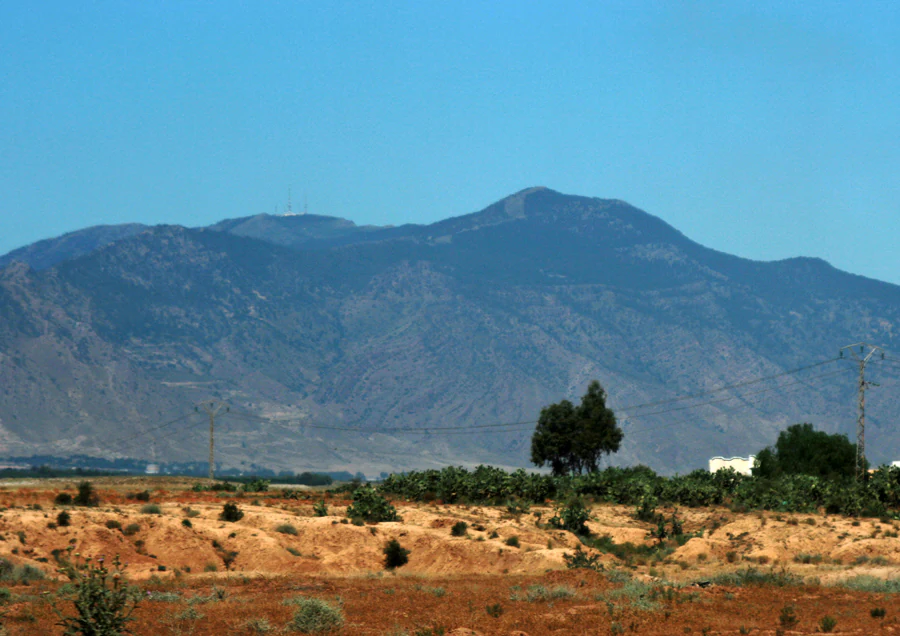
The landscape of Chambi National Park is dominated by Djebel Chambi, a prominent mountain that rises dramatically from the surrounding plains of west-central Tunisia. The terrain is characterized by steep rocky slopes, mountain ridges, and forested valleys that create a varied topography within a relatively compact protected area. The mountain's elevation of 1,544 meters provides significant vertical relief and creates distinct ecological zones as elevation increases. The Mont de Tbessa forest massif, which encompasses the park, consists of ancient mountain ranges that have been shaped by geological processes over millions of years. Vegetation cover varies with elevation and aspect, with denser forest vegetation in protected valleys and more open shrubland on exposed slopes. The absence of permanent rivers means the landscape is shaped primarily by seasonal precipitation, with water flowing in temporary wadis during wet periods and the terrain displaying characteristics of semi-arid mountain environments.

Chambi National Park ecosystems, habitats, and plant life

The park's ecological significance stems from its position within the Mont de Tebessa forest massif and its role as a transitional zone between Mediterranean and North African biomes. Vegetation communities within the park include holm oak forests, Aleppo pine stands, and dense maquis shrubland featuring Cotoneaster nummularius. The park also supports areas of Stipa tenacissima, a tough perennial grass that forms extensive steppe-like vegetation in drier sections. These plant communities provide critical habitat for the park's endangered mammal species and support diverse bird populations. The combination of forested slopes, rocky outcrops, and open grassland areas creates a mosaic of habitats that supports species adapted to different ecological niches. The lack of permanent water sources makes the ecosystem particularly dependent on the health of the surrounding forested areas for water retention and soil stabilization.

Chambi National Park wildlife and species highlights

Chambi National Park is home to several species of significant conservation concern. The park is one of the last refuges of Cuvier's gazelle, an endangered antelope species that has declined dramatically across its North African range. The Barbary sheep, a vulnerable mountain-dwelling species also known as aoudad, inhabits the rocky slopes and steep terrain of the park. Birdlife is particularly well-represented, with the park supporting populations of the Tunisian crossbill, an endemic subspecies of particular note. Raptors are well represented, with Egyptian vulture, Bonelli's eagle, and peregrine falcon all found within the protected area. These bird species utilize the mountain terrain for nesting and hunting, with the cliffs and rocky outcrops providing ideal breeding habitat. The diverse wildlife community reflects the park's importance as a mountain ecosystem in a region where such habitats are relatively rare in Tunisia.

Chambi National Park conservation status and protection priorities

Chambi National Park represents one of Tunisia's most important conservation areas, designated both as a national park in 1980 and a UNESCO biosphere reserve in 1977. The dual protection status reflects the site's exceptional ecological value and the need for integrated conservation and sustainable development approaches. The park serves as a critical refuge for Cuvier gazelle, a species that has suffered severe population declines across its historical range in North Africa. The 1970 establishment of a dedicated fenced reserve for this species was a pioneering conservation effort in the region. The Mont de Tebessa forest massif, of which the park is a part, forms a continuous ecological corridor across the Tunisian-Algerian border, making transboundary conservation coordination important for species that move between the two countries. The protection of Mount Chambi also preserves important watershed functions and helps prevent soil erosion in this mountainous region.

Top sights and standout views in Chambi National Park

Chambi National Park offers visitors the opportunity to explore Tunisia's highest mountain and witness rare North African wildlife in a protected mountain environment. The park's network of trails allows access to different elevations and habitat types, with the summit of Djebel Chambi providing panoramic views across the west-central Tunisian landscape. Wildlife viewing opportunities focus on the endangered Cuvier's gazelle and Barbary sheep, though these species require patient observation given their cautious nature. The bird population, particularly the raptors and the endemic Tunisian crossbill, attracts ornithological interest. The park's designation as a UNESCO biosphere reserve indicates its importance beyond simple protection, incorporating sustainable use zones and community involvement in conservation management.

Best time to visit Chambi National Park

The most favorable time to visit Chambi National Park is during the spring months from March to May, when temperatures are moderate and vegetation is at its most vibrant following winter rains. Autumn, particularly October and November, also offers pleasant conditions for hiking and wildlife observation. Summer months can bring extreme heat, especially at lower elevations within the park, making outdoor activities uncomfortable. Winter, while cooler, may bring cold temperatures at higher elevations and limited accessibility. The park can be visited year-round, but the shoulder seasons provide the most comfortable conditions for exploring the mountain trails and observing wildlife.
Park location guide

Geography guide, regional context, and park location map for Chambi National Park

Chambi National Park park geography, regions, and map view in Tunisia
Understand where Chambi National Park sits in Tunisia through a broader geographic reading of the surrounding landscape, nearby location context, and its mapped position within the national park landscape.

How Chambi National Park fits into Tunisia

Tunisia is a Maghreb country in North Africa with a Mediterranean coastline, bordered by Algeria and Libya. The country features the ancient ruins of Carthage, the Great Mosque of Kairouan, and portions of the Atlas Mountains and Sahara Desert. With a population of approximately 12 million, Tunisia operates as a unitary presidential republic with Arabic as the official language.

Wider geography shaping Chambi National Park in Tunisia

Tunisia occupies 163,610 km² in North Africa, bordering Algeria to the west and southwest, Libya to the southeast, and the Mediterranean Sea to the north and east. The country features the eastern end of the Atlas Mountains in the north and extends into the northern Sahara Desert in the south. Its 1,300 km of coastline runs along the Mediterranean Basin. Africa's northernmost point, Cape Angela, is located in Tunisia.

Map view of Chambi National Park

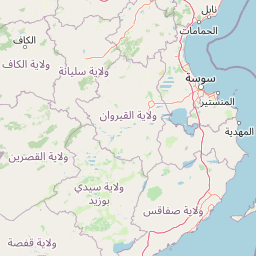
Use this park location map to pinpoint Chambi National Park in Tunisia, understand its exact geographic position, and read its mapped placement within the surrounding landscape more clearly.

Pigeon | © OpenStreetMap contributors

Location context for Chambi National Park

Kasserine Governorate
Park atlas

Trace the geographic spread of Tunisia's protected landscapes and compare adjacent mountain conservation areas.

Explore Nearby National Parks and Protected Areas Surrounding Chambi National Park
Discover more national parks and protected areas adjacent to Chambi National Park, exploring a broader array of Tunisia's mountain ecosystems and conservation landscapes. Compare geographic features, ecological zones, and protected-area statuses to deepen your understanding of the region's natural heritage.
National parkGafsa Governorate

Bou-Hedma National Park: Mapped Protected Area and Conservation Sanctuary in Gafsa Governorate

Discover Saharan wildlife, Roman ruins, and unique semi-arid landscapes.

Bou-Hedma National Park serves as a crucial conservation hub in Tunisia's Gafsa Governorate, renowned for its success in reintroducing endangered Saharan large mammals like the scimitar oryx and addax. The park's geography spans arid plains and seasonal wadis, encompassing the Ramsar-listed Sebkhet Noual wetland. Its unique landscape also preserves significant Roman-era archaeological sites, offering a rich context for exploring protected-area identity, conservation achievements, and ancient human history within a North African setting.

Established
1980
IUCN
II
National parkEl Tarf Province

El Kala National Park: Protected Wetlands and Barbary Stag Habitat

Explore its mapped geography and vital ecosystem context.

El Kala National Park represents a crucial protected landscape within El Tarf Province, Algeria, recognized internationally for its extensive Mediterranean wetlands and rich biodiversity. This national park is a vital ecological zone, comprising six major lakes and a significant stretch of coastline, offering a unique mosaic of aquatic and terrestrial environments. Its role as a sanctuary for the Barbary stag and migratory birds highlights its importance in regional conservation efforts. Exploring El Kala National Park provides insight into the mapped terrain, protected boundaries, and distinct geographic features that define this significant North African natural area.

Area
764 km²
Established
1993
IUCN
II
National parkTunisia

Boukornine National Park: A Protected Mediterranean Mountain Landscape in Tunisia

Explore its mapped terrain and unique protected ecosystem.

Boukornine National Park in Tunisia represents a significant protected landscape, notable for its central granite peak, Jebel Boukornine, which rises sharply above the surrounding coastal plains. This national park, covering approximately 1,939 hectares, preserves a distinctive Mediterranean mountain ecosystem. Its rugged terrain, rocky slopes, and the presence of Aïn Zargua spring support a unique concentration of species, including notable flora and fauna. Understanding Boukornine National Park provides insight into the regional geography and the importance of conserving these mountainous protected areas within Tunisia.

Area
19.39 km²
Established
1987
IUCN
II
National parkJijel Province

Taza National Park: Protected Mediterranean Coast and Tell Atlas Forest Landscape

Explore its unique mapped geography and conservation significance.

Taza National Park, situated in Algeria's Jijel Province, represents a crucial protected landscape where the Tell Atlas mountains meet the Mediterranean Sea. This 3,807-hectare national park is celebrated for its dramatic coastal cliffs, extensive cork oak and gall oak forests, the largest in Algeria, and its designation as a UNESCO biosphere reserve. The park's geography facilitates unique habitat zones, making it a key area for atlas-based discovery of North African biodiversity, including the Barbary macaque and Algerian nuthatch, within a landscape of exceptional natural beauty and conservation priority.

Area
38.07 km²
Established
1923
IUCN
II
Watercolor painting of a landscape with rolling hills, pink wildflowers, and scattered trees
National park

Pantelleria National Park: A Protected Landscape within Italy's Atlas

Mapped boundaries and regional geographic context.

Pantelleria National Park is a designated national park in Italy offering a distinct protected landscape for exploration. This page provides essential geographic context, highlighting the park's mapped boundaries and its significance within the regional atlas. Understand the terrain and protected land features that define this important natural area.

Area
66.4 km²
Established
2016
IUCN
II
Relief
Highland
National park

Ta' Qali National Park: Malta's Largest Urban Protected Landscape and Recreation Hub

Mapped Gardens, Event Venues, and Recreational Zones

Ta' Qali National Park serves as a vital green lung in central Malta, showcasing a landscape transformed from a wartime airfield into a modern urban protected area. This national park is recognized for its extensive recreational zones, meticulously designed formal gardens, and a prominent open-air concert venue that hosts major cultural events. Its relatively flat terrain and planned infrastructure offer a distinct map-based perspective on urban parkland, highlighting its significance as a major public amenity and a key feature of Malta's landscape.

Area
0.35 km²
IUCN
V
Relief
Lowland
Climate
Mediterranean
Stylized illustration of rocky coastal cliffs, turquoise sea, scattered trees, and a sea stack
National parkItaly

National Park of the Gulf of Orosei and Gennargentu: Italy's Coastal and Mountain Protected Terrain

Mapped geography of a unique Sardinian protected landscape.

Delve into the atlas-level details of the National Park of the Gulf of Orosei and Gennargentu, a protected area in Italy renowned for its stark contrast between dramatic coastal cliffs bordering the Gulf of Orosei and the wild, mountainous interior of the Gennargentu massif. This page provides structured geographic context, mapping the park's boundaries and showcasing its distinctive karst landscape, hidden beaches, and rugged peaks for comprehensive protected-area exploration.

IUCN
II
Watercolor illustration of a coastal landscape with green hills, shoreline, and blue sea under a pale yellow sky
National parkSardinia

Asinara National Park: National Park Protected Landscape and Geographic Setting

Explore mapped terrain and protected area context within Sardinia.

Asinara National Park stands as a key protected landscape within the Italian national park system, located off the coast of Sardinia. This entry provides detailed geographic context, focusing on its mapped boundaries and the unique natural terrain that defines this island sanctuary. MoriAtlas facilitates a structured discovery of Asinara National Park, enabling users to understand its protected area status and its significant position within the broader regional geography of Sardinia for atlas exploration.

Area
51.7 km²
Established
1997
IUCN
II
Relief
Mixed relief

Common questions about visiting, size, designation, and location context for Chambi National Park

Chambi National Park FAQs for park facts, access, geography, and protected area context
Find quick answers about Chambi National Park, including protected-area facts, park geography, trail and visitor context, and how the park fits into its surrounding country and regional landscape.
MoriAtlas Explorer

Continue Your Protected Areas Search Across the Global Atlas

Deepen your exploration by continuing the structured search for national parks and protected areas worldwide. Utilize the comprehensive filtering capabilities to compare different conservation landscapes and refine your understanding of global park geography. Discover more about the distribution and characteristics of protected natural areas.

Global natural geography