Why Currawinya National Park stands out
Currawinya National Park is best known for its Ramsar-listed wetland system comprising Lakes Numalla and Wyara, which provide critical habitat for waterbirds during drought conditions and serve as staging grounds for migratory waders traversing inland Australia. The park is also renowned for its greater bilby conservation program, featuring one of Australia's largest predator-exclusion enclosures where captive-bred bilbies have been reintroduced. With over 200 bird species recorded, the park is a significant destination for birdwatching, particularly for observing waterbird congregations and pelicans. The combination of mulga woodland, floodplain, and terminal lake ecosystems makes this park a unique example of arid-zone wetland conservation.
Currawinya National Park history and protected-area timeline
The land that now comprises Currawinya National Park has a history of human occupation spanning thousands of years, with Indigenous Australian sites of cultural significance throughout the park indicating long-term Aboriginal use of the wetlands and surrounding landscapes. European pastoral use began in the nineteenth century, with the park area functioning as pastoral land for grazing livestock. In 1991, the Queensland Government purchased the Currawinya and Caiwarro Homestead properties, establishing the national park and preserving the remaining structures including the homestead, machinery, and a levee bank that still exist today. A significant expansion occurred in 2015 when the state government acquired three adjoining properties, doubling the park's area and enhancing its conservation value. The bilby enclosure was established in 2001 as a major conservation initiative, creating a predator-free haven for this threatened species within the broader park landscape.
Currawinya National Park landscape and geographic character
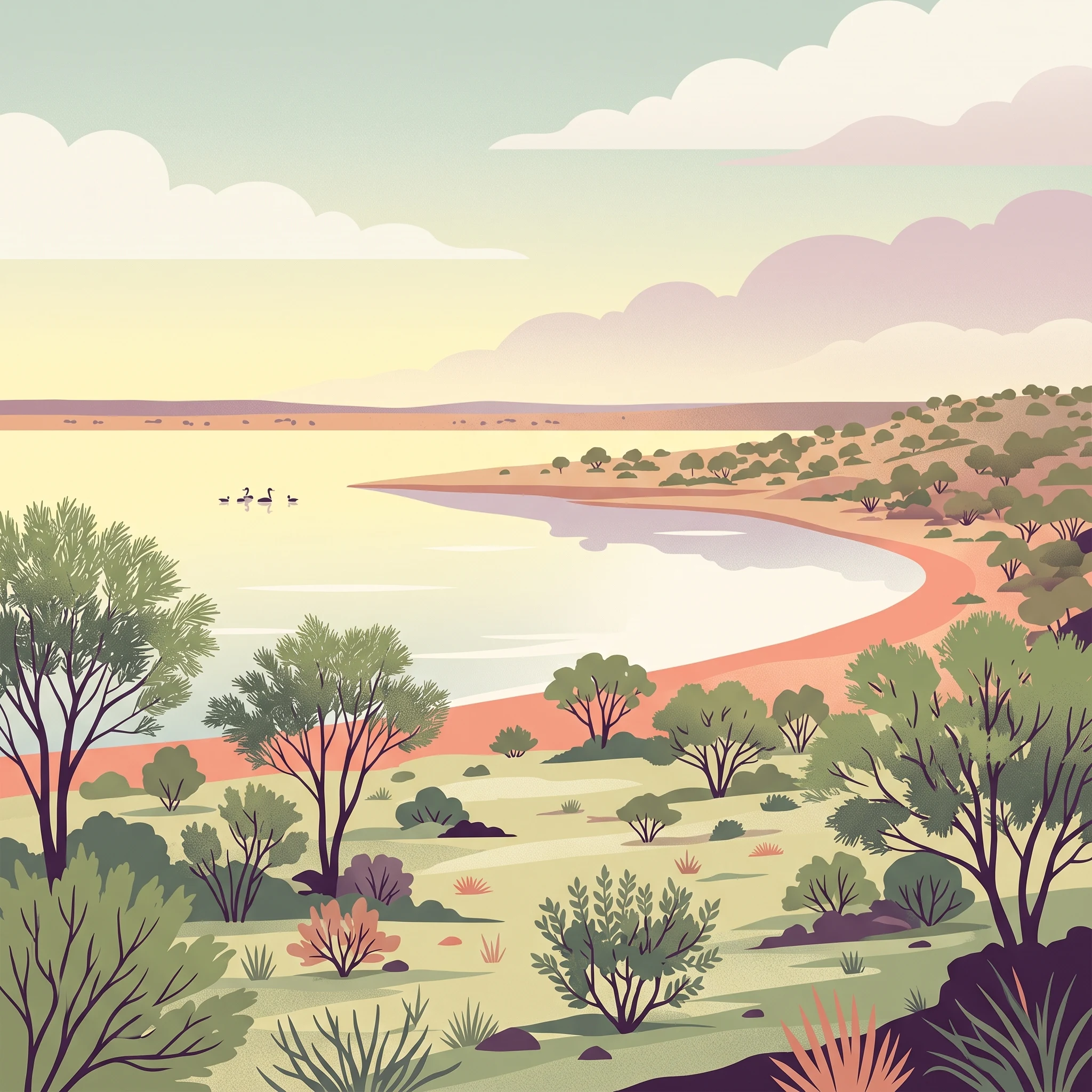
The physical landscape of Currawinya National Park is defined by the flat to gently undulating terrain of the mulga lands, a vast biome extending across much of inland Queensland and New South Wales. The characteristic sandy soils support a mosaic of vegetation communities including mulga woodland, grasslands, and the distinctive terminal lake basins that represent the lowest points in the landscape. Lakes Numalla and Wyara are shallow, ephemeral wetlands that fill during periods of high rainfall in the Paroo River catchment and then gradually dry, leaving salt-encrusted beds during drought periods. The floodplain areas adjacent to the lakes support different vegetation patterns, with samphire flats and lignum thickets providing habitat variety. The landscape lacks dramatic topographic relief, instead offering the subtle beauty of vast open horizons, changing sky conditions, and the seasonal transformation of wetland systems.
Currawinya National Park ecosystems, habitats, and plant life
The ecological character of Currawinya is shaped by its position in the mulga lands bioregion and its function as a terminal wetland system in an arid landscape. The park's Ramsar-listed lakes represent isolated but critically important wet points in an otherwise dry environment, providing habitat that supports the park's exceptional bird diversity. The Paroo Floodplain and Currawinya Important Bird Area designation recognises the site's significance for waterbird populations, particularly during periods when conditions allow the lakes to fill and provide abundant feeding and breeding opportunities. Vegetation communities include mulga open woodlands on the plains, coolabah woodlands along watercourses, and distinctive wetland plant assemblages around the lake margins. The park's 14 threatened species reflect the conservation value of protecting these diverse habitats within a largely cleared and modified landscape.
Currawinya National Park wildlife and species highlights
The wildlife of Currawinya National Park is most renowned for its birdlife, with over 200 species recorded including significant populations of waterbirds such as pelicans, swans, ducks, and migratory waders that use the lakes as drought refuge or passage points during their movements across inland Australia. The park provides crucial habitat for birds when other wetlands in the region have dried, making it a biodiversity hotspot during drought conditions. Mammals in the park include the greater bilby, which has been the focus of a dedicated conservation program within the predator-exclusion enclosure. The surrounding mulga woodlands support a range of reptile, small mammal, and invertebrate species adapted to the semi-arid conditions. The bilby program represents one of the most significant conservation initiatives in the park's history, aiming to establish a secure population of this threatened marsupial.
Currawinya National Park conservation status and protection priorities
Currawinya National Park holds significant conservation importance at both national and international levels, primarily through its Ramsar wetland designation for Lakes Numalla and Wyara. The Ramsar Convention recognition reflects the international significance of these wetlands for waterbird conservation, particularly as drought refuge habitat in Australia's often unpredictable climate. The park's inclusion in the Important Bird Area network further underscores its role in protecting bird populations across inland Australia. The bilby conservation program demonstrates the park's value for threatened species recovery, with the predator-exclusion fence representing a substantial investment in creating safe habitat for this endangered marsupial. Conservation challenges include managing feral cat populations that have infiltrated the enclosure and maintaining the ecological function of the wetland systems in the face of climate variability.
Currawinya National Park cultural meaning and human context
The cultural context of Currawinya National Park includes both Indigenous Australian heritage and more recent pastoral history. Indigenous Australian sites of cultural significance throughout the park indicate continuous Aboriginal connection to this landscape over thousands of years, with the wetlands particularly important for traditional ecological knowledge and resource use. The pastoral era, while now ended within the park boundary, left visible marks including the remnants of the Currawinya and Caiwarro Homesteads, machinery, and the levee bank that remain as historical features. This layered history reflects the broader pattern of land use across South West Queensland, where Indigenous occupation was followed by European pastoral development and more recently by conservation reservation. The park's establishment in 1991 and subsequent expansion represent a shift in values toward protecting the region's natural and cultural heritage.
Top sights and standout views in Currawinya National Park
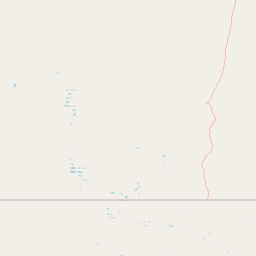
The standout features of Currawinya National Park are its Ramsar-listed Lakes Numalla and Wyara, which create remarkable birdwatching opportunities especially during drought when the park becomes a vital refuge for waterbirds. The greater bilby enclosure offers a unique conservation experience, representing one of Australia's most ambitious predator-exclusion programs for a threatened species. The vast mulga lands landscape provides a distinctive outback experience with open horizons and changing seasonal conditions. The park's location near Hungerford, a tiny town on the Queensland-New South Wales border, adds to its remote and adventurous character. With over 200 bird species, numerous threatened species, and the combination of wetland and woodland ecosystems, the park offers remarkable biodiversity within a semi-arid setting.
Best time to visit Currawinya National Park
The best time to visit Currawinya National Park depends on seasonal conditions and what visitors hope to experience. The wetland birdlife is most spectacular when Lakes Numalla and Wyara hold water, typically following periods of good rainfall in the Paroo River catchment. During dry periods, the lakes may be greatly reduced or dry entirely, which still offers wildlife viewing but with different character. The bilby enclosure provides year-round viewing opportunities. The semi-arid climate means summer temperatures can be extreme, while winter offers mild days but cold nights. Spring and autumn generally provide the most comfortable conditions for exploring the park. Visitors should check current conditions before traveling, as the remote location and variable wetland status significantly affect the park experience.