
Why Tregole National Park stands out
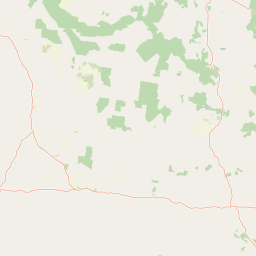
Tregole National Park is best known for its remarkable Ooline tree stands, which represent one of the most significant concentrations of this vulnerable species in Australia. The Ooline tree is a distinctive component of Queensland's inland woodlands, and the pure stands found within Tregole are considered unusual because they occur in a climate that is significantly hotter and drier than typical Ooline habitat. This makes the park particularly valuable for understanding the species' ecological tolerances and conservation requirements. The park also serves as a representative example of semi-arid ecosystem diversity, protecting the transitional zone where brigalow and mulga vegetation communities meet.
Tregole National Park history and protected-area timeline
The land that now comprises Tregole National Park was historically used for grazing purposes prior to its protection. The area was gazetted for protection in 1975, marking its transition from a working pastoral property to a conservation reserve. In 1995, the park was formally established under national park legislation, granting it the higher level of protection that comes with IUCN Category II designation. This evolution from agricultural land to protected area reflects a broader shift in Queensland's approach to land conservation during the latter half of the twentieth century, as recognition grew for the ecological values of semi-arid woodland ecosystems. The Queensland Parks and Wildlife Service has maintained management oversight since the park's establishment, working to protect the Ooline stands and maintain the ecological integrity of the semi-arid woodland communities.
Tregole National Park landscape and geographic character
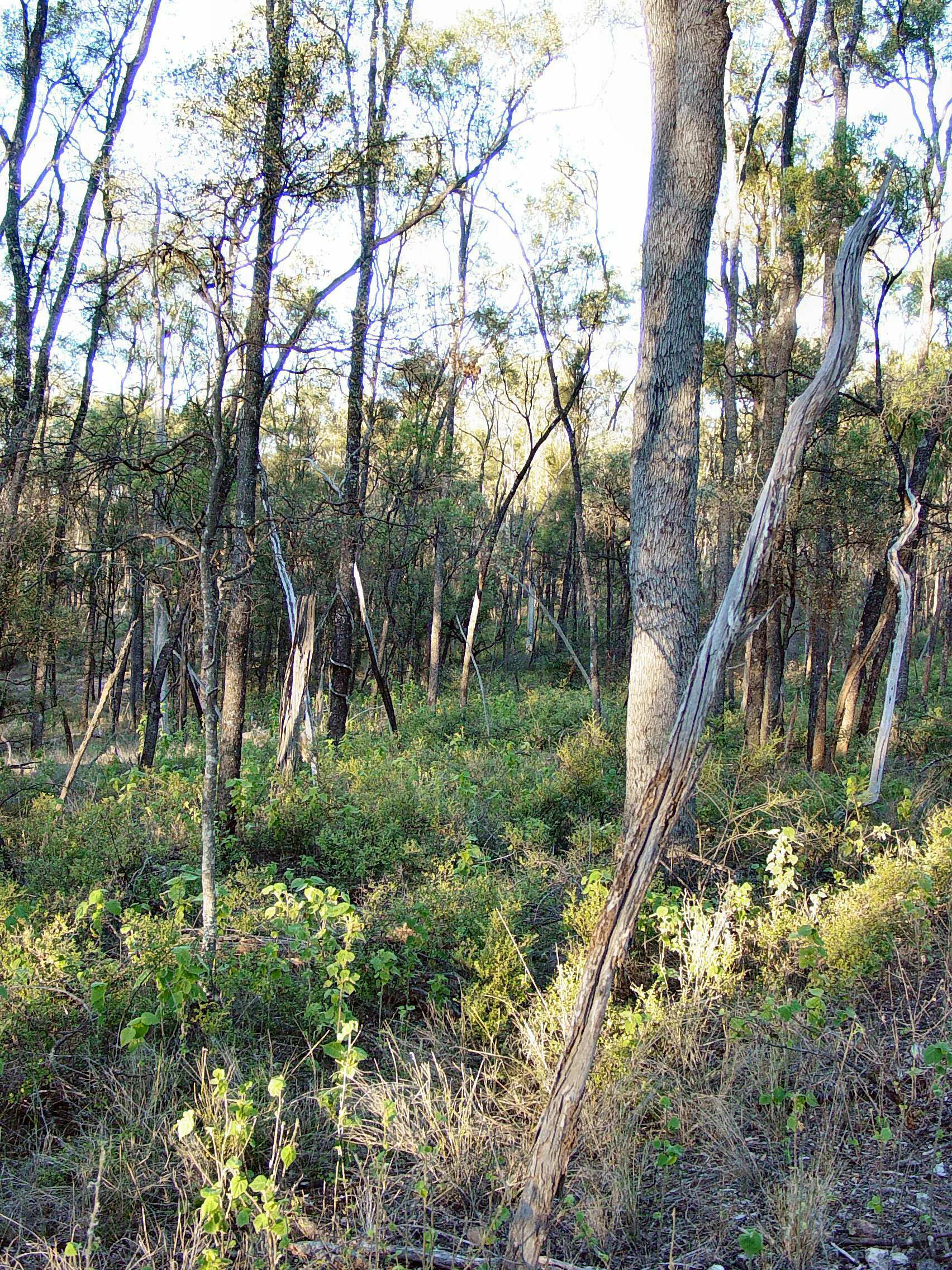
The landscape of Tregole National Park is characterized by semi-arid woodlands typical of South West Queensland, dominated by the dense, dark-green canopy of Ooline trees that create almost pure stands across much of the park's extent. The terrain is generally flat to gently undulating, consistent with the interior lowlands of the Murray-Darling Basin region. The vegetation structure alternates between the denser brigalow-dominated communities and the more open mulga woodlands, with the transition between these communities creating subtle variations in the park's visual character. The Ooline trees themselves are visually distinctive, with their dark foliage providing strong contrast against the lighter tones of the surrounding semi-arid landscape. The park lacks significant topographic drama, instead offering the quieter, more subtle beauty characteristic of Australia's inland woodland environments.
Tregole National Park ecosystems, habitats, and plant life
The ecological character of Tregole National Park is defined by its position at the intersection of two major vegetation biomes, the brigalow and mulga communities, both of which represent distinctive semi-arid woodland formations found throughout inland Queensland and New South Wales. The brigalow ecosystem is characterized by dense Acacia harpophylla woodlands, while mulga refers to the semi-arid woodlands dominated by Acacia aneura. Their convergence at Tregole creates a representative sample of semi-arid ecosystem diversity that would be difficult to find elsewhere in such a compact area. The Ooline tree, from the species Cadellia pentastylis, is the park's most notable botanical feature and is classified as a vulnerable species in Australia. The pure Ooline stands found at Tregole are particularly significant because they thrive in conditions that are hotter and drier than typical Ooline habitat, suggesting the species has ecological adaptations that allow it to survive in this challenging environment.
Tregole National Park wildlife and species highlights
While the Wikipedia source focuses primarily on the botanical features of Tregole National Park, the semi-arid woodland environment supports a range of wildlife adapted to the harsh interior conditions of Queensland. The brigalow and mulga woodlands provide habitat for various bird species, reptiles, and small mammals that have evolved to cope with the region's seasonal extremes and limited water availability. The dense canopy of the Ooline stands offers shelter and foraging opportunities for woodland bird species, while the ground layer supports reptiles adapted to the semi-arid conditions. The conservation of the Ooline stands is particularly important for wildlife, as these seemingly uniform forests actually provide microhabitats and resources that support biodiversity in an otherwise challenging landscape.
Tregole National Park conservation status and protection priorities
Tregole National Park holds significant conservation value primarily due to its protection of the vulnerable Ooline tree and its representative semi-arid ecosystems. The Ooline species, Cadellia pentastylis, is listed as vulnerable under Australian environmental legislation, and the nearly pure stands found at Tregole represent one of the most substantial populations of this species in existence. The park's location at the convergence of the brigalow and mulga biospheres adds further conservation significance, as it protects a representative sample of both ecosystems within a single protected area. This is particularly important given the extensive clearing of brigalow and mulga woodlands for agriculture across their former ranges. The transition from grazing land to protected area in 1975, followed by national park establishment in 1995, demonstrates a successful conservation outcome for this semi-arid woodland ecosystem.
Tregole National Park cultural meaning and human context
The Wikipedia source does not provide specific information about indigenous heritage or cultural history associated with Tregole National Park. The park is located in South West Queensland, a region with Aboriginal cultural heritage spanning many thousands of years, though detailed documentation of local cultural connections to this particular area is not included in the available source material. The pastoral history of the land prior to protection is briefly noted, with the area having been used for grazing before its establishment as a protected area.
Top sights and standout views in Tregole National Park
The defining highlight of Tregole National Park is its remarkable Ooline tree stands, which create an almost pure forest in an environment that is notably hotter and drier than typical Ooline habitat. This makes the park uniquely significant for this vulnerable species. The park also provides a compact but representative example of semi-arid ecosystem diversity, protecting the transitional zone where brigalow and mulga woodlands meet. Visitors can experience this distinctive landscape through a short 2.1-kilometer walking track at the day-use area, which offers an accessible introduction to the park's ecological character. The park's undeveloped nature, lacking camping facilities, adds to its appeal for those seeking a quieter, more contemplative natural experience.
Best time to visit Tregole National Park
The best time to visit Tregole National Park would be during the cooler months of autumn and spring in Queensland, when temperatures are more comfortable for outdoor exploration. Summer temperatures in South West Queensland can be extremely high, potentially making the day-use area and walking track less pleasant for visitors. Winter brings cooler conditions but can also see cold nights and mornings. As a day-use only park with no camping facilities, visitors should plan their trip accordingly and arrive with sufficient time to explore the walking track and enjoy the landscape before returning to larger centers. The lack of facilities means visitors should bring adequate water and supplies, regardless of the season.