Mori Atlas logo
National parkGeorges River Koala National Park

Discover the mapped boundaries and unique habitat of this critical koala sanctuary.

Georges River Koala National Park: Protected Landscape and Geographic Context in New South Wales

(Warranmadhaa National Park)

Georges River Koala National Park stands as a dedicated national park in New South Wales, established to protect crucial koala habitat within the Georges River corridor. This significant protected landscape offers a unique opportunity to explore the geographic setting and mapped terrain that supports one of Australia's most important chlamydia-free koala populations. Understand its role in regional conservation and the specific natural features that define its protected boundaries.

koala conservationNew South Wales national parksSydney green spacesCumberland PlainAboriginal heritage sitesurban wildlife protection

Georges River Koala National Park

National park

Park overview

Structured park overview, official facts, and landscape profile for Georges River Koala National Park

Georges River Koala National Park park facts, protected area profile, and essential visitor context
Review the core facts for Georges River Koala National Park, including designation, size, terrain, visitor scale, habitats, and operating context in one park-focused overview.

About Georges River Koala National Park

Georges River Koala National Park represents a landmark conservation initiative in Australia's most urbanised state, created specifically to protect and restore koala habitat in the Sydney region. The park is being established within the Georges River catchment, an area that retains significant stands of native vegetation despite decades of surrounding urban development. The protected area connects fragmented woodland corridors through strategic land acquisition, enabling koalas to move between habitat patches and maintain genetic diversity. The Cumberland Plain Conservation Plan guides the park's development alongside urban growth, with provisions for revegetation in the Noorumba and Beulah corridors to strengthen ecological connectivity. This approach acknowledges that effective koala conservation requires landscape-scale planning rather than isolated protected patches.

Quick facts and research context for Georges River Koala National Park

The Georges River Koala National Park covers approximately 1,830 hectares of bushland in Sydney's southwestern corridor. As of mid-2025, the government has acquired 962 hectares for the park, with plans to expand by an additional 830 hectares through the Cumberland Plain Conservation Plan. The park sits between Long Point in Campbelltown and the township of Appin, following the Georges River valley. The official name Warranmadhaa was selected through consultation with the Tharawal Aboriginal Land Council and traditional custodians, describing the southern landscape character. The NSW government has committed $48.2 million toward implementing the park, including a koala care centre, volunteer support programs, and protective infrastructure.

Park context

Deeper park guide and search-rich context for Georges River Koala National Park

Georges River Koala National Park history, landscape, wildlife, and travel context
Explore Georges River Koala National Park through its history, landscape character, ecosystems, wildlife, conservation priorities, cultural context, and seasonal travel timing in a structured park guide built for atlas discovery and search intent.

Why Georges River Koala National Park stands out

The park is distinguished by containing the only confirmed chlamydia-free koala populations in New South Wales, making it critically important for the species' long-term survival. The protected area was specifically designed to address severe koala population decline in the Sydney basin, creating connected habitat through the Georges River corridor. The park's establishment addresses a gap in formal protection for koala populations in the Greater Sydney region, where urban expansion has increasingly isolated and threatened remaining colonies. The collaboration with Tharawal traditional custodians in naming and managing the landscape also represents a notable aspect of the park's identity.

Georges River Koala National Park history and protected-area timeline

The concept for a dedicated koala national park in the Georges River area originated with the NSW Labor Party, which first proposed such a policy in November 2018. That initial proposal focused on a smaller area within the Smiths Creek Reserve in Campbelltown and was taken to the 2019 state election, but the party was not in government at the time so the policy was not implemented. The idea was revived for the 2023 state election campaign, with the proposed park repositioned between Glenfield and Appin. Following Labor's victory under Premier Chris Minns, planning commenced in earnest. The state government allocated $48.2 million toward the initiative, which includes not only land acquisition but also a koala care centre, volunteer support programs, and infrastructure to reduce road mortality. Member of Parliament Greg Warren for Campbelltown has been a particularly strong advocate for the proposal.

Georges River Koala National Park landscape and geographic character

The park occupies terrain within the Georges River valley, characterised by undulating hills and woodland plains typical of the Cumberland Plain bioregion. The landscape supports a mix of open forest and woodland communities, with the Georges River providing a natural corridor through the protected area. Ousedale Creek offers additional east-west connectivity within the park boundaries. The terrain includes areas requiring significant revegetation, particularly in the northern corridor extensions, where historical clearing has degraded habitat quality. The southern portion of the park, described by the Aboriginal name Warranmadhaa, encompasses distinctive landscape character valued by traditional custodians.

Georges River Koala National Park ecosystems, habitats, and plant life

The park protects remnant vegetation communities of the Cumberland Plain, an area that has been heavily modified by agriculture and urban development since European settlement. These woodland ecosystems provide essential habitat for koalas, which depend on specific tree species for food and shelter. The protection of chlamydia-free koala populations represents a particularly significant conservation asset, as this disease has caused severe declines in koala numbers across Queensland and northern New South Wales. The park's location within the Georges River corridor also connects to broader biodiversity values, supporting species that move through the riparian and woodland habitats.

Georges River Koala National Park wildlife and species highlights

The Georges River Koala National Park exists primarily to protect koala populations, which occupy the woodland and forest habitats within the park boundaries. These populations are notable for their confirmed freedom from chlamydia, a bacterial disease that has caused widespread mortality and infertility in koala populations throughout eastern Australia. The park provides critical habitat connectivity allowing koalas to move between feeding and resting sites, which is essential for their survival in an increasingly fragmented landscape. Beyond koalas, the woodland and riparian habitats support various native fauna adapted to the Cumberland Plain environment.

Georges River Koala National Park conservation status and protection priorities

The establishment of Georges River Koala National Park addresses a critical gap in formal protection for koalas within the Greater Sydney region. The park's chlamydia-free koala populations represent a unique conservation asset that could serve as a source population for restocking other areas or maintaining genetic diversity. The $48.2 million investment reflects the seriousness with which the NSW government approaches koala conservation in this region, integrating habitat protection with care facilities and infrastructure to reduce mortality from vehicle strikes. The Cumberland Plain Conservation Plan framework acknowledges that conservation must be integrated with development planning rather than treated as a separate consideration.

Georges River Koala National Park cultural meaning and human context

The park's official name Warranmadhaa was chosen through consultation with the Tharawal Aboriginal Land Council, traditional custodians, and other members of the local Aboriginal community. This name describes the southern part of the park's landscape and reflects the ongoing connection between Aboriginal people and Country in the Georges River region. The collaborative approach to naming represents contemporary recognition of Indigenous knowledge and custodianship in protected area management. The Tharawal people have historical connections to the Georges River catchment that extend far beyond European settlement of the area.

Top sights and standout views in Georges River Koala National Park

The park contains the only chlamydia-free koala populations in New South Wales, representing a critical conservation resource for species survival. Its establishment fulfills a 2023 election commitment by the NSW Labor government with substantial funding support. The park connects remnant woodland through the Georges River corridor, enabling vital habitat connectivity for koala movement. The official Aboriginal name Warranmadhaa reflects Tharawal traditional custodianship of the landscape.

Best time to visit Georges River Koala National Park

The park's accessibility within the Sydney metropolitan area makes it available for visits throughout the year, though spring and autumn typically offer comfortable conditions for exploring bushland environments. Visitors should note that as a newly established protected area, visitor facilities and trails may still be under development. The best wildlife viewing opportunities often occur in early morning or late afternoon when koalas are more active in the trees. Summer heat should be managed carefully with adequate water and sun protection.
Park location guide

Geography guide, regional context, and park location map for Georges River Koala National Park

Georges River Koala National Park park geography, regions, and map view in Australia
Understand where Georges River Koala National Park sits in Australia through a broader geographic reading of the surrounding landscape, nearby location context, and its mapped position within the national park landscape.

How Georges River Koala National Park fits into Australia

Australia is a constitutional monarchy and federal parliamentary democracy comprising six states and ten territories. With a population of nearly 28 million, it is one of the world's most urbanised countries, with most people concentrated on the eastern seaboard. The country has a high Human Development Index and is known for its cultural diversity, ancient Aboriginal heritage, and unique wildlife.

Wider geography shaping Georges River Koala National Park in Australia

Australia occupies the entire Australian continent, the island of Tasmania, and numerous smaller islands. It is the world's flattest and driest inhabited continent, featuring vast deserts in the interior (the Outback), tropical rainforests along the eastern coast, and a coastline bordering the Indian and Pacific Oceans.

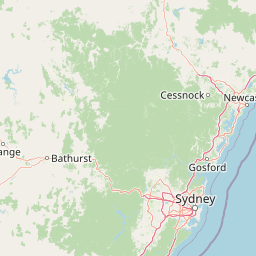
Map view of Georges River Koala National Park

Use this park location map to pinpoint Georges River Koala National Park in Australia, understand its exact geographic position, and read its mapped placement within the surrounding landscape more clearly.

Pigeon | © OpenStreetMap contributors

Location context for Georges River Koala National Park

New South Wales
Park atlas

Trace the regional spread of protected landscapes and conservation areas within the Greater Sydney region.

Explore Nearby National Parks and Protected Areas Around Georges River Koala National Park
After exploring Georges River Koala National Park, browse other national parks and protected areas across the Georges River corridor and broader Cumberland Plain bioregion. This geographic context allows for comparison of diverse conservation efforts and reveals the regional spread of koala habitats and other critical natural landscapes.
National parkNew South Wales

Heathcote National Park: Discover the Hawkesbury Sandstone Terrain and Mapped Protected Boundaries

Explore the rugged gorges and regional geography of this New South Wales national park.

Heathcote National Park preserves a significant example of the Sydney region's characteristic Hawkesbury sandstone landscape, presenting a terrain of deeply incised creek gorges and rocky valleys. Located in New South Wales, this protected national park offers valuable insights into regional geography and the mapped distribution of natural landscapes. Its rugged terrain and diverse ecosystems make it a key destination for understanding the protected area context of Australia's eastern seaboard.

Area
26.79 km²
Established
1943
IUCN
II
National parkNew South Wales

Dharawal National Park: Sandstone Landscapes and Upland Swamp Ecosystem Atlas

Discover mapped protected area boundaries and unique biodiversity.

Dharawal National Park, situated in New South Wales, is a significant protected area distinguished by its globally important upland swamp ecosystems, which exhibit the highest species richness of shrub and sedge communities found anywhere on Earth. This national park features a varied terrain, from steep gorges and waterfalls to sandstone woodlands and rainforest valleys, all contributing to its exceptional biodiversity and status as a crucial koala habitat within southern Sydney. Its landscape context on the Woronora Plateau provides a unique geographic perspective for understanding protected Australian natural areas.

Area
65.08 km²
Established
2012
IUCN
II
National parkNew South Wales

Georges River National Park: Protected Landscape and Geographic Context in New South Wales

Mapped terrain, sandstone woodlands, and key wetland habitats.

Georges River National Park, located within New South Wales, Australia, serves as a crucial protected natural area. Its 514 hectares encompass diverse terrain shaped by the Georges River, featuring significant mangrove swamps, salt marshes, and exposed sandstone woodlands characteristic of the Sydney region. This park's atlas value lies in its role preserving vital ecosystems, supporting a notable array of vertebrate and bird species, and showcasing unique natural landscapes easily explored through mapped terrain and geographic context.

Area
5.14 km²
Established
1992
IUCN
II
Relief
Lowland
National parkNew South Wales

Sydney Harbour National Park: A Distinctive Coastal Protected Landscape in New South Wales

Explore its mapped geography and unique heritage sites.

Sydney Harbour National Park represents an extraordinary protected area in New South Wales, Australia, celebrated for its integration of natural coastal terrain with significant historical sites. This national park offers a unique opportunity for atlas-based exploration of its mapped boundaries, dramatic sandstone headlands, and sheltered harbour locations. Discover the distinctive blend of natural landscape and heritage fortifications that define this metropolitan park, providing a rich geographic context for understanding urban protected areas.

Area
3.92 km²
Established
1975
IUCN
II
National parkAustralia

Cattai National Park: Australia's Premier Colonial Heritage Protected Landscape

Mapped riverfront geography and historical Australian park context.

Cattai National Park represents a vital entry in Australia's atlas of protected areas, offering unparalleled insight into the nation's early colonial history alongside its natural riverine landscapes. The park's designation as a national park highlights its importance in preserving not only the unique geography of the Hawkesbury River floodplain but also significant historical sites like the Hope Farm Mill, Australia's oldest industrial site. Exploring Cattai National Park allows for a deep dive into mapped protected boundaries and the layered cultural and natural terrain of the Sydney region.

Area
4.24 km²
Established
1992
IUCN
II
National parkNew South Wales

Bangadilly National Park: Protected Sandstone Plateau and Gorge Landscape in NSW

Explore its unique terrain and Wingecarribee River geography.

Bangadilly National Park, situated in New South Wales, is a critical protected area characterized by its striking sandstone plateau and gorge formations bordering the Wingecarribee River. As a strict nature reserve, it safeguards a significant transition zone for local flora and provides essential habitat for numerous rare and threatened species, making it a key site for understanding regional landscape ecology and protected area distribution in Australia.

Area
21.35 km²
Established
2001
IUCN
Ia
National parkNew South Wales

Brisbane Water National Park: A Protected Landscape in New South Wales' Sydney Basin Bioregion

Explore mapped terrain, endangered ecosystems, and coastal waterway geography.

Brisbane Water National Park, located in New South Wales, Australia, is a vital protected area safeguarding critical ecosystems within the Sydney Basin bioregion. This national park features a diverse landscape encompassing rugged escarpments, fertile valleys, and important coastal waterways. Its protected status makes it a crucial conservation refuge, offering insights into unique natural terrain and regional geography for those seeking detailed, map-centric exploration.

Area
115.06 km²
Established
1959
IUCN
II
National parkNew South Wales

Bouddi National Park: Coastal National Park with Temperate Rainforest & Marine Atlas

Discover unique sandstone landscapes and protected marine geography in New South Wales.

Bouddi National Park in New South Wales stands out for its rare mix of coastal headlands, ancient temperate rainforests, and a comprehensive marine protected area. Its landscape is defined by dramatic Hawkesbury sandstone geology, featuring spectacular tessellated pavements and laterite plateaus. The park's protected marine zone significantly enhances local biodiversity, making it a key area for understanding coastal and oceanic protected landscapes within the Australian atlas.

Area
15.32 km²
Established
1967
IUCN
II
Relief
Lowland

Common questions about visiting, size, designation, and location context for Georges River Koala National Park

Georges River Koala National Park FAQs for park facts, access, geography, and protected area context
Find quick answers about Georges River Koala National Park, including protected-area facts, park geography, trail and visitor context, and how the park fits into its surrounding country and regional landscape.
MoriAtlas Explorer

Continue Your Protected Areas Search Across the Global Atlas

Deepen your exploration by continuing the structured search for national parks and protected areas worldwide. Utilize the comprehensive filtering capabilities to compare different conservation landscapes and refine your understanding of global park geography. Discover more about the distribution and characteristics of protected natural areas.

Global natural geography