Why Grand Bois National Park stands out
Grand Bois National Park is best known for protecting one of Haiti's last remaining primary rainforests, a rare and precious ecosystem in a country that has lost approximately 99% of its original forest cover. The park gained particular scientific prominence when researchers rediscovered the Tiburon stream frog (Eleutherodactylus semipalmatus), a amphibian species previously believed to be extinct. Additionally, botanists discovered a rare Magnolia tree species (Magnolia ekmanii) that had not been seen since the early 20th-century explorations of Swedish botanist Erik Leonard Ekman. These discoveries underscore the park's exceptional biodiversity significance despite its relatively small size, serving as a living laboratory for understanding Caribbean forest ecosystems and a critical refuge for species found nowhere else.
Grand Bois National Park history and protected-area timeline
Grand Bois National Park was established on September 23, 2015, when Haitian President Michel Martelly signed the decree creating the protected area. The initiative was led by the Haiti National Trust, a national conservation organization that had identified Morne Grand Bois as one of Haiti's critical biodiversity landmarks. Prior to formal protection, the mountain had remained relatively forested compared to surrounding areas, largely due to its steep terrain and elevation, which made it less attractive for agriculture and development. The founding scientists and conservationists recognized the urgency of establishing protection because deforestation pressures were increasing in the region, and without legal protection, the primary rainforest faced imminent threat. The rediscovery of the Tiburon stream frog and the finding of Magnolia ekmanii during the scientific surveys that preceded park establishment provided compelling evidence of the area's irreplaceable biodiversity value. These discoveries transformed scientific understanding of Haiti's remaining biodiversity and strengthened the case for rapid protection action.
Grand Bois National Park landscape and geographic character
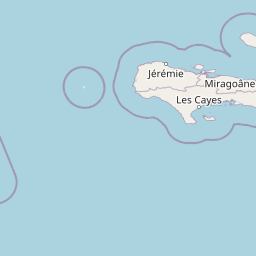
The landscape of Grand Bois National Park is defined by Morne Grand Bois, a dramatic isolated mountain peak that rises to 1,262 meters above sea level in southwestern Haiti. Unlike much of Haiti's terrain, which consists of rolling hills and lowland plains, Morne Grand Bois stands as a prominent peak creating a distinctive landscape feature visible across the region. The park encompasses all areas above 900 meters elevation, including the mountain's steep slopes, ridges, and valleys. The terrain is characterized by steep elevation changes, rocky outcrops, and forested slopes that transition from lower elevation tropical vegetation to cloud forest conditions at higher elevations. The mountain's isolation creates an ecological island effect, where species have evolved in relative independence from mainland populations. The park's small footprint of 3.7 square kilometers belies its environmental importance, as the vertical range and microclimates generated by the mountain's topography support diverse habitats within a compact area.
Grand Bois National Park ecosystems, habitats, and plant life
The ecological significance of Grand Bois National Park cannot be overstated for a country that has lost the vast majority of its original forests. The park protects Haiti's remaining primary rainforest, an ecosystem type that has almost entirely disappeared from the island of Hispaniola. The forest on Morne Grand Bois represents a complete, functioning ecosystem with native tree species, intact soil communities, and the full complement of native biodiversity. The mountain's elevation generates cloud forest conditions, where moisture from Trade Winds condenses on the vegetation, supporting epiphytes, ferns, and moisture-dependent species. The forest contains rare and endemic species adapted to these specific conditions, making it a unique repository of Caribbean biodiversity. The ecosystem also provides critical hydrological functions, with the forest's vegetation regulating water flow through streams and springs that serve as water sources for local communities. This watershed function adds ecological importance beyond biodiversity conservation, linking the forest's health directly to human welfare in the surrounding area.
Grand Bois National Park wildlife and species highlights
Grand Bois National Park is home to remarkable wildlife diversity relative to its small size, with several species of exceptional conservation significance. The most celebrated discovery was the Tiburon stream frog (Eleutherodactylus semipalmatus), also known as the foothill robber frog, which was rediscovered after being thought extinct. This amphibian represents a conservation success story and demonstrates the park's role as a refuge for species that have disappeared from other parts of Haiti. The discovery of Magnolia ekmanii, a rare tree species not recorded since the early 1900s, highlights the botanical significance of the park. Beyond these flagship discoveries, the primary rainforest supports diverse invertebrate communities, bird species, and smaller vertebrates that depend on intact forest habitat. The park's wildlife value is enhanced by its role as one of the last refuges for native Caribbean species in a region where habitat loss has driven many species to extinction or near-extinction.
Grand Bois National Park conservation status and protection priorities
Grand Bois National Park represents a critical conservation priority in one of the most forest-depleted countries in the world. The park was established to address the urgent threat of deforestation, which continues to impact Haiti's remaining natural areas. The primary threat to the park's ecosystems comes from clearing for agriculture, logging for fuelwood and charcoal, and general pressure from a growing population that depends on forest resources. Beyond direct forest loss, deforestation in the watershed affects streams and springs that flow through the park, impacting aquatic species habitat and reducing water availability for downstream communities. The conservation of Grand Bois is therefore linked to both biodiversity protection and sustainable resource management for local populations. The park's designation as an IUCN Category II protected area provides international recognition of its significance and access to conservation support and attention. Continued conservation success will require addressing the underlying drivers of deforestation while supporting sustainable livelihoods for communities near the park.
Top sights and standout views in Grand Bois National Park
Grand Bois National Park stands as one of Haiti's most important conservation areas, protecting the island's remaining primary rainforest on an isolated mountain peak. The park's establishment in 2015 marked a significant achievement for Caribbean conservation, preserving critical habitat for species found nowhere else including the rediscovered Tiburon stream frog and the rare Magnolia ekmanii. The mountain's 1,262-meter peak and forest-covered slopes create a dramatic landscape that is increasingly rare in Haiti. The park's watershed function provides essential water resources for surrounding communities, making its conservation directly relevant to local welfare. As one of the last intact forest ecosystems in Haiti, Grand Bois serves as a living reference for understanding the island's historical biodiversity and ecosystem function.