Why Jaragua National Park stands out
Jaragua National Park is best known for being the Caribbean's largest protected area, encompassing a remarkable diversity of habitats within a single park boundary. The park is particularly celebrated for its significant populations of American flamingos that inhabit the coastal lagoons and the saltwater Lake of Oviedo. Its designation as an Important Bird Area reflects exceptional avifauna diversity, including numerous endemic species such as the Hispaniolan parrot, Hispaniolan emerald, and Antillean piculet. The park also protects critical dry forest ecosystems that have largely disappeared elsewhere on Hispaniola, along with pristine marine habitats around Beata Island and Alto Velo Island. The presence of Bahía de las Águilas, one of the most unspoiled beaches in the Caribbean, adds to the park's distinctive character.
Jaragua National Park history and protected-area timeline
Jaragua National Park was established on August 11, 1983, through Presidential Decree No. 1315, representing a landmark commitment by the Dominican Republic to conserve its natural heritage. The park was named after Xaragua, one of the five Taíno chiefdoms that existed on Hispaniola before European contact, linking the protected area to the island's pre-Columbian human history. The establishment of the park responded to growing recognition that the Hispaniolan dry forests, once covering much of the island's lowlands, had been dramatically reduced by agricultural expansion and charcoal production. The park's creation aimed to protect the remaining significant tracts of this endangered forest type and the unique species that depend on it. Over the decades, Jaragua has gained additional recognition, including designation as an Important Bird Area by BirdLife International and inclusion in the UNESCO Man and the Biosphere Programme, reflecting its global significance for biodiversity conservation.
Jaragua National Park landscape and geographic character
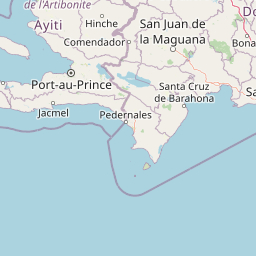
The landscape of Jaragua National Park presents a striking contrast between the semi-arid inland terrain of the Baoruco foothills and the lush coastal wetlands along the Caribbean shore. The Baoruco Mountain Range forms a dramatic backdrop, with the park encompassing the southern slopes where dry forest and scrubland create a characteristic xerophytic landscape adapted to seasonal drought. Moving toward the coast, the terrain transitions through mangrove zones and coastal scrub before reaching the shoreline and offshore islands. Beata Island and Alto Velo Island add distinct island landscapes to the park's geography, each supporting specialized coastal and marine environments. The park contains numerous lagoons, including Lagunas Oviedo, Salada, Manuel Matos, La Rabiza, Puerto en Medio, Bucán Base, and Salado Bucán, which create a complex wetland mosaic throughout the coastal plain. Lago de Oviedo stands out as a significant saltwater lake that punctuates the park's interior, its shallow waters supporting abundant birdlife and creating a focal point for ecological diversity within the broader semi-arid landscape.
Jaragua National Park ecosystems, habitats, and plant life
The nature of Jaragua National Park is defined by the Hispaniolan dry forests ecoregion, one of the most threatened and biodiverse forest types in the Caribbean. The park protects extensive stands of dry forest characterized by trees adapted to seasonal drought conditions, along with coastal mangrove ecosystems that provide critical habitat for marine and bird species. The diverse habitats within the park support a remarkable concentration of biodiversity, with particular significance for endemic species that evolved in isolation on Hispaniola. The numerous lagoons scattered throughout the park create freshwater and brackish wetland habitats that attract both resident and migratory bird species, supporting the park's reputation as an ornithological destination. The protected marine habitats around Beata and Alto Velo Islands extend the park's ecological significance into the Caribbean Sea, protecting coral reef communities and marine ecosystems that are integral to the broader marine biodiversity of the Dominican Republic. The park's status as the only protected area of the Paleoisla del Sur geoformation adds geological significance, preserving evidence of the island's formation during the late Pleistocene period.
Jaragua National Park wildlife and species highlights
Jaragua National Park supports exceptional wildlife diversity, with particular prominence given to bird species that thrive in the various habitats within the park's boundaries. The American flamingo is among the most iconic species, with flocks commonly observed wading in the shallow waters of lagoons and coastal areas. The park provides critical habitat for numerous waterfowl, wading birds, and passerine species, both as breeding grounds and as migration stopovers along the Caribbean flyway. The diversity of psittaciformes is notable, with the Hispaniolan parrot and other parrot species inhabiting the forest canopy. Hummingbirds, including the Hispaniolan emerald and Hispaniolan mango, add to the park's avian character, while birds of prey patrol the skies throughout the protected area. Endemic species such as the Greater Antillean bullfinch, Antillean piculet, Greater Antillean grackle, Abbott's northern potoo, and vervain hummingbird represent species found nowhere else in the world, underscoring the park's global significance for avian conservation.
Jaragua National Park conservation status and protection priorities
Jaragua National Park represents a cornerstone of Dominican conservation efforts and holds international recognition for its ecological importance. The park's designation as a UNESCO Biosphere Reserve reflects its role in demonstrating sustainable conservation approaches that balance ecological protection with compatible human uses. As the largest protected area in the Caribbean, Jaragua provides a critical refuge for species that have lost habitat elsewhere on Hispaniola, particularly within the endangered dry forests ecoregion. The Important Bird Area designation by BirdLife International acknowledges the park's exceptional avifauna, including significant populations of endemic and migratory species. Conservation challenges in the park include managing the tension between protection and the needs of local communities, addressing pressures from agricultural expansion, and maintaining the integrity of marine habitats against broader environmental threats. The park's comprehensive approach to protecting both terrestrial and marine ecosystems positions it as a model for integrated coastal zone management in the Caribbean region.
Jaragua National Park cultural meaning and human context
The cultural context of Jaragua National Park is deeply connected to the pre-Columbian history of Hispaniola, as the park bears the name of Xaragua, one of the five Taíno chiefdoms that organized indigenous life on the island before European contact. The Taíno people inhabited the territory now encompassed by the park, establishing settlements and agricultural systems in the coastal areas and interior lands. The naming of the park after this historic chiefdom acknowledges the long human history associated with the landscape and reinforces the connection between contemporary conservation and the island's ancestral heritage. While the park's primary designation focuses on natural conservation, the cultural dimension adds depth to its identity and provides a framework for understanding the long relationship between human communities and the dry forest ecosystems that once dominated this region of Hispaniola.
Top sights and standout views in Jaragua National Park
Jaragua National Park offers several standout features that distinguish it within the Caribbean protected area network. The park's status as the largest protected area in the Caribbean provides exceptional scope for exploration and conservation. The opportunity to observe American flamingos in their natural habitat, particularly around Lago de Oviedo and the coastal lagoons, represents a major draw for visitors. The park's birdlife is extraordinarily diverse, with numerous endemic species present, making it a premier destination for ornithologists and bird enthusiasts. The presence of Beata Island and Alto Velo Island adds remote island ecosystems rarely accessible to visitors. Bahía de las Águilas offers a nearly pristine beach experience, one of the few remaining undeveloped coastal areas in the Caribbean. The diversity of habitats within a single park, from mountain forest to coastal mangroves to marine environments, creates remarkable ecological complexity. The park's geological significance as the only protected area of the Paleoisla del Sur adds scientific interest to the visitor experience.
Best time to visit Jaragua National Park
The optimal time to visit Jaragua National Park aligns with the cooler, drier months from November through April, when temperatures are more moderate and rainfall is reduced, making outdoor exploration more comfortable. This period also corresponds with the peak of the migratory bird season, offering enhanced opportunities to observe both resident species and northern migrants passing through the park. The dry forest habitats are most accessible during these months when trail conditions are better and vegetation is less dense. The summer months from May through October bring higher temperatures and increased rainfall, which can limit some activities but also bring the landscape to life with lush vegetation. The American flamingos are present year-round but may be more easily observed when water levels in the lagoons recede during the drier months, concentrating birds in remaining water areas. Visitors interested in the park's marine environments should note that water conditions are generally favorable year-round, though the winter months may bring rougher seas along certain coastlines.