Mori Atlas logo
National parkGrand Bois National Park

Discover the mapped boundaries and unique biodiversity of this critical conservation area in Sud.

Grand Bois National Park: Haiti's Pristine Mountain Rainforest Protected Landscape

(Parc National Naturel de Grand Bois)

Grand Bois National Park, located in Haiti's Sud region, represents a vital protected natural area focused on preserving a rare primary rainforest ecosystem. This national park encompasses the dramatic mountainous terrain of Morne Grand Bois, a peak rising over 1,200 meters, creating a unique cloud forest environment above 900 meters elevation. Its establishment safeguards crucial habitat for species found nowhere else, including endemic frogs and rare Magnolia trees, underscoring its significance for regional biodiversity and conservation in one of the Caribbean's most deforested nations. The park's mapped boundaries protect approximately 3.7 square kilometers of ecologically critical mountain landscape.

Primary RainforestMountain ConservationCaribbean Protected AreaBiodiversity HotspotEndemic SpeciesCloud Forest

Grand Bois National Park

National park

Park overview

Structured park overview, official facts, and landscape profile for Grand Bois National Park

Grand Bois National Park park facts, protected area profile, and essential visitor context

Review the core facts for Grand Bois National Park, including designation, size, terrain, visitor scale, habitats, and operating context in one park-focused overview.

About Grand Bois National Park

Grand Bois National Park represents one of Haiti's most significant conservation achievements in recent decades. Established in 2015 through the initiative of the Haiti National Trust and other conservation partners, the park was created to protect the unique ecosystem of Morne Grand Bois, an isolated mountain that stands apart from Haiti's generally low-lying terrain. The mountain rises dramatically from the surrounding landscape, creating distinct ecological zones and providing habitat for species adapted to cloud forest conditions. The park's establishment was driven by scientific recognition that Morne Grand Bois harbored biodiversity of national and international importance, including species that had been lost from other parts of Haiti. The primary rainforest found on Morne Grand Bois is particularly significant because it represents a nearly complete forest ecosystem with intact canopy structure, native understory vegetation, and the full complement of native species that once characterized Haitian forests. This makes the park invaluable not only for biodiversity conservation but also as a reference ecosystem for understanding historical Caribbean forest composition and function. The park's location spanning two departments adds administrative complexity but also emphasizes its regional importance as a trans-departmental conservation area.

Quick facts and research context for Grand Bois National Park

Grand Bois National Park is located in southwestern Haiti, northwest of Les Anglais, spanning the border between the Sud and Grand'Anse departments. The park centers on Morne Grand Bois, an isolated mountain peak reaching 1,262 meters in elevation, with all protected areas situated above 900 meters. Established on September 23, 2015 by President Michel Martelly, the park protects Haiti's remaining primary rainforest ecosystem, making it a critical biodiversity stronghold in the Caribbean. The park was identified by the Haiti National Trust as one of the nation's most important biodiversity landmarks due to its unique plant and animal species assemblages.

Protection and recognition

Tracking the terrestrial boundary, establishment timeline, and official conservation framework.

Documented Protection Status of Grand Bois National Park

Grand Bois National Park features formal terrestrial protection established in 2015 to safeguard its specific inland geography. Reviewing official designations and regional management boundaries offers essential geographic context for understanding the scope of local conservation efforts.

Protection details

Protection scope
Terrestrial
Designated year
2015
Park context

Deeper park guide and search-rich context for Grand Bois National Park

Grand Bois National Park history, landscape, wildlife, and travel context

Explore Grand Bois National Park through its history, landscape character, ecosystems, wildlife, conservation priorities, cultural context, and seasonal travel timing in a structured park guide built for atlas discovery and search intent.

Why Grand Bois National Park stands out

Grand Bois National Park is best known for protecting one of Haiti's last remaining primary rainforests, a rare and precious ecosystem in a country that has lost approximately 99% of its original forest cover. The park gained particular scientific prominence when researchers rediscovered the Tiburon stream frog (Eleutherodactylus semipalmatus), a amphibian species previously believed to be extinct. Additionally, botanists discovered a rare Magnolia tree species (Magnolia ekmanii) that had not been seen since the early 20th-century explorations of Swedish botanist Erik Leonard Ekman. These discoveries underscore the park's exceptional biodiversity significance despite its relatively small size, serving as a living laboratory for understanding Caribbean forest ecosystems and a critical refuge for species found nowhere else.

Grand Bois National Park history and protected-area timeline

Grand Bois National Park was established on September 23, 2015, when Haitian President Michel Martelly signed the decree creating the protected area. The initiative was led by the Haiti National Trust, a national conservation organization that had identified Morne Grand Bois as one of Haiti's critical biodiversity landmarks. Prior to formal protection, the mountain had remained relatively forested compared to surrounding areas, largely due to its steep terrain and elevation, which made it less attractive for agriculture and development. The founding scientists and conservationists recognized the urgency of establishing protection because deforestation pressures were increasing in the region, and without legal protection, the primary rainforest faced imminent threat. The rediscovery of the Tiburon stream frog and the finding of Magnolia ekmanii during the scientific surveys that preceded park establishment provided compelling evidence of the area's irreplaceable biodiversity value. These discoveries transformed scientific understanding of Haiti's remaining biodiversity and strengthened the case for rapid protection action.

Grand Bois National Park landscape and geographic character

The landscape of Grand Bois National Park is defined by Morne Grand Bois, a dramatic isolated mountain peak that rises to 1,262 meters above sea level in southwestern Haiti. Unlike much of Haiti's terrain, which consists of rolling hills and lowland plains, Morne Grand Bois stands as a prominent peak creating a distinctive landscape feature visible across the region. The park encompasses all areas above 900 meters elevation, including the mountain's steep slopes, ridges, and valleys. The terrain is characterized by steep elevation changes, rocky outcrops, and forested slopes that transition from lower elevation tropical vegetation to cloud forest conditions at higher elevations. The mountain's isolation creates an ecological island effect, where species have evolved in relative independence from mainland populations. The park's small footprint of 3.7 square kilometers belies its environmental importance, as the vertical range and microclimates generated by the mountain's topography support diverse habitats within a compact area.

Grand Bois National Park ecosystems, habitats, and plant life

The ecological significance of Grand Bois National Park cannot be overstated for a country that has lost the vast majority of its original forests. The park protects Haiti's remaining primary rainforest, an ecosystem type that has almost entirely disappeared from the island of Hispaniola. The forest on Morne Grand Bois represents a complete, functioning ecosystem with native tree species, intact soil communities, and the full complement of native biodiversity. The mountain's elevation generates cloud forest conditions, where moisture from Trade Winds condenses on the vegetation, supporting epiphytes, ferns, and moisture-dependent species. The forest contains rare and endemic species adapted to these specific conditions, making it a unique repository of Caribbean biodiversity. The ecosystem also provides critical hydrological functions, with the forest's vegetation regulating water flow through streams and springs that serve as water sources for local communities. This watershed function adds ecological importance beyond biodiversity conservation, linking the forest's health directly to human welfare in the surrounding area.

Grand Bois National Park wildlife and species highlights

Grand Bois National Park is home to remarkable wildlife diversity relative to its small size, with several species of exceptional conservation significance. The most celebrated discovery was the Tiburon stream frog (Eleutherodactylus semipalmatus), also known as the foothill robber frog, which was rediscovered after being thought extinct. This amphibian represents a conservation success story and demonstrates the park's role as a refuge for species that have disappeared from other parts of Haiti. The discovery of Magnolia ekmanii, a rare tree species not recorded since the early 1900s, highlights the botanical significance of the park. Beyond these flagship discoveries, the primary rainforest supports diverse invertebrate communities, bird species, and smaller vertebrates that depend on intact forest habitat. The park's wildlife value is enhanced by its role as one of the last refuges for native Caribbean species in a region where habitat loss has driven many species to extinction or near-extinction.

Grand Bois National Park conservation status and protection priorities

Grand Bois National Park represents a critical conservation priority in one of the most forest-depleted countries in the world. The park was established to address the urgent threat of deforestation, which continues to impact Haiti's remaining natural areas. The primary threat to the park's ecosystems comes from clearing for agriculture, logging for fuelwood and charcoal, and general pressure from a growing population that depends on forest resources. Beyond direct forest loss, deforestation in the watershed affects streams and springs that flow through the park, impacting aquatic species habitat and reducing water availability for downstream communities. The conservation of Grand Bois is therefore linked to both biodiversity protection and sustainable resource management for local populations. The park's designation as an IUCN Category II protected area provides international recognition of its significance and access to conservation support and attention. Continued conservation success will require addressing the underlying drivers of deforestation while supporting sustainable livelihoods for communities near the park.

Top sights and standout views in Grand Bois National Park

Grand Bois National Park stands as one of Haiti's most important conservation areas, protecting the island's remaining primary rainforest on an isolated mountain peak. The park's establishment in 2015 marked a significant achievement for Caribbean conservation, preserving critical habitat for species found nowhere else including the rediscovered Tiburon stream frog and the rare Magnolia ekmanii. The mountain's 1,262-meter peak and forest-covered slopes create a dramatic landscape that is increasingly rare in Haiti. The park's watershed function provides essential water resources for surrounding communities, making its conservation directly relevant to local welfare. As one of the last intact forest ecosystems in Haiti, Grand Bois serves as a living reference for understanding the island's historical biodiversity and ecosystem function.
Monthly climate preview

Long-term average temperature patterns and precipitation ranges recorded in the Sud region

Grand Bois National Park Climate and Monthly Weather Normals

Measured climatology for Grand Bois National Park indicates a warm year-round environment with mean temperatures ranging from 25.6°C to 28.5°C alongside moderate variation in daily precipitation rates. Accessing the full monthly breakdown reveals detailed maximums, minimums, and daily rainfall baselines derived from multi-decade historical observations.
Annual mean27 °C
26 °C29 °C
Jan26°
Feb26°
Mar26°
Apr27°
May28°
Jun28°
Jul28°
Aug29°
Sep28°
Oct28°
Nov27°
Dec26°
Warmest month
August

28.5 °C

Coolest month
January

25.6 °C

Wettest month
October

3.5 mm/day

Driest month
March

0.8 mm/day

Park location guide

Geography guide, regional context, and park location map for Grand Bois National Park

Grand Bois National Park park geography, regions, and map view in Haiti

Understand where Grand Bois National Park sits in Haiti through a broader geographic reading of the surrounding landscape, nearby location context, and its mapped position within the national park landscape.

How Grand Bois National Park fits into Haiti

Haiti is a Caribbean country occupying the western third of Hispaniola Island in the Caribbean Sea. It gained independence from France in 1804 following the Haitian Revolution, becoming the first sovereign state established by a slave revolt and the second independent nation in the Americas. The country is known for its complex political history, economic challenges, and cultural significance in the Caribbean.

Wider geography shaping Grand Bois National Park in Haiti

Haiti occupies the western third of Hispaniola Island in the Caribbean, sharing the island with the Dominican Republic. The country is positioned in the Caribbean Sea, east of Cuba and south of the Bahamas. Haiti's terrain is predominantly mountainous, with valleys and coastal plains. The country borders the Caribbean Sea on its western, southern, and southwestern coasts.

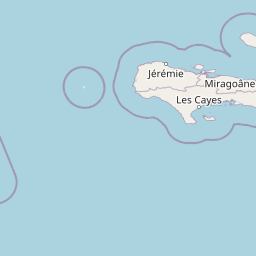
Map view of Grand Bois National Park

Use this park location map to pinpoint Grand Bois National Park in Haiti, understand its exact geographic position, and read its mapped placement within the surrounding landscape more clearly.

Pigeon | © OpenStreetMap contributors

Location context for Grand Bois National Park

Grand'AnseSud
Park atlas

Browse surrounding protected landscapes and compare mountain conservation areas across the region.

Explore Similar National Parks and Protected Areas Near Grand Bois National Park

Continue your protected area exploration by browsing other national parks and conservation landscapes across Haiti and the wider Caribbean. Compare these mapped geographic features to understand regional park distribution, diverse mountain ecosystems, and the spread of critical forest reserves.
National parkSud
About 0 km away#1 closest

Southwest

Parc national du Grand Bois: Geographic Profile and Protected Forest Boundaries

High-elevation montane terrain within the Sud department of Haiti

Parc national du Grand Bois protects an ecologically significant remnant of primary tropical and cloud forest on the isolated Morne Grand Bois peak. The park's steep, basin-like geography creates a unique refuge for endemic biodiversity and critical watershed protection in the Sud region, showcasing a distinct topographic boundary that contrasts sharply with the surrounding deforested slopes of the Tiburon Peninsula.

Area
3.702 km²
Established
2015
IUCN
II
National parkHaiti
About 10 km away#2 closest

Northeast

Deux Mamelles National Park: Protected Cloud Forest and Mountain Terrain in Haiti

Explore Haiti's critical highland cloud forest ecosystem.

Deux Mamelles National Park is a protected area in Haiti renowned for preserving one of the Caribbean's last remaining cloud forest ecosystems. Located on the Tiburon Peninsula, the park centers around Morne Deux Mamelles, a mountain rising to 1,276 meters. Its rugged, dissected limestone terrain supports primary forest at high elevations, making it a significant biodiversity hotspot and a key site for watershed protection. This park offers a glimpse into the unique natural heritage of Haiti's highlands.

Area
22.65 km²
Established
2015
IUCN
II
Relief
Mountain
Watercolor painting of a mountainous landscape with green valleys and distant peaks.
National parkHaiti
About 21 km away#3 closest

East

Grande Colline National Park: Remote Haitian Mountain Protected Landscape

Unique cloud forest, giant tree ferns, and rugged terrain in Haiti.

Grande Colline National Park safeguards crucial montane cloud forest ecosystems in Haiti's Massif de la Hotte. Characterized by its five named peaks and steep ridges, this protected area preserves a landscape of towering tree ferns and intact hardwood forests above 1,800 meters. Its establishment highlights scientific exploration and the ongoing need for conservation in one of the Caribbean's most biodiverse regions, offering a unique glimpse into isolated montane geography.

Area
15.1 km²
Established
2014
IUCN
II
Relief
Mountain
National parkSud
About 21 km away#4 closest

East

Parc national naturel de Grande Colline: Mountain Geography and Protected Area Atlas

A remote, high-altitude primary forest reserve in the Massif de la Hotte

Trace the boundaries of Parc national naturel de Grande Colline, an inaccessible mountain sanctuary characterized by deep ravines, cloud forests, and permanent rivers. As a central biodiversity site within Haiti, the terrain spans five major summits and protects key headwaters for the southern coastline. This atlas entry provides an overview of the park's geographic significance and primary forest habitat.

Area
15.1 km²
Established
2014
IUCN
II
Relief
Mountain
Natural monumentFinland
About 25 km away#5 closest

Southeast

Grotte Marie-Jeanne Natural Monument: Exploring the Geography of Haiti's Longest Cave System

A complex karst labyrinth of limestone galleries and cultural heritage

Grotte Marie-Jeanne represents a premier karst landscape feature in southern Haiti, offering a deep look into a subterranean network of over 50 distinct chambers. This natural monument reveals a multi-tiered geological structure characterized by diverse speleothems and historical inscriptions. The site serves as a vital anchor for understanding the regional karst topography, combining natural formation processes with long-standing human cultural presence within its limestone walls.

Relief
Upland
Climate
Tropical
Access
Access unknown
Scope
Terrestrial
National parkSud
About 29 km away#6 closest

East

Parc national de Macaya: Mountain Geography and Protected Area Map of Southern Haiti

Cloud forest summits and hydrological landscapes in Sud

This protected area represents one of the most significant biodiversity reserves in the Caribbean. By safeguarding high-elevation cloud forests and steep mountain terrain within the Sud region, the park sustains rare endemic flora and vital watersheds that define the southern Haitian landscape.

Area
20 km²
Established
1983
IUCN
II
Protected areaHaiti
About 29 km away#7 closest

East

Massif de la Hotte Protected Area: Geography, Mapped Ridges, and Haitian Mountain Terrain

Exploring the ecological architecture of the Tiburon Peninsula.

Massif de la Hotte serves as a pivotal mountainous protected area in southwestern Haiti, known for its dense cloud forest coverage and steep, rugged topography. This overview provides insight into the massif’s formation, its role as a regional biodiversity anchor, and its vertical landscape that rises sharply from the surrounding coastal lowlands.

Relief
Mountain
Scope
Terrestrial
Water
Minor water
Forest
Mostly forested
National parkHaiti
About 30 km away#8 closest

East

Pic Macaya National Park: Haiti's Protected Cloud Forest and Mountain Geography

Explore critical endemic species within Haiti's mountainous protected areas.

Pic Macaya National Park stands as a significant natural sanctuary in Haiti, preserving the island's final remnants of virgin cloud forest within the challenging terrain of the Massif de la Hotte. This protected area is defined by its high-altitude volcanic and karstic landscape, including Pic Macaya, the second-highest peak in Haiti. The park is a crucial stronghold for biodiversity, harboring numerous species endemic to Hispaniola, making it an essential site for conservation and a focal point for understanding regional natural landscapes.

Area
80 km²
Established
1984
IUCN
II
Relief
Mountain

Common questions about visiting, size, designation, and location context for Grand Bois National Park

Grand Bois National Park FAQs for park facts, access, geography, and protected area context

Find quick answers about Grand Bois National Park, including protected-area facts, park geography, trail and visitor context, and how the park fits into its surrounding country and regional landscape.
MoriAtlas Explorer

Continue Your Protected Areas Search Across the Global Atlas

Deepen your exploration by continuing the structured search for national parks and protected areas worldwide. Utilize the comprehensive filtering capabilities to compare different conservation landscapes and refine your understanding of global park geography. Discover more about the distribution and characteristics of protected natural areas.

Global natural geography