
Why Kahuzi-Biega National Park stands out
Kahuzi-Biega National Park is renowned as the last stronghold of the eastern lowland gorilla, one of the rarest and most endangered primate subspecies in the world. The park protects the most diverse assemblage of mammal species found anywhere in the Albertine Rift, with 136 species documented including forest elephants, eastern chimpanzees, leopards, and bongos. Its exceptional botanical diversity includes over 1,178 plant species recorded in the highland regions alone, with the park displaying all stages of low to highland forest transition across six distinct vegetation types. The park also holds significant bird diversity with 349 species, including 42 endemic to the region, and has been recognized as an Important Bird Area by BirdLife International.
Kahuzi-Biega National Park history and protected-area timeline
The conservation history of Kahuzi-Biega began in 1937 when the Belgian Colonial administration established the Zoological and Forest Reserve of Mount Kahuzi on July 27 of that year. This early protected area focused on the volcanic highlands surrounding Mount Kahuzi, recognizing the region's ecological significance during the colonial period. The park in its current form was established in November 1970 by Adrien Deschryver, a Belgian photographer and conservationist whose vision helped shape the modern protected area. Five years after its establishment, the park was significantly expanded in 1975 to cover its current extent of 6,000 square kilometers, though this expansion brought controversial social consequences as inhabited lowland areas were incorporated, resulting in forced evacuations that affected communities of the Shi, Tembo, and Rega tribal groups. In 1980, the park received international recognition as a UNESCO World Heritage Site under Criterion (x) for its unique rainforest habitat and exceptional mammal diversity, particularly its eastern lowland gorilla population. However, the park's World Heritage status was placed on the List of World Heritage in Danger in 1997 due to the deteriorating security situation in the region, an influx of refugees, and increasing wildlife exploitation. Despite ongoing conservation challenges, the park has remained on the danger list continuously since that time, reflecting the persistent difficulties of maintaining effective protection in a region affected by political instability.
Kahuzi-Biega National Park landscape and geographic character
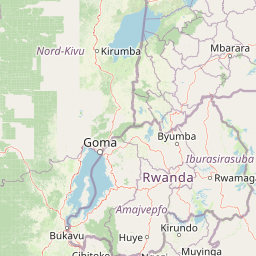
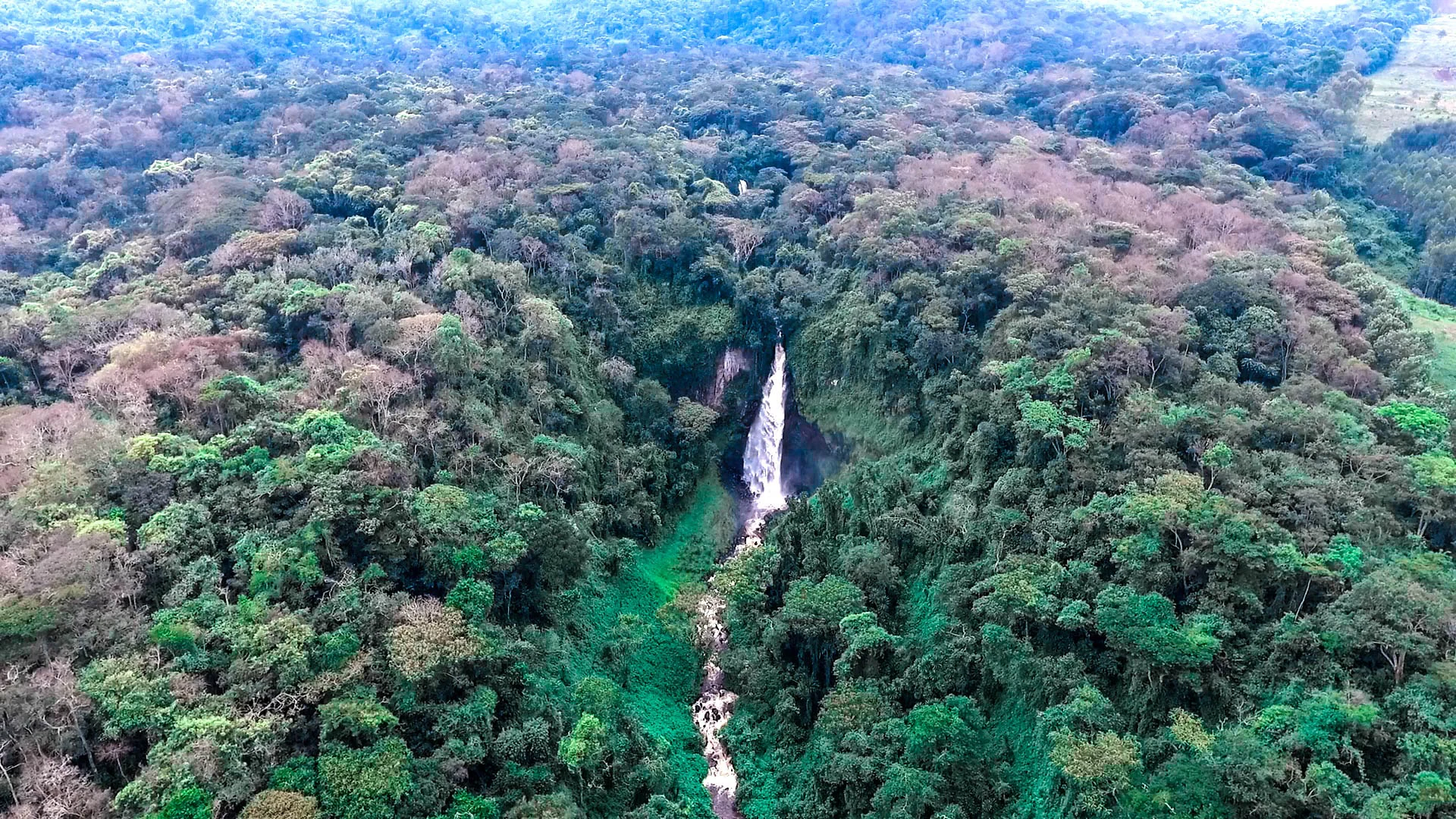
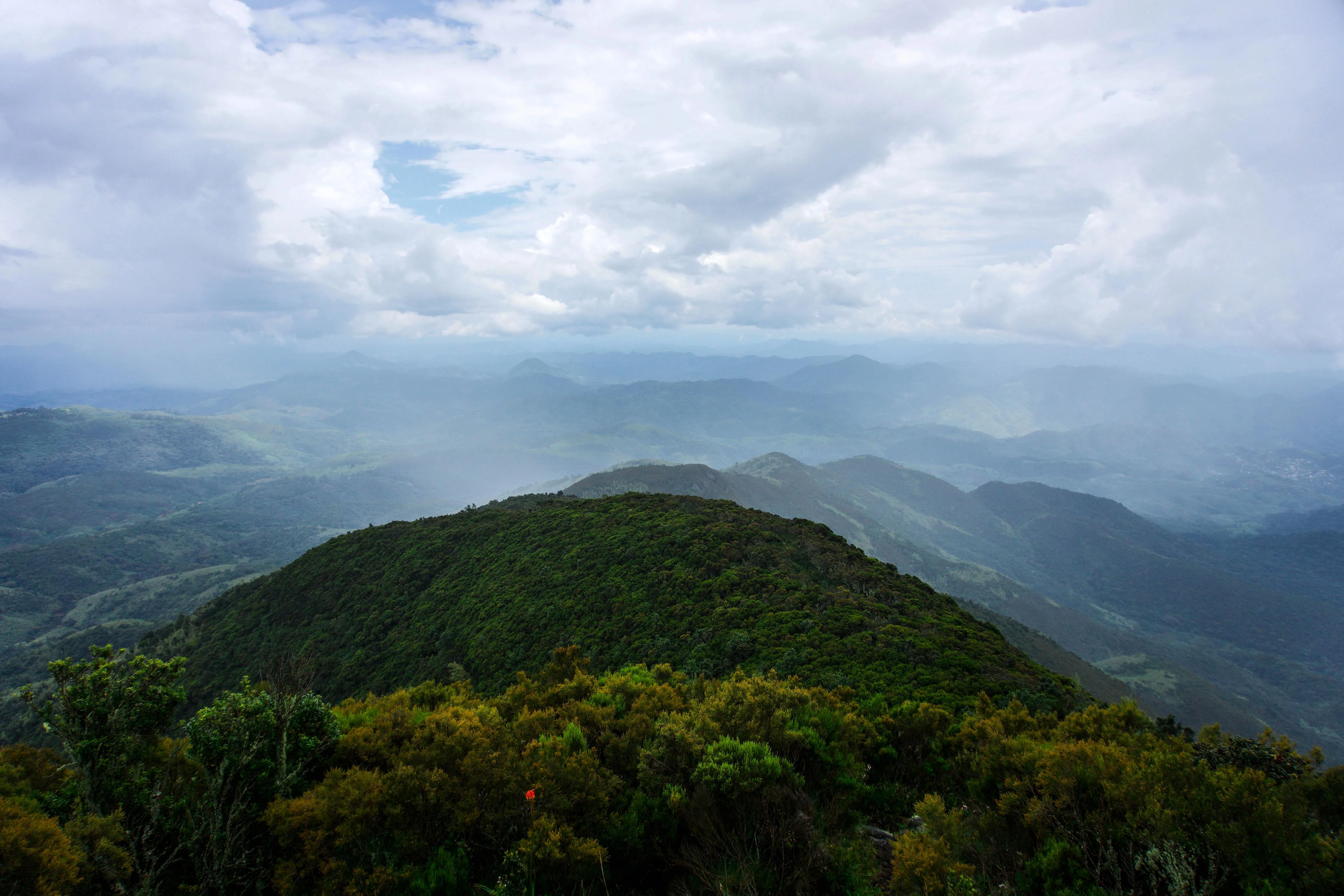
The landscape of Kahuzi-Biega National Park presents a striking contrast between its eastern volcanic highlands and western lowland expanses. The eastern sector rises dramatically into the Mitumba Mountains, part of the Albertine Rift, where the twin volcanoes Kahuzi and Biéga dominate the skyline at 3,308 meters and 2,790 meters respectively. These volcanic peaks support unique subalpine environments at their summits, featuring heather, dry savanna, and grasslands, along with the endemic subspecies Dendrosenecio erici-rosenii. The transition from the highlands to the lowlands is remarkable for its ecological completeness, displaying continuous forest vegetation from 600 meters to over 2,600 meters with six distinguishable primary vegetation types visible across this elevation gradient. The western lowland sector consists predominantly of dense tropical rainforest stretching across a vast, relatively flat landscape from Bukavu toward Kisangani. Swamps, bogs, and riparian forests punctuate this terrain, creating hydromorphic habitats that are rare globally. The park is transected by the Luka and Lugulu rivers, which drain into the Lualaba River, while a narrow 7.4-kilometer corridor connects the two distinct sectors of the park.
Kahuzi-Biega National Park ecosystems, habitats, and plant life
The ecological richness of Kahuzi-Biega National Park is extraordinary, with the park serving as a biodiversity hotspot of global significance. The western lowland sector is dominated by dense Guineo-Congolian wet equatorial rainforest, part of the Northeastern Congolian lowland forests ecoregion, with a transition forest zone existing between 1,200 and 1,500 meters elevation. The eastern mountainous sector encompasses the Albertine Rift montane forests, with distinct vegetation zones ranging from mountain and swamp forest between 2,000 and 2,400 meters, through bamboo forest from 2,350 to 2,600 meters, to subalpine heather above 2,600 meters. The park's swamps, bogs, marshland, and riparian forests on hydromorphic ground represent globally rare habitat types found at all altitudes. With over 1,178 plant species recorded in the highland regions alone, the park supports exceptional botanical diversity. The park's position within the Albertine Rift and its elevational range from lowland to subalpine zones make it one of the few sites in Sub-Saharan Africa that demonstrates all stages of forest transition across such a complete gradient.
Kahuzi-Biega National Park wildlife and species highlights
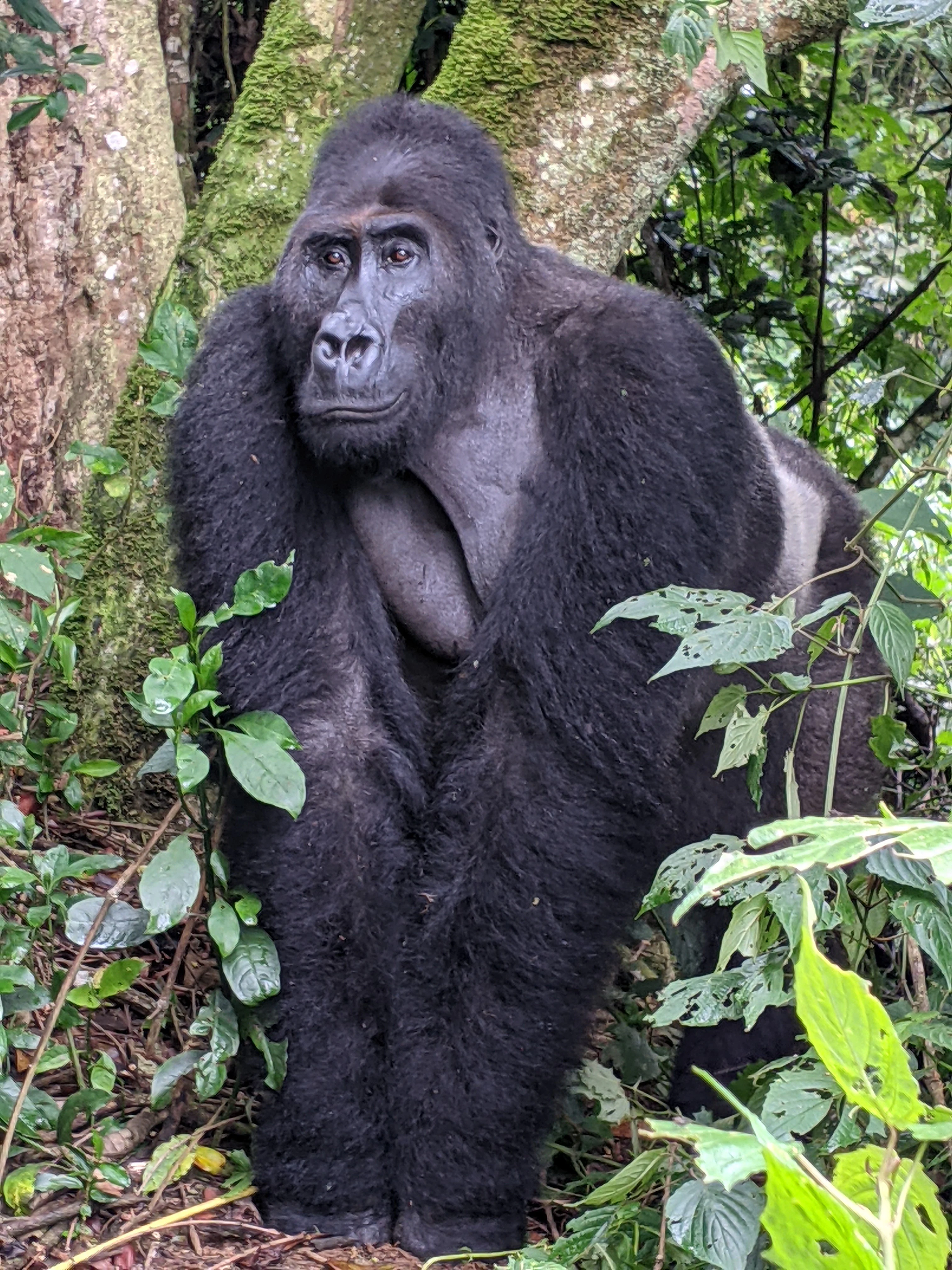
Kahuzi-Biega National Park protects a remarkable diversity of wildlife, with 136 mammal species and 349 bird species documented within its boundaries. The eastern lowland gorilla represents the park's most iconic species and its primary conservation flag, serving as the last refuge for this endangered primate. Population estimates have fluctuated dramatically, from approximately 600 individuals in the pre-1990s conflict period to a low of 125 recorded in a 2008 survey, though a 2011 census by the Wildlife Conservation Society documented at least 181 gorillas. Other primates include the eastern chimpanzee, several Cercopithecinae species including the olive baboon, various Colobinae, and Hamlyn's monkey. The park supports significant populations of forest elephants, forest buffalo, hippopotamuses, leopards, giant forest hogs, and bongos. Two genet species endemic to the Congo Basin, the aquatic genet and the giant forest genet, are found within the park. The bird fauna includes 42 endemic species such as the threatened Albertine owlet, yellow-crested helmet shrike, Congo peafowl, African green broadbill, and Rockefeller's sunbird. A 2020 freshwater fish survey identified 147 species, including 11 endemic to the Lowa River basin and seven previously undescribed species.
Kahuzi-Biega National Park conservation status and protection priorities
Kahuzi-Biega National Park faces profound conservation challenges despite its international protection status. Since 1997, the park has remained on the UNESCO List of World Heritage in Danger due to regional political instability, refugee movements, and increasing pressure from wildlife exploitation. The park is managed by the Institut Congolais pour la Conservation de la Nature, which maintains basic management and surveillance operations, though ranger satisfaction surveys conducted between 2015 and 2016 revealed significant concerns including low salaries, lack of support, and poor living conditions. Illegal artisanal mining, particularly for coltan, poses ongoing threats to the park's forest cover. Conservation efforts have also been complicated by human rights concerns, most notably regarding the Batwa people who were evicted from ancestral territories during the park's 1975 expansion. In 2022, the African Commission on Human and Peoples' Rights ruled that the Democratic Republic of the Congo violated the human rights of Batwa people by evicting them without prior consent. These intersecting conservation and human rights challenges highlight the complexity of protecting this critical ecosystem while addressing the needs of local communities.
Kahuzi-Biega National Park cultural meaning and human context
The Kahuzi-Biega region has been home to local communities for generations, with the park's 1975 expansion bringing significant social disruption. The expansion incorporated inhabited lowland areas, resulting in forced evacuations that affected approximately 13,000 people from the Shi, Tembo, and Rega tribal communities, many of whom refused to leave. The Twa people, traditionally forest-dwelling, have been employed by park authorities in conservation efforts. Historical tensions surrounding displacement and land rights have persisted, with the Batwa community returning to the park in 2018 and facing allegations of violence from park rangers in 2019. The 2022 African Commission ruling recognizing violations of Batwa rights underscores the ongoing challenge of balancing conservation objectives with indigenous community rights in the region.
Top sights and standout views in Kahuzi-Biega National Park
Kahuzi-Biega National Park stands as one of Africa's most significant protected areas, combining the dramatic volcanic landscapes of Mounts Kahuzi and Biéga with extensive lowland rainforest to create a unique conservation landscape. The park protects the last remaining population of eastern lowland gorillas, making it critically important for the survival of this endangered subspecies. Its elevational gradient from 600 meters to over 3,300 meters supports an unparalleled diversity of vegetation types, including all stages of lowland to subalpine forest transition in one of the few places in Sub-Saharan Africa where such a complete gradient exists. With 136 mammal species and 349 bird species, including 42 endemics, the park holds exceptional biodiversity value. The designation as a UNESCO World Heritage Site since 1980 recognizes its global significance, though its continued listing as in danger since 1997 reflects the ongoing challenges of maintaining effective protection in a politically unstable region.
Best time to visit Kahuzi-Biega National Park
The park's equatorial location results in relatively consistent conditions throughout the year, though visitor access is significantly influenced by the broader security situation in eastern DRC. The average maximum temperature of 18°C and minimum of 10.4°C, combined with annual precipitation of approximately 1,800mm, create a humid tropical environment typical of highland and lowland forest areas. Visitors should monitor travel advisories and consult with local conservation authorities regarding current conditions before planning any visit, as the park's accessibility can change based on regional stability.