Mori Atlas logo
National parkLomami National Park

Discover the unique bonobo habitat and forest biodiversity of this crucial Congo Basin protected area.

Lomami National Park: Protected Landscape and Geographic Atlas in the Democratic Republic of the Congo

(Parc national de Lomami)

Lomami National Park represents a vital protected landscape within the Democratic Republic of the Congo, established as the country's ninth national park. This vast area of lowland tropical rainforest, spanning approximately 8,879 square kilometers, is strategically situated in the central basin of the Lomami River, influencing wildlife distribution and evolutionary patterns. Its establishment highlights a significant conservation milestone, adding critical protected territory to the nation's network and safeguarding unique ecosystems and species.

Lowland tropical rainforestBonobo habitatOkapi conservationCongo BasinCentral African protected areaGreat ape sanctuary

Lomami National Park

National park

Park overview

Structured park overview, official facts, and landscape profile for Lomami National Park

Lomami National Park park facts, protected area profile, and essential visitor context
Review the core facts for Lomami National Park, including designation, size, terrain, visitor scale, habitats, and operating context in one park-focused overview.

About Lomami National Park

Lomami National Park represents one of Central Africa's most significant recent conservation achievements, established to protect a remarkable stretch of lowland tropical rainforest in the heart of the Congo Basin. The park's creation emerged from a grassroots process beginning in 2010, when conservationists and government officials engaged with communities across the region through village meetings and traditional ceremonies to establish boundaries that would satisfy both conservation needs and local interests. By 2013, both Maniema and Tshopo Provinces had declared provincial parks, creating an initial layer of protection before the national decree in July 2016 elevated the area to full national park status. The park's location between Kisangani and Kindu places it in a strategically important corridor of forest that connects to the broader Tshuapa-Lomami-Lualaba Conservation Landscape, making it a vital node in the DRC's evolving protected area network. The Lomami River, which forms the park's western boundary and flows through its northern reaches, has played a fundamental role in shaping the region's biodiversity by acting as a biogeographic barrier that has influenced the evolutionary trajectories of species within the park.

Quick facts and research context for Lomami National Park

Lomami National Park covers 8,879 km² of primarily lowland tropical rainforest in the Democratic Republic of the Congo. The park was officially established on July 7, 2016, making it the ninth national park in the country and the first created since 1992. It is managed by the Institut Congolais pour la Conservation de la Nature and is located between the cities of Kisangani and Kindu, straddling the provinces of Tshopo and Maniema. The Lomami River serves as the western boundary and acts as a significant biogeographic barrier that has influenced the evolution of wildlife in the region. The park encompasses diverse habitats including hill-forest, low elevation upland forest, seasonally flooded forest, riverine forest, and edaphic savannas in the southern areas.

Park context

Deeper park guide and search-rich context for Lomami National Park

Lomami National Park history, landscape, wildlife, and travel context
Explore Lomami National Park through its history, landscape character, ecosystems, wildlife, conservation priorities, cultural context, and seasonal travel timing in a structured park guide built for atlas discovery and search intent.

Why Lomami National Park stands out

Lomami National Park is renowned for its remarkable population of bonobos, one of humanity's closest living relatives. The park's bonobo population has been identified as genetically distinct from other bonobo populations, with the Lomami River acting as a geographic barrier that has driven this evolutionary differentiation. The park also protects critical populations of the okapi, a forest-dwelling ungulate endemic to the DRC, and the Congo peafowl, the national bird of the country. Additionally, the park gained scientific prominence with the 2007 discovery of the lesula, a previously unknown primate species, highlighting the region's significance as a center of biodiversity discovery.

Lomami National Park history and protected-area timeline

The establishment of Lomami National Park followed a careful, community-driven process that spanned several years and represented a new approach to protected area creation in the Democratic Republic of the Congo. Beginning in 2010, government officials, conservation organizations, and local leaders conducted extensive outreach missions to village centers and town halls throughout the region, engaging communities in discussions about the importance of establishing formal protection for the area's forests and wildlife. A distinctive element of this process was the use of Tambiko ceremonies, traditional rituals in which communities consulted their ancestors to validate the proposed boundaries of the protected area. By 2013, the governors of both Maniema and Tshopo Provinces had taken a preliminary step by declaring provincial parks, which immediately made all hunting within these areas illegal. This provincial-level protection created a foundation for the eventual national designation, and on July 7, 2016, the DR Congo's national government formally decreed Lomami National Park into existence as the ninth national park in the country and the first to be established since 1992.

Lomami National Park landscape and geographic character

The landscape of Lomami National Park encompasses a remarkable diversity of forest types and terrain that reflects its position in the central Congo Basin. The park is predominantly covered by lowland tropical rainforest, with forest cover being more consistent in the northern portions of the park where the terrain ranges from hill-forest on the steeper slopes to low elevation upland forest on the more level ground, seasonally flooded forest in the low-lying areas, and riverine forest along the watercourses. The southern reaches of the park and the broader conservation landscape feature edaphic savannas that emerge from the forest, creating a mosaic of woodland and grassland that provides important habitat diversity. The western boundary of the park is defined by the Lomami River, which flows through the northern part of the park and has acted as a significant geographic feature influencing both human settlement patterns and wildlife distribution. The western areas also contain more hilly terrain, providing topographic variation that contributes to the park's overall ecological complexity.

Lomami National Park ecosystems, habitats, and plant life

The ecological character of Lomami National Park is defined by its position in the Congo Basin, one of the world's most biodiverse forest regions and the second-largest contiguous tropical rainforest on Earth. The park's forest ecosystems support an extraordinary concentration of species, with the lowland tropical rainforest providing habitat for numerous endangered and endemic species. The diverse forest types found within the park, including hill-forest, lowland upland forest, seasonally flooded forest, and riverine forest, each support distinct ecological communities. The presence of edaphic savannas in the southern portions of the landscape adds further ecological diversity, creating a mosaic of habitats that supports species adapted to both forest and open woodland environments. The Lomami River itself serves as an important ecological corridor while also functioning as a biogeographic barrier that has influenced the evolutionary divergence of species populations on either side.

Lomami National Park wildlife and species highlights

Lomami National Park harbors an exceptional array of wildlife, including several endangered species that rank among Africa's most conservation-significant fauna. The park contains one of the last substantial populations of bonobos, the lesser-known of Africa's two chimpanzee species and among the rarest great apes in the world. Genetic research has confirmed that the Lomami bonobo population is distinct from other populations, making the park particularly important for the species' long-term survival. The okapi, a forest-dwelling ungulate that was once believed to be a type of zebra before being recognized as a relative of the giraffe, remains present in the park's forests. The Congo peafowl, the national bird of the Democratic Republic of the Congo, inhabits the forest throughout the park. The 2007 discovery of the lesula monkey demonstrated that significant biodiversity remains to be documented in the region, while the park also supports populations of the rare Dryas monkey, African forest elephant, and numerous other primate species including the Tshuapa red colobus, Lomami red colobus, Angola colobus, black crested mangabey, red-tailed monkey, De Brazza's monkey, blue monkey, and Wolf's mona monkey.

Lomami National Park conservation status and protection priorities

Lomami National Park represents a critical addition to the Democratic Republic of the Congo's protected area network and addresses urgent conservation needs in a region facing severe wildlife pressures. The park's creation in 2016 marked the first new national park in the country in over two decades, signaling a renewed commitment to forest protection in the Congo Basin. By protecting populations of bonobos, okapis, and Congo peafowl, the park addresses conservation priorities for species that face significant threats throughout their ranges. The park is integrated into the broader Tshuapa-Lomami-Lualaba Conservation Landscape, which represents a coordinated approach to maintaining forest connectivity across a large region. However, the park faces substantial challenges from commercial bushmeat hunting and elephant poaching for ivory, with research indicating that hunting pressure originates both from local communities and from hunters arriving from other regions. Conservation effectiveness will depend on sustained investment in anti-poaching efforts and community engagement.

Lomami National Park cultural meaning and human context

The buffer zone surrounding Lomami National Park is home to approximately 100 small villages whose residents belong primarily to seven different ethnic groups: Lengola, Mbole, Mituku, Langa, Tetela, Ngengele, and Arabisé communities. These communities have historically depended on agriculture, hunting, and fishing for their livelihoods, creating a relationship with the forest landscape that predates the park's establishment. The involvement of these communities in the park's creation through village meetings and traditional consultations reflects an understanding that long-term conservation success requires local buy-in and recognition of traditional land use patterns. The presence of Arabisé communities among the buffer zone populations indicates the historical influence of trade routes and migration patterns that have shaped human settlement in the region over generations.

Top sights and standout views in Lomami National Park

Lomami National Park stands as a relatively young but critically important protected area in the Congo Basin, offering protection to some of Central Africa's most significant biodiversity. The park's bonobo population, genetically distinct from other populations and separated by the Lomami River, represents a unique conservation opportunity for one of Africa's rarest great apes. The discovery of the lesula monkey as recently as 2007 demonstrates that the region continues to yield new scientific discoveries, suggesting that the park's full biodiversity has not yet been documented. As the DRC's first new national park since 1992, Lomami represents a conservation milestone that acknowledges the importance of protecting the country's forest heritage while providing a framework for sustainable community involvement in forest stewardship.

Best time to visit Lomami National Park

Visiting Lomami National Park involves considerations related to the equatorial climate of the Congo Basin, where rainfall is abundant throughout the year and the dry seasons are relatively mild. The period from June to September typically sees reduced precipitation and may offer slightly easier conditions for wildlife observation, though the park's dense forest means that sightings of terrestrial species remain challenging regardless of season. The wetter months from October through May bring higher water levels that can affect accessibility in certain areas, particularly the seasonally flooded forests. Visitors should be prepared for the logistical challenges inherent in accessing a remote Central African protected area and should expect a wilderness experience that differs markedly from more developed park destinations.
Park location guide

Geography guide, regional context, and park location map for Lomami National Park

Lomami National Park park geography, regions, and map view in Democratic Republic of the Congo
Understand where Lomami National Park sits in Democratic Republic of the Congo through a broader geographic reading of the surrounding landscape, nearby location context, and its mapped position within the national park landscape.

How Lomami National Park fits into Democratic Republic of the Congo

The Democratic Republic of the Congo is a Central African country bordered by the Republic of the Congo, Angola, Zambia, Tanzania, Uganda, Rwanda, Burundi, and the Central African Republic, with a small Atlantic coastline. It occupies the Congo Basin, one of the world's largest tropical rainforest regions. French is the official language, though over 200 indigenous languages are spoken. Kinshasa is the capital and largest city.

Wider geography shaping Lomami National Park in Democratic Republic of the Congo

The DRC occupies a central position in Central Africa, bordering the Republic of the Congo and the South Atlantic Ocean to the west, the Central African Republic and South Sudan to the north, Uganda, Rwanda, Burundi, and Tanzania to the east (across Lake Tanganyika), and Zambia and Angola to the south. The country's terrain is dominated by the Congo Basin, a vast lowland plain covered in equatorial rainforest, while the eastern and southeastern regions feature highlands and mountains including the Albertine Rift.

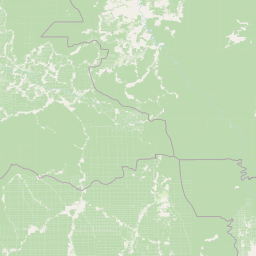
Map view of Lomami National Park

Use this park location map to pinpoint Lomami National Park in Democratic Republic of the Congo, understand its exact geographic position, and read its mapped placement within the surrounding landscape more clearly.

Pigeon | © OpenStreetMap contributors

Location context for Lomami National Park

ManiemaTshopo
Park atlas

Map the regional spread of protected landscapes across the Congo Basin, exploring areas adjacent to Lomami National Park.

Discover Other National Parks and Protected Areas Near Lomami National Park
After exploring Lomami National Park, compare its unique lowland tropical rainforest and bonobo habitat with other national parks and protected areas across the Democratic Republic of the Congo. Discover how connected conservation landscapes contribute to biodiversity preservation and geographic understanding in Central Africa.
National parkDemocratic Republic of the Congo

Maiko National Park National Park: Map and Protected Landscape Exploration

Discover primary forest terrain and endemic species sanctuary.

Maiko National Park, situated in the Democratic Republic of the Congo, is a cornerstone of central African conservation, protecting over 10,000 square kilometers of pristine tropical rainforest. This national park is recognized globally for its critical role in harboring endemic species such as Grauer's gorilla and the okapi, alongside significant populations of forest elephants and chimpanzees. Its extensive river systems and varied terrain within the Ituri Rainforest ecosystem provide essential habitat, establishing Maiko as a key area for understanding and preserving central African biodiversity and landscape context.

Area
10,885 km²
Established
1970
IUCN
II
National parkSouth Kivu Province

Kahuzi-Biéga National Park: A Protected Landscape in South Kivu Province's Albertine Rift

Explore its mapped boundaries and diverse terrain.

Kahuzi-Biéga National Park, a significant national park in South Kivu Province, is defined by its dramatic geographic diversity. Spanning approximately 6,000 square kilometers, it features a unique ecological gradient from dense lowland equatorial rainforest in the west to the subalpine zones of the Mitumba Mountains in the east, dominated by the dormant volcanoes Mount Kahuzi and Mount Biéga. This protected landscape offers a rich atlas context for understanding the biodiversity and regional geography of the Albertine Rift, showcasing a vital transition in terrain and habitat.

Area
6,000 km²
Established
1970
IUCN
II
National parkDemocratic Republic of the Congo

Salonga National Park: Africa's Largest Tropical Rainforest Protected Landscape

Discover its vast mapped boundaries and riverine geography.

Salonga National Park is recognized as Africa's largest tropical rainforest, a UNESCO World Heritage Site vital for the conservation of bonobos and other endemic species. Its protected landscape is defined by extensive lowland forests and intricate river networks, with access primarily through waterways. This park offers profound insights into the geography of the Congo Basin and the conservation of endangered primates within a vast, remote wilderness.

Area
36,000 km²
Established
1970
IUCN
II
National parkDemocratic Republic of the Congo

Virunga National Park: Democratic Republic of the Congo's Premier Protected Landscape

Mapped boundaries and diverse Albertine Rift endemic geography.

Virunga National Park represents a pivotal protected area within the Democratic Republic of the Congo, characterized by an exceptional range of geographic features and vital ecosystems. Its protected landscape includes active volcanoes like Nyiragongo with its lava lake, the towering Rwenzori Mountains, and diverse lowland savannas. This atlas-focused entry highlights the park's unique position in the Albertine Rift, crucial for numerous endemic species and offering significant insight into regional geography and protected land context.

Area
7,800 km²
Established
1925
IUCN
II
National parkUganda

Rwenzori Mountains National Park: Uganda's Distinctive Glacial National Park Landscape

Mapped terrain and Afro-alpine ecosystems of this East African protected area.

Rwenzori Mountains National Park represents a unique protected landscape in Uganda, known for its iconic glacial peaks and endemic Afro-alpine vegetation. As a UNESCO World Heritage Site, it showcases dramatic terrain ranging from montane forests to permanent glaciers, with Margherita Peak standing as the crown jewel. This park offers a rich geographic context for understanding East African mountain ecosystems and the mapped boundaries of significant conservation areas, providing valuable data for atlas-style exploration.

Area
996 km²
Established
1991
IUCN
VI
National parkKagera Region

Ibanda-Kyerwa National Park: Tanzania's Tri-Border Protected Landscape and Geographic Atlas

Savanna, riparian habitats, and vital regional geography exploration.

Delve into Ibanda-Kyerwa National Park, a recently established national park in Tanzania's Kagera Region. This protected area is distinguished by its critical location at the tri-border with Uganda and Rwanda, with the Kagera River system defining its unique savanna and riparian landscapes. Understanding its mapped boundaries and ecological context provides essential insight into protected land discovery in northwestern Tanzania and its role within the wider regional atlas.

Area
200 km²
Established
2019
IUCN
II
National parkUvinza District

Mahale Mountains National Park: Tanzania's Remote Mountain Forest & Lake Tanganyika Landscape

Explore unique primate habitats and dramatic protected terrain.

Mahale Mountains National Park stands as a testament to unique ecological convergence, where the Mahale Mountains' dense forests dramatically meet the vast expanse of Lake Tanganyika. This protected area is globally recognized for harboring the largest wild population of eastern chimpanzees, offering a rare glimpse into their behavior within a pristine wilderness. The park's landscape is defined by steep mountain slopes, diverse woodland, and aquatic environments, creating a distinctive geographic context that sets it apart from typical savanna protected areas in Tanzania.

Area
1,650 km²
Established
1985
IUCN
II
National parkDemocratic Republic of the Congo

Upemba National Park: Protected Landscape and Geographic Atlas within the Democratic Republic of the Congo

Explore its mapped boundaries and diverse ecosystems.

Upemba National Park, located in the Democratic Republic of the Congo, is a premier destination for understanding protected landscapes and regional geography. This national park is characterized by its extensive wetlands, lake ecosystems, and mountainous terrain, providing a rich environment for atlas-driven discovery. Its unique geographic context and diverse habitats make it a pivotal site for exploring central African protected areas and their ecological significance.

Area
11,730 km²
Established
1939
IUCN
II

Common questions about visiting, size, designation, and location context for Lomami National Park

Lomami National Park FAQs for park facts, access, geography, and protected area context
Find quick answers about Lomami National Park, including protected-area facts, park geography, trail and visitor context, and how the park fits into its surrounding country and regional landscape.
MoriAtlas Explorer

Continue Your Protected Areas Search Across the Global Atlas

Deepen your exploration by continuing the structured search for national parks and protected areas worldwide. Utilize the comprehensive filtering capabilities to compare different conservation landscapes and refine your understanding of global park geography. Discover more about the distribution and characteristics of protected natural areas.

Global natural geography