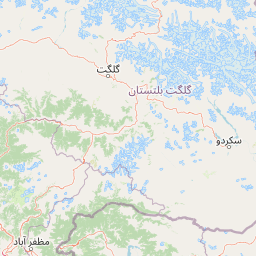
Why Khunjerab National Park stands out
Khunjerab National Park is internationally renowned as a critical stronghold for the Marco Polo sheep, a critically endangered subspecies found nowhere else in Pakistan. The park also supports what may be the highest density of snow leopards in the entire Himalayan ecosystem, making it one of the most significant alpine predator conservation areas in Asia. Its dramatic glacial valleys, alpine meadows, and remote karakoram landscapes create one of the most spectacular high-altitude wilderness areas in the world.
Khunjerab National Park history and protected-area timeline
Khunjerab National Park was established on April 29, 1975, following a brief field survey conducted by George Schaller of the Wildlife Conservation Society in 1974. Schaller mapped the park's borders as part of his pioneering work on mountain ungulates across Central and South Asia. The park was created primarily to protect the endangered Marco Polo sheep, as well as snow leopards and bharal that inhabit the region. Prime Minister Zulfikar Ali Bhutto formally inaugurated the park, expressing the ambition that it must become a world famous protected area.
Despite its designation as an IUCN Category II national park, which legally prohibits activities including agriculture and hunting, the park experienced significant management challenges during its early decades. Illegal hunting of Marco Polo sheep continued despite protected status, prompting the International Union for Conservation of Nature to commission Norwegian biologist Per Wegge to conduct a wildlife survey in 1988. Wegge's findings suggested that competition between domestic livestock and wild sheep was minimal, and that most poaching was not conducted by local Wakhi residents. He proposed reclassifying the park to allow controlled grazing and sustainable hunting with revenues benefiting local communities.
The government instead pursued a new management plan supported by both the IUCN and World Wildlife Fund, focusing on conservation-oriented tourism as a sustainable economic alternative to hunting. The WWF established the Khunzerav Village Organization, engaging local communities in wildlife monitoring and anti-poaching efforts. The park continues to face conservation challenges, but these community-based initiatives have strengthened protection of its critically endangered species.
Khunjerab National Park landscape and geographic character
The physical landscape of Khunjerab National Park is defined by the extreme elevations and dramatic topography of the central Karakoram range. The park sits at average elevations around 5,200 meters, with more than half of its area exceeding 4,000 meters, creating an environment where human habitation is sparse and the effects of altitude severely limit biological productivity. The terrain consists of U-shaped glacial valleys carved by ancient ice sheets, now occupied by braided river channels fed by snowmelt and glacial discharge.
Rocky cliffs and steep-walled gorges characterize the valley floors, where sparse vegetation clings to available soil in alpine meadows and on rock ledges. The higher elevations give way to permanent snow cover and glaciers that descend from the karakoram's highest peaks. Khunjerab Pass, at 4,934 meters, represents the park's northwestern gateway and one of the highest drivable passes in the world, serving as the primary overland connection between Pakistan and China via the Karakoram Highway.
The landscape creates a dramatic backdrop of stark beauty, where massive rock walls rise thousands of meters above valley floors, and the interplay of light on snow and stone produces constantly changing visual conditions. This is terrain that remains genuinely remote and inaccessible for much of the year, preserving a wilderness character increasingly rare in populated mountain regions.
Khunjerab National Park ecosystems, habitats, and plant life
The ecological character of Khunjerab National Park reflects the harsh conditions of a high-altitude karakoram environment. The park lies at the intersection of Palearctic and Himalayan biogeographic zones, creating a unique assemblage of species adapted to extreme cold, thin air, and seasonal resource scarcity. Vegetation is limited to alpine steppe and sparse meadow communities that can survive the long, harsh winters and brief growing season.
The primary habitats consist of alpine meadows in valley bottoms, rocky cliffs and ledges supporting sparse vegetation, and the riparian corridors along glacial streams. These diverse habitat types support the park's remarkable biodiversity despite the challenging environmental conditions. The ecological isolation of the Karakoram range has allowed distinctive subspecies and populations to evolve, making the park's fauna particularly significant from a conservation perspective.
Khunjerab National Park wildlife and species highlights
Khunjerab National Park protects an exceptional concentration of globally threatened alpine wildlife. The park's flagship species is the Marco Polo sheep, a critically endangered subspecies whose global range is largely restricted to this region of Pakistan. These magnificent wild sheep, characterized by their massive spiraling horns, represent one of the most sought-after conservation priorities in Central Asian mountain ecosystems. Population estimates suggest fewer than 200 individuals remained following highway construction, though targeted conservation efforts have helped stabilize or modestly increase numbers.
The snow leopard, another critically endangered species, roams the park's cliffs and valleys in what may be the highest density population in the Himalayan region. These elusive predators are perfectly adapted to the harsh alpine environment, hunting ibex, bharal, and other prey across the park's remote terrain. Over 2,000 Siberian ibex, classified as near threatened, browse the steep cliffs and meadows throughout the park, while bharal populations persist in the Shimshal area. The park also supports the Himalayan brown bear, Indian wolf, and numerous smaller mammals including the long-tailed marmot and large-eared pika.
Birdlife is equally remarkable, with 45 avian species recorded including the golden eagle, Himalayan vulture, and bearded vulture. Alpine specialists such as the red-billed chough, Himalayan snowcock, and wallcreeper inhabit the park's cliff environments, while various thrushes, finches, and warblers occupy the limited vegetated areas. Two reptile species, the Himalayan agama and Pakistani agama, complete the park's vertebrate fauna.
Khunjerab National Park conservation status and protection priorities
Khunjerab National Park represents one of Pakistan's most important conservation designations, protecting a globally significant population of critically endangered species in an increasingly threatened high-altitude ecosystem. The park's primary conservation value lies in its role as a stronghold for the Marco Polo sheep, a species whose global population continues to face pressure from hunting, habitat fragmentation, and competition with domestic livestock. The snow leopard population may represent the highest density in the Himalayan arc, making this park critical for the survival of this elusive apex predator.
The transboundary conservation relationship with China's Taxkorgan Natural Reserve creates an international corridor essential for maintaining genetic connectivity between wildlife populations separated by national borders. As climate change accelerates impacts on alpine ecosystems, these protected areas become increasingly important as refugia for species adapted to cold conditions. The park faces ongoing challenges from illegal hunting, grazing pressure, and the impacts of infrastructure development along the Karakoram Highway, requiring sustained management attention and community engagement to maintain its conservation values.
Khunjerab National Park cultural meaning and human context
The park lies within the traditional territory of the Wakhi people, a distinct ethnic community whose cultural practices and livelihoods are intimately connected to the karakoram landscape. Wakhi communities have inhabited these high valleys for generations, practicing pastoralism and seasonal migration between elevation zones. The Wakhi language gives the park its name, with 'khun' meaning blood and 'jerav' meaning to stream, a reference to the dramatic watercourses that channel through the valleys.
These communities represent both a conservation challenge and opportunity, as their traditional land use practices interact with wildlife populations and habitat conditions. The WWF's Khunzerav Village Organization represents an effort to align local livelihoods with conservation objectives, providing economic incentives for community members to serve as wildlife monitors and anti-poaching guardians. This approach acknowledges that long-term conservation success depends on the support and involvement of people who share the landscape with the park's endangered wildlife.
Top sights and standout views in Khunjerab National Park
Khunjerab National Park offers access to one of the most spectacular high-altitude wilderness areas in Asia, where dramatic karakoram peaks frame glacial valleys supporting critically endangered wildlife. The opportunity to observe Marco Polo sheep and snow leopards in their natural habitat draws conservation-minded travelers to this remote corner of Pakistan. The Karakoram Highway corridor provides vehicle access to the park area, including the dramatic crossing at Khunjerab Pass where the world's highest ATM serves travelers between Pakistan and China. The park's transboundary significance with China's Taxkorgan Natural Reserve demonstrates international conservation cooperation in one of Earth's most mountainous and ecologically important regions.
Best time to visit Khunjerab National Park
The optimal visiting season for Khunjerab National Park runs from May through September, when weather conditions allow access to the high-altitude terrain. Summer months bring relatively mild daytime temperatures in the valleys, though nights remain cold and conditions can change rapidly. The Karakoram Highway remains open during these months, though seasonal weather events including rain, fog, and occasional snow can affect travel. Spring and autumn offer fewer visitors and potentially clearer skies, though access may be more limited due to weather conditions. Winter access is severely restricted by heavy snowfall and extreme cold, with the pass and highway often closed for extended periods.