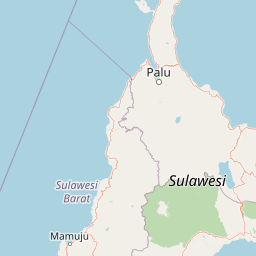
Why Lore Lindu National Park stands out
Lore Lindu is renowned for its extraordinary concentration of endemic species, particularly the 77 bird species found only on Sulawesi, including the distinctive maleo with its striking black plumage and prominent crown. The park's montane forests shelter unique primates like the Tonkean macaque and the diminutive pygmy tarsier, one of the world's smallest primates. Equally significant is the park's archaeological heritage, with over 400 granite megaliths distributed across the Napu, Bada, and Behoa valleys, some representing human forms up to 4.5 meters tall. The landscape of steep valley walls, remnant lakes like Lake Lindu, and the transition from lowland tropical forest to sub-alpine vegetation creates a distinctive setting that supports this exceptional combination of biological and cultural significance.
Lore Lindu National Park history and protected-area timeline
Lore Lindu National Park emerged from the consolidation of three earlier protected designations: the Lore Kalamanta Nature Reserve, the Lake Lindu Recreation and Protection Forest, and the Lore Lindu Wildlife Reserve. While an area of approximately 2,310 km² was declared for national park status in 1982, the official designation in 1999 resulted in a reduced boundary of 2,180 km², reflecting the complex process of establishing a coherent protected area within a region of human settlement and land use. The park's recognition as a UNESCO Biosphere Reserve in 1978 preceded its national park designation, acknowledging the region's exceptional ecological value and the need to balance conservation with the needs of surrounding communities. Archaeological investigations have documented megalithic activity across the Napu, Bada, and Behoa valleys, with stone carvings ranging in date from approximately 3000 BC to 1300 AD, representing a tradition of human landscape modification that predates the protected area framework by millennia. Since 2000, the Indonesian-German Collaborative Research Center known as STORMA has conducted intensive studies on forest margin stability, contributing scientific understanding of how protected area status influences deforestation patterns.
Lore Lindu National Park landscape and geographic character
The physical geography of Lore Lindu National Park is defined by a series of deep valleys carved into Sulawesi's central mountain spine, creating a complex terrain of steep ridges, narrow gorges, and remnant lake basins. The Palolo, Napu, Lindu, Besoa, and Bada valleys represent a distinctive valley system that was historically interconnected by larger lake systems before sediment accumulation reduced these water bodies to their current extent. Lake Lindu remains the park's largest surface water feature, its presence creating important habitat heterogeneity within the broader forest matrix. The western boundary follows the Kulawi Valley, a collection of narrower valleys that drain toward the coast. Elevation ranges from 200 meters in the valley floors to 2,500 meters along ridgelines, with the highest peaks supporting sub-alpine forest conditions. The terrain creates dramatic local topography with slopes often exceeding 30 degrees, while the combination of high rainfall in the southern portions and the underlying volcanic geology produces frequent cloud formation in the montane zones, contributing to the moisture-dependent character of the forest ecosystems.
Lore Lindu National Park ecosystems, habitats, and plant life
Lore Lindu National Park encompasses multiple distinct ecosystem types arranged along its steep elevation gradient, creating a vertically stratified series of forest communities from lowland tropical forest through sub-montane, montane, and sub-alpine zones. The lowland forests feature species such as Eucalyptus deglupta, Cananga odorata, and Gnetum gnemon, while higher elevations support Castanopsis argentea, Agathis philippinensis, and Phyllocladus hypophyllus in increasingly stunted forms as conditions become more extreme. The park's global significance derives primarily from its role as a center of endemism for Sulawesi's unique fauna, a reflection of the island's long-term isolation and its position at the boundary between Asian and Australian biogeographic realms. The montane forests experience persistent cloud immersion, supporting moisture-dependent species assemblages that differ markedly from the dry forest types common in other parts of Sulawesi. The combination of high rainfall in the southern valleys, with annual totals reaching 4,000 mm, and the elevational gradient creates habitat conditions for species with vastly different moisture and temperature requirements within a relatively compact geographic area.
Lore Lindu National Park wildlife and species highlights
The mammalian fauna of Lore Lindu includes an extraordinary proportion of Sulawesi endemics, species found nowhere else on Earth. The Tonkean macaque represents one of the park's most visible primate species, traveling in social groups through the forest canopy. The lowland anoa, a diminutive wild buffalo, and the extraordinary North Sulawesi babirusa with its bizarre tusk-like teeth are signature species of the Sulawesi fauna. The park shelters both the pygmy tarsier and Dian's tarsier, tiny primates adapted to nocturnal hunting in the montane forest understory. The avifauna is particularly remarkable, with 77 bird species endemic to Sulawesi recorded within the park boundaries. The maleo stands as perhaps the most iconic species, a ground-dwelling megapode that incubates its eggs in geothermal soils. Other endemic birds include the purple-bearded bee-eater, the geomalia, and numerous other species. Lake Lindu supports endemic fish including Oryzias bonneorum and Oryzias sarasinorum, as well as the endemic crab Parathelphusa linduensis, demonstrating the lake's ecological distinctiveness as an isolated aquatic ecosystem.
Lore Lindu National Park conservation status and protection priorities
Lore Lindu National Park's designation as a UNESCO Biosphere Reserve in 1978 recognized its global significance for biodiversity conservation, while its national park status under IUCN Category II provides formal protection for its forest ecosystems. The park faces significant conservation challenges, with deforestation from illegal logging and agricultural encroachment representing the primary threats to forest integrity. Management complexities arise from the presence of 62 villages along the park's boundaries and one village within the protected area, creating ongoing pressure on forest resources. Scientific studies by the STORMA program have documented that protected area status has reduced deforestation rates by approximately 9% compared to unprotected forest margins, demonstrating measurable conservation effectiveness. The park's elevation range and diversity of habitats create resilience against some threats, while the presence of endemic species with restricted distributions makes the protected area irreplaceable for long-term species survival. Conservation priorities include strengthening law enforcement, building local awareness of forest preservation importance, and developing sustainable land use practices in the buffer zone.
Lore Lindu National Park cultural meaning and human context
Lore Lindu National Park exists within a landscape of continuous human habitation, with 117 villages surrounding the protected area and traditional ethnic groups maintaining cultural connections to the land. The local population includes members of the Kaili, Kulavi, and Lore ethnic groups, whose ancestors inhabited these valleys long before the establishment of formal protection frameworks. The presence of over 400 megaliths throughout the park, including approximately 30 representing human forms, demonstrates that the landscape held significant cultural meaning for past societies, with stone carvings distributed across the Napu, Behoa, and Bada valleys. These archaeological features, along with stone pots and accompanying lids, represent a tradition spanning from approximately 3000 BC to 1300 AD, connecting contemporary conservation with millennia of human landscape modification. The relationship between local communities and the park's resources requires ongoing attention to ensure that conservation objectives can be balanced with traditional land use practices and livelihood needs.
Top sights and standout views in Lore Lindu National Park
Lore Lindu offers a rare combination of biological and cultural significance within a single protected area. The montane forests shelter endemic species found nowhere else, from the Tonkean macaque to the 77 endemic bird species including the distinctive maleo. The ancient megalithic sites in the Napu and Bada valleys represent one of Indonesia's most important archaeological landscapes, with stone figures and arrangements dating back thousands of years. Lake Lindu provides a scenic focus within the park, supporting endemic aquatic species and creating habitat diversity. The elevation gradient from 200 to over 2,600 meters creates a complete forest succession from lowland tropical conditions to sub-alpine environments, all accessible within a single protected landscape. The park's status as a UNESCO Biosphere Reserve reflects its global significance as both a biodiversity sanctuary and a model for integrating conservation with human settlement.
Best time to visit Lore Lindu National Park
The optimal period for visiting Lore Lindu National Park runs from July to September, when the southern region experiences reduced rainfall and conditions are most favorable for exploration. The park receives exceptionally high rainfall in its southern portions, with annual totals reaching 4,000 mm concentrated during the monsoon season from November to April. Visiting during the dry season provides better opportunities for trekking between valleys and accessing higher elevations, though montane areas may still experience regular cloud immersion and precipitation even during nominally drier months. Temperatures in the lowland areas remain consistently warm throughout the year, ranging from 26 to 32 degrees Celsius, with temperatures dropping approximately 6 degrees Celsius for every 1,100 meters of elevation gain. Visitors should be prepared for humid conditions throughout the year and for the possibility of rain even during the preferred July to September window, particularly at higher elevations.