Why Kayan Mentarang National Park stands out
Kayan Mentarang is best known as the heart of Borneo, protecting one of the last great contiguous tropical forest landscapes in Southeast Asia. The park is famous for its exceptional biodiversity, particularly its populations of proboscis monkeys, Bornean gibbons, and several species of critically endangered hornbills including the helmeted rhinoceros hornbill. Its position at the Indonesia-Malaysia border places it at the crossroads of multiple ecosystems, supporting both lowland dipterocarp forests and montane vegetation zones. The park is also renowned for the traditional cultures of the Dayak peoples who have inhabited the region for over 350 years, preserving indigenous knowledge and sustainable land-use practices across the landscape.
Kayan Mentarang National Park history and protected-area timeline
Kayan Mentarang National Park was officially established in 1996 as part of Indonesia's expanding network of protected areas. The creation of the park responded to growing recognition of the ecological importance of Borneo's interior forests and the need to protect remaining wilderness areas from expanding logging and agricultural development. Prior to national park designation, the area existed as a forest reserve with varying levels of protection. The establishment coincided with increased international attention to Borneo's deforestation crisis and the emergence of transboundary conservation frameworks. The Heart of Borneo initiative, launched in 2007, further elevated the park's significance by positioning it as a core conservation zone within a trinational network. Recent years have seen improved cross-border cooperation, with agreements facilitating tourist movement from Malaysian Borneo through the Ba'kelalan gateway, marking a shift from the park's historically restricted access.
Kayan Mentarang National Park landscape and geographic character
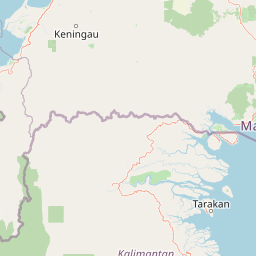
The landscape of Kayan Mentarang National Park is characterized by its dramatic mountainous terrain and extensive forest cover. The Apau Kayan plateau forms the park's central spine, a dispersed highland region of ridges, valleys, and traditional walking trails that has long served as a corridor for indigenous movement across northern Borneo. The terrain descends from montane elevations in the central region toward lowland river valleys in the southern and eastern sections. The Kayan River and its tributaries traverse the park, carving valleys that provide both aquatic habitat and transportation routes for local communities. The park's position at the Indonesia-Malaysia border means it forms part of a continuous highland ecosystem that extends across the international boundary, creating one of the largest transboundary protected areas in Southeast Asia.
Kayan Mentarang National Park ecosystems, habitats, and plant life
Kayan Mentarang protects one of Southeast Asia's most ecologically significant forest ecosystems. The park's location at the heart of Borneo places it within the island's biodiversity hotspot, where species from Asian and Australasian lineages meet and diversify. The varied elevation gradient from lowland to montane zones supports multiple distinct vegetation types, including primary dipterocarp forests in the lower elevations, montane forests in the higher terrain, and riparian zones along the major river systems. The dense canopy and intact forest structure have allowed ecological processes to continue relatively unimpeded, supporting populations of species that have been displaced from more degraded parts of Borneo. The park's inclusion in the Heart of Borneo initiative reflects its role as a reservoir of biodiversity in a region where forest loss has been extensive.
Kayan Mentarang National Park wildlife and species highlights
The wildlife of Kayan Mentarang National Park includes remarkable assemblages of Southeast Asian forest species. Among the park's mammal populations, the proboscis monkey and Bornean gibbon represent flagship arboreal species whose populations depend on intact forest canopies. The park also shelters several felid species including the clouded leopard, marbled cat, and flat-headed cat, three of Borneo's most elusive forest predators. Other notable mammals include the sun bear, Malayan pangolin, and various primate and civet species. The birdlife is equally impressive, with four species of hornbill documented within the park, including the spectacular helmeted hornbill and the rhinoceros hornbill. These large fruit-eating birds play critical roles in seed dispersal and forest dynamics. The combination of intact forest, diverse habitats, and relative isolation has allowed these species to persist in densities that have declined across much of Borneo's logged and fragmented landscapes.
Kayan Mentarang National Park conservation status and protection priorities
Kayan Mentarang National Park plays a vital role in regional conservation strategy as the core zone of the Heart of Borneo initiative. This trinational program aims to preserve approximately 200,000 square kilometers of contiguous forest across Indonesia, Malaysia, and Brunei, representing one of the largest transboundary conservation efforts in the tropics. The park's significance stems from its vast size, relatively intact ecosystems, and its position connecting protected areas across the Indonesia-Malaysia border. Conservation challenges include pressure from logging, plantation expansion, and the need to balance traditional indigenous land use with protection objectives. The park's designation as IUCN Category II reflects its dual mandate of biodiversity protection and sustainable management, though enforcement across such an extensive remote area presents substantial logistical difficulties.
Kayan Mentarang National Park cultural meaning and human context
The region surrounding Kayan Mentarang has been inhabited for over 350 years, as evidenced by archaeological remains including stone tools and graves found within the park boundaries. Approximately 20,000 to 25,000 Dayak people live in communities around the park, representing a cultural landscape where traditional indigenous practices remain integral to the region's identity. Multiple Dayak tribes inhabit the area, including the Kenyah, Murut, Punan, Lundayeh, and Lun Bawang peoples, each maintaining distinct cultural traditions, languages, and relationships with the forest. These communities have historically practiced rotational agriculture, hunting, and the use of forest resources in ways that have shaped and been shaped by the landscape over centuries. The Apau Kayan plateau remains culturally significant as a traditional highland corridor connecting Dayak settlements across Borneo.
Top sights and standout views in Kayan Mentarang National Park
Kayan Mentarang offers exceptional opportunities to experience one of Southeast Asia's last great wilderness areas. The park's status as the centerpiece of the Heart of Borneo initiative reflects its outstanding ecological values and the critical role it plays in preserving regional biodiversity. Visitors can explore pristine river systems like the Kayan, encounter diverse primate and hornbill species, and engage with Dayak communities maintaining traditional forest-based lifestyles. The transboundary location provides a rare opportunity to experience conservation across international borders, while the Apau Kayan plateau offers access to one of Borneo's most historically and culturally significant highland regions.
Best time to visit Kayan Mentarang National Park
The optimal period for visiting Kayan Mentarang National Park generally corresponds with the drier months typical of the Borneo climate, though the park's extensive forest cover means that rain can occur throughout the year. The dry season from March through October often provides more accessible trail conditions and clearer river travel, while the wetter months from November through February may still allow visits but with more challenging logistics. Visitors should note that the park's remote location and border area require careful planning, including coordination with local authorities and awareness of cross-border permit requirements when entering from Malaysia.