
Why Minami Alps National Park stands out
Minami Alps National Park is best known for its dramatic alpine scenery and status as one of Japan's premier high-mountain wilderness areas. The park protects seven peaks exceeding 3000 meters, creating a spectacular backdrop of jagged ridgelines, rock faces, and remote valleys. It is renowned for preserving old-growth beech forests, subalpine conifer stands, and the rare Japanese serow, a goat-antelope species that inhabits the steep mountain slopes. The park also shelters the rock ptarmigan, a bird species adapted to the harsh alpine environment. Its significance as a watershed, feeding three major rivers that support millions of people downstream, adds to its ecological importance.
Minami Alps National Park history and protected-area timeline
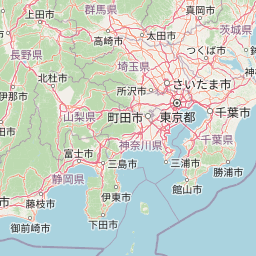
Minami Alps National Park was officially established on June 1, 1964, as part of Japan's post-war expansion of protected area designation. During the rapid economic growth of the 1950s and 1960s, Japan began systematically identifying and protecting outstanding natural areas to preserve biodiversity, scenic beauty, and ecological functions. The Akaishi Mountains were recognized as possessing exceptional natural value due to their impressive peaks, unique ecosystems, and critical watershed function. The park was designated under IUCN Category II, reflecting its primary purpose of protecting natural ecosystems while allowing for limited compatible use. Unlike many Japanese national parks that developed extensive tourism infrastructure, Minami Alps was purposefully maintained as a wilderness area with minimal development. This approach reflected both the challenging terrain and the desire to preserve the area's wild character. The park's boundaries were drawn to encompass the core of the Akaishi Mountains and the critical headwater zones of the three major river systems, creating a coherent protection unit that addresses both conservation and watershed management objectives.
Minami Alps National Park landscape and geographic character
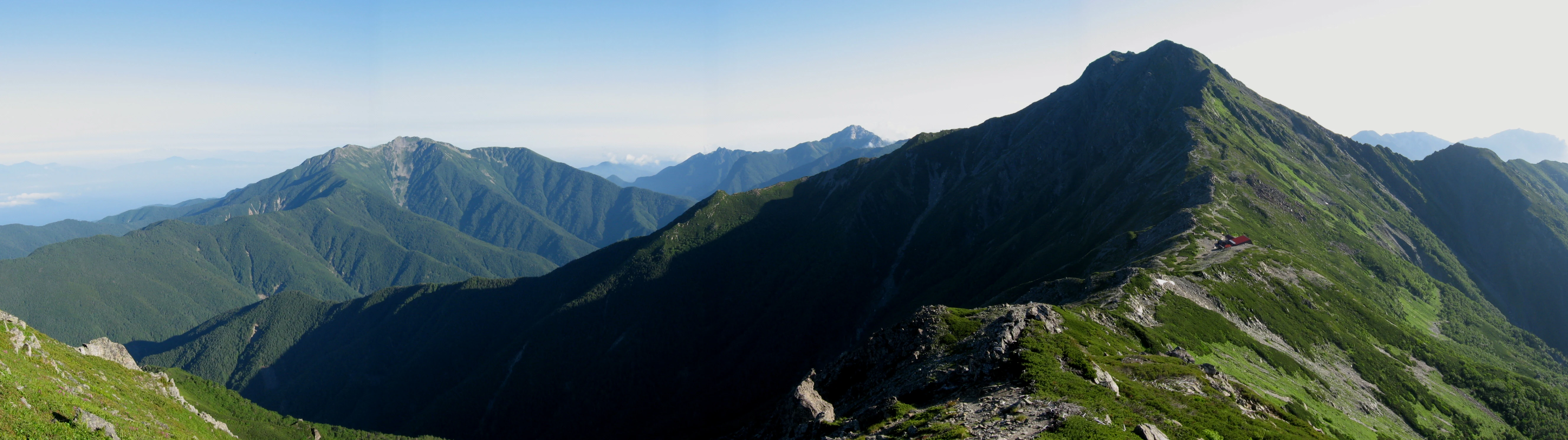
The landscape of Minami Alps National Park is defined by the dramatic, glacially-carved terrain of the Akaishi Mountains. Seven peaks rise above 3000 meters, creating a spectacular alpine environment with steep-sided valleys, jagged ridgelines, and exposed rock faces. The highest summits include Mount Senjō at 3032 meters, Mount Kita at 3196 meters (the second-highest peak in the Akaishi range), Mount Aino at 3192 meters, and Mount Akaishi at 3120 meters. Between these major peaks, numerous subsidiary ridges and spurs create a complex terrain that has been shaped by past glacial activity and ongoing erosion. The valleys carved by ancient glaciers now contain streams and rivers that flow outward from the central heights, eventually joining the three major river systems whose headwaters originate within the park. The combination of high relief, significant elevation range, and the presence of perennial snow and ice on the highest peaks gives this landscape a distinctly alpine character that differs markedly from the lower-elevation mountains of surrounding regions.
Minami Alps National Park ecosystems, habitats, and plant life
The ecological character of Minami Alps National Park is shaped by its dramatic elevation range and the transition from subalpine to alpine conditions. Japanese beech forests dominate the lower elevations, forming extensive stands that represent some of the finest examples of this forest type in Japan. Above the beech zone, Japanese stone pine and hemlock spruce create a subalpine forest layer that is particularly well-developed on the slopes and valley floors. At the highest elevations, above the tree line, alpine meadows and rocky terrain support specialized vegetation adapted to the extreme conditions. The park's position in central Honshū places it at a biogeographic crossroads, with species from both northern and southern Japan meeting in this mountain environment. This unique positioning contributes to the park's biodiversity significance, as the range of habitats supports a variety of plant and animal communities that would not be found together in either warmer or colder regions.
Minami Alps National Park wildlife and species highlights
The wildlife community of Minami Alps National Park reflects its position as a wilderness area with limited human disturbance. The Japanese serow, known locally as kamoshika, represents the largest and most characteristic large mammal in the park, inhabiting the steep mountain slopes and forest edges throughout the year. This goat-antelope species is endemic to Japan and is recognized as a natural monument requiring protection. The rock ptarmigan, a bird species that migrates to high elevations during the breeding season, is notable for its seasonal color change and adaptation to the harsh alpine environment. Larger mammals present in the park include the Asiatic black bear, wild boar, and sika deer, all of which occupy the forested areas at various elevations. The combination of old-growth forest habitat, minimal human disturbance, and the presence of diverse elevation zones creates conditions suitable for a range of species, though the park's remote and rugged character means that wildlife viewing opportunities are limited compared to more accessible protected areas.
Minami Alps National Park conservation status and protection priorities
Minami Alps National Park plays a crucial role in protecting both Japan's alpine biodiversity and critical water resources. The park's watershed function, providing the headwaters for three major river systems that serve millions of downstream users, represents one of its most significant conservation values. Protection of these headwaters ensures water quality and helps regulate flow patterns that are essential for agricultural, industrial, and domestic water supply across the Chūbu region. The old-growth beech forests within the park are increasingly rare in Japan, as development and forestry have removed most of the nation's original forest cover. These forests provide habitat for numerous species and contribute to soil stability on the steep mountain slopes. The Japanese serow population, while stable within the park boundaries, faces pressure from habitat loss and fragmentation in lower-elevation areas, making the protected alpine habitat increasingly important for the species' long-term survival. The park's minimal development approach, while limiting tourism opportunities, has effectively preserved the area's wilderness character and the ecological processes that depend on relatively unmodified conditions.
Minami Alps National Park cultural meaning and human context
The Akaishi Mountains have been significant in Japanese religious and cultural traditions for centuries, as the mountains have been viewed as sacred spaces associated with Shugendo, the mountain worship practice of Japan's traditional folk religion. The area's remoteness and dramatic scenery contributed to its spiritual significance, with various peaks and locations serving as sites for pilgrimage and meditation. While Minami Alps National Park does not contain explicit cultural heritage sites of the type found in some Japanese parks, the broader landscape context includes traditional relationships between local communities and the mountain environment. The prefectures surrounding the park, particularly Shizuoka, Yamanashi, and Nagano, each have distinct regional identities shaped by their relationship with the mountains and the rivers that originate in this high terrain. The park's establishment in 1964 also reflects a post-war Japanese cultural shift toward environmental awareness and the recognition that certain landscapes warrant protection for future generations.
Top sights and standout views in Minami Alps National Park
The seven peaks exceeding 3000 meters create a spectacular alpine environment that is the primary draw for experienced mountaineers and hikers. The old-growth Japanese beech forests at lower elevations offer a different but equally significant natural experience, with massive trees and a cathedral-like forest floor. The Japanese serow, while difficult to observe, represents a conservation success story and serves as a symbol of the park's wilderness character. The watershed protection function, while not visually dramatic, represents one of the park's most important contributions to regional sustainability. The sense of remoteness and the absence of developed tourist infrastructure differentiate Minami Alps from more accessible Japanese parks, offering a genuine wilderness experience for those with the skills and preparation to venture into this high mountain environment.
Best time to visit Minami Alps National Park
The optimal season for visiting Minami Alps National Park runs from mid-summer through early autumn, typically July through September, when the high mountain trails are snow-free and conditions are most suitable for alpine hiking and mountaineering. The winter months bring heavy snowfall and extreme conditions that make the park effectively inaccessible except for specialized winter mountaineering. Spring and early summer feature lingering snow and unstable weather that can pose hazards for unprepared visitors. The brief summer season offers the best combination of accessibility and relatively stable weather, though afternoon thunderstorms are common and visitors should be prepared for rapid weather changes. The lack of developed facilities means that all visitors must be self-sufficient and prepared for backcountry conditions regardless of the season. Those seeking to experience the park's natural values should plan their visit around the narrow window of suitable conditions and ensure they have appropriate equipment, navigation skills, and knowledge of the mountain environment.