

Mori Atlas logo
National parkSanjay National Park

Discover the mapped terrain and conservation significance of this central Indian natural area.

Sanjay National Park: Madhya Pradesh's Protected Landscape and National Park Atlas

(Sanjay Dubri Tiger Reserve)

Sanjay National Park represents a significant protected landscape in the heart of Madhya Pradesh, India. This national park spans an extensive territory characterized by its predominantly hilly terrain and dry deciduous forests, forming a crucial part of the Narmada Valley ecoregion. Its mapped boundaries encompass vital habitats, playing a key role in regional conservation efforts, particularly for its notable tiger population.

Tiger ReservesDry Deciduous ForestsMadhya PradeshCentral IndiaWildlife ConservationNational Parks

Sanjay National Park

National park

Park overview

Structured park overview, official facts, and landscape profile for Sanjay National Park

Sanjay National Park park facts, protected area profile, and essential visitor context
Review the core facts for Sanjay National Park, including designation, size, terrain, visitor scale, habitats, and operating context in one park-focused overview.

About Sanjay National Park

Sanjay National Park represents a substantial protected wilderness in the heart of India's central forest region within Madhya Pradesh. The park's designation as both a national park and tiger reserve reflects its dual importance for biodiversity conservation and habitat protection. The landscape features hilly terrain characteristic of the region, with the Banas River forming a natural western boundary and connecting to the larger Son River system. The park's creation followed the establishment of the broader Sanjay-Dubri Tiger Reserve, which incorporates both the national park and Dubri Wildlife Sanctuary. Following the formation of Chhattisgarh as a separate state in 2000, a significant portion of the original forest area was reorganized, with the Chhattisgarh portion becoming Guru Ghasidas National Park. The protected area serves as a critical corridor for wildlife movement in central India and maintains significant populations of flagship species including tigers and elephants.

Quick facts and research context for Sanjay National Park

Sanjay National Park spans 1,674.55 square kilometers in Sidhi district, Madhya Pradesh, comprising 812 square kilometers of core area and 868 square kilometers of buffer zone. The park was declared a national park in 1981 and became a tiger reserve in 2006. It is part of the Narmada Valley dry deciduous forests ecoregion and features hilly terrain with the Banas and Son rivers as important watercourses. The protected area shares a boundary with Guru Ghasidas National Park in the region.

Park context

Deeper park guide and search-rich context for Sanjay National Park

Sanjay National Park history, landscape, wildlife, and travel context
Explore Sanjay National Park through its history, landscape character, ecosystems, wildlife, conservation priorities, cultural context, and seasonal travel timing in a structured park guide built for atlas discovery and search intent.

Why Sanjay National Park stands out

Sanjay National Park is particularly renowned for its tiger population and role in big cat conservation within central India. The park gained historical significance as the territory where the famous white tiger Mohan was captured in 1951 by the king of Rewa. The reserve also represents the last known territory of the Asiatic cheetah in India, adding historical conservation importance. The park's dry deciduous forest ecosystem supports a rich community of wildlife including Bengal tigers, Indian elephants, leopards, and diverse ungulate species.

White tiger
White tiger

Sanjay National Park history and protected-area timeline

Sanjay National Park was established as a national park in 1981, creating formal protected status for the forests of Sidhi district. The designation as a tiger reserve followed in 2006, reflecting the area's importance for big cat conservation and the presence of viable tiger populations. The park's history is intertwined with the broader conservation narrative of central India, as the region was historically part of the larger forest complex that included what is now Chhattisgarh. Following the state reorganization in 2000, the original contiguous forest area was divided, with the Madhya Pradesh portion retaining the Sanjay National Park designation while the Chhattisgarh portion became Guru Ghasidas National Park. The capture of the white tiger Mohan in 1951 from the forests of this region established the area's significance in Indian wildlife conservation history.

Sanjay National Park landscape and geographic character

The park features predominantly hilly terrain characteristic of central India's upland regions. The landscape is defined by the Banas River, which forms the western boundary of the protected area before joining the Son River system. The terrain varies in elevation and includes valleys, slopes, and forested ridges that create a diverse physical environment. The surrounding region of Sidhi district contributes to a broader landscape of forested hills and river valleys. The park's position within the Narmada Valley dry deciduous forests ecoregion indicates undulating terrain with interspersed watercourses and forest cover.
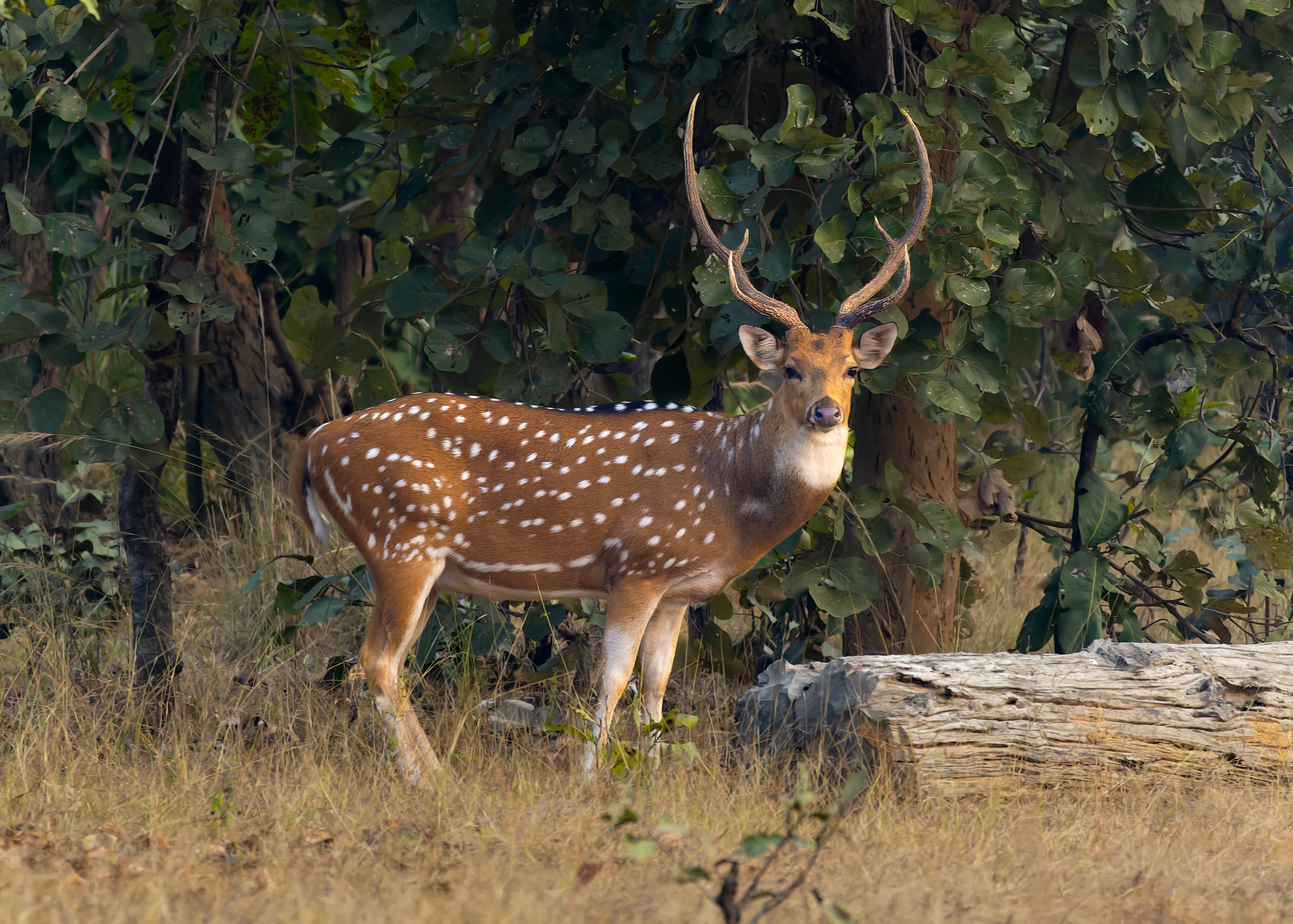
Chinkara by Tisha Mukherjee 01.jpg
Chinkara (Gazella bennettii) in Sanjay Dubri Tiger Reserve, Madhya Pradesh, India.

Sanjay National Park ecosystems, habitats, and plant life

Sanjay National Park is situated within the Narmada Valley dry deciduous forests ecoregion, a biodiversity-rich zone of central India. The vegetation is characterized by sal forest dominance along with bamboo thickets and mixed deciduous tree species. Key tree species include sal, dhawa, tendu, harra, mahua, kusum, shisham, khair, amla, and bair. This forest type supports a complex ecological community and provides critical habitat for numerous species. The park's extent includes both core protection zones and surrounding buffer areas, creating a gradient of protection that supports ecological processes and wildlife movement.
Changeable Hawk-Eagle by Tisha Mukherjee 08.jpg
Changeable Hawk-Eagle

Sanjay National Park wildlife and species highlights

The park supports a remarkable diversity of wildlife, with Bengal tigers and Indian elephants among the flagship species. Large mammals present include Indian leopard, chital, sambar deer, northern red muntjac, chinkara, wild boar, nilgai, and gaur. Predators include the Bengal tiger, leopard, golden jackal, and striped hyena. Other notable species include sloth bear, Indian crested porcupine, jungle cat, and monitor lizard. The bird fauna includes peacock, red jungle fowl, Asian koel, Indian roller, and various owl species. Historical records indicate the area was the last known territory of the Asiatic cheetah in India, adding significant conservation context. The tiger population has shown growth from six individuals in earlier counts to forty-one tigers by 2023.
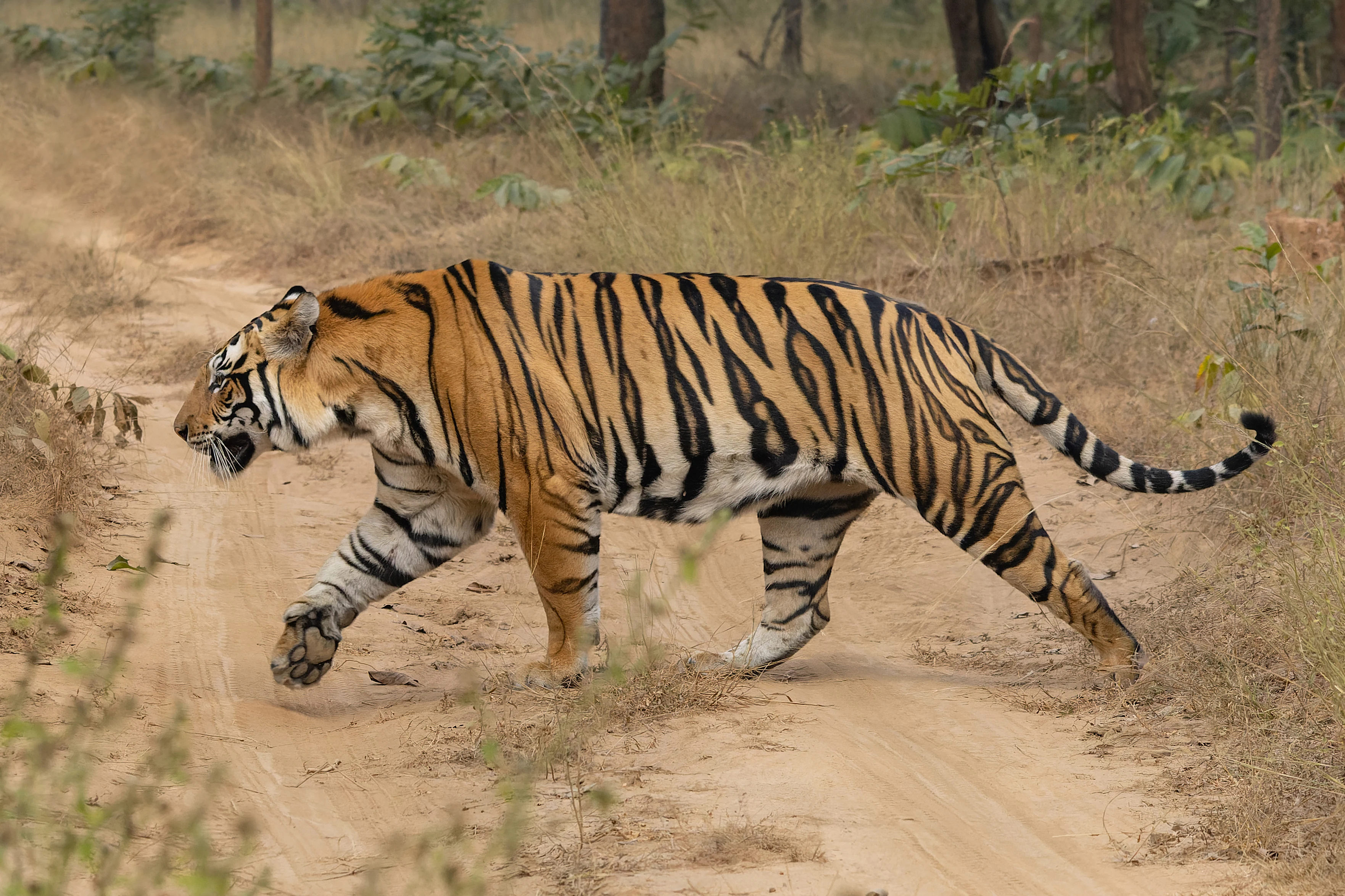
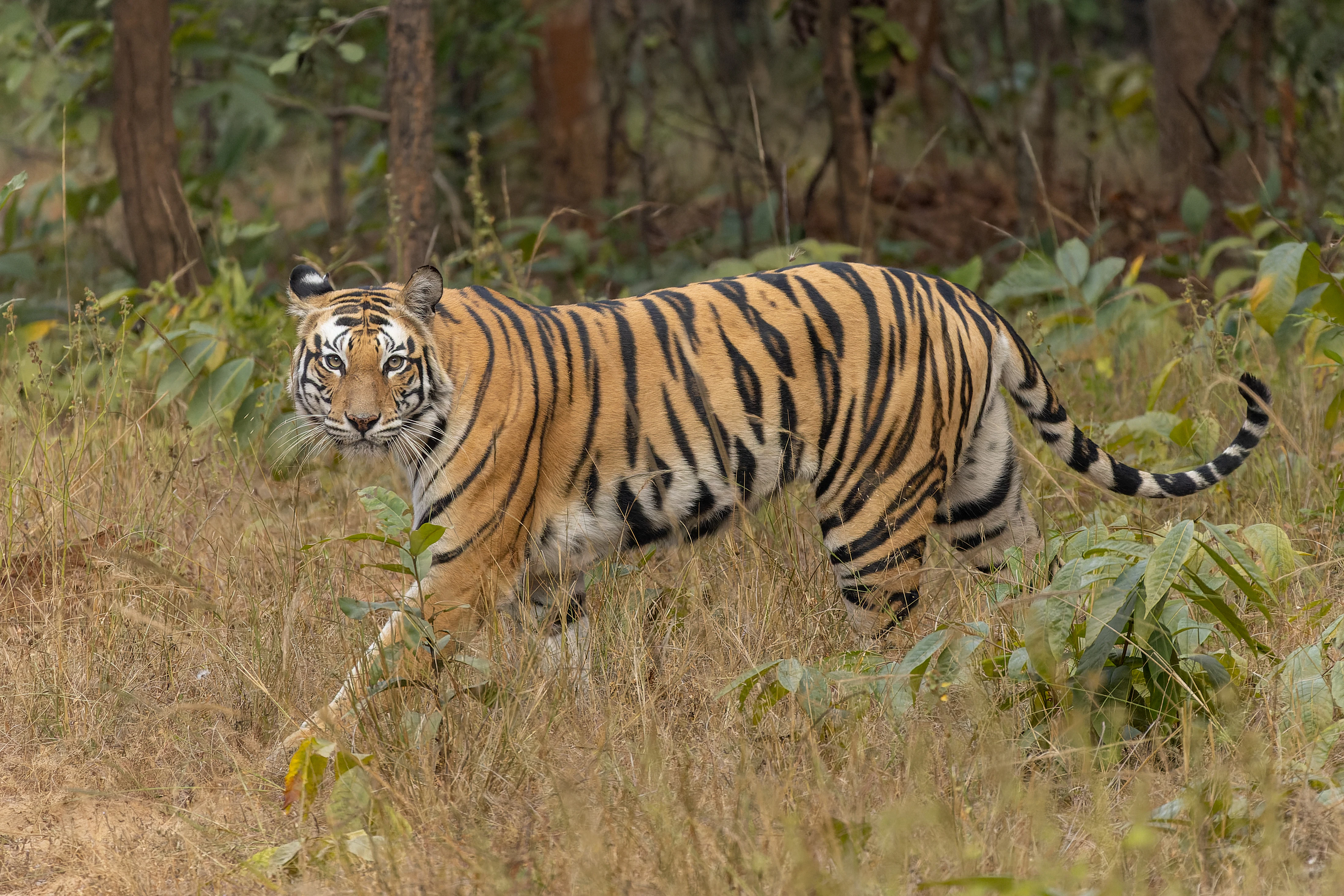
Bengal tiger in Sanjay Dubri Tiger Reserve
A Bengal tiger in Sanjay Dubri Tiger Reserve, Madhya Pradesh, India.

Sanjay National Park conservation status and protection priorities

Sanjay National Park serves as a critical component of India's wildlife conservation framework, particularly for tiger protection in central India. The tiger reserve designation brings focused management attention and resources for big cat conservation. The park's location within the larger Narmada Valley ecoregion positions it as an important node in the regional conservation landscape. Reintroduction efforts for gaur in 2023, with animals sourced from Kanha and Satpura Tiger Reserves, demonstrate active habitat management and species recovery programs. The protected area functions as both a biodiversity repository and a living landscape where conservation and ecological processes continue.

Sanjay National Park cultural meaning and human context

The park does not have extensively documented indigenous or cultural heritage content in available sources, though the region of Sidhi district has historical connections to the Rewa princely state. The capture of the white tiger Mohan by the king of Rewa in 1951 represents a notable historical event linking the area to regional royal heritage.

Top sights and standout views in Sanjay National Park

Sanjay National Park combines significant tiger conservation importance with extensive dry deciduous forest habitat in central India. The park's landscape of hilly terrain, river boundaries, and diverse forest types supports substantial wildlife populations including elephants, leopards, and numerous ungulate species. The historical significance of being the capture location of the famous white tiger Mohan adds to the park's conservation legacy. The 2023 gaur reintroduction demonstrates ongoing active conservation management. The park forms part of a larger regional conservation complex that includes Guru Ghasidas National Park across the state boundary.
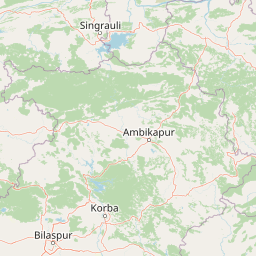
Park location guide

Geography guide, regional context, and park location map for Sanjay National Park

Sanjay National Park park geography, regions, and map view in India
Understand where Sanjay National Park sits in India through a broader geographic reading of the surrounding landscape, nearby location context, and its mapped position within the national park landscape.

How Sanjay National Park fits into India

India is a South Asian country bordered by the Indian Ocean, Arabian Sea, and Bay of Bengal. It shares land borders with Pakistan, China, Nepal, Bhutan, Bangladesh, and Myanmar. The country has a population of over 1.4 billion people and operates as a federal parliamentary republic with its capital in New Delhi.

Wider geography shaping Sanjay National Park in India

India occupies the Indian subcontinent in South Asia, bordered by the Arabian Sea to the southwest, the Bay of Bengal to the southeast, and the Indian Ocean to the south. It shares land borders with Pakistan to the west, China, Nepal, and Bhutan to the north, and Bangladesh and Myanmar to the east. The territory also includes the Andaman and Nicobar Islands in the Indian Ocean.

Map view of Sanjay National Park

Use this park location map to pinpoint Sanjay National Park in India, understand its exact geographic position, and read its mapped placement within the surrounding landscape more clearly.

Pigeon | © OpenStreetMap contributors

Location context for Sanjay National Park

Madhya Pradesh

Visualize the protected landscapes of Sanjay-Dubri Tiger Reserve, understanding its river boundaries, varied elevations, and core conservation zones.

Sanjay National Park Photos: Explore the Hilly Terrain, Dry Deciduous Forests, and Wildlife Habitats of Central India
Explore visual imagery of Sanjay National Park to understand its diverse landscapes, encompassing hilly terrain, extensive dry deciduous forests, and the Banas River's role in shaping its protected environment. These photos provide valuable geographic context for the park's habitats, revealing the environmental character that sustains its notable tiger population and other significant wildlife in Central India.

White tiger

Chital in Sanjay Dubri Tiger Reserve

Chinkara by Tisha Mukherjee 01.jpg

Changeable Hawk-Eagle by Tisha Mukherjee 08.jpg

Bengal tiger in Sanjay Dubri Tiger Reserve

Bengal tiger in Sanjay Dubri Tiger Reserve

Park atlas

Explore the geographic spread of protected areas and conservation landscapes surrounding Sanjay National Park.

Browse National Parks and Protected Areas Near Sanjay National Park in Central India
Browse national parks, tiger reserves, and other protected areas situated within the central Indian dry deciduous forest ecoregion, including significant conservation landscapes geographically adjacent to Sanjay National Park. Discover how these distinct protected areas connect across regional geography, enabling comparisons of their diverse habitats, terrain, and conservation importance.
National parkWest Champaran District

Valmiki National Park: A Vital National Park and Protected Landscape in Bihar

Explore unique Sivalik terrain and mapped protected area boundaries

Valmiki National Park, located in the West Champaran District of Bihar, is a significant protected area renowned for its unique geography. Situated at the interface of the Himalayas and the Gangetic plains, the park showcases a varied terrain including ridges, gorges, dense forests, and extensive wetlands. As Bihar's only national park and a designated tiger reserve, it offers rich insights into conservation landscapes and regional biodiversity for atlas exploration.

Area
898.45 km²
Established
1990
IUCN
II
National parkBardiya District

Bardiya National Park: Nepal's Expansive Terai Protected Landscape and Atlas

Mapped geography, tiger habitat, and rhino conservation in Bardiya District.

Bardiya National Park represents a significant protected area within Nepal's Terai lowlands, providing an exceptional resource for geographic discovery. Its diverse terrain, including vast grasslands and dense forests bisected by major river systems like the Karnali and Babai, creates unique ecosystems. As the largest national park in Nepal, it is instrumental in mapping wildlife corridors and understanding regional landscape dynamics, particularly for endangered species such as Bengal tigers and Indian rhinoceroses. This park offers a profound glimpse into the mapped natural heritage of the Bardiya District.

Area
968 km²
Established
1988
IUCN
II
National parkMadhya Pradesh

Kuno National Park: Madhya Pradesh National Park Atlas and Protected Landscape

Explore its diverse dry deciduous forests and savannah terrain.

Kuno National Park is a protected area in Madhya Pradesh, India, renowned for its dry deciduous forest and savannah grassland ecosystems. This national park, bisected by the Kuno River, offers a significant landscape for understanding regional geography and conservation efforts within India. Its varied terrain provides essential habitat and contributes to the broader atlas of protected lands, making it a key destination for geographic discovery.

Area
748.76 km²
Established
2018
IUCN
II
National parkLakhimpur Kheri district

Dudhwa National Park: Terai Grasslands and Alluvial Plain Geography within Lakhimpur Kheri

Discover the mapped protected landscape of this vital Indian national park.

Dudhwa National Park in Lakhimpur Kheri district stands as a crucial example of the Terai grassland ecosystem, characterized by its expansive alluvial plains and marshy habitats. This page provides an atlas-style exploration of its protected landscape, detailing the unique terrain and geographic context essential for understanding its conservation significance.

Area
614 km²
Established
1977
IUCN
II
Visitors
26K annual
National parkIndia

Keoladeo National Park: India's Renowned Wetland Bird Sanctuary and Protected Landscape

Explore its mapped terrain and critical avian habitat near Bharatpur.

Keoladeo National Park, a designated national park in India, represents a critical hub for wetland conservation and avian biodiversity. The park's meticulously managed wetland system, a mosaic of shallow waters and grasslands, provides essential habitat for thousands of resident and migratory birds from across Eurasia. Situated near Bharatpur, this protected landscape offers a unique opportunity to study the intersection of arid and fertile plains geography and serves as a vital stopover point on major bird flyways, underscoring its importance in regional conservation efforts.

Area
28.7 km²
Established
1982
IUCN
II
National parkRajasthan

Ranthambore National Park: Protected Area Atlas and Dry Deciduous Landscape Exploration

Discover its unique terrain and mapped boundaries.

Dive into the protected landscape of Ranthambore National Park, a nationally significant protected area in Rajasthan, India. This page offers detailed insights into its dry deciduous forest ecosystem, characterized by rocky hills, open grasslands, and vital lakes. Explore the park's mapped boundaries and understand its position within the regional geography, providing an atlas-centric view of its terrain and conservation importance.

Area
1,334 km²
Established
1980
IUCN
II
National parkNepal

Langtang National Park: Nepal's Pioneer Himalayan Protected Landscape and Alpine Atlas

Mapped glaciated terrain, sacred lakes, and towering peaks define this national park.

Langtang National Park, established as Nepal's first Himalayan national park, offers a unique window into high-altitude protected landscapes. Its geography is characterized by dramatic glaciated valleys, soaring mountain peaks including Langtang Lirung, and a rich diversity of alpine ecosystems. This page provides an atlas-centric view of the park's boundaries and its significance within the broader Himalayan conservation context.

Area
1,710 km²
Established
1976
IUCN
II
Relief
Mountain
National parkNepal

Shey Phoksundo National Park: Nepal's Largest Trans-Himalayan Protected Landscape with Phoksundo Lake

Explore alpine terrain and unique protected ecosystems.

Delve into the geographical distinctiveness of Shey Phoksundo National Park, Nepal's expansive protected area. This park is defined by its dramatic elevation changes and the striking Phoksundo Lake, a vivid turquoise alpine reservoir set against barren, mountainous terrain. Understanding its trans-Himalayan setting and protected landscape context reveals its importance within the broader atlas of global natural areas.

Area
3,555 km²
Established
1984
IUCN
II

Common questions about visiting, size, designation, and location context for Sanjay National Park

Sanjay National Park FAQs for park facts, access, geography, and protected area context
Find quick answers about Sanjay National Park, including protected-area facts, park geography, trail and visitor context, and how the park fits into its surrounding country and regional landscape.
MoriAtlas Explorer

Continue Your Protected Areas Search Across the Global Atlas

Deepen your exploration by continuing the structured search for national parks and protected areas worldwide. Utilize the comprehensive filtering capabilities to compare different conservation landscapes and refine your understanding of global park geography. Discover more about the distribution and characteristics of protected natural areas.

Global natural geography