Why Kuno National Park stands out
Kuno National Park is best known as India's primary site for cheetah reintroduction, with the first African cheetahs arriving from Namibia in September 2022. The park was also historically selected as the preferred location for establishing a second population of Asiatic lions, though Gujarat has resisted relocating lions from the Gir Wildlife Sanctuary. The park's dry deciduous forests and savannah grasslands support diverse wildlife including leopards, wolves, sloth bears, and numerous ungulate species. The presence of the 18th-century Palpur Fort within the park adds historical significance to its natural landscape.
Kuno National Park history and protected-area timeline
Kuno Wildlife Sanctuary was established in 1981 with an initial area of approximately 345 square kilometers in the Sheopur and Morena districts of Madhya Pradesh. In the 1990s, the sanctuary gained prominence when it was selected as the primary candidate for implementing the Asiatic Lion Reintroduction Project, which aimed to establish a second lion population in India to reduce conservation risk. Between 1998 and 2003, approximately 1,650 inhabitants from 24 villages were resettled to locations outside the protected area to reduce human-wildlife conflict and create space for wildlife. Most resettled populations belonged to the Saharia tribal community, along with Jatav, Brahmin, Gurjar, Kushwaha, and Yadav communities. A buffer zone of 924 square kilometers was established around the sanctuary. In 2009, Kuno was proposed as a site for cheetah reintroduction in India. The Indian Supreme Court ruled in April 2013 that Gujarat must transfer some Gir lions to Madhya Pradesh, though Gujarat has not complied with this order. In December 2018, the state government upgraded the sanctuary to national park status and enlarged the protected area by 413 square kilometers. The cheetah reintroduction program proceeded independently, with the first cheetahs arriving from Namibia in September 2022, followed by additional introductions in 2023 and 2025.
Kuno National Park landscape and geographic character
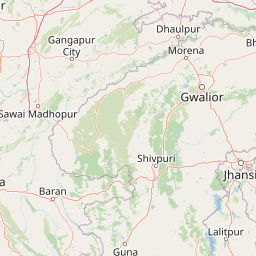
Kuno National Park occupies a varied landscape in the semi-arid region of northern Madhya Pradesh, characterized by rolling terrain, forested ridges, and open grasslands. The Kuno River flows through the park, creating riparian corridors that contrast with the surrounding dry deciduous forest. The terrain includes undulating hills and plateaus covered with mixed forest, interspersed with vast savannah grassland patches that are typical of the Khathiar-Gir ecoregion. The landscape transitions from denser forest in the river valleys to more open woodland and grassland on the higher ground. The presence of Palpur Fort, a historical structure built during the 18th century, provides a cultural landmark within the natural landscape. The overall topography supports the park's function as a wildlife habitat while creating diverse viewing opportunities across different habitat types.
Kuno National Park ecosystems, habitats, and plant life
The vegetation of Kuno National Park represents the Khathiar-Gir dry deciduous forests ecoregion, featuring a mix of tropical dry deciduous forest and savannah grassland. The forest composition includes Anogeissus pendula woodland, Boswellia and Butea forests, and tropical riverine forest along watercourses. Dominant tree species include Acacia catechu, Salai, Tendu, Palash, Dhok, Acacia leucophloea, and various Ziziphus species. The understory features shrub species like Grewia flavescens, Helicteres isora, and Vitex negundo. Grasslands support species including Heteropogon contortus, Aristida hystrix, and Desmostachya bipinnata. This habitat combination creates a mosaic landscape that supports both forest-dwelling and grassland-dependent species, making the park ecologically diverse despite its semi-arid setting.
Kuno National Park wildlife and species highlights
Kuno National Park supports a diverse mammal community including chital, sambar, nilgai, chinkara, blackbuck, chousingha, wild boar, Indian porcupine, Indian hare, and langurs. Predators present include Indian leopard, jungle cat, sloth bear, dhole, Indian wolf, Indian jackal, striped hyena, Bengal fox, and Indian grey mongoose. The park gained prominence for large carnivore reintroduction, with Southeast African cheetahs introduced starting in 2022. Reptile species recorded include mugger crocodile, gharial, Bengal monitor, and Indian softshell turtle in the Kuno River. Bird diversity is notable with 129 species recorded in a 2007 survey, including resident raptors such as Indian white-backed vulture, crested serpent-eagle, and Bonelli's eagle, plus winter visitors like demoiselle crane, common crane, and steppe eagle.
Kuno National Park conservation status and protection priorities
Kuno National Park represents a cornerstone of India's conservation strategy for establishing viable populations of threatened large carnivores outside their current restricted ranges. The park's selection for both Asiatic lion and cheetah reintroduction programs reflects its suitable habitat and strategic importance in national conservation planning. The 1998-2003 village relocation program created expanded wild habitat by removing human settlements from the core area, though the presence of over 1,900 feral zebu cattle by 2008 indicated ongoing management challenges. The cheetah reintroduction from Namibia represents a controversial but significant effort to restore an extinct species to the Indian landscape. Conservation value extends to protecting the Khathiar-Gir dry deciduous forest ecoregion, which supports numerous species and represents a diminishing habitat type in central India.
Kuno National Park cultural meaning and human context
The park region has historical human presence, with resettled communities including Saharia tribal people as well as Jatav, Brahmin, Gurjar, Kushwaha, and Yadav populations. The 18th-century Palpur Fort within the park represents historical heritage from the Karauli state rulers, adding cultural dimension to the protected landscape. The relocation of 24 villages and approximately 1,650 people between 1998 and 2003 enabled expansion of wild habitat but also represented significant social displacement. The region falls within the broader Chambal landscape known for its historical and cultural significance in central India.
Top sights and standout views in Kuno National Park
Kuno National Park stands as India's flagship cheetah reintroduction site, with African cheetahs successfully established since 2022. The park offers diverse wildlife viewing in dry deciduous forest and savannah grassland habitats supporting leopards, wolves, sloth bears, and multiple ungulate species. The Kuno River corridor provides scenic landscape and supports riparian wildlife. Historical interest comes from the 18th-century Palpur Fort within park boundaries. The park's role in India's conservation planning for establishing second populations of large carnivores gives it national significance beyond just regional importance.
Best time to visit Kuno National Park
The best time to visit Kuno National Park is during the winter months from October through March when temperatures are moderate and wildlife is more easily spotted near water sources. The summer months from April to June bring intense heat that drives animals to the river and waterholes, making wildlife viewing more concentrated but physically demanding. The monsoon season from July to September brings lush vegetation but accessibility may be limited. Winter visitors can expect pleasant daytime temperatures and the chance to see migratory birds including various crane species and eagles.