Why Mukundara Hills National Park stands out
Mukundara Hills National Park is best known as a premier tiger conservation landscape in Rajasthan, hosting Bengal tigers as the apex predator within a complex ecosystem supporting multiple endangered carnivores including Indian wolves and Indian leopards. The park's significance stems from its position as one of the few large, contiguous protected areas in a region where such habitats have been fragmented by agricultural expansion and human settlement. The combination of dry deciduous forest, rocky hills, river valleys, and grasslands creates a heterogeneous landscape supporting remarkable biodiversity. Additionally, the park protects populations of gharial and mugger crocodiles along its river systems, representing important conservation value for these threatened reptiles.
Mukundara Hills National Park history and protected-area timeline
The forests within present-day Mukundara Hills National Park carry a complex historical legacy tied to the royal hunting traditions of the Maharaja of Kota. These lands were maintained as private game reserves for generations, preserving the natural landscape and its wildlife despite surrounding pressures for agricultural conversion. The formal establishment of the national park in 2004 represented a transformation from royal hunting ground to public conservation landscape, though this transition was not without controversy. A notable political dispute arose when the Bharatiya Janata Party state government reversed an earlier decision to name the park after Rajiv Gandhi, demonstrating how protected area governance in India can become entangled with contemporary political considerations. The consolidation of three wildlife sanctuaries into a single national park reflected evolving conservation philosophy that emphasizes landscape-scale protection over isolated reserve management.
Mukundara Hills National Park landscape and geographic character
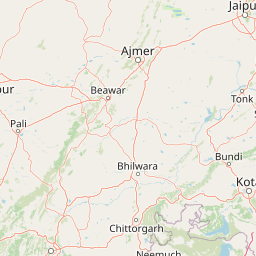
Mukundara Hills National Park occupies a mountainous landscape characterized by rugged hills, rocky outcrops, and valleys carved by seasonal rivers. The terrain rises from relatively gentle slopes in the lower reaches to more steeply undulating terrain in the hill interiors, with exposed granite and sandstone formations creating distinctive rock formations throughout the park. The landscape includes extensive grassland patches that occur in the valleys and plateaus between the forested hills, maintaining an open character despite the surrounding woodland. Four major rivers, including the Chambal River, flow through the park, cutting deep channels that create riparian corridors of distinctive character. These river valleys provide scenic variety and critical ecological functions, with the Chambal being particularly significant for its crocodilian populations. The overall landscape presents a mosaic of dry deciduous forest cover interspersed with open grasslands, creating the heterogeneous habitat structure that supports diverse wildlife communities.
Mukundara Hills National Park ecosystems, habitats, and plant life
The park exists within the Khathiar-Gir dry deciduous forest ecoregion, a biogeographic zone characterized by vegetation adapted to seasonal drought and moderate rainfall. The forest composition includes numerous tree species such as Acacia nilotica, azadirachta indica, dalbergia sissoo, and various ficus species, creating a layered canopy structure in the denser woodland areas. The grasslands represent a particularly important habitat component, maintaining openness that supports different wildlife species than the closed forest areas. These open grassy areas occur both in the valley bottoms and on flatter hilltops, providing forage habitat for herbivores and hunting terrain for coursing predators. The rivers flowing through the park create riparian zones with distinct vegetation, offering water and browse even during dry seasons when the surrounding forest becomes desiccated. This ecological diversity across a relatively compact landscape enables the park to support both forest-dwelling and open-country species within a single protected area.
Mukundara Hills National Park wildlife and species highlights
Mukundara Hills National Park supports a notable assemblage of wildlife species, with Bengal tigers representing the apex predator and primary conservation focus. Indian wolves and Indian leopards share the predator guild, each occupying different ecological niches within the heterogeneous landscape. The prey community includes chital, sambar deer, wild boar, and nilgai, providing a diverse prey base that supports multiple large carnivore species. Smaller carnivores include the sloth bear, which inhabits the forested areas and feeds on insects and fruit, while the chinkara represents a dry-country antelope adapted to the park's open habitats. The rivers support significant reptile populations, particularly the mugger crocodile and the critically endangered gharial, both of which rely on the Chambal River system. This combination of large mammals and aquatic reptiles makes the park important for conservation at multiple trophic levels, representing a functional ecosystem rather than merely a species list.
Mukundara Hills National Park conservation status and protection priorities
As a Tiger Reserve under India's Project Tiger program, Mukundara Hills National Park receives focused attention and resources for tiger conservation, which benefits the broader ecosystem through the protection of habitat and prey species. The park's inclusion of three former sanctuaries, particularly the National Chambal Sanctuary, provides additional conservation value by protecting critical river habitat for gharial and mugger populations. The dry deciduous forest ecoregion has experienced significant habitat loss and fragmentation outside protected areas, making the park's contiguous forest cover increasingly valuable for species requiring large home ranges. Conservation challenges include managing human-wildlife conflict along the park boundaries and maintaining connectivity with surrounding landscapes. The park represents an important node in the network of protected areas spanning central and western India, contributing to regional conservation of species that require large tracts of contiguous habitat.
Mukundara Hills National Park cultural meaning and human context
The park's landscape carries deep historical significance as the traditional hunting grounds of the Maharaja of Kota, a relationship that shaped both the land's character and its conservation trajectory. Unlike many Indian protected areas that faced early clearance for agriculture, these forests were maintained as royal hunting preserves, inadvertently preserving forest cover and wildlife populations through the colonial and post-independence periods. The name controversy surrounding the park's designation reflects the ongoing political dimensions of conservation in India, where naming decisions can become symbolic contests between different political traditions. Local communities surrounding the park maintain traditional relationships with the landscape, though the formal protected area status has altered access patterns and resource use possibilities.
Top sights and standout views in Mukundara Hills National Park
Mukundara Hills National Park stands out as Rajasthan's primary tiger conservation landscape, offering one of the best opportunities to observe Bengal tigers in the western Indian region. The park's diverse habitat mosaic of dry deciduous forest, grasslands, and river valleys creates excellent wildlife viewing opportunities across multiple terrain types. The presence of both gharial and mugger crocodiles in the Chambal River provides unique reptile viewing possibilities that few other Indian parks combine with tiger viewing. The mountainous terrain offers scenic beauty distinct from the more typical flat Protected Areas of Rajasthan, with panoramic views from hilltop points like Garadiya Mahadev providing memorable visitor experiences. The park represents an important conservation anchor in a region where large predators face significant habitat pressure outside protected boundaries.
Best time to visit Mukundara Hills National Park
The optimal period for visiting Mukundara Hills National Park runs from October through March, when comfortable temperatures and minimal rainfall allow for productive wildlife viewing. The winter months offer the best chances for tiger sightings as animals become more active during cooler daylight hours and congregate near remaining water sources. The landscape during this period displays the full depth of seasonal change, with the dry deciduous forest at its most transparent following leaf fall. Monsoon season from July through September brings renewed vegetation and flow to the rivers, though some areas may be temporarily inaccessible and wildlife viewing becomes more challenging. Summer months from April through June present difficult conditions with extreme heat, though this period can offer rewarding wildlife encounters as animals must visit the remaining water points.