

Mori Atlas logo
National parkVansda National Park

Discover the mapped boundaries and dense deciduous forest ecosystems of this Western Ghats national park.

Vansda National Park: Protected Landscape Atlas and Geographic Context in Navsari District

Vansda National Park represents a significant protected natural area within Navsari District, offering a unique opportunity to explore the dense deciduous woodlands characteristic of the Western Ghats. This page details the park's geographic setting, focusing on its mapped boundaries, its role as a vital protected landscape along the Ambika River, and the distinct bamboo forest ecosystems that define its terrain. Understand how this national park contributes to conservation within this biodiversity hotspot, providing a factual atlas-style exploration for those interested in regional geography and protected land features.

Deciduous ForestWestern GhatsWildlife ConservationBirdwatchingBamboo ForestGujarat

Vansda National Park

National park

Park overview

Structured park overview, official facts, and landscape profile for Vansda National Park

Vansda National Park park facts, protected area profile, and essential visitor context
Review the core facts for Vansda National Park, including designation, size, terrain, visitor scale, habitats, and operating context in one park-focused overview.

About Vansda National Park

Vansda National Park represents one of Gujarat's most significant protected forest areas, situated in the southern part of the state within the Western Ghats biodiversity hotspot. The park's location in the Sahyadri range places it within a mountainous landscape that receives substantial monsoon rainfall, supporting lush vegetation that contrasts sharply with the semi-arid terrain typical of much of Gujarat. The park's establishment in 1979 formalized protections for an area that had already benefited from forest conservation measures since 1952, resulting in mature forest cover with substantial bamboo groves known locally as Katas. The Ambika River flows through the park, providing critical water resources and supporting riparian ecosystems. The surrounding Vansda tehsil is culturally significant as a region where adivasi communities maintain traditional ways of life, and the town of Vansda serves as an economic hub for the surrounding tribal populations. Access to the park is facilitated by both road infrastructure, including the Vansda-Waghai state highway passing through the protected area, and the historic narrow gauge railway connecting Waghai to Billimora.

Quick facts and research context for Vansda National Park

Vansda National Park occupies roughly 24 square kilometers in the Vansda tehsil of Navsari District in Gujarat state, India. The park was formally established in 1979 and is managed by the Forest Department of Gujarat. It sits within the Western Ghats system, specifically the Sahyadri range, and is traversed by the Ambika River. The forest is classified as deciduous with prominent bamboo groves. Access is available via the Vansda-Waghai state highway and a narrow gauge railway line connecting Waghai to Billimora. The park is part of the larger Dangs' Forest complex, which represents one of the most densely forested regions in Gujarat.

Park context

Deeper park guide and search-rich context for Vansda National Park

Vansda National Park history, landscape, wildlife, and travel context
Explore Vansda National Park through its history, landscape character, ecosystems, wildlife, conservation priorities, cultural context, and seasonal travel timing in a structured park guide built for atlas discovery and search intent.

Why Vansda National Park stands out

Vansda National Park is best known for its well-preserved deciduous forest ecosystem within the Western Ghats, characterized by dense bamboo groves and the protection of forest cover dating back over seven decades. The park supports remarkable biodiversity, including a confirmed population of dholes rediscovered in 2020 after 50 years, as well as the elusive rusty-spotted cat first recorded in 1992. Its position along the Ambika River and within the Sahyadri range provides habitat for over 155 bird species, making it significant for avifauna. The park also features a botanical garden, the Gira Waterfalls, and serves as an ecotourism destination in southern Gujarat.

Vansda National Park history and protected-area timeline

Vansda National Park was officially established in 1979 as a protected national park under Indian conservation law. However, the forest area it encompasses had already received significant protection measures beginning in 1952, when tree felling was prohibited in the region. This earlier conservation measure contributed substantially to the park's current character, allowing the forest to mature and develop the dense vegetation and bamboo groves for which it is now known. The park exists within the broader context of the Dangs' Forest, a historically important forest area in Gujarat. Management responsibility rests with the Forest Department of Gujarat. In recent decades, the park has gained attention for ecological discoveries, including the 1992 sighting of a rusty-spotted cat and the 2020 camera trap confirmation of dholes in the park, representing the first confirmed presence of this species in Gujarat after a 50-year absence.

Vansda National Park landscape and geographic character

The terrain of Vansda National Park is characterized by the gently rolling hills and forested valleys of the Sahyadri range in the Western Ghats. The landscape is dominated by deciduous forest cover, with the park's position along the banks of the Ambika River adding aquatic and riparian dimensions to the terrestrial environment. The area features valleys and hill slopes that channel monsoon waters into the river system, creating a landscape of moderate relief compared to the more dramatic peaks found elsewhere in the Western Ghats. The dense forest includes numerous bamboo stands, creating a distinctive visual and ecological character. The park's elevation and position within the Western Ghats creates a humid microclimate that supports more luxuriant vegetation than the surrounding semi-arid Gujarat plains.

Vansda National Park ecosystems, habitats, and plant life

Vansda National Park lies within the Western Ghats, one of India's eight biodiversity hotspots and a region of exceptional plant and animal diversity. The park's deciduous forest ecosystem supports an impressive floristic inventory, with 443 species of flowering plants documented within its boundaries. The vegetation includes teak as a prominent species, along with numerous other trees such as sadad, khakhro, timru, bamboo, mahudo, behada, umaro, kusum, sisam, and shimlo. The presence of the Ambika River adds riparian characteristics to the forest, and the riverbanks support a variety of colourful orchids. The forest structure reflects the park's protection history, with the prohibition of tree felling since 1952 allowing for the development of mature forest stands and the characteristic bamboo groves known locally as Katas.

Vansda National Park wildlife and species highlights

The mammalian fauna of Vansda National Park includes several species of conservation significance. Large predators include the Indian leopard, while the dhole, a social canid, was confirmed present in the park through camera trap recordings in 2020, marking a significant ecological record for Gujarat after a 50-year absence. Smaller carnivores include the common palm civet, small Indian civet, striped hyena, and jungle cat. Primate species represented include the rhesus macaque and Hanuman langur. The park supports ungulates including the four-horned antelope, wild boar, spotted deer, and barking deer. Notable smaller mammals include the Indian giant squirrel, flying squirrel, pangolin, and Indian porcupine. The park also reports the presence of pythons and venomous snakes including Russell's viper, cobras, and kraits. Bird diversity is exceptional, with approximately 155 species recorded, including the common grey hornbill, grey-fronted green pigeon, Malabar trogon, jungle babbler, forest spotted owlet, and shama. Invertebrates include about 121 spider species, with the giant wood spider being notable as the largest spider species found in Gujarat.

Vansda National Park conservation status and protection priorities

Vansda National Park represents an important conservation unit within Gujarat, protecting what remains of the state's forest cover in the southern region. The park's inclusion within the Western Ghats, a recognized global biodiversity hotspot, underscores its significance beyond state boundaries. The long-standing protection against tree felling since 1952 demonstrates a historical commitment to forest conservation that contributed to the area's current ecological integrity. The discovery of dholes in 2020, after five decades without confirmed records, highlights both the park's ecological value and the ongoing potential for significant biological discoveries. While the Bengal tiger is reportedly extinct in Gujarat, the park's location near the borders with Maharashtra and Madhya Pradesh places it within a broader landscape that supports tiger populations, and the area is considered potential tiger habitat. The park also supports conservation education through facilities including a botanical garden, conservation center, and deer breeding center.

Vansda National Park cultural meaning and human context

The region surrounding Vansda National Park is home to significant adivasi populations who maintain traditional connections to the forest landscape. The town of Vansda itself serves as an important trading center for these tribal communities, representing a cultural hub where traditional and market economies intersect. The park's accessibility and the presence of local tribes contribute to its ecotourism character, with tribal communities representing a cultural dimension of visits. The narrow gauge railway connecting Waghai to Billimora passes through the region, providing a historic transportation link that reflects the area's development history. The combination of ecological significance and cultural heritage creates a context where conservation and community interests intersect.

Top sights and standout views in Vansda National Park

Vansda National Park offers visitors a relatively accessible natural area within Gujarat's limited forest estate, providing an opportunity to experience Western Ghats ecosystems in this westernmost extent of the mountain range. The bamboo-dominated deciduous forest, protected for over seven decades, represents mature forest that has largely disappeared from surrounding areas. Wildlife viewing opportunities include the chance to encounter diverse mammals and over 150 bird species, with recent dhole sightings adding to the park's appeal. The Ambika River provides a scenic focus, with the riverbanks supporting orchid populations. Facilities including a botanical garden, Gira Waterfalls, and the Kilad campsite support visitor experiences. The proximity to the tribal communities of the Dangs region adds a cultural dimension uncommon in most Indian national parks.

Best time to visit Vansda National Park

Vansda National Park is best visited during the post-monsoon and winter seasons, from October through March, when weather conditions are comfortable and wildlife visibility improves as vegetation thins. The monsoon season from June to September brings heavy rainfall to the Western Ghats, making some areas less accessible and wildlife less visible. The summer months from April to June can be quite hot, though the forest canopy provides some relief. Visitors seeking to observe wildlife should note that the park's recent dhole sightings occurred in February and May 2020, suggesting that the dry season may offer better opportunities for predator activity. The park's position in the Western Ghats means it receives more rainfall than surrounding lowland Gujarat, and visitors should accordingly plan for humid conditions during the monsoon period.
Park location guide

Geography guide, regional context, and park location map for Vansda National Park

Vansda National Park park geography, regions, and map view in India
Understand where Vansda National Park sits in India through a broader geographic reading of the surrounding landscape, nearby location context, and its mapped position within the national park landscape.

How Vansda National Park fits into India

India is a South Asian country bordered by the Indian Ocean, Arabian Sea, and Bay of Bengal. It shares land borders with Pakistan, China, Nepal, Bhutan, Bangladesh, and Myanmar. The country has a population of over 1.4 billion people and operates as a federal parliamentary republic with its capital in New Delhi.

Wider geography shaping Vansda National Park in India

India occupies the Indian subcontinent in South Asia, bordered by the Arabian Sea to the southwest, the Bay of Bengal to the southeast, and the Indian Ocean to the south. It shares land borders with Pakistan to the west, China, Nepal, and Bhutan to the north, and Bangladesh and Myanmar to the east. The territory also includes the Andaman and Nicobar Islands in the Indian Ocean.

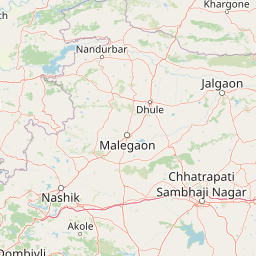
Map view of Vansda National Park

Use this park location map to pinpoint Vansda National Park in India, understand its exact geographic position, and read its mapped placement within the surrounding landscape more clearly.

Pigeon | © OpenStreetMap contributors

Location context for Vansda National Park

GujaratNavsari District
Park atlas

Map the regional protected areas, tracing conservation landscapes across Gujarat and the Western Ghats.

Explore Nearby National Parks and Protected Areas Surrounding Vansda National Park
Continue your atlas exploration beyond Vansda National Park by browsing other national parks and protected areas situated within its surrounding regional geography. Compare their diverse landscapes, conservation priorities, and environmental contexts to understand the broader network of protected lands across Gujarat, India.
National parkMaharashtra

Sanjay Gandhi National Park: Protected Forest Landscape and Ancient Buddhist Archaeology

Explore the mapped terrain and natural geography within Maharashtra.

Sanjay Gandhi National Park offers a unique blend of natural and historical discovery. This national park preserves vital tropical forest ecosystems characteristic of the Western Ghats region, providing a crucial urban wilderness habitat. Its most prominent feature is the Kanheri Caves, an extensive network of ancient rock-cut Buddhist structures showcasing over 2,400 years of continuous religious and cultural history. The park's protected boundaries encompass diverse terrain, supporting leopard populations and a rich variety of bird and insect life, all within the metropolitan limits of Mumbai, making it a significant site for geographic and conservation exploration.

Area
87 km²
Established
1996
IUCN
II
National parkBhavnagar District

Blackbuck National Park: Gujarat's Grassland Protected Landscape and Wildlife Atlas

Mapped semi-arid terrain and endangered species habitat.

Blackbuck National Park in Bhavnagar District, India, presents a unique focus on semi-arid grassland ecosystems and their protection. This national park showcases a flat, expansive landscape that borders coastal tidal zones, offering a distinct geographic context for its rich biodiversity. As a critical habitat for the blackbuck antelope and the endangered lesser florican, its protected area status is paramount. Exploring this park through its mapped boundaries and regional geography reveals its importance within India's network of conservation landscapes.

Area
34.08 km²
Established
1976
IUCN
II
Relief
Lowland
National parkRajasthan

Mukundara Hills National Park: Rajasthan's Protected Landscape for Tigers and Diverse Habitats

Explore its dry deciduous forests, rocky hills, and riverine ecosystems.

Mukundara Hills National Park is a significant national park and tiger conservation landscape situated in eastern Rajasthan, India. This protected area features a varied terrain encompassing rocky hills, dry deciduous forests, and crucial grassland patches, all intersected by major rivers like the Chambal. Its ecological importance lies in providing vital habitat for Bengal tigers and a mosaic of landscapes that support a wide array of wildlife. Understanding its mapped boundaries and geographic context reveals its critical role in regional conservation efforts and provides a rich atlas-level view of protected lands in western India.

Area
759.99 km²
Established
2004
IUCN
II
National parkTelangana

Mrugavani National Park: Telangana's Protected Area within the Deccan Plateau's Natural Landscape

Explore undulating terrain and tropical dry forest ecosystems.

Mrugavani National Park represents a significant protected landscape within Telangana, India, characterized by its characteristic Deccan Plateau geography. Covering 1,211 acres, this national park features a terrain of rocky outcrops and undulating topography supporting a tropical dry deciduous forest ecosystem. It serves as a critical refuge for native flora and fauna, including a notable population of spotted deer, and offers a valuable case study in regional conservation and mapped protected areas near urban centers.

Area
4.9 km²
Established
1994
IUCN
II
Relief
Upland
National parkRajasthan

Desert National Park: A Sprawling National Park in Rajasthan's Thar Desert

Explore unique desert geography, mapped terrain, and fossil discoveries.

Desert National Park offers an expansive atlas view of the Thar Desert's unique aeolian sand deposits and arid terrain. Covering over 3,100 square kilometers across Rajasthan's Jaisalmer and Barmer districts, this national park is a critical landscape for desert conservation. Its features include iconic sand dunes, rocky formations, and ancient fossil beds, providing a profound geographic context for understanding desert ecosystems and prehistoric life.

Area
3,162 km²
Established
1981
IUCN
II
National parkRajasthan

Ranthambore National Park: Protected Area Atlas and Dry Deciduous Landscape Exploration

Discover its unique terrain and mapped boundaries.

Dive into the protected landscape of Ranthambore National Park, a nationally significant protected area in Rajasthan, India. This page offers detailed insights into its dry deciduous forest ecosystem, characterized by rocky hills, open grasslands, and vital lakes. Explore the park's mapped boundaries and understand its position within the regional geography, providing an atlas-centric view of its terrain and conservation importance.

Area
1,334 km²
Established
1980
IUCN
II
National parkMadhya Pradesh

Kuno National Park: Madhya Pradesh National Park Atlas and Protected Landscape

Explore its diverse dry deciduous forests and savannah terrain.

Kuno National Park is a protected area in Madhya Pradesh, India, renowned for its dry deciduous forest and savannah grassland ecosystems. This national park, bisected by the Kuno River, offers a significant landscape for understanding regional geography and conservation efforts within India. Its varied terrain provides essential habitat and contributes to the broader atlas of protected lands, making it a key destination for geographic discovery.

Area
748.76 km²
Established
2018
IUCN
II
National parkIndia

Keoladeo National Park: India's Renowned Wetland Bird Sanctuary and Protected Landscape

Explore its mapped terrain and critical avian habitat near Bharatpur.

Keoladeo National Park, a designated national park in India, represents a critical hub for wetland conservation and avian biodiversity. The park's meticulously managed wetland system, a mosaic of shallow waters and grasslands, provides essential habitat for thousands of resident and migratory birds from across Eurasia. Situated near Bharatpur, this protected landscape offers a unique opportunity to study the intersection of arid and fertile plains geography and serves as a vital stopover point on major bird flyways, underscoring its importance in regional conservation efforts.

Area
28.7 km²
Established
1982
IUCN
II

Common questions about visiting, size, designation, and location context for Vansda National Park

Vansda National Park FAQs for park facts, access, geography, and protected area context
Find quick answers about Vansda National Park, including protected-area facts, park geography, trail and visitor context, and how the park fits into its surrounding country and regional landscape.
MoriAtlas Explorer

Continue Your Protected Areas Search Across the Global Atlas

Deepen your exploration by continuing the structured search for national parks and protected areas worldwide. Utilize the comprehensive filtering capabilities to compare different conservation landscapes and refine your understanding of global park geography. Discover more about the distribution and characteristics of protected natural areas.

Global natural geography