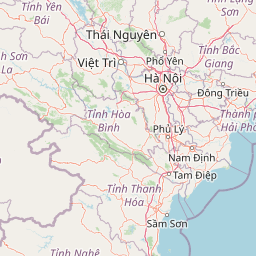
Why Xuân Sơn National Park stands out
Xuân Sơn National Park is notable for its location at the southeastern edge of the Hoang Lien Mountains, one of Vietnam's most significant mountain ranges. The park protects a transitional zone between highland mountain forest and lower-elevation terrain, encompassing steep ridgelines, forested slopes, and valley systems characteristic of this mountainous border region. This positioning at the edge of a major mountain range gives the park particular geographic significance within Vietnam's northern highlands.
Xuân Sơn National Park history and protected-area timeline
Xuân Sơn National Park was established on August 9, 1986, initially designated as a nature reserve before being elevated to national park status as part of Vietnam's developing protected area network. The establishment reflected Vietnam's growing emphasis on nature conservation during the 1980s and 1990s, a period when the country began systematically designating national parks and nature reserves to protect representative ecosystems across different biogeographic regions. The park's location within the Hoang Lien Mountains placed it within a region of significant ecological importance, prompting its inclusion in Vietnam's national park system as a protected area for mountain forest ecosystems in the northern highlands.
Xuân Sơn National Park landscape and geographic character
The landscape of Xuân Sơn National Park is defined by its position at the southeastern edge of the Hoang Lien Mountains, a major mountain range extending along the Sino-Vietnamese border. The terrain is characterized by steep, forested slopes rising along ridgelines and descending into narrow valleys and stream corridors. This mountainous topography creates a landscape of considerable topographic variation, with the elevation changes supporting diverse forest types and habitat zones. The park's position at the range's southeastern extent means the terrain transitions from higher mountain terrain to lower-elevation terrain as it extends toward the Red River and Black River lowlands. The combination of steep slopes, forest cover, and the mountainous setting gives the park its distinctive character as a highland protected area in northern Vietnam.
Xuân Sơn National Park ecosystems, habitats, and plant life
The nature of Xuân Sơn National Park centers on its mountain forest ecosystems positioned at the edge of the Hoang Lien Mountains. The protected area encompasses forest communities adapted to the subtropical highland environment of northern Vietnam, with vegetation patterns shaped by elevation, slope aspect, and moisture gradients. The park's position at the southeastern edge of a major mountain range creates ecological transitional characteristics, as species from higher-elevation mountain forests mix with those from lower-elevation forest types. These mountain forest ecosystems support the park's biodiversity value and form the ecological foundation for its protected area status.
Xuân Sơn National Park conservation status and protection priorities
Xuân Sơn National Park holds IUCN category II protection status, classifying it as a national park within the international protected area framework. This designation recognizes the park's significance as a protected mountain forest area in northern Vietnam, with the IUCN category denoting areas protected primarily for ecosystem conservation and recreation. The park's inclusion in Vietnam's national park system reflects broader conservation objectives to preserve representative examples of the country's major ecosystem types, including the mountain forest environments found in the Hoang Lien Mountains region. The protected area contributes to Vietnam's network of national parks that together aim to maintain biodiversity and natural landscape values across different regions of the country.
Top sights and standout views in Xuân Sơn National Park
Xuân Sơn National Park protects a significant mountain forest landscape at the southeastern edge of Vietnam's Hoang Lien Mountains, an important highland range in the northern part of the country. The park's 150 square kilometers of protected terrain include steep forested slopes and valley systems that form part of the broader Red River and Black River highland watershed. Its location 45 kilometers southwest of the confluence of these two major rivers places it strategically within a region of significant geographic and ecological importance. The park's establishment in 1986 reflects Vietnam's commitment to preserving its mountain forest ecosystems and natural heritage.
Best time to visit Xuân Sơn National Park
The best time to visit Xuân Sơn National Park aligns with the typical visiting season for Vietnam's northern highland regions, generally from October to December and from March to May. These periods offer more moderate temperatures and varying landscape conditions that affect the forest environment and visitor experience. The park's mountainous setting means that conditions can differ notably from lowland areas, with cooler temperatures in the higher elevations particularly during the winter months from December to February.