

Mori Atlas logo
National parkDunggir National Park

Discover the mapped boundaries and biodiversity of this unique national park.

Dunggir National Park: Subtropical Rainforest Protected Landscape in New South Wales

Dunggir National Park represents a vital protected landscape within New South Wales, Australia, celebrated for its exceptional subtropical rainforest ecosystems and concentrated biodiversity. This national park safeguards three distinct rainforest types across 25 square kilometres, providing critical habitat for numerous species, including twelve listed as endangered. Its designation as a national park underscores its ecological significance and offers a detailed map view into the natural and cultural heritage of the Gumbaynggirr people, whose name for the park, meaning koala, highlights its deep connection to the land.

subtropical rainforestNew South Wales national parksendangered species habitatGumbaynggirr countrythree rainforest typesnorthern NSW wilderness

Dunggir National Park

National park

Park overview

Structured park overview, official facts, and landscape profile for Dunggir National Park

Dunggir National Park park facts, protected area profile, and essential visitor context
Review the core facts for Dunggir National Park, including designation, size, terrain, visitor scale, habitats, and operating context in one park-focused overview.

About Dunggir National Park

Dunggir National Park represents a significant conservation achievement in northern New South Wales, protecting a pocket of subtropical wilderness that might otherwise have been lost to development or land-use change. The park's establishment in 1997 reflected growing recognition of the ecological and cultural value of the Nambucca Valley's remaining forested areas. Unlike many Australian national parks that protect arid or temperate landscapes, Dunggir preserves the humid, lush environments characteristic of the mid-north coast, where rainfall supports dense vegetation layers and complex ecological communities. The park's terrain features ridgelines and valleys that create diverse microhabitats, from moist rainforest gullies to more exposed ridgeline environments. This topographic variation contributes to the three rainforest types found within the park, each supporting different assemblages of plants and animals. The Gumbaynggirr people, whose traditional lands encompass this area, have long understood the ecological richness of these rainforest environments, and their language has preserved knowledge of the landscape through place names like Dunggir. The park provides habitat for species that have declined elsewhere due to clearing, fragmentation, and changed land management practices, making protection of this area crucial for regional biodiversity persistence.

Quick facts and research context for Dunggir National Park

Dunggir National Park occupies 25 square kilometres of protected land in northern New South Wales, established in 1997 and managed by the NSW National Parks and Wildlife Service. The park sits within the Gumbaynggirr traditional country, approximately 382 kilometres northeast of Sydney. Its name comes from the Gumbaynggirr word for koala. The protected area supports twelve endangered animal species, more than 400 indigenous plant species, and three rainforest types. The Kosekai Lookout serves as a primary visitor destination, offering panoramic views of the Nambucca Valley.

Park context

Deeper park guide and search-rich context for Dunggir National Park

Dunggir National Park history, landscape, wildlife, and travel context
Explore Dunggir National Park through its history, landscape character, ecosystems, wildlife, conservation priorities, cultural context, and seasonal travel timing in a structured park guide built for atlas discovery and search intent.

Why Dunggir National Park stands out

Dunggir National Park is best known for its exceptional subtropical rainforest protection and significant biodiversity concentration within a relatively compact area. The park preserves three distinct rainforest types, creating a complex ecological mosaic that supports numerous endangered species. Its Gumbaynggirr cultural heritage adds depth to its identity, with the name itself honouring the koala, an animal that remains symbolically and ecologically important to the region. The Kosekai Lookout provides one of the most accessible and rewarding viewing experiences in the northern NSW highlands, making the park a destination for both nature enthusiasts and those seeking connection with Aboriginal cultural heritage.

Dunggir National Park history and protected-area timeline

Dunggir National Park was formally established in 1997 as part of expansions to New South Wales' protected area network during the 1990s. This period saw increased attention to conserving the remaining pockets of subtropical rainforest along Australia's east coast, much of which had been cleared for agriculture, forestry, or settlement. The park's creation built upon earlier conservation efforts in the region and recognised the biological significance of the Nambucca Valley's remaining forested landscapes. Management responsibility rests with the NSW National Parks and Wildlife Service, which oversees protection of the park's natural values while providing opportunities for appropriate public enjoyment. The decision to use the Gumbaynggirr name Dunggir, meaning koala, as the park's official title reflected an effort to incorporate Aboriginal cultural heritage into the protected area's identity, acknowledging the long history of Indigenous connection to this landscape.

Dunggir National Park landscape and geographic character

Dunggir National Park encompasses a landscape of forested ridges and valleys characteristic of the northern New South Wales highlands. The terrain rises from the valley floors to create a mountainous backdrop visible from the Nambucca Valley below. Dense vegetation covers the slopes, with the subtropical rainforest creating a lush, layered environment where towering trees, climbing vines, ferns, and epiphytes combine to form a complex visual texture. The Kosekai Lookout provides an elevated vantage point from which visitors can appreciate the park's place within the broader landscape, with views extending across the Nambucca Valley to distant ridges. The rainforest environments range from wetter, more sheltered gullies to slightly more open forest types on ridgelines, creating visual and ecological variation across the park's 25 square kilometre extent.

Dunggir National Park ecosystems, habitats, and plant life

The nature of Dunggir National Park is defined by its subtropical rainforest ecosystems, which represent some of the most biodiverse habitats in Australia. Three distinct rainforest types occur within the park, each supporting different plant communities adapted to varying moisture levels, soil conditions, and positions on the slope. These rainforests contain over 400 indigenous plant species, ranging from towering emergent trees to groundcover ferns and epiphytic plants growing on tree branches. The humid, equable climate of the northern NSW coast supports this rainforest persistence, with sufficient rainfall throughout the year to maintain moisture-dependent vegetation. The complexity of the rainforest structure creates numerous microhabitats, supporting the park's remarkable biodiversity despite its relatively modest area.

Dunggir National Park wildlife and species highlights

Dunggir National Park provides crucial habitat for twelve endangered animal species, making it a significant site for wildlife conservation in northern New South Wales. The rainforests and surrounding forested areas support populations of species that have suffered declines across much of their former ranges. The park's name, derived from the Gumbaynggirr word for koala, acknowledges the presence of this iconic marsupial, though the park protects many other species as well. The diverse habitat structure, from canopy layers to ground level, supports various ecological niches for different animal groups. The protection of these endangered species within a dedicated national park ensures that populations have access to secure habitat where they can persist away from threats such as habitat loss, introduced predators, and disease.

Dunggir National Park conservation status and protection priorities

Dunggir National Park plays an important conservation role by protecting a concentration of biodiversity within a relatively small area of subtropical rainforest. The twelve endangered animal species and over 400 indigenous plant species represent a significant conservation asset, particularly given the extent of clearing that has occurred in the Nambucca Valley region and elsewhere along the NSW coast. The three rainforest types protected within the park represent different ecological communities that each support distinct assemblages of species. Protection through national park reservation provides these species with secure habitat where ecosystem processes can continue with minimal human disturbance, supporting long-term population persistence and ecological integrity.

Dunggir National Park cultural meaning and human context

Dunggir National Park sits within the traditional country of the Gumbaynggirr people, an Aboriginal community whose connection to this landscape spans thousands of years. The use of the Gumbaynggirr name Dunggir, meaning koala, as the park's title acknowledges this Indigenous heritage and the cultural significance of the area to its traditional custodians. The Gumbaynggirr language has preserved knowledge of the local environment, including species like the koala that feature in traditional naming. While the national park designation is a relatively recent form of protection, it builds upon and recognises the much longer history of Aboriginal people caring for Country in this region. Incorporating the Gumbaynggirr name into the park's identity helps ensure that Indigenous cultural heritage remains visible within the protected area framework.

Top sights and standout views in Dunggir National Park

Dunggir National Park's Kosekai Lookout delivers one of the most accessible and rewarding visitor experiences in the Nambucca Valley region, with panoramic views across forested ridgelines and the valley below. The park's three rainforest types and twelve endangered species represent remarkable biodiversity concentrated within 25 square kilometres. The Gumbaynggirr cultural heritage, expressed through the park's name meaning koala, provides a meaningful connection to Indigenous history and values. Subtropical rainforest environments, relatively rare in Australia's protected area network, offer distinctive ecological character and visual appeal. The compact size of the park makes it manageable for visitors seeking to experience multiple environments within a single visit.

Best time to visit Dunggir National Park

Dunggir National Park can be visited throughout the year, with each season offering different environmental conditions. The subtropical climate means rainfall occurs across all months, though the summer period typically brings higher rainfall and more humid conditions. Winter months tend to be cooler and drier, potentially offering more comfortable conditions for walking and sightseeing. The rainforest maintains its lush appearance year-round due to consistent moisture, though visitor experiences may vary with seasonal weather patterns. Those interested in wildlife viewing might consider how different seasons affect animal activity levels and visibility.
Park location guide

Geography guide, regional context, and park location map for Dunggir National Park

Dunggir National Park park geography, regions, and map view in Australia
Understand where Dunggir National Park sits in Australia through a broader geographic reading of the surrounding landscape, nearby location context, and its mapped position within the national park landscape.

How Dunggir National Park fits into Australia

Australia is a constitutional monarchy and federal parliamentary democracy comprising six states and ten territories. With a population of nearly 28 million, it is one of the world's most urbanised countries, with most people concentrated on the eastern seaboard. The country has a high Human Development Index and is known for its cultural diversity, ancient Aboriginal heritage, and unique wildlife.

Wider geography shaping Dunggir National Park in Australia

Australia occupies the entire Australian continent, the island of Tasmania, and numerous smaller islands. It is the world's flattest and driest inhabited continent, featuring vast deserts in the interior (the Outback), tropical rainforests along the eastern coast, and a coastline bordering the Indian and Pacific Oceans.

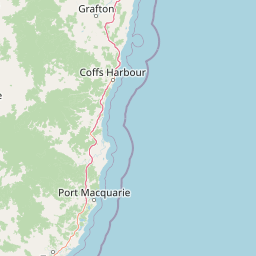
Map view of Dunggir National Park

Use this park location map to pinpoint Dunggir National Park in Australia, understand its exact geographic position, and read its mapped placement within the surrounding landscape more clearly.

Pigeon | © OpenStreetMap contributors

Location context for Dunggir National Park

New South Wales
Park atlas

Compare protected landscapes and trace regional conservation efforts across the Nambucca Valley's geography.

Explore Other National Parks and Protected Areas Surrounding Dunggir National Park, New South Wales
Discover national parks and protected areas located near Dunggir National Park, tracing their mapped geography and unique conservation landscapes across northern New South Wales. Compare these additional protected areas to understand regional biodiversity, distinct rainforest types, and the broader context of conservation efforts beyond a single park.
National parkNew South Wales

New England National Park: Escarpment Landscape and Protected Area Discovery in New South Wales

Explore dramatic cliffs, ancient rainforests, and diverse ecosystems.

New England National Park represents a critical protected landscape on the eastern edge of New South Wales' Northern Tablelands. This area is characterized by its spectacular escarpment country, featuring impressive cliffs, rugged ridges, and deep valleys that cradle some of Australia's most botanically rich environments. As a designated national park, it preserves ancient ecosystems and offers unique opportunities for atlas-based geographic discovery of its mapped terrain and wilderness character.

Area
673 km²
Established
1937
IUCN
Ib
National parkNew South Wales

Bellinger River National Park: Protected River Landscape and Forested Terrain in New South Wales

Explore mapped boundaries and geographic context.

Bellinger River National Park is a protected national park situated in New South Wales, Australia, renowned for its untouched upper river catchment and dense old-growth forests. The park offers valuable insights into the region's natural geography, featuring steep valleys, numerous waterfalls, and a significant river corridor. This page provides detailed information on its protected landscape, mapped boundaries, and geographic setting, essential for atlas-style discovery and understanding its ecological significance.

Area
28.3 km²
Established
1997
IUCN
II
National parkNew South Wales

Junuy Juluum National Park: New South Wales Protected Forest Remnant Exploration

Discover rare warm temperate rainforest and unique Australian birdlife.

Junuy Juluum National Park offers a vital glimpse into a rare warm temperate rainforest habitat within New South Wales. Situated on Campion Mountain, this protected area showcases a distinct forest ecosystem, contrasting sharply with the surrounding eucalypt woodlands and cleared agricultural lands. Its mapped geography and status as a protected forest remnant make it significant for understanding regional conservation landscapes and unique Australian birdlife.

Area
9 km²
Established
1999
IUCN
II
National parkNew South Wales

Arakoon National Park: Explore New South Wales' Coastal Protected Landscape and Heritage

Mapped boundaries and natural terrain of a key Australian national park.

Arakoon National Park represents a vital protected area in New South Wales, Australia, characterized by its dramatic coastal geography. This park offers an in-depth look at its mapped terrain, including headlands, beaches, and forests, providing essential context for understanding Australia's protected lands. Its importance extends to its dual identity as a significant Aboriginal cultural landscape and a site of colonial historical interest, making it a multifaceted destination for geographic and protected-area discovery.

Area
115 km²
Established
2013
IUCN
II
National parkNew South Wales

Kumbatine National Park: Protected Landscape and Geographic Context in New South Wales

Explore its mapped terrain and subtropical forest ecosystems.

Kumbatine National Park represents a vital tract of protected subtropical forest and eucalypt bushland within New South Wales' Northern Rivers region. This detail page provides an atlas perspective on the park's geography, featuring the prominent Mount Kippara and the watershed of Glencoe Creek. Understand its unique landscape context and its significance as a preserved natural area in a region marked by extensive land clearing, offering rich details for geographic exploration.

Area
130 km²
Established
1999
IUCN
II
Relief
Mixed relief
National parkNew South Wales

Willi Willi National Park: A Protected Mountain Landscape in New South Wales

Explore ancient rainforests and dramatic terrain.

Willi Willi National Park represents a critical protected wilderness area on Australia's North Coast of New South Wales. Its landscape is defined by steep ridges, prominent peaks such as Mount Banda Banda, and ancient temperate rainforests, forming part of the internationally significant Gondwana Rainforests World Heritage Site. This park offers rich geographic context for understanding the diverse terrain and protected natural heritage of the region, making it a key destination for atlas-based discovery.

Area
298.7 km²
Established
1996
IUCN
Ib
Relief
Mountain
National parkNew South Wales

Ulidarra National Park: New South Wales Strict Nature Reserve and Wildlife Sanctuary

Explore its elevation range, mapped forest ecosystems, and protected habitats.

Ulidarra National Park represents a small yet ecologically vital protected area within New South Wales, Australia. Classified as a strict nature reserve, it preserves significant old-growth eucalyptus forests and intact rainforests across a notable elevation gradient. The park is recognized for providing critical habitat for species like koalas and various native birds, making it a key site for understanding regional wildlife diversity and protected landscape conservation through detailed mapping and geographic context.

Area
6.8 km²
Established
1999
IUCN
Ia
National parkNorthern Tablelands

Chaelundi National Park: Landmark Old-Growth Forest Protection in the Northern Tablelands

Mapped protected area landscape and regional geography.

Chaelundi National Park stands as a vital component of protected natural landscapes on Australia's Northern Tablelands. This national park is celebrated for its extensive old-growth forest, a direct result of significant environmental legal battles that highlighted its ecological importance. With declared wilderness areas covering thousands of hectares, the park offers a substantial glimpse into the region's conservation values and the complex interplay between landscape, law, and protected land status, providing rich context for geographic exploration.

Area
191.74 km²
Established
1997
IUCN
II

Common questions about visiting, size, designation, and location context for Dunggir National Park

Dunggir National Park FAQs for park facts, access, geography, and protected area context
Find quick answers about Dunggir National Park, including protected-area facts, park geography, trail and visitor context, and how the park fits into its surrounding country and regional landscape.
MoriAtlas Explorer

Continue Your Protected Areas Search Across the Global Atlas

Deepen your exploration by continuing the structured search for national parks and protected areas worldwide. Utilize the comprehensive filtering capabilities to compare different conservation landscapes and refine your understanding of global park geography. Discover more about the distribution and characteristics of protected natural areas.

Global natural geography