Why Murchison Falls National Park stands out
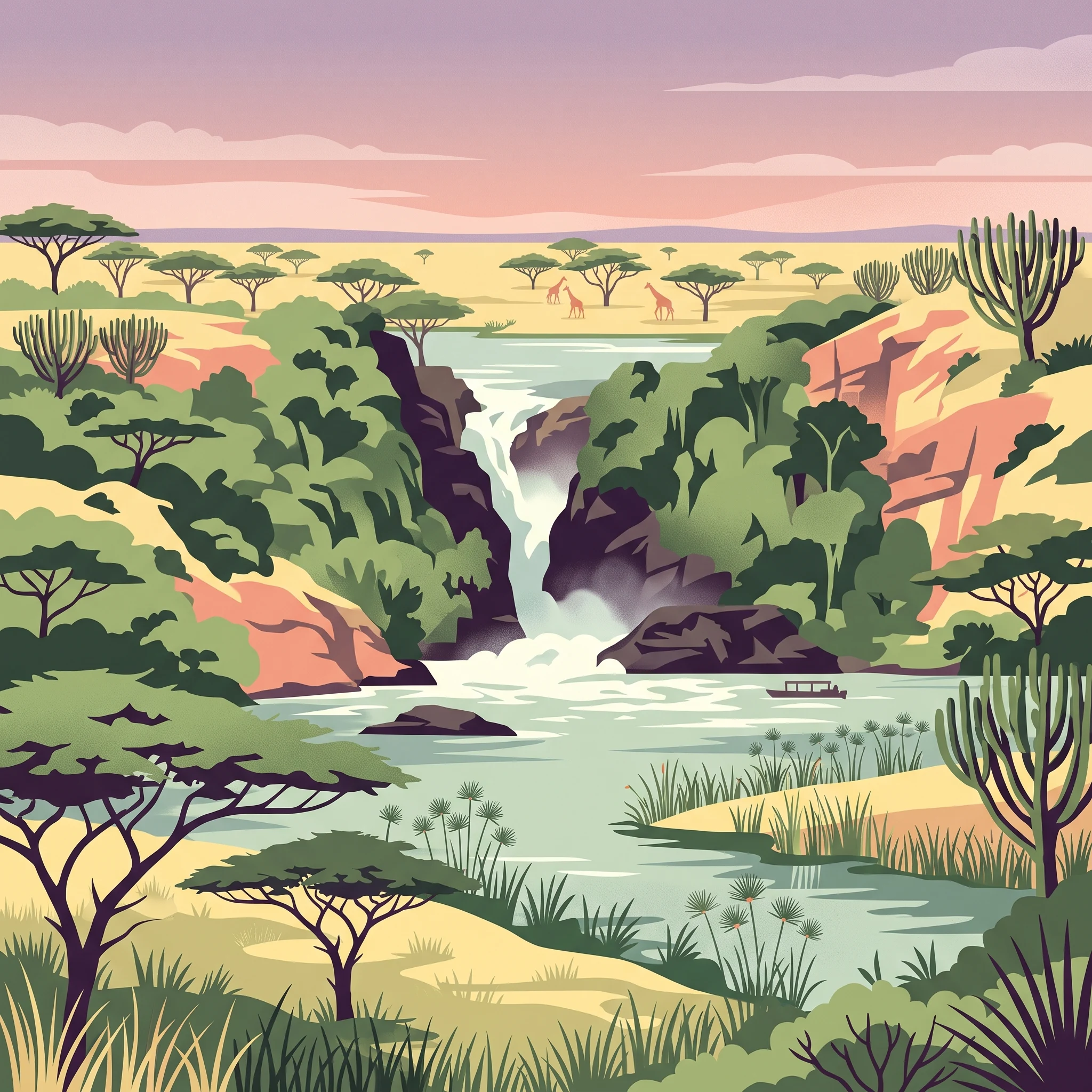
Murchison Falls is best known for the spectacular cascade where the Nile squeezes through a narrow rock gorge and plunges into a misty gorge below, creating one of the most powerful waterfall experiences in East Africa. The park is also renowned for its substantial populations of Rothschild's giraffe, which have been actively managed and translocated within the park, and for hosting Uganda's largest Nile crocodile population. The adjacent Budongo Forest Reserve supports chimpanzee communities, while the wetland ecosystems attract over 450 bird species including the iconic shoebill stork. The combination of dramatic river scenery, large mammal populations, and exceptional birdlife makes this park a flagship conservation area for Uganda.
Murchison Falls National Park history and protected-area timeline
The area that now comprises Murchison Falls National Park was first visited by European explorers John Speke and James Grant in 1862 during their expedition to locate the source of the Nile. More extensive exploration followed in 1863-64 when Samuel and Florence Baker traversed the region, with Florence Baker naming the falls after Roderick Murchison, then president of the Royal Geographical Society. The region's history took a dramatic turn between 1907 and 1912 when the British administration evacuated approximately 13,000 square kilometers of territory due to sleeping sickness outbreaks spread by tsetse flies. This depopulation created a natural laboratory for wildlife recovery, and in 1910 the Bunyoro Game Reserve was established south of the Nile. The reserve expanded north of the river in 1928, incorporating what is now the Nwoya District area. When Uganda gained independence and established its National Parks Act in 1952, this protected area was formally designated as Murchison Falls National Park. The park experienced a brief name change during Idi Amin's Africanization campaign in 1972, becoming Kabalega National Park to honor the Bunyoro king Kabalega, before reverting to its original name.
Murchison Falls National Park landscape and geographic character
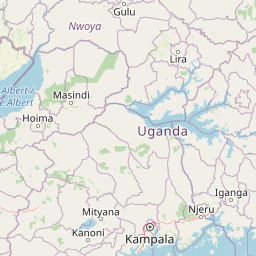
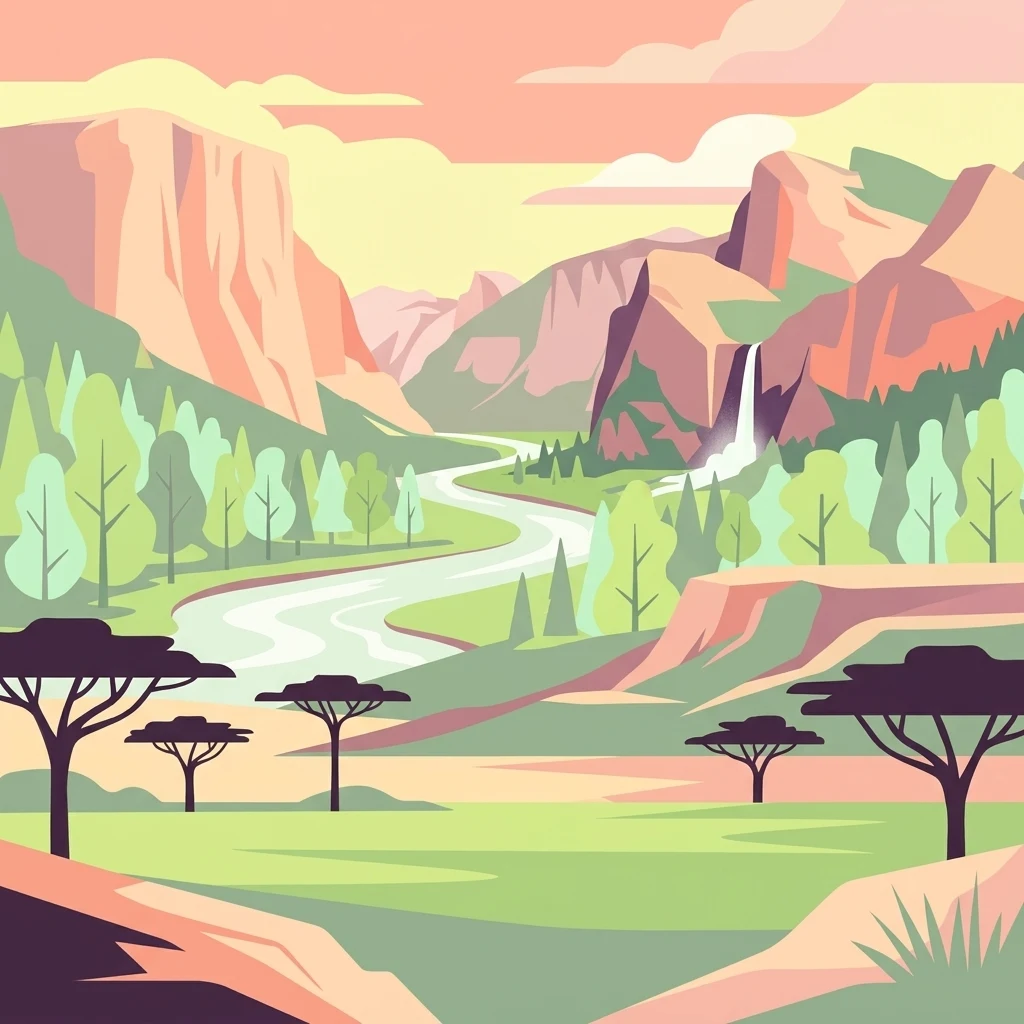
The landscape of Murchison Falls National Park is dominated by the Victoria Nile, which carved a dramatic course through the Ugandan plateau to create the park's namesake falls. The river enters the park from the east and flows westward for approximately 115 kilometers before reaching the falls, where it compresses into a narrow gorge and descends dramatically into the rift valley below. Beyond the falls, the river continues to Lake Albert, creating an extensive delta wetland system. The terrain away from the river corridors consists primarily of savanna grasslands and woodland, with scattered forest patches particularly in the northern sections. The landscape provides sweeping views of the Nile valley with its riparian vegetation contrasting against the more open savanna. Karuma Falls, located near the Masindi-Gulu Highway, represents another significant waterfall feature within the broader conservation area, though it sits at the interface between the park and the Karuma Wildlife Reserve.
Murchison Falls National Park ecosystems, habitats, and plant life
The ecological character of Murchison Falls National Park centers on its riparian and savanna ecosystems, which together support remarkable biodiversity. The park's wetlands, particularly the Murchison Falls-Albert Delta system, represent critically important habitat for waterfowl and migratory birds. The riparian forests along the Nile corridor provide crucial cover and corridor function for forest-dwelling species, while the surrounding savanna supports abundant large herbivore populations. The park's position in the Albertine Rift region contributes to its species richness, with the combination of aquatic, forest, and grassland habitats creating diverse ecological niches. The Budongo Forest Reserve, though technically separate from the park, functions ecologically as part of the broader landscape and contains significant chimpanzee populations that occasionally range into the park's northern sections. The park's designation as a Ramsar Wetland since 2006 acknowledges the international significance of its delta and floodplain ecosystems.
Murchison Falls National Park wildlife and species highlights
Murchison Falls National Park supports impressive wildlife populations across its diverse habitats. The park contains 76 documented mammal species, including significant populations of Rothschild's giraffe, which have been the focus of active conservation management including translocations to establish viable populations on both sides of the Nile. The park hosts Uganda's largest concentration of Nile crocodiles, with these large predators regularly observed along the riverbanks and in the pools below the falls. Chimpanzees are present in the broader conservation area, particularly in the Budongo Forest Reserve, and occasionally range into the park's forested sections. The park serves as an important Lion Conservation Unit, though populations have faced pressures with estimates suggesting relatively low numbers. The avian community is exceptionally diverse, with 450 documented bird species including the striking shoebill stork, dwarf kingfisher, goliath heron, white-thighed hornbill, and great blue turaco. Hippos and elephants are commonly observed along the Nile, while buffaloes and various antelope species populate the savanna areas.
Murchison Falls National Park conservation status and protection priorities
Murchison Falls National Park holds significant conservation importance both within Uganda and regionally. Its designation as a Ramsar Wetland since 2006 recognizes the international significance of the Murchison Falls-Albert Delta system, which provides critical habitat for waterbirds and supports ecological processes essential to the broader Nile system. The park's status as a Lion Conservation Unit since 2005 reflects its role in protecting one of Uganda's most important predator populations, though the small estimated population of around 250 individuals highlights the ongoing conservation challenges. The Rothschild's giraffe population has benefited from active management, including translocation programs to establish new populations and reduce pressure on existing groups. The park faces emerging challenges from regional development, including the East African Crude Oil Pipeline project which involves infrastructure development within and adjacent to the park boundaries, and the Karuma Power Station which represents Uganda's largest hydroelectric facility.
Murchison Falls National Park cultural meaning and human context
The landscape surrounding Murchison Falls holds deep historical significance for the Bunyoro people, whose traditional territory encompassed much of the park area before colonial interventions. The evacuation of roughly 13,000 square kilometers between 1907 and 1912 due to sleeping sickness fundamentally altered the human presence in the region, creating the depopulated landscape that facilitated wildlife recovery and subsequent protection. The park's 1972 renaming to Kabalega National Park reflected post-colonial efforts to recognize indigenous African leadership, honoring King Kabalega of Bunyoro who resisted colonial conquest in the late 19th century. The name subsequently reverted to Murchison Falls, reflecting the complex interplay between pre-colonial heritage and colonial-era naming that characterizes many African protected areas.
Best time to visit Murchison Falls National Park
The best time to visit Murchison Falls National Park is during the dry seasons, typically from December to February and June to August, when wildlife viewing is more accessible as animals congregate around water sources and vegetation is less dense. The wet seasons bring lusher scenery and excellent birdwatching as migratory species arrive, though some roads may become more difficult to navigate. The period immediately after rains can offer beautiful green landscapes and improved wildlife activity, though conditions can change from year to year. Boat trips to the base of Murchison Falls are available year-round, though water levels and visibility may vary seasonally.