Mori Atlas logo
National parkPodocarpus National Park

Explore the unique confluence of four major ecological systems and 100+ lagoons.

Podocarpus National Park: Ecuador's Biodiversity Hotspot and Mapped Protected Landscape

Podocarpus National Park represents a critical protected area in southeastern Ecuador, situated at the extraordinary meeting point of Andean, Amazonian, and Pacific ecological regions. This designated national park safeguards a remarkable zone of biodiversity, characterized by dramatic elevational gradients that transition from lower montane forests to high-altitude paramo and elfin forests. Users can discover its geographic scope, explore its varied mapped terrain, and understand its significance as a protected landscape through detailed atlas-style content.

Andean mountainsCloud forestsParamo ecosystemsBiodiversity hotspotEndemic speciesElfin forests

Podocarpus National Park

National park

Park overview

Structured park overview, official facts, and landscape profile for Podocarpus National Park

Podocarpus National Park park facts, protected area profile, and essential visitor context
Review the core facts for Podocarpus National Park, including designation, size, terrain, visitor scale, habitats, and operating context in one park-focused overview.

About Podocarpus National Park

Podocarpus National Park represents one of Ecuador's most significant protected areas, established in 1982 to preserve the extraordinary biodiversity found at the intersection of the Andes and Amazon. The park's territory extends from two spurs of the eastern Andean range down into the basins of the Nangaritza, Numbala, and Loyola rivers, creating a continuous protected corridor from high mountain ecosystems to lower forest habitats. This environmental gradient supports an remarkable diversity of life, with the park categorized as a megadiverse zone where species from northern and southern Andean lineages meet Amazonian and Pacific influences. Despite decades of research, only a minority of the species inhabiting the park have been documented, suggesting that much of its biological wealth remains to be discovered. The park serves as a critical corridor for wildlife movement between higher and lower elevation habitats, supporting populations of endangered species including the mountain tapir, spectacled bear, northern pudu, and jaguar.

Quick facts and research context for Podocarpus National Park

Podocarpus National Park is located in southeastern Ecuador along the eastern slopes of the Andes, approximately 15 minutes from the city of Loja. The park spans elevations from 1,000 to 3,500 metres, protecting a gradient of ecosystems from cloud forest to paramo. It is recognized as one of the most botanically diverse areas in the Americas, often called the 'Botanical Garden of America.' The park contains over 4,000 plant species and provides habitat for 68 recorded mammal species and 560 bird species. The park has two main entrances: the Cajanuma Sector near Loja and the Bombuscaro Sector near Zamora.

Park context

Deeper park guide and search-rich context for Podocarpus National Park

Podocarpus National Park history, landscape, wildlife, and travel context
Explore Podocarpus National Park through its history, landscape character, ecosystems, wildlife, conservation priorities, cultural context, and seasonal travel timing in a structured park guide built for atlas discovery and search intent.

Why Podocarpus National Park stands out

Podocarpus National Park is best known for its extraordinary biodiversity and its position as a meeting point of four major ecological systems. The park protects extensive elfin forests characterized by stunted, moss-draped trees adapted to constant cloud immersion, as well as paramo wetlands housing over 100 lagoons including the notable Lagunas del Compadre. It is famous for the romerillo tree (Podocarpus glomeratus), the conifer species that gives the park its name and which can reach heights of 40 metres. The park is also recognized as one of the world's premier locations for geometer moths, with 1,266 species recorded in the northern sector alone, exceeding any other location on Earth.

Podocarpus National Park history and protected-area timeline

Podocarpus National Park was established on December 15, 1982, creating federal protection for the extraordinary biodiversity found in the Andean-Amazon transition zone of southeastern Ecuador. The park's creation recognized the scientific significance of the region, which had already attracted botanical attention for its exceptional plant diversity. Since its establishment, the park has been the subject of ongoing scientific research, with particular attention to its avifauna, which led bird experts Wedge and Long to identify it as one of the most important areas for neotropic bird conservation in 1995. The park's infrastructure has developed around two primary entrance sectors, Cajanuma and Bombuscaro, which provide access to different elevational zones and habitat types. Management of the park has had to address challenges including informal mining activity in certain sectors and the need to balance conservation with sustainable tourism development.

Podocarpus National Park landscape and geographic character

The physical landscape of Podocarpus National Park is defined by its position along the eastern slopes of the Andes, where the mountain range descends toward the Amazon Basin. The terrain encompasses two distinct spurs of the eastern Andean range, with elevations ranging from approximately 1,000 metres in the lower montane forest zones to over 3,500 metres in the paramo and elfin forest habitats. The park protects the watersheds of several major river systems, including the Nangaritza, Numbala, and Loyola rivers, as well as the Bombuscaro River which flows through the park's Bombuscaro Sector. At higher elevations, the landscape features the characteristic dwarfed, twisted forms of elfin forest, where trees become heavily encrusted with mosses and lichens due to persistent cloud immersion. Above the treeline, the paramo ecosystem presents a complex of peat bogs, cushion plants, and more than 100 lagoons, with Lagunas del Compadre being among the most well-known. The landscape transitions dramatically through distinct vegetation zones as elevation changes, creating a vertical mosaic of ecosystems.

Podocarpus National Park ecosystems, habitats, and plant life

The ecological character of Podocarpus National Park is defined by its exceptional plant diversity and the complex interplay of four major ecological systems. The park has earned the nickname 'Botanical Garden of America' due to its extraordinary flora, with more than 4,000 plant species documented across its elevation gradient. The high and low mountain-forest ecosystems located in the Nudo de Sabanilla pass, together with the very humid mountain and premontane forests in the Numbala River basin, support massive trees reaching heights of 40 metres, including the namesake romerillo (Podocarpus glomeratus), a conifer that provides the park's name. The park also protects the cinchona tree, Ecuador's national tree, along with a staggering variety of orchids and other plant groups. The ecosystem progression from lower montane rain forest through cloud forest to elfin forest and finally paramo creates distinct habitat zones, each supporting characteristic plant assemblages adapted to specific moisture, temperature, and elevation conditions.

Podocarpus National Park wildlife and species highlights

Podocarpus National Park supports an impressive array of wildlife, with 68 mammal species documented within its boundaries and surrounding areas. Four of these species appear on Ecuador's Red List as either endangered or vulnerable: the mountain tapir (Tapirus pinchaque), spectacled bear (Tremarctos ornatus), northern pudu (Pudu mephistophiles), and jaguar (Panthera onca). The park's avifauna is particularly remarkable, with 560 bird species recorded, representing six percent of all birds worldwide and 40 percent of all bird species in Ecuador. This exceptional bird diversity led to the park's identification as one of the most important areas for neotropic bird conservation. The park also harbors extraordinary insect diversity, most notably with 1,266 species of geometer moths recorded in the northern sector, a number that exceeds any other location on Earth and represents a globally significant entomological treasure.

Podocarpus National Park conservation status and protection priorities

Podocarpus National Park holds significant conservation importance due to its role as a biodiversity hotspot where multiple ecological systems converge. The park's designation as a megadiverse zone reflects the extraordinary concentration of endemic species found within its boundaries, resulting from its position at the intersection of Northern Andes, Southern Andes, Amazonian, and Pacific biogeographic regions. This confluence creates unique conditions that have allowed species from different origins to interact and diversify, producing a remarkably rich biological tapestry. The protection of the park's elevational gradient is particularly important, as it preserves continuous habitat corridors connecting high-elevation paramo and elfin forest ecosystems with lower montane and premontane forests, allowing species to migrate and maintain genetic exchange across altitudinal zones. The park's importance for conservation extends beyond its borders, serving as a critical area for neotropic bird conservation and as a repository of global significance for biodiversity.

Podocarpus National Park cultural meaning and human context

Podocarpus National Park is situated in a region with rich cultural heritage, though the park itself is primarily managed for its ecological values. The park's territory spans traditional lands of indigenous communities in southeastern Ecuador, and local communities have historical connections to the landscape. The region around the park, particularly around Vilcabamba, is known for its cultural significance and the traditional practices of local populations. The park's two main entrance areas serve as interfaces between the protected area and surrounding communities, with the Cajanuma entrance providing access from the city of Loja and the Bombuscaro entrance connecting to the town of Zamora. These community connections influence park management and provide opportunities for local involvement in conservation and sustainable tourism initiatives.

Top sights and standout views in Podocarpus National Park

Podocarpus National Park offers visitors exceptional experiences across its diverse ecosystems. The Cajanuma Sector provides access to high-elevation elfin forest and paramo habitats, with trails including the Spectacled Bear Trail offering educational interpretation and the Mirador trail providing panoramic views of Loja and surrounding countryside. The park's network of over 100 lagoons, particularly the Lagunas del Compadre, represent a highlight for hikers willing to undertake multi-day treks with advance permission and guides. The Bombuscaro Sector showcases lower montane cloud forest with trails leading to the Poderosa waterfall and scenic viewpoints. The botanical richness of the park, with species like the romerillo, cinchona, and hundreds of orchid varieties, provides ongoing discovery opportunities for nature enthusiasts. The remarkable bird diversity and potential wildlife sightings, including encounters with spectacled bears or mountain tapirs, add to the park's appeal as a destination for nature observation.

Best time to visit Podocarpus National Park

The climate and visiting conditions in Podocarpus National Park vary by sector due to the park's size and topographic complexity. In the eastern portions of the park, the rainy season typically occurs from March through July, while the western areas around the Cajanuma entrance experience their wet period from October to December. This variation means that visitors can often find favorable conditions in one sector even during the rainy season in another. At high elevations, mean temperatures hover around 12°C, while the lower montane forest zones maintain warmer conditions around 18°C. The park can be visited year-round, though the dry seasons in each area generally offer more comfortable conditions for hiking and wildlife observation. Visitors planning access to remote areas like the Lagunas del Compadre should arrange permits and guides well in advance regardless of when they plan to visit.

Park location guide

Geography guide, regional context, and park location map for Podocarpus National Park

Podocarpus National Park park geography, regions, and map view in Ecuador
Understand where Podocarpus National Park sits in Ecuador through a broader geographic reading of the surrounding landscape, nearby location context, and its mapped position within the national park landscape.

How Podocarpus National Park fits into Ecuador

Ecuador is a presidential republic located in northwestern South America, with Quito as its capital and Guayaquil as its largest city. The country spans 283,561 km² and encompasses the Galápagos Islands, a volcanic archipelago famous for unique wildlife that helped shape Darwin's theory of evolution. Ecuador is a plurinational state with Spanish as the official language, though Kichwa and Shuar are recognized for indigenous peoples.

Wider geography shaping Podocarpus National Park in Ecuador

Ecuador is located in northwestern South America along the Pacific coast. It shares borders with Colombia to the north and Peru to the east and south. The country includes the Galápagos Islands, a volcanic archipelago in the Pacific Ocean approximately 1,000 km west of the mainland. The territory encompasses diverse terrain including the Amazon rainforest in the east, the Andean highlands in the center, and coastal plains along the Pacific.

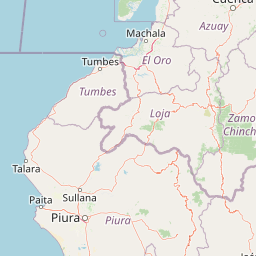
Map view of Podocarpus National Park

Use this park location map to pinpoint Podocarpus National Park in Ecuador, understand its exact geographic position, and read its mapped placement within the surrounding landscape more clearly.

Pigeon | © OpenStreetMap contributors

Location context for Podocarpus National Park

Loja ProvinceZamora Chinchipe
Park atlas

Browse complementary protected areas and trace geographic connections across Ecuador's Andean and Amazonian landscapes.

Discover Nearby National Parks and Protected Areas Beyond Podocarpus National Park
Browse a curated list of national parks and protected areas situated near Podocarpus National Park, spanning Ecuador's diverse Andean mountains, cloud forests, and Amazonian lowlands. Continue your atlas-style discovery to compare these protected landscapes, tracing ecological connections and understanding the broader regional conservation efforts and distinct terrains.
National parkZamora Chinchipe

Yacurí National Park: Protected Andean Lakes and Volcanic Landscape in Zamora Chinchipe

Discover highland geography and the ancient Inca Trail.

Yacurí National Park is a key protected landscape in Ecuador's southern Andes, celebrated for its remarkable collection of over 46 high-altitude lakes set within dramatic volcanic terrain. Situated in Zamora Chinchipe province, the park preserves a vital stretch of the Inca Trail, complete with archaeological sites. This national park offers a rich exploration of Andean geography, páramo ecosystems, and significant cultural heritage, making it a cornerstone of the region's protected areas.

Area
431 km²
Established
2009
IUCN
II
National parkPeru

Cerros de Amotape National Park: Peru's Protected Pacific Tropical Forest Atlas

Explore mapped boundaries and diverse terrain of this unique landscape.

Cerros de Amotape National Park stands as a significant protected area within Peru, meticulously preserving remnants of the Tumbes-Piura dry forests and Pacific tropical forests. Situated within the Cordillera de los Amotapes, the park features a dynamic landscape from riverine habitats to elevated mountain terrain. This park detail page offers an atlas-style view, focusing on its geographic context, mapped protected boundaries, and its importance as a conservation corridor for unique biodiversity.

Area
1,515.61 km²
Established
1975
IUCN
II
National parkCajamarca Region

Cutervo National Park: Peru's Oldest National Park Atlas and Protected Landscape

Andean Montane Forests and Mapped Geography of a Pioneering Protected Area

As Peru's oldest national park, established in 1961, Cutervo National Park offers a unique glimpse into the protected geography of the northern Peruvian Andes. Located in the Cajamarca Region, it preserves diverse Andean montane forests and páramo grasslands across a significant elevation gradient from 1,550 to 3,500 meters. This page details the park's landscape, including its role as a headwater conservation area and its position within a critical South American ecoregion, providing rich context for geographic and protected-area exploration.

Area
82.14 km²
Established
1961
IUCN
II
National parkEcuador

Sumaco Napo-Galeras National Park: Ecuador's Volcanic National Park Landscape

Explore protected areas and biodiversity in the Andean-Amazon transition.

Sumaco Napo-Galeras National Park protects a dramatic volcanic landscape in Ecuador, showcasing a significant elevation gradient that supports diverse cloud forest and Amazonian rainforest habitats. This national park is recognized for its endemic species and rich avifauna, offering a compelling case study for understanding protected land geography and ecological transitions within South America.

Area
2,067.49 km²
Established
1994
IUCN
II
National parkPeru

Güeppi-Sekime National Park: Protected National Park Atlas in Peru

Mapped landscape and regional geography of this Amazonian protected area.

Güeppi-Sekime National Park is a prominent protected area in Peru, recognized as a national park safeguarding a substantial expanse of tropical forest. Its landscape is characterized by diverse terrain, including rolling hills and seasonally inundated lowlands, vital for a rich tapestry of flora and fauna. The park's strategic location on the Ecuador border underscores its importance for transboundary conservation and ecological connectivity within the western Amazon basin. This page offers detailed information on its protected area identity, geographic context, and the mapped natural features that define this significant conservation landscape.

Area
2,036 km²
Established
2012
IUCN
II
Protected areaNariño

La Corota Island Flora Sanctuary: A Unique Protected Area within Colombia's Nariño Region

Explore its Andean cloud forest landscape and mapped island geography.

La Corota Island Flora Sanctuary is a critical protected area in Nariño, Colombia, celebrated for its distinctive status as the country's only lake island ecosystem supporting old-growth Andean cloud forest. This compact sanctuary provides a unique landscape context, safeguarding endemic plant species and diverse birdlife within its mapped boundaries. Its presence within Laguna de la Cocha highlights a special convergence of wetland and forest geography, offering insights for atlas exploration of protected lands.

Area
0.152 km²
Established
1977
IUCN
II
National parkPeru

Sierra del Divisor National Park: Peru's Sacred Amazonian Protected Landmark

Explore dramatic mountain terrain and protected lowland rainforest.

Sierra del Divisor National Park in Peru is a vital protected area conserving over 1.35 million hectares of Amazon rainforest. Characterized by the unique Sierra del Divisor mountain range and the sacred pyramid peak of Cerro El Cono, the park offers a distinct landscape within the broader Amazon basin. As one of Peru's newer national parks, it represents a significant commitment to preserving critical biodiversity corridors and understanding the geographic context of protected lands in a region facing environmental pressures.

Area
13,544.8 km²
Established
2015
IUCN
II
National parkPasco Region

Yanachaga, Chemillén National Park: Protected Area in Pasco Region, Peru

Mapped terrain, Pleistocene refuge, and rich biodiversity.

Yanachaga, Chemillén National Park, a national park situated in Peru's Pasco Region, preserves over 122,000 hectares of mountainous cloud forest and rainforest ecosystems. Its landscape is characterized by dramatic canyons and steep forested slopes, creating significant altitudinal variation from 460 to 3,643 meters. Recognized as a Pleistocene refuge, the park shelters ancient forest remnants and harbors exceptional biodiversity, including hundreds of bird species and iconic mammals, offering rich context for geographic and protected-area exploration.

Area
1,220 km²
Established
1986
IUCN
II

Common questions about visiting, size, designation, and location context for Podocarpus National Park

Podocarpus National Park FAQs for park facts, access, geography, and protected area context
Find quick answers about Podocarpus National Park, including protected-area facts, park geography, trail and visitor context, and how the park fits into its surrounding country and regional landscape.
MoriAtlas Explorer

Continue Your Protected Areas Search Across the Global Atlas

Deepen your exploration by continuing the structured search for national parks and protected areas worldwide. Utilize the comprehensive filtering capabilities to compare different conservation landscapes and refine your understanding of global park geography. Discover more about the distribution and characteristics of protected natural areas.

Global natural geography