
Mori Atlas logo
National parkTaï National Park

Mapping West Africa's largest primary forest and its critical primate habitats.

Taï National Park: Ivory Coast's Last Intact Primary Rainforest Protected Landscape

(Parc National de Taï)

Taï National Park represents a significant protected landscape in southwestern Ivory Coast, safeguarding one of the final expanses of West African primary rainforest. This national park, situated near the Liberian border between the Cavalla and Sassandra rivers, offers a unique opportunity to explore its mapped boundaries, diverse terrain, and exceptional biodiversity. As a UNESCO World Heritage Site, it forms a critical part of the ancient Upper Guinean rain forest ecosystem, providing essential habitat and landscape context within the region.

primary rainforestUNESCO World Heritage Sitebiosphere reserveprimate habitatchimpanzee conservationWest Africa

Taï National Park

National park

Park overview

Structured park overview, official facts, and landscape profile for Taï National Park

Taï National Park park facts, protected area profile, and essential visitor context
Review the core facts for Taï National Park, including designation, size, terrain, visitor scale, habitats, and operating context in one park-focused overview.

About Taï National Park

Taï National Park represents one of the most significant conservation areas in West Africa, protecting what remains of the once-extensive Upper Guinean rain forest that historically covered much of the region. The park's establishment in 1972 marked a critical step in preserving this vanishing ecosystem, though the forest reserve dates back to 1926. Its UNESCO World Heritage inscription in 1982 recognized both the extraordinary diversity of flora and fauna and the ecological significance of this remaining forest island. The park serves as a natural laboratory for scientific research, having hosted numerous international research programs including UNESCO Man and Biosphere projects examining human interference in forest ecosystems. The surrounding region has experienced significant human pressure, with population growing from approximately 3,200 in 1971 to 57,000 by 1991, creating challenges for park management and conservation. Despite these pressures, the park remains a vital stronghold for biodiversity and a critical component of West Africa's ecological heritage.

Quick facts and research context for Taï National Park

Taï National Park spans roughly 3,300 square kilometers in the Montagnes and Bas-Sassandra districts of Ivory Coast, bordering Liberia. The protected area was established on 28 August 1972 and holds IUCN Category II status. It became a UNESCO World Heritage Site in 1982 and a biosphere reserve in 1978. The park features tropical evergreen forest with altitudes ranging from 80 to 396 meters, and supports over 1,300 plant species with more than half endemic to the Guinean zone. The park contains 140 mammal species and approximately 250 bird species, including significant populations of western chimpanzees known for their tool-using behavior.

Park context

Deeper park guide and search-rich context for Taï National Park

Taï National Park history, landscape, wildlife, and travel context
Explore Taï National Park through its history, landscape character, ecosystems, wildlife, conservation priorities, cultural context, and seasonal travel timing in a structured park guide built for atlas discovery and search intent.

Why Taï National Park stands out

Taï National Park is best known as one of the last intact primary rainforest reserves in West Africa and a critical refuge for endangered species. The park hosts the largest population of western chimpanzees in the region, noted for their sophisticated tool-using behaviors including nut-cracking with stones. It is also renowned for its population of pygmy hippos, one of the few viable remaining populations of this endangered species. The park contains five mammal species listed on the IUCN Red List of Threatened Species: the pygmy hippopotamus, olive colobus monkeys, leopards, chimpanzees, and Jentink's duiker. Its exceptional biodiversity extends to nearly 1,000 vertebrate species, 140 mammal species, and over 250 bird species, with 28 bird species endemic to the Guinean zone.

Taï National Park history and protected-area timeline

The Taï Forest reserve was created in 1926, establishing early protection for this significant forest ecosystem. The reserve was promoted to full national park status on 28 August 1972, formalizing its conservation importance at the national level. In 1978, the park was recognized as a UNESCO biosphere reserve, acknowledging its role in preserving biodiversity while allowing for sustainable use of surrounding resources. The critical World Heritage inscription followed in 1982, when the park was added to the list of Natural World Heritage Sites based on criteria (vii) and (x), recognizing its outstanding natural beauty and the importance of its ecosystems in maintaining biodiversity. International conservation efforts intensified through the 1990s and early 2000s, with the Project Autonome pour la Conservation du Parc National de Taï (PACPNT) running from 1993 to 2002, financed by GTZ, KfW, and the WWF. This project worked to improve management and surveillance, monitor flora and fauna conditions, and launch conservation initiatives with local communities. In 2002, technical and scientific management was transferred to the national Office Ivoirien des Parcs et Reserves.

Taï National Park landscape and geographic character

The park occupies the southwestern corner of Ivory Coast, bordering Liberia, and consists of tropical evergreen forest spanning approximately 3,300 square kilometers with an additional 200 square kilometer buffer zone. The terrain sits on a Precambrian granite peneplain composed of migmatites, biotites, and gneiss, sloping gently from the drier north to more deeply dissected land in the south. The plateau, at elevations between 150 and 200 meters, is interrupted by several granite inselbergs formed from plutonic intrusions, including Mont Niénokoué in the southwest, the park's highest point at 396 meters. A large zone of varied schists runs northeast to southwest across the park, dissected by tributaries including the N'zo, Meno, Little Hana, and Hana rivers, all flowing southwest to the Cavally River. These rivers are wide during wet seasons but become shallow streams in the dry season. Some swamp forest exists in the northwest and along the N'zo river corridor. The soils are predominantly ferrallitic, generally leached and of low fertility, though more fertile alluvial soils occur in southern valleys.

Taï National Park ecosystems, habitats, and plant life

The park represents the largest remaining island of relatively intact forest in West Africa, protecting what remains of the vast Upper Guinean rain forest that once stretched across multiple countries. It lies within a WWF/IUCN Centre of Plant Diversity and in the center of endemism of eastern Liberia and western Ivory Coast, likely functioning as an Ice Age refugium. The vegetation consists predominantly of dense evergreen ombrophilous forest of Upper Guinean type, featuring 40 to 60-meter emergent trees with massive trunks and large buttresses or stilt roots. Two main forest types grade across the park: diverse moist evergreen forest with leguminous trees in the southern third, transitioning to moist semi-evergreen forest in the north. The Sassandrian moist evergreen forest in the southwest, on schistose soils, supports species including ebony, Diospyros gabunensis, and Heritiera utilis, with numerous endemic species especially in the lower Cavally Valley and Meno and Hana depressions. Epiphytes and lianas form important elements at lower forest levels, while swamp forests along river backwaters feature species like Gilbertiodendron splendidum, Symphonia globulifera, and raphia palms.

Taï National Park wildlife and species highlights

The park supports extraordinary biodiversity with nearly 1,000 vertebrate species, including 140 mammal species representing 47 of the 54 large mammal species known from the Guinean rain forest. Eleven primate species inhabit the park, including western red colobus, Diana monkey, Campbell's mona monkey, lesser and greater spot-nosed monkeys, black-and-white colobus, ursine colobus, olive colobus, sooty mangabey, dwarf galago, and Bosman's potto. The park contains one of West Africa's largest chimpanzee populations, estimated at over 4,500 individuals in the 1990s, notable for their tool-using behaviors including nut-cracking. Five mammal species are threatened: pygmy hippopotamus (approximately 500 individuals), olive colobus monkeys, leopards, chimpanzees, and Jentink's duiker. The park supports exceptional duiker diversity including Jentink's duiker, zebra duiker, Maxwell's duiker, and royal antelope. Bird diversity includes at least 250 species with 28 endemic to the Guinean zone, including African crowned eagle, yellow-casqued hornbill, and white-necked rockfowl. The park has been designated an Important Bird Area by BirdLife International.

Taï National Park conservation status and protection priorities

Taï National Park holds exceptional conservation significance as one of the last primary rainforest strongholds in West Africa. Its UNESCO World Heritage status and biosphere reserve designation reflect international recognition of its ecological value. The park protects five threatened mammal species on the IUCN Red List, representing a critical conservation priority. As a center of endemism with over 50 species endemic to the region and more than half of its 1,300 plant species restricted to the Guinean zone, the park serves as a genetic reservoir of global significance. The park has been the focus of extensive scientific research, including long-term studies of chimpanzees and their tool-using behaviors, and investigations into Ebola virus transmission. Conservation challenges include population pressure from surrounding communities that grew dramatically from 1971 to 1991, illegal settlement within the park, and fragmentation of buffer zone forests. International conservation projects through the 1990s and 2000s have worked to improve management, but ongoing threats require continued vigilance.

Taï National Park cultural meaning and human context

The forest region around Taï was traditionally inhabited by the Guéré and Oubi peoples, who maintained totemic restrictions against eating chimpanzees, thereby contributing to the preservation of chimpanzee populations in the area. French colonial influence dates only from the mid-19th century, with limited settlement in the area before the late 1960s. Population growth accelerated following reservoir construction in the N'Zo valley and drought conditions in the Sahel that pushed people southward. Today, the park is surrounded by 72 villages with three main ethnic groups: the Bakoué and Kroumen, who traditionally practiced selective forest clearing and preserved medicinal trees, and the Baoulé, who together with refugees from dam projects, Sahel drought, and regional conflicts now form the majority and have engaged in more intensive forest clearing. The east side of the park has suffered most from human impact. Local communities have used forest plants for traditional medicine, including the fruit of Thaumatococcus daniellii, used for its intensely sweet protein substance, and the bark of Terminalia superba for malaria treatment.

Top sights and standout views in Taï National Park

Taï National Park offers visitors the opportunity to explore one of West Africa's last great primary rainforests, home to significant populations of western chimpanzees known for their tool-using behaviors including stone nut-cracking. The park protects the largest remaining tract of intact Upper Guinean forest, supporting extraordinary biodiversity including over 1,300 plant species, 140 mammal species, and 250 bird species. Notable species include the endangered pygmy hippopotamus, Jentink's duiker, and numerous primate species. The landscape features gentle plateau terrain broken by granite inselbergs including Mont Niénokoué, with river systems flowing through swamp forest corridors. Visitors can access the park from the nearby town of Taï, where an ecological research station provides facilities. The park offers opportunities for wildlife observation, primate tracking, and experiencing the atmosphere of a pristine West African rainforest.

Best time to visit Taï National Park

The park experiences a sub-equatorial climate with two wet seasons. The primary rainy period occurs from March/April through July, with a shorter wet season in September to October. Rainfall averages around 1,700 millimeters in the north to 2,200 millimeters in the southwest. The south has no true dry season, while the northern portion experiences a marked dry season from November to February/March, briefly accentuated by dry northeasterly Harmattan winds. Temperature remains relatively stable throughout the year, ranging from 24 to 27 degrees Celsius due to oceanic influence and forest cover, though diurnal temperatures can vary more widely. High humidity of around 85 percent persists year-round. Visitors interested in wildlife viewing should consider that dry seasons may concentrate animals around remaining water sources, though the park's evergreen character means that wildlife is present throughout the year.
Park location guide

Geography guide, regional context, and park location map for Taï National Park

Taï National Park park geography, regions, and map view in Ivory Coast
Understand where Taï National Park sits in Ivory Coast through a broader geographic reading of the surrounding landscape, nearby location context, and its mapped position within the national park landscape.

How Taï National Park fits into Ivory Coast

Ivory Coast, officially the Republic of Côte d'Ivoire, is a West African country with a coastline on the Gulf of Guinea. It gained independence from France in 1960 and is now a presidential republic. The country is a major producer of cocoa and coffee, with Abidjan serving as its largest city and economic hub, while Yamoussoukro is the official capital.

Wider geography shaping Taï National Park in Ivory Coast

Ivory Coast is situated on the southern coast of West Africa along the Gulf of Guinea. It borders Guinea to the northwest, Liberia to the west, Mali to the northwest, Burkina Faso to the northeast, Ghana to the east, and the Atlantic Ocean to the south. The terrain includes coastal plains, interior highlands, and forested regions.

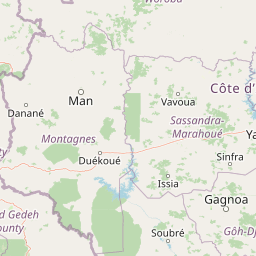
Map view of Taï National Park

Use this park location map to pinpoint Taï National Park in Ivory Coast, understand its exact geographic position, and read its mapped placement within the surrounding landscape more clearly.

Pigeon | © OpenStreetMap contributors

Location context for Taï National Park

Bas-Sassandra DistrictMontagnes District
Park atlas

Trace the connected protected landscapes and regional park geography surrounding Ivory Coast's Taï National Park.

Discover Other National Parks and Protected Areas Near Taï National Park
Continue your exploration of Taï National Park by browsing other national parks and protected areas across the surrounding West African region. Compare these protected landscapes to understand their shared Upper Guinean forest context, regional biodiversity, and distinct conservation challenges throughout West Africa.
Protected areaNimba County

Gibi National Forest: Protected Tropical Forest in Nimba County, Liberia

Mapped landscape and regional geography of this key conservation area.

Gibi National Forest, a protected tropical forest spanning 607 square kilometers in Nimba County, Liberia, plays a crucial role in the preservation of the Upper Guinea forest ecosystem. Established in 1960, its landscape features tropical forest terrain near the mountainous Nimba Range. This protected area contributes significantly to regional conservation strategies, offering a vital habitat within a biodiversity hotspot that faces considerable pressure.

Area
607 km²
Established
1960
IUCN
VI
Climate
Tropical
Protected areaNimba County

Nimba National Forest: Protected Mountain Landscape & Bird Area in Nimba County

Explore mapped boundaries and regional geographic context.

Nimba National Forest, a protected area of approximately 187 square kilometers, is defined by its mountainous terrain in Nimba County, Liberia. Situated at the tri-border region with Guinea and Ivory Coast, this forest is recognized for its importance as a habitat for diverse bird species and its role in regional conservation efforts. Discover its mapped landscape, its position within the Nimba Range, and its ecological significance within West Africa's protected natural areas.

Area
187 km²
IUCN
VI
National parkAbidjan

Banco National Park National Park: Primary Forest Landscape and Abidjan Geography

Explore mapped boundaries and urban conservation.

Banco National Park is a globally significant protected area, uniquely preserving dense primary tropical forest within the urban sprawl of Abidjan, Ivory Coast. This national park offers critical insights into urban conservation, featuring rare tree species and providing essential ecosystem services like water supply and carbon sequestration for the surrounding region. Its landscape, characterized by the Gbangbo River and rare mahogany and avodire trees, forms a vital geographic element within the metropolitan atlas.

Area
30 km²
Established
1953
IUCN
II
National parkWestern North Region

Bia National Park: Ghana's Vital Protected Forest Landscape with West Africa's Tallest Trees

Explore the unique mapped geography and biodiversity of this key conservation area.

Bia National Park serves as a crucial protected landscape in Ghana's Western North Region, celebrated for harboring some of West Africa's tallest trees and a rich diversity of wildlife. This detailed entry provides context on its mapped boundaries and ecological significance as one of the last relatively untouched forest remnants in the region. Understand the park's place within Ghana's geography and its value for conservation research, showcasing its unique transitional forest ecosystem and the documented species it protects.

Area
563 km²
Established
1974
IUCN
II
Climate
Tropical
National parkEastern Province

Gola Rainforest National Park: Sierra Leone's Premier Rainforest Protected Area

Explore mapped boundaries and biodiversity in Eastern Province's vast tropical rainforest.

Gola Rainforest National Park is Sierra Leone's second national park and the largest intact rainforest landscape in the country, located in the Eastern Province. As part of the Upper Guinea Forest biodiversity hotspot, it is renowned for its exceptional wildlife, including western chimpanzees and pygmy hippopotamuses. This protected area's mapped extent covers over 71,000 hectares, contributing significantly to regional conservation and providing a vital natural resource for both wildlife and local communities.

Area
710.7 km²
Established
2010
IUCN
II
Relief
Lowland
National parkGhana

Nini-Suhien National Park: Ghana's Coastal Forest Protected Landscape and Avian Sanctuary

Explore mapped boundaries of vital tropical forest habitat.

Nini-Suhien National Park in Ghana is recognized for its protected coastal forest, a habitat type critically endangered across West Africa. Established in 1976, this national park spans 160 square kilometers, serving as a key component of the Ankasa Conservation Area and a vital corridor for wildlife. Its designation as an Important Bird Area highlights its global importance for birdlife, offering a unique geographic and ecological study within the nation's atlas of protected lands.

Area
160 km²
Established
1976
IUCN
II
Relief
Lowland
National parkIvory Coast

Comoé National Park: A UNESCO World Heritage Site and Ivory Coast's Largest National Park

Explore its diverse savanna ecosystems and gallery forest geography.

Comoé National Park is a landmark protected area in West Africa, celebrated as the most biodiverse savanna on Earth. Situated across northeastern Ivory Coast, it encompasses a unique geographic gradient from Guinea savanna to Sudanian zones, supporting varied habitats from expansive savannas to dense gallery forests along the Comoé River. Its status as a national park highlights its critical role in wildlife conservation and its significant contribution to the understanding of transitional ecological landscapes.

Area
11,500 km²
Established
1983
IUCN
II
Relief
Lowland
National parkGhana

Bui National Park: Protected Savanna Landscape and Black Volta River Geography in Ghana

Explore the mapped boundaries and unique ecosystems of this national park.

Bui National Park, a protected national park in Ghana, offers a rich geographic discovery of savanna ecosystems bisected by the Black Volta River. Its vast mapped area provides a unique setting for understanding riparian corridors, woodland savanna, and mountainous terrain. The park is critically important for its significant hippopotamus population and its designation as an Important Bird Area, showcasing its ecological value. Exploration of Bui National Park provides insight into Ghana's protected landscapes and their strategic position within West African geography, serving as a key entity for any natural atlas.

Area
1,820 km²
Established
1971
IUCN
II

Common questions about visiting, size, designation, and location context for Taï National Park

Taï National Park FAQs for park facts, access, geography, and protected area context
Find quick answers about Taï National Park, including protected-area facts, park geography, trail and visitor context, and how the park fits into its surrounding country and regional landscape.
MoriAtlas Explorer

Continue Your Protected Areas Search Across the Global Atlas

Deepen your exploration by continuing the structured search for national parks and protected areas worldwide. Utilize the comprehensive filtering capabilities to compare different conservation landscapes and refine your understanding of global park geography. Discover more about the distribution and characteristics of protected natural areas.

Global natural geography